Where Afghan Landscape Turns Into Legend
Afghanistan’s strongest Fortean material is not a neat catalogue of alien landings, lake monsters and newspaper oddities.
Page outline Jump by section
The dragon that became a valley
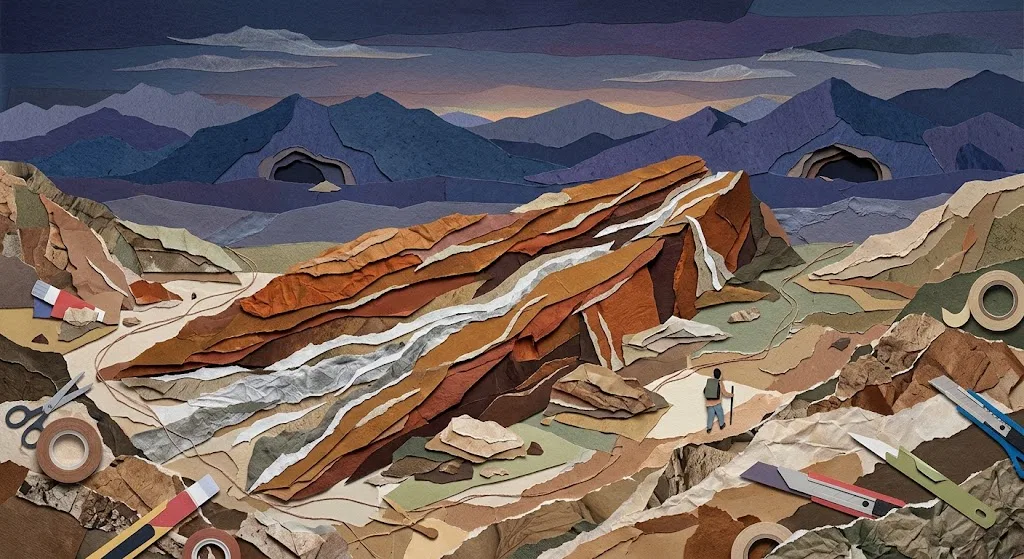
The most vivid Afghan strange-place tradition is in Bamiyan, where the Valley of the Dragon lies a short distance west of Bamiyan bazaar. In local telling, a dragon once terrorised the valley until Hazrat Ali killed it; the “body” remains as a long, split ridge, with pale mineral water read as the dragon’s tears. Afghanistan Analysts Network describes the place as part of Bamiyan’s “fantasy book atmosphere”, with a petrified mound several hundred metres long, cleft by Ali’s sword, and white chalky water dropping from the snout.[Afghanistan Analysts Network - English]afghanistan-analysts.orgAfghanistan Analysts NetworkAfghanistan Analysts Network
The story matters because Bamiyan is already a layered mythic landscape. UNESCO identifies the Bamiyan Valley as a cultural landscape whose remains show Buddhist, Gandharan, Hellenistic, Roman, Sasanian and Islamic influences from the 1st to 13th centuries; it includes the niches of the destroyed 55-metre and 38-metre Buddha statues, Buddhist caves and later Islamic fortifications.[UNESCO World Heritage Centre]whc.unesco.orgOpen source on unesco.org. The dragon legend sits in that same layered terrain: a natural feature becomes a religiously charged narrative, and the landscape itself becomes a kind of archive.
Sceptically, there is no need to posit a literal dragon. The physical “creature” is a geological formation, and the tale works because the ridge is already suggestive: long, broken, pale-streaked and set in a dramatic valley. Believers and local storytellers, however, are not simply making a mistaken zoological claim. The legend gives Bamiyan a moral geography. It explains a peculiar formation, links the place to sacred history, and turns a walk through rock and mineral water into a story of rescue, sanctity and danger overcome.
There is also a deeper pattern here. Across cultures, dragons often mark difficult terrain, water sources, springs, ravines, caves or old sacred places. Bamiyan’s dragon does the same work. It makes geology memorable. It gives travellers a story to repeat. And it shows how Afghan Forteana often lives less in isolated “sightings” than in places where a strange shape and a powerful tradition reinforce one another.
Spirits, stones and the Afghan unseen
Afghan spirit belief is not a single tidy system. It draws on Islamic ideas of jinn, older Central Asian and Iranian spirit worlds, local saint traditions, healing practices and village-level stories. Pew Research defines jinn, in Islamic usage, as supernatural beings described in the Quran who may be good, evil or morally neutral.[Pew Research Center]pewresearch.orgPew Research Center Appendix B: Glossary | Pew Research CenterPew Research Center Appendix B: Glossary | Pew Research Center In its 2012 survey of Muslim beliefs and practices, Pew found that belief in jinn was widespread in many surveyed countries, and that Afghan Muslims were among South Asian respondents who frequently turned to traditional religious healers, with 66% saying they had done so to help cure someone who was ill.[Pew Research Center]pewresearch.orgOpen source on pewresearch.org.
This is important for a Fortean page because many “haunting”, “possession” or “curse” accounts in Afghanistan are not best understood as imported ghost stories. They belong to a lived explanatory world in which illness, misfortune, fear, mental distress and uncanny places may be interpreted through spirits, saints, blessings, pollution, prayer or inherited custom. That does not make every account factually true in a paranormal sense. It means the reports have a social life and a logic of their own.
Anthropological work on Afghan mysticism and healing also shows how older spirit ideas could attach to places. Homayun Sidky’s study of Afghan malangs, Sufis and mystics notes that some ancient shrines may have pre-Islamic origins, and that certain sacred stones in Afghanistan have traditionally been believed to be dwellings of div, a class of indigenous spirits; the same passage links Nuristan’s sacred-stone practices to pre-Islamic shamanistic religion.[Asian Ethnology]asianethnology.orgAsian Ethnology For a reader of strange history, this is one of the clearest bridges between folklore and landscape: the eerie object is not just a stone, but a point of contact with an unseen presence.
Modern reporting adds a harder edge. In 2013, AFP reported on the Mia Ali Baba shrine outside Jalalabad, where some people were chained for 40 days in the belief that the ordeal could cure mental illness or possession by jinn. The same report quoted a Kabul psychiatric hospital director rejecting the practice as scientifically baseless and human-rights observers calling for the shrine to be closed.[The Express Tribune]tribune.com.pk40 days in chains: Afghan shrine offers 'cure' for evil spirits… That case is not “fun spooky folklore”. It shows how supernatural explanations can become treatment systems, and how cultural belief, trauma, poor access to healthcare and human-rights concerns can collide.
The Fortean lesson is to keep two thoughts in view at once. Jinn and spirit traditions are culturally significant and should not be dismissed as mere decoration. But claims of possession, curse or exorcism also need careful handling, especially where vulnerable people may be harmed by coercive “cures” or denied medical care.
Dreams, saints and decisions from the invisible world
Afghanistan’s uncanny record is not only about monsters and frightening spirits. It also includes visionary experience: dreams, blessings, saintly presence and claims of guidance from beyond ordinary waking life. Annika Schmeding’s ethnographic work on a Sufi community in present-day Afghanistan describes dream practice not as random private fantasy, but as a communal process in which people prepare for, expect, discuss and judge dreams as part of religious life. In the case she studied, dreams were involved in the community’s attempt to decide on a new leader.[HAU Journal]haujournal.orgOpen source on haujournal.org.
For a Fortean reader, this is a useful corrective. Western paranormal writing often treats dreams as “premonitions” only when they appear to predict a dramatic event. Afghan Sufi dream practice, as described in this research, is more social and disciplined than that. A dream may be weighed, interpreted, accepted, doubted or fitted into a wider spiritual framework. The strange claim is not simply “someone dreamed something”. It is that dreaming can become a recognised channel through which a community negotiates authority and divine nearness.
Sceptical interpretation would point to psychology, memory, social expectation and the human habit of finding meaning in emotionally charged images. A believer’s interpretation may instead treat certain dreams as guidance, visitation or a sign of spiritual rank. The interesting point is that both readings recognise the same basic fact: dreams can change behaviour. In Afghan religious settings, they may influence trust, leadership, healing, pilgrimage and the authority of saints or teachers.
This also connects Afghanistan to a broader Fortean motif: the invisible event that leaves visible consequences. No one can put a dream in a museum case. Yet a dream can alter a journey, a succession dispute, a healing decision or the reputation of a holy person. That is exactly the sort of borderline material that country-level weird history should preserve carefully, without inflating it into proof of prophecy.
Giants in the mountains: folklore, war stories and internet mutation
The “Giant of Kandahar” is probably the best-known modern Afghan cryptid story online, especially in English-language fringe media. The usual claim is that US troops encountered and killed a huge red-haired humanoid in Afghanistan, after which the body was removed and suppressed. Military Times treated the story as an outlandish military-conspiracy tale, noting claims of a 13-foot creature with red hair, extra fingers and two rows of teeth, but also reporting that Pentagon officials told Snopes they had no record of such an incident.[Military Times]militarytimes.comOpen source on militarytimes.com.
As evidence, the Kandahar giant is weak. The story lacks verifiable names, documents, physical remains, consistent location details or an accountable chain of witnesses. Its strongest life is online: podcasts, paranormal radio, social media retellings and “heard from a soldier” anecdotes. In that sense, it is less a traditional Afghan monster than a wartime internet legend set in Afghanistan.
That distinction matters. Afghanistan does have older traditions of powerful spirits, giants, divs, dangerous mountains and uncanny places. But the modern Kandahar giant story often repackages Afghanistan as a backdrop for foreign military mythology. The country becomes a remote, cave-filled stage on which outsiders project biblical giants, classified helicopters and secret government retrievals. That tells us more about American war folklore and conspiracy culture than it does about Afghan oral tradition.
Still, the story has cultural pull for understandable reasons. Afghanistan’s terrain is mountainous and difficult. Coalition soldiers often operated at night, under stress, using thermal imaging, night vision, drones and fragmentary intelligence. In such conditions, misread scale, distance, heat signatures, shadows, rocks, clothing and animals can become memorable anomalies. National Defense University Press has argued more broadly that military UAP and misidentification cases show how complex operating environments can create serious identification problems, especially when communication and context are poor.[ndupress.ndu.edu]ndupress.ndu.educutting the chaff overlooked lessons of military uap sightings for joint forceCutting the Chaff: Overlooked Lessons of Military UAP Sightings for Joint Force and Interagency Coordination > National Defense Universit…
The likely explanation for the Kandahar giant is not one simple hoax but a chain: old giant motifs, war-zone stress, second-hand barracks stories, ambiguous sensor impressions, online embellishment and an audience already primed for hidden-history claims. As Afghan Forteana, it belongs in the record — but with a warning label. It is a modern legend about Afghanistan, not good evidence for giant humanoids in Afghanistan.
The 1956 Afghan “flying saucer” file
Afghanistan does have at least one archived Cold War UFO curiosity. An Internet Archive item titled “1956-01-7340421-Afghanistan” is attributed to the U.S. Air Force, dated 1956, tagged with UFO, Project Blue Book and unidentified flying objects, and listed as a three-page item in the Project Blue Book collection.[Internet Archive]archive.orgOpen source on archive.org. The National Archives explains that Project Blue Book was the U.S. Air Force programme for investigating UFO reports, that its records were declassified and transferred to the National Archives, and that the project closed in 1969.[National Archives]archives.govNational Archives Project BLUE BOOKNational Archives Project BLUE BOOK
This does not mean a spacecraft landed in Afghanistan. Project Blue Book files include reports, administrative records, witness statements and investigations of varying quality. The U.S. Air Force’s own later fact sheet, reproduced by the National Archives, says that from 1947 to 1969 Project Blue Book received 12,618 sightings, of which 701 remained “unidentified”, while also stating that no investigated UFO gave evidence of a national-security threat, advanced unknown technology or extraterrestrial vehicles.[National Archives]archives.govNational Archives Project BLUE BOOKNational Archives Project BLUE BOOK
The Afghan case is therefore best treated as an archival oddity: evidence that a report existed and entered a formal UFO bureaucracy, not evidence that the report’s most exotic interpretation was true. That distinction is crucial. Fortean interest often begins when an official file exists, but an official file proves only that somebody thought the report worth recording.
The Afghanistan setting does, however, make the case evocative. In the 1950s, Afghanistan sat within Cold War geography: near Soviet Central Asia, politically significant, and increasingly watched by outside powers. Reports of unusual aerial objects in such contexts could involve aircraft, balloons, meteors, astronomical bodies, military rumours, translation problems or genuinely unresolved observations. The mystery is not necessarily “aliens over Afghanistan”. It is how a strange report moved through the machinery of state attention.
Real things falling from the sky
Not every “fall from the sky” belongs to folklore. Meteorites are genuine, physical, testable objects, and Afghanistan has a small but interesting record in the Meteoritical Bulletin database. A search for Herat entries lists Kohsan as an official 2024 meteorite from Herat Province, classified as H4 and weighing 200 grams; the same database also lists Juzjanan as a doubtful fall from the year 1009, recorded as a doubtful iron from Herat.[LPI]lpi.usra.eduLPIMeteoritical Bulletin: Search the DatabaseLPIMeteoritical Bulletin: Search the Database
That pairing is perfect for evidence-aware Forteana. Kohsan is a modern scientific record: named, classified and entered into the official meteorite literature. Juzjanan is different: old, doubtful, and more historically suggestive than scientifically secure. The two entries show how sky-fall claims move along a spectrum. At one end are analysed meteorites; at the other are reports preserved in older sources with uncertain provenance.
Afghanistan does not appear, from the accessible evidence, to have a rich public record of classic “raining frogs” or “raining fish” incidents comparable to some other countries. That absence should not be padded into a false tradition. The useful comparison is explanatory. The Library of Congress notes that animal-rain reports are often explained by waterspouts or powerful updrafts, while also warning that many historical reports are second- or third-hand and that storms can make animals appear suddenly on the ground without having fallen from the sky.[The Library of Congress]loc.govOpen source on loc.gov. Smithsonian Magazine similarly describes fish, frog and coloured rains as long-standing strange-rain motifs, often involving waterspouts, tornadoes, dust or other airborne particles.[Smithsonian Magazine]smithsonianmag.comOpen source on smithsonianmag.com.
For Afghanistan, the sky-fall theme is best grounded in meteorites rather than animal rains. It also offers a sober reminder: some strange falls are real, but real does not mean supernatural. A stone from space is astonishing enough without adding invented omens.
Why Afghan Forteana feels different
Afghan Forteana has a different centre of gravity from the classic newspaper-Fort tradition of Victorian fish falls, phantom airships and parlour poltergeists. Much of it is place-based and tradition-based rather than event-based. A ridge becomes a dragon. A stone becomes a spirit dwelling. A shrine becomes a site of healing, fear or coercion. A dream becomes a form of religious knowledge. A war-zone rumour becomes a giant.
Several features shape the pattern:
- Landscape does much of the storytelling. Mountains, caves, valleys, ruins and springs invite narrative explanation, especially where travel is hard and local memory is strong.
- Religious tradition and folklore overlap. Jinn, saints, dreams, blessings and shrines may be discussed in ways that are devotional, medical, social and supernatural at once.
- War distorts evidence. Afghanistan’s modern conflicts created conditions in which rumour, secrecy, trauma, foreign military technology and fragmentary testimony could flourish.
- Archives are patchy. Some material survives in official databases or academic work; other stories circulate orally or online without stable documentation.
- The best cases are not always the loudest. The Kandahar giant is famous online, but Bamiyan’s dragon landscape and Afghan spirit-healing traditions are far better rooted in place and culture.
This is why the strongest reading is neither credulous nor dismissive. Afghanistan’s strange record is not a proof-file for monsters. It is a map of how people make sense of dangerous terrain, illness, sacred power, memory and inexplicable sights. The uncanny survives there because it is attached to things that are already real: rocks, ruins, dreams, shrines, meteorites, military records and the human need to turn fear into story.
Amazon book picks
Further Reading
Books and field guides related to Where Afghan Landscape Turns Into Legend. Use these as the next step if you want deeper reading beyond the article.

Afghanistan A Cultural And Political History
Provides cultural context for folklore and regional traditions.

The Penguin Book of Dragons
Places Afghan dragon legends within wider dragon traditions.

Myths and Legends
Introduces global mythic themes useful for interpreting Afghan legends.
eBay marketplace picks
Marketplace Samples
Live-tested eBay searches with available results related to this page.


Endnotes
1.
Source: afghanistan-analysts.org
Title: Afghanistan Analysts Network
Link:https://www.afghanistan-analysts.org/en/reports/context-culture/traveling-bamyan/
2.
Source: whc.unesco.org
Link:https://whc.unesco.org/en/list/208/
3.
Source: asianethnology.org
Title: Asian Ethnology
4.
Source: tribune.com.pk
Title: The Express Tribune
Link:https://tribune.com.pk/story/641483/40-days-in-chains-afghan-shrine-offers-cure-for-evil-spirits
Source snippet
40 days in chains: Afghan shrine offers 'cure' for evil spirits...
5.
Source: ndupress.ndu.edu
Title: cutting the chaff overlooked lessons of military uap sightings for joint force
Link:https://ndupress.ndu.edu/Joint-Force-Quarterly/Joint-Force-Quarterly-110/Article/Article/3447233/cutting-the-chaff-overlooked-lessons-of-military-uap-sightings-for-joint-force/
Source snippet
Cutting the Chaff: Overlooked Lessons of Military UAP Sightings for Joint Force and Interagency Coordination > National Defense Universit...
6.
Source: archive.org
Link:https://archive.org/details/1956-01-7340421-Afghanistan
7.
Source: archives.gov
Title: National Archives Project BLUE BOOK
Link:https://www.archives.gov/research/military/air-force/ufos
8.
Source: lpi.usra.edu
Title: LPIMeteoritical Bulletin: Search the Database
Link:https://www.lpi.usra.edu/meteor/metbull.php?country=Afghanistan&lrec=200&sea=Herat&sfor=places&srt=year&stype=exact
9.
Source: archive.org
Link:https://archive.org/stream/asiaticmythology00jhac/asiaticmythology00jhac_djvu.txt
10.
Source: archive.org
Link:https://archive.org/stream/MEBooks/The%20Nativist%20Prophets%20of%20Early%20-%20Patricia%20Crone_djvu.txt
11.
Source: ia801606.us.archive.org
Title: 2015.458610.The Flowering Of Indian Art text
Link:https://ia801606.us.archive.org/6/items/in.ernet.dli.2015.458610/2015.458610.The-Flowering-Of-Indian-Art_text.pdf
12.
Source: archive.org
Link:https://archive.org/stream/in.ernet.dli.2015.69873/2015.69873.Classical-Persian-Literature_djvu.txt
13.
Source: archive.org
Link:https://archive.org/stream/selectionsfromt00forr/selectionsfromt00forr_djvu.txt
14.
Source: archive.org
Link:https://archive.org/stream/JeffHayWorldReligionsGreenhavenEncyclopedia/Jeff%20Hay%20World%20Religions%20Greenhaven%20Encyclopedia_djvu.txt
15.
Source: ia601405.us.archive.org
Link:https://ia601405.us.archive.org/28/items/B-001-014-055/B-001-014-055.pdf
16.
Source: archive.org
Link:https://archive.org/download/PakistaniaatAJournalOfPakistanStudiesVol.1No122009/Binder1.pdf
17.
Source: archive.org
Title: 73815 djvu.txt
Link:https://archive.org/stream/in.gov.ignca.73815/73815_djvu.txt
18.
Source: archive.org
Link:https://archive.org/stream/alphabets-of-life/Scholars_Edition_Vol_2_djvu.txt
19.
Source: archive.org
Link:https://archive.org/stream/in.gov.ignca.12398/12398_djvu.txt
20.
Source: archives.gov
Link:https://www.archives.gov/research/catalog/catalog-bulk-downloads/uap-bulk-download
21.
Source: archives.gov
Link:https://www.archives.gov/files/declassification/iscap/pdf/2014-004-doc01.pdf
22.
Source: archives.gov
Link:https://www.archives.gov/research/guides/still-pictures-guide
23.
Source: archives.gov
Link:https://www.archives.gov/files/research/9-11/staff-report-sept2005.pdf
24.
Source: archives.gov
Title: 2016 220 pt 2 release material completed
Link:https://www.archives.gov/files/declassification/iscap/pdf/2016-220-pt-2-release-material-completed.pdf
25.
Source: archives.gov
Link:https://www.archives.gov/files/research/cartographic/cartographic-ww2-guide.pdf
26.
Source: archives.gov
Link:https://www.archives.gov/files/research/foreign-policy/cold-war/berlin-wall-1962-1987/dvd/pdfs/military_3/1985-1986.pdf
27.
Source: archives.gov
Title: lp gwb foia log 2014 2022 redacted
Link:https://www.archives.gov/files/foia/pdf/lp-gwb-foia-log-2014-2022-redacted.pdf
28.
Source: archives.gov
Link:https://www.archives.gov/files/research/foreign-policy/state-dept/finding-aids/records-classification-handbook-1963.pdf
29.
Source: archives.gov
Title: REGISTR Y.Afghanistan. PAB’r I
Link:https://www.archives.gov/files/research/guides/war-dept/oasd-filing-manual-1977-edition.pdf
30.
Source: archives.gov
Link:https://www.archives.gov/files/presidential-records/vice-presidential-records/pdfs/2014-0011-F.pdf
31.
Source: unesco.org
Title: document 5380
Link:https://www.unesco.org/archives/multimedia/document-5380
32.
Source: whc.unesco.org
Link:https://whc.unesco.org/uploads/nominations/208rev.pdf
33.
Source: unesco.org
Title: document 178 eng 2
Link:https://www.unesco.org/archives/multimedia/document-178-eng-2
34.
Source: whc.unesco.org
Link:https://whc.unesco.org/document/152982
35.
Source: afghanistan-analysts.org
Link:https://www.afghanistan-analysts.org/en/tag/valley-of-the-dragon/
36.
Source: war.gov
Link:https://www.war.gov/ufo/
37.
Source: meteoritical.org
Link:https://meteoritical.org/publications/meteoritical-bulletin
38.
Source: news.sky.com
Link:https://news.sky.com/story/documents-left-at-british-embassy-in-kabul-could-have-endangered-local-workers-12391704
39.
Source: pewresearch.org
Title: Pew Research Center Appendix B: Glossary | Pew Research Center
Link:https://www.pewresearch.org/religion/2012/08/09/the-worlds-muslims-unity-and-diversity-glossary/
40.
Source: pewresearch.org
Link:https://www.pewresearch.org/religion/2012/08/09/the-worlds-muslims-unity-and-diversity-4-other-beliefs-and-practices/
41.
Source: haujournal.org
Link:https://www.haujournal.org/index.php/hau/article/view/1822
42.
Source: militarytimes.com
Link:https://www.militarytimes.com/off-duty/military-culture/2022/11/01/here-be-giants-outlandish-tales-of-the-military-the-afghan-colossi/
43.
Source: loc.gov
Link:https://www.loc.gov/everyday-mysteries/browse-all-questions/item/can-it-rain-frogs-fish-and-other-objects/
44.
Source: smithsonianmag.com
Link:https://www.smithsonianmag.com/science-nature/strange-rain-why-fish-frogs-and-golf-balls-fall-skies-180956527/
45.
Source: youtube.com
Title: The Kandahar Giant
Link:https://www.youtube.com/watch?v=ZvcbfANE0hU
46.
Source: Wikipedia
Link:https://en.wikipedia.org/wiki/Jinn
47.
Source: pewresearch.org
Title: the worlds muslims unity and diversity 6 religious practics
Link:https://www.pewresearch.org/religion/2012/08/09/the-worlds-muslims-unity-and-diversity-6-religious-practics/
48.
Source: pewresearch.org
Title: the worlds muslims religion politics society overview
Link:https://www.pewresearch.org/religion/2013/04/30/the-worlds-muslims-religion-politics-society-overview/
49.
Source: pewresearch.org
Title: new pew forum report describes unity and diversity of islam around the globe
Link:https://www.pewresearch.org/religion/2012/08/09/new-pew-forum-report-describes-unity-and-diversity-of-islam-around-the-globe/
50.
Source: iranicaonline.org
Link:https://www.iranicaonline.org/articles/div/
51.
Source: lpi.usra.edu
Link:https://www.lpi.usra.edu/meteor/metbull.cfm?country=Afghanistan&lrec=50&sea=&sfor=names&srt=year&stype=contains
52.
Source: lpi.usra.edu
Link:https://www.lpi.usra.edu/meteor/metbull.php?ants=&browse=&categ=All&country=All&dr=&falls=&lrec=50&map=ge&mblist=All&page=4&phot=&pnt=Normal+table&rect=&sea=Impact+Crater&sfor=types&snew=0&srt=&stype=exact&valids=
53.
Source: journal.culanth.org
Link:https://journal.culanth.org/index.php/ca/article/view/5857/1051
54.
Source: science.howstuffworks.com
Title: giant of kandahar
Link:https://science.howstuffworks.com/science-vs-myth/strange-creatures/giant-of-kandahar.htm
55.
Source: blog.togetherweserved.com
Title: the kandahar giant
Link:https://blog.togetherweserved.com/the-kandahar-giant/
56.
Source: jstor.org
Link:https://www.jstor.org/stable/27058123
57.
Source: jstor.org
Link:https://www.jstor.org/stable/1179061
58.
Source: jstor.org
Link:https://www.jstor.org/stable/1178037
59.
Source: nationalarchives.gov.uk
Link:https://www.nationalarchives.gov.uk/explore-the-collection/explore-by-time-period/postwar/ufo-reports/
60.
Source: media.nationalarchives.gov.uk
Link:https://media.nationalarchives.gov.uk/index.php/ufo-file-release-august-2010/
61.
Source: cryptidz.fandom.com
Title: Giant of Kandahar
Link:https://cryptidz.fandom.com/wiki/Giant_of_Kandahar
62.
Source: ares.jsc.nasa.gov
Title: meteorite falls
63.
Source: metoffice.gov.uk
Title: what is blood rain and will we see it this week
Link:https://www.metoffice.gov.uk/blog/2026/what-is-blood-rain-and-will-we-see-it-this-week
64.
Source: essentialhistoryandmythology.wordpress.com
Link:https://essentialhistoryandmythology.wordpress.com/2025/04/17/divs/
Additional References
65.
Source: youtube.com
Title: Djinn of the Afghan War
Link:https://www.youtube.com/watch?v=wUJAzDpobPY
Source snippet
Pentagon UFO files REVEAL mysterious UAP formations over Iran, CENTCOM captures video | WATCH...
66.
Source: uscirf.gov
Link:https://www.uscirf.gov/sites/default/files/resources/2012ARChapters/afghanistan%202012.pdf
67.
Source: cia.gov
Link:https://www.cia.gov/readingroom/document/cia-rdp90-00845r000100320006-6
68.
Source: cia.gov
Link:https://www.cia.gov/readingroom/document/07083374
69.
Source: youtube.com
Title: A Real Life Encounter With A Kandahar Giant | Joe Rogan & Devon Larratt
Link:https://www.youtube.com/watch?v=ZBGK-J34Gso
Source snippet
Djinn of the Afghan War - Forgotten History...
70.
Source: youtube.com
Title: Dara e Ajdahar: The [Dragon Valley]({{ ‘dragon-valley/’ | relative_url }}), Bamyan Afghanistan
Link:https://www.youtube.com/watch?v=6-nPM_ykHco
Source snippet
A Real Life Encounter With A Kandahar Giant | Joe Rogan & Devon Larratt...
71.
Source: facebook.com
Link:https://www.facebook.com/worldearthquakes/posts/mysteriouslightsmysterious-lights-found-in-some-place-of-the-world-since-5-may-2/1283489933922240/
72.
Source: academia.edu
Link:https://www.academia.edu/31445483/Destruction_of_Bamiyan_Buddha_Taliban_Iconoclasm_and_Hazara_Response_in_Wariko_K_ed_Himalayan_and_Central_Asian_Studies_Vol_16_No_2_April_June_2012_BAMIYAN_SPECIAL_pp
73.
Source: academia.edu
Link:https://www.academia.edu/124971355/Dreaming_the_path_Ontological_shifts_in_a_Sufi_order_in_Afghanistan
74.
Source: academia.edu
Link:https://www.academia.edu/108514987/The_Worlds_Muslims_Unity_and_Diversity_The_Worlds_Muslims_Unity_and_Diversity_FOR_FURTHER_INFORMATION_CONTACT
Topic Tree
Follow this branch
Related pages 192
- Antigua Uncanny
- Bosnian Mysteries
- Botswana Weird
- Brazil Strange
- Cameroon Mysteries
- +187 more in sidebar