Why Does Tuvalu's Landscape Feel So Enchanted?
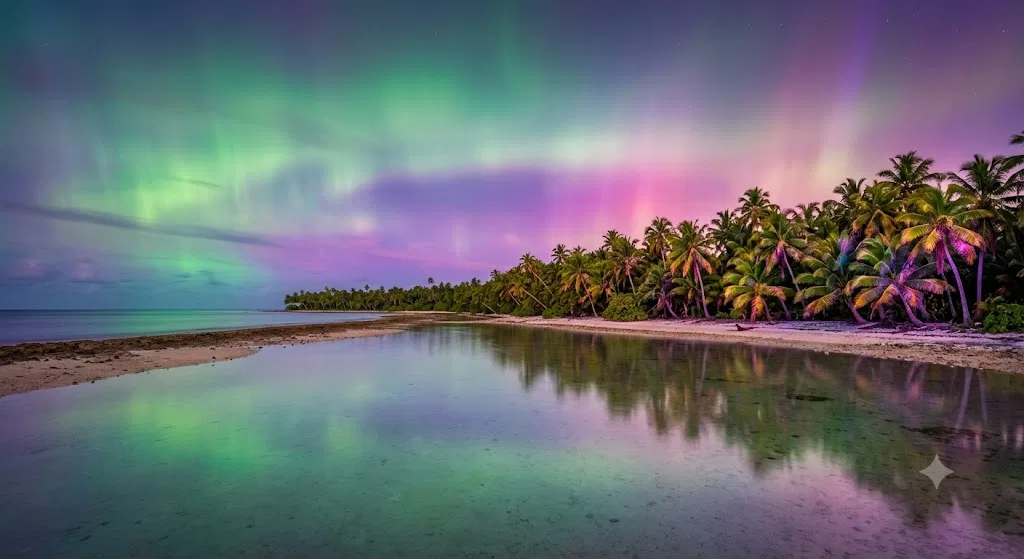
Tuvalu is not rich in the usual Fortean paperwork: there is no famous national UFO flap, no well-attested lake monster, and no grand archive of anomalous rains. Its strange-history record is quieter and more interesting than that.
Page outline Jump by section
Introduction
The key Tuvaluan Fortean themes are creation stories in which animals shape the islands, spirit-founded places, ancestor worship recorded by nineteenth-century visitors, island relics credited with power, and the oddly futuristic idea of a country preserving itself as a “digital nation” if the physical land becomes unliveable. Tuvalu’s Forteana is therefore less about monsters in the shadows than about a haunted geography: land made by myth, guarded by memory, and threatened by the sea. UNESCO’s 2024 Tentative List entry for Tuvalu stresses that oral tradition remains an authoritative source for islanders’ sense of place, while also noting spiritually valued natural features and cultural places predating Christian missionisation.[UNESCO World Heritage Centre]whc.unesco.orgOpen source on unesco.org.
The islands made by an eel and a flounder
The most famous strange story associated with Tuvalu is the creation account of the Eel and the Flounder. In widely repeated summaries of Tuvaluan mythology, the Flounder’s flat body becomes the pattern for the low atolls, while the Eel’s long body becomes the model for the coconut palm. The story is not an “incident report” in the Fortean sense; it is a mythic explanation for why Tuvalu looks and lives as it does: flat land, encircling ocean, and coconut trees central to daily survival.[Wikipedia]WikipediaTuvaluan mythologyTuvaluan mythology
What gives the tale its country-level importance is that it ties the everyday landscape to a living explanatory image. A reader standing on a Tuvaluan atoll does not need a monster sighting to feel the strangeness: the islands themselves are the marvel. They are narrow, low, and exposed, and the story turns that geographical oddity into an argument between beings whose bodies become the template of the world. In this sense, Tuvalu’s creation folklore works rather like geomythology elsewhere: not as geology in disguise, but as a culturally memorable way of making landform, food, animal life, and social identity belong together.
There is also a useful caution here. Modern retellings often flatten oral traditions into a single neat myth, but Tuvalu’s origin stories vary by island. Some accounts describe founders arriving from Samoa or Tonga; others involve spirits, part-spirit ancestors, or localised creation episodes. The Eel and the Flounder is the best-known shared motif, but it should not be treated as the whole of Tuvaluan cosmology.[Wikipedia]WikipediaTuvaluan mythologyTuvaluan mythology
Spirit ancestors and the old sacred order
The richest early written account for Tuvaluan “strange belief” is not a ghost story in a modern tabloid style, but a missionary-and-scientific-era record. In 1896, geologist W. J. Sollas visited Funafuti as part of the Royal Society’s coral reef boring expedition; in 1897, Nature published his “Legendary History of Funafuti, Ellice Group”, based on oral history given by Erivara, chief of Funafuti, with Jack O’Brien interpreting.[Nature]nature.comOpen source on nature.com.
The account matters because it records a layered sacred world before Christianity became dominant. Later summaries drawing on these traditions describe beliefs that moved from reverence for powers of nature, including thunder, lightning, birds, and fishes, towards spirit worship and then towards ritual specialists or spirit-masters who mediated between people and spirits, deities, and sacred objects. One described object was a red stone called Teo; another was Pulau, a hat of red, white, and black pandanus leaves decorated with shells and associated with a deified ancestor.[Wikipedia]WikipediaHistory of TuvaluHistory of Tuvalu
For Fortean readers, the important point is not that these objects were “magical” in a provable laboratory sense. It is that they were treated as charged things in a practical ritual system. Fishing, cultivation, healing, and communal security were not sealed off from the unseen. The oddity lies in how ordinary work and sacred agency overlapped: the sea gave food, storms threatened life, and ancestors or spirit powers could be invoked, feared, or ritually managed.
Christianity changed that landscape dramatically. Sources on Tuvaluan religion note that the introduction of Christianity ended the worship of ancestral spirits and other deities, along with the authority of the old ritual specialists. Modern Tuvalu is overwhelmingly Christian; the Church of Tuvalu is the largest denomination and has a central public role.[Wikipedia]WikipediaOpen source on wikipedia.org.
The Kauga, Tefolaha, and ancestors who do not stay ordinary
One of the most striking features of Tuvaluan legendary history is the way founders and respected figures can move from human memory into spirit significance. Sollas’s Funafuti account includes the Kauga, people said to have swum from Samoa after a wreck; they were respected, remembered in place names, and after death were worshipped as spirits.[Wikipedia]WikipediaOpen source on wikipedia.org.
Nanumean traditions add another layer. Tefolaha, the founding figure of Nanumea, is described in some summaries as part human and part spirit from Tonga. Stories attached to him include contests of names, the departure of earlier female figures Pai and Vau, and a powerful wooden spear, Kaumaile, connected with later heroic episodes. In one account, Lapi calls upon the spirit of Tefolaha while fighting the Tongan giant Tuulapoupou; the remembered phrase associated with Tefolaha is still described as carrying special force in Nanumean tradition.[Wikipedia]WikipediaTuvaluan mythologyTuvaluan mythology
This is classic weird-history material because it refuses a clean split between history, myth, genealogy, and sacred power. A sceptical reading sees these as oral traditions encoding migration, conflict, land claims, and chiefly authority. A believer or tradition-centred reading may treat ancestral presence as more than metaphor. Either way, the stories show why Tuvalu’s “hauntings” are not best sought in abandoned houses. They sit in names, reefs, relics, family lines, and remembered phrases.
Sea-serpents, spirit founders, and island-by-island strangeness
Tuvalu’s island traditions are not uniform, and that is part of their interest. Nanumaga’s founding figure Tepuhi is described in one summary as a spirit in the form of a sea-serpent who came from Fiji, while Niutao traditions describe first inhabitants as half spirit and half human beings. Nui traditions include spirits raising islets from the ocean floor.[Wikipedia]WikipediaTuvaluan mythologyTuvaluan mythology
These motifs sound sensational if ripped out of context — sea-serpent founder, half-spirit inhabitants, islands raised by spirits — but they are better understood as localised sacred histories. In small island societies, origin stories often do several jobs at once. They explain who belongs, where authority comes from, why certain places matter, and how a community relates to the sea that both sustains and threatens it.
The Fortean question is therefore not simply “Was there really a sea-serpent?” A more useful question is: why does a sea-serpent form make sense in this place? In Tuvalu, where human life depends on reading ocean, reef, fish, current, and storm, animal and marine imagery is not decorative. It is part of a worldview in which the non-human world has agency, memory, and moral force.
Sacred animals, food rules, and the everyday uncanny
One of the most concrete consequences of the Eel and the Flounder story is the reported taboo on eating moray eel, linked in some retellings to the eel’s sacred importance. That makes the myth more than a bedtime story: it shapes behaviour around animals and food.[Wikipedia]WikipediaTuvaluan mythologyTuvaluan mythology
This is where Tuvaluan folklore becomes especially interesting for grounded Forteana. Many “strange” traditions around the world look less strange when seen as ecological memory, social rule, or identity marker. A taboo may protect a valued species, distinguish one community from another, or honour a founding story. That does not mean the sacred explanation is fake; it means the sacred explanation lives in the same world as fishing, eating, kinship, and survival.
The same pattern appears in accounts of pre-Christian supernaturals that included worshipped ancestors, culture heroes, and natural phenomena. In a low-lying atoll environment, thunder, birds, fish, reef passages, drought, and storm surge are not background scenery. They are active presences in daily life, and older belief systems treated them accordingly.[everyculture.com]everyculture.comOpen source on everyculture.com.
Why Tuvalu has few famous UFOs or monster cases
A search for Tuvaluan UFO reports turns up little of evidential value. One online UFO listing claims to be preparing or collecting Tuvalu reports, but it provides no substantial case detail in the accessible result and should not be treated as a meaningful archive.[usufocenter.com]usufocenter.comOpen source on usufocenter.com.
That absence is not surprising. Tuvalu is small, remote, sparsely populated, and historically underrepresented in global newspaper and specialist anomaly archives. A country can have rich strange traditions without producing the kinds of reports favoured by twentieth-century Anglophone Fortean collectors: saucer sightings, lake monsters, poltergeist investigations, and “falls from the sky” clippings. In Tuvalu’s case, the better evidence points towards oral tradition, sacred history, ritual memory, and environmental strangeness rather than modern paranormal case files.
This also guards against a common mistake in country-by-country Forteana: padding a page with weak claims just because the topic demands “weird” material. Tuvalu does not need invented UFO drama. Its genuinely unusual record is stronger when treated on its own terms.
The modern uncanny: a country becoming digital before it disappears
The most contemporary strange story about Tuvalu is not supernatural at all, but it has the eerie shape of speculative fiction. In 2022, Tuvalu announced plans to build a digital version of itself, preserving islands, landmarks, history, and culture as rising seas threaten the country’s physical future. Reuters reported the announcement during COP27, and the official Digital Tuvalu project describes digital transformation as a way to help Tuvalu retain identity and continue functioning as a state even if physical land is lost.[Reuters]reuters.comTuvalu turns to the metaverse as rising seas threatenTuvalu turns to the metaverse as rising seas threaten
This is not Forteana in the old sense of a mystery light over a field. It is stranger than that: a sovereign state planning for the possibility of becoming partly archival, partly virtual, partly diasporic. Scholars have argued that Digital Tuvalu brings together climate catastrophe and digital state formation, raising questions about sovereignty, memory, governance, and what a nation is when land becomes unstable.[OUP Academic]academic.oup.comOpen source on oup.com.
For Tuvalu, this digital turn is not a gimmick floating free of culture. UNESCO’s Tuvalu Tentative List entry highlights oral tradition, cultural places, and spiritually valued natural features; other cultural-preservation initiatives discuss digital records, 3D models, oral histories, music, dance, crafts, and controls around sensitive or sacred knowledge.[UNESCO World Heritage Centre]whc.unesco.orgOpen source on unesco.org.
The result is a very modern kind of haunting. The fear is not that the dead will not rest, but that the living may have to remember a homeland that no longer functions as habitable land. A future Tuvaluan child may inherit not only stories of spirit founders and mythic animals, but scans, recordings, virtual landscapes, and legal arguments insisting that a country can survive the loss of ground beneath it.
How sceptics and believers read the same material
Tuvalu’s strange traditions are best approached with two ideas held together. First, they are not laboratory evidence for spirits, sacred stones, sea-serpent ancestors, or animal creators. The sources are oral traditions, missionary-era and colonial-era recordings, later cultural histories, modern summaries, and heritage documents. They require careful reading because translation, Christianisation, outsider interpretation, and later retelling all shape what survives.[Nature]nature.comOpen source on nature.com.
Second, reducing them to “just stories” misses their force. Oral tradition in Tuvalu remains tied to land, identity, family memory, performance, and authority. UNESCO’s description of Tuvalu’s cultural landscape explicitly recognises oral tradition as important and authoritative in islanders’ sense of place.[UNESCO World Heritage Centre]whc.unesco.orgOpen source on unesco.org.
A fair sceptical reading says: these accounts preserve social history, migration memory, environmental observation, and political legitimacy through mythic language. A fair tradition-centred reading says: these stories express real relationships between people, ancestors, place, and non-human powers, whether or not outsiders classify them as literal events. The most evidence-aware position is not to flatten either side. Tuvaluan Forteana lives in the tension between explanation and enchantment.
What belongs in Tuvalu’s weird-history record
The strongest entries for Tuvalu are not random oddities but recurring motifs with cultural depth:
- Creation through animal bodies: the Eel and the Flounder explain the form of atolls, coconut palms, day, sea, and sky in a compact mythic drama.[Wikipedia]WikipediaTuvaluan mythologyTuvaluan mythology
- Spirit founders and ancestral power: figures such as Tefolaha, Tepuhi, and the Kauga show how migration memory, genealogy, and sacred presence overlap.[Wikipedia]WikipediaTuvaluan mythologyTuvaluan mythology
- Ritual objects and old sacred specialists: accounts of Teo, Pulau, and spirit-masters point to a pre-Christian ritual order in which healing, fishing, crops, and spirits were connected.[Wikipedia]WikipediaHistory of TuvaluHistory of Tuvalu
- A landscape becoming archive: Digital Tuvalu turns climate vulnerability into one of the strangest sovereignty questions on Earth: can a threatened island country preserve not only records, but political and cultural continuity, in digital form?[Reuters]reuters.comTuvalu turns to the metaverse as rising seas threatenTuvalu turns to the metaverse as rising seas threaten
This makes Tuvalu a distinctive Fortean country page. Its weirdness is not loud, lurid, or case-file heavy. It is quieter and more unsettling: a nation whose land is explained by mythic animals, whose older sacred order linked ancestors and natural forces, and whose modern future may depend on preserving place when place itself is under threat.

Amazon book picks
Further Reading
Books and field guides related to Why Does Tuvalu's Landscape Feel So Enchanted?. Use these as the next step if you want deeper reading beyond the article.
The happy isles of Oceania
Offers engaging context for life and culture across Pacific islands.
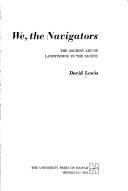
We, the navigators
Provides essential cultural background for Pacific island traditions including Tuvalu.
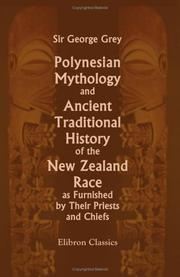
Polynesian Mythology and Ancient Traditional History of the N...
First published 2005.
Vaka Moana, Voyages of the Ancestors
First published 2007. Subjects: Polynesians, Navigation, Migrations, Discovery and exploration, Entdeckung.
eBay marketplace picks
Marketplace Samples
Live-tested eBay searches with available results related to this page.
Endnotes
1.
Source: whc.unesco.org
Link:https://whc.unesco.org/en/tentativelists/6707/
2.
Source: whc.unesco.org
Link:https://whc.unesco.org/en/news/2666
3.
Source: Wikipedia
Title: Tuvaluan mythology
Link:https://en.wikipedia.org/wiki/Tuvaluan_mythology
4.
Source: nature.com
Link:https://www.nature.com/articles/055353a0
5.
Source: Wikipedia
Title: History of Tuvalu
Link:https://en.wikipedia.org/wiki/History_of_Tuvalu
6.
Source: Wikipedia
Link:https://en.wikipedia.org/wiki/Tuvalu
7.
Source: Wikipedia
Title: Religion in Tuvalu
Link:https://en.wikipedia.org/wiki/Religion_in_Tuvalu
8.
Source: Wikipedia
Link:https://en.wikipedia.org/wiki/Tutanga
9.
Source: everyculture.com
Link:https://www.everyculture.com/Oceania/Tuvalu-Religion-and-Expressive-Culture.html
10.
Source: usufocenter.com
Link:https://www.usufocenter.com/ufo-sighting-reports/worldwide/tuvalu-ufo-sightings.html
11.
Source: reuters.com
Title: Tuvalu turns to the metaverse as rising seas threaten
Link:https://www.reuters.com/business/cop/tuvalu-turns-metaverse-rising-seas-threaten-existence-2022-11-15/
12.
Source: tuvalu.tv
Link:https://www.tuvalu.tv/about
13.
Source: academic.oup.com
Link:https://academic.oup.com/ia/article/100/4/1491/7710472
14.
Source: archive.org
Link:https://archive.org/stream/Aquaculture_Resource_Use_and_the_Environment_by_Claude_Boyd_Aaron_McNevin/Aquaculture_Resource_Use_and_the_Environment_by_Claude_Boyd_Aaron_McNevin_djvu.txt
15.
Source: archive.org
Title: fisheriesreviewv019688mbp djvu.txt
Link:https://archive.org/stream/fisheriesreviewv019688mbp/fisheriesreviewv019688mbp_djvu.txt
16.
Source: archive.org
Link:https://archive.org/stream/mobot31753002242078/mobot31753002242078_djvu.txt
17.
Source: archive.org
Title: Jan 11 1986, Financial Times, #29826, UK (en) djvu.txt
Link:https://archive.org/stream/FinancialTimes1986UKEnglish/Jan%2011%201986%2C%20Financial%20Times%2C%20%2329826%2C%20UK%20%28en%29_djvu.txt
18.
Source: archive.org
Link:https://www.archive.org/stream/NEW_1/NEW.txt
19.
Source: archive.org
Link:https://archive.org/download/mobywordlists03201gut/COMPOUND.TXT
20.
Source: archive.org
Title: Sep 24 1982, Financial Times, #28883, UK (en) djvu.txt
Link:https://archive.org/stream/FinancialTimes1982UKEnglish/Sep%2024%201982%2C%20Financial%20Times%2C%20%2328883%2C%20UK%20%28en%29_djvu.txt
21.
Source: archive.org
Title: Aug 22 1989, Financial Times, #30927, UK (en) djvu.txt
Link:https://archive.org/stream/FinancialTimes1989UKEnglish/Aug%2022%201989%2C%20Financial%20Times%2C%20%2330927%2C%20UK%20%28en%29_djvu.txt
22.
Source: archive.org
Title: Dec 19 1986, Financial Times, #30114, UK (en) djvu.txt
Link:https://archive.org/stream/FinancialTimes1986UKEnglish/Dec%2019%201986%2C%20Financial%20Times%2C%20%2330114%2C%20UK%20%28en%29_djvu.txt
23.
Source: archive.org
Title: 2015.154604.Fisheries Review Vol39 No3 1994 djvu.txt
Link:https://archive.org/stream/in.ernet.dli.2015.154604/2015.154604.Fisheries-Review-Vol39-No3-1994_djvu.txt
24.
Source: ich.unesco.org
Link:https://ich.unesco.org/en/lists
25.
Source: unesdoc.unesco.org
Link:https://unesdoc.unesco.org/ark%3A/48223/pf0000366838
26.
Source: ich.unesco.org
Title: tuvalu TV
Link:https://ich.unesco.org/en/state/tuvalu-TV
27.
Source: whc.unesco.org
Link:https://whc.unesco.org/fr/etatsparties/tv
28.
Source: Wikipedia
Title: Ghosts in Polynesian culture
Link:https://en.wikipedia.org/wiki/Ghosts_in_Polynesian_culture
29.
Source: Wikipedia
Title: Ancient Celtic religion
Link:https://en.wikipedia.org/wiki/Ancient_Celtic_religion
30.
Source: Wikipedia
Title: William Johnson Sollas
Link:https://en.wikipedia.org/wiki/William_Johnson_Sollas
31.
Source: context.news
Title: tuvalu preserves history online as rising seas threaten existence
Link:https://www.context.news/climate-risks/tuvalu-preserves-history-online-as-rising-seas-threaten-existence
32.
Source: reuters.com
Title: sinking tuvalu fights keep maritime boundaries sea levels rise 2024 09 24
Link:https://www.reuters.com/investigations/sinking-tuvalu-fights-keep-maritime-boundaries-sea-levels-rise-2024-09-24/
33.
Source: youtube.com
Link:https://www.youtube.com/watch?v=xpUNqWOU540
34.
Source: facebook.com
Link:https://www.facebook.com/100044449415680/posts/question-pulotu-the-underworld-in-samoan-mythology-what-do-you-know-about-it-wor/503744819643348/
35.
Source: thecommonwealth.org
Link:https://thecommonwealth.org/our-member-countries/tuvalu
36.
Source: theguardian.com
Link:https://www.theguardian.com/world/tuvalu
37.
Source: worldheritageexplorer.org
Link:https://www.worldheritageexplorer.org/countries/tuvalu.html
38.
Source: dbc.wroc.pl
Link:https://dbc.wroc.pl/Content/17275/PDF/19426.pdf
39.
Source: biodiversitylibrary.org
Link:https://biodiversitylibrary.org/page/15627962
Additional References
40.
Source: youtube.com
Title: Government of Tuvalu
Link:https://www.youtube.com/watch?v=b7QKboSOxUw
Source snippet
'First digital nation': Tuvalu turns to metaverse as rising seas threaten existence...
41.
Source: youtube.com
Title: TUVALU: THE COUNTRY THAT IS DISAPPEARING BENEATH THE SEA
Link:https://www.youtube.com/watch?v=swBF-fFfLjo
Source snippet
Government of Tuvalu - The First Digital Nation (case study)...
42.
Source: facebook.com
Link:https://www.facebook.com/TheNTNews/posts/can-neither-confirm-or-deny-northern-territory-police-have-received-multiple-ufo/1505194630956170/
43.
Source: researchgate.net
Link:https://www.researchgate.net/publication/350607410_Gods_Spirits_and_Natural_Hazards_Ontologies_and_Epistemologies_of_Natural_Hazards_and_Climate_Change_in_Kiribati_and_Papua_New_Guinea
44.
Source: researchgate.net
Link:https://www.researchgate.net/publication/342222568_Oral_Traditions_Cultural_Significance_of_Storytelling_and_Samoan_Understandings_of_Place_or_Fanua
45.
Source: folkknowledgeplace.org
Link:https://folkknowledgeplace.org/article/155807-tides-of-belonging-and-resilience-exploring-social-capital-and-cultural-preservation-among-tuvaluan-migrants-in-new-zealand
46.
Source: findanexpert.unimelb.edu.au
Link:https://findanexpert.unimelb.edu.au/news/63315-supernatural-beliefs-have-featured-in-every-society-throughout-history.-new-research-helps-explain-why
47.
Source: instagram.com
Link:https://www.instagram.com/reel/B78BRhvBJNu/
48.
Source: frieze.com
Link:https://www.frieze.com/article/celeste-olalquiaga-tuvalu-issue-234
49.
Source: facebook.com
Link:https://www.facebook.com/AusHCfnfu/posts/high-commissioner-2nd-secretary-aditi-and-spm-lilia-were-honoured-to-join-the-na/1270913065084296/
Topic Tree
Follow this branch
Related pages 192
- Afghan Forteana
- Antigua Uncanny
- Bosnian Mysteries
- Botswana Weird
- Brazil Strange
- +187 more in sidebar