When Malawi's Rumours Became Public Events
Malawi’s strongest Fortean material is not a tidy catalogue of UFOs and lake serpents.
Page outline Jump by section
Introduction
The best-documented cases are the “blood-sucker” panics of 2002 and 2017, when rumours of vampires or magical blood collectors led to vigilante attacks, arrests and official intervention. Alongside those sit the 2005 haunted-palace affair, Lake Malawi’s monster-like ritual imagery, and the so-called “terror beast” reports from Dowa in 2003, probably rooted in real animal attacks rather than cryptozoology. Taken together, Malawi’s Forteana is a study in how the uncanny becomes socially powerful even when the evidence remains fragile.
The blood-sucker panics: Malawi’s most serious modern weird case
The most internationally reported Fortean episode in Malawi is the vampire or “blood-sucker” panic that spread through southern districts in 2017. Reuters reported that the United Nations pulled staff out of parts of southern Malawi after a vampire scare triggered mob violence in Phalombe and Mulanje, with rumours that people were attacking victims to drink or collect their blood. The same news agency later reported that police had arrested around 200 suspected vigilantes connected with attacks on people accused of vampirism.[Reuters]reuters.comvampire scare prompts un pullout from southern malawi id USKBN1CE25CVampire scare prompts UN pullout from southern MalawiOct 10, 2017 — The United Nations said on Monday it has pulled staff out of t…
What makes the episode important is not that there was good evidence for vampires. There was not. It matters because the rumour had real-world force. Reuters and VOA both reported that President Peter Mutharika publicly addressed the scare, warned against witchcraft-related terror, and urged chiefs and communities to stop the violence. VOA reported six deaths at the time of the president’s intervention, while later reports and analyses described the toll as higher as the panic spread and arrests mounted.[reuters.com]reuters.comOpen source on reuters.com.
The rumours were not merely gothic window dressing borrowed from European vampire fiction. Reports described “blood suckers” as people who used gases, needles, vehicles, secrecy and connections to power. That mixture matters. It places the panic closer to a modern conspiracy rumour than to a cape-and-coffin vampire tale. UN Dispatch summarised local claims that blood suckers were said to use suffocation gas before draining blood, while Scotland Malawi Partnership warned that sensational foreign reporting often missed the cultural and social context behind the fear.[undispatch.com]undispatch.comlynch mobs southern malawi hunt vampires no reallylynch mobs southern malawi hunt vampires no really
The 2017 panic also had a history. Contemporary reports linked it to earlier vampire rumours in Malawi in 2002, when vigilante violence had also broken out. Reuters and Time both noted the 2002 precedent, while anthropologist Adam Ashforth’s article “When the Vampires Come for You” examined Malawi blood-sucker rumours as a serious social phenomenon rather than a comic superstition.[Time]time.comVigilante 'Vampire-Hunters' Have Killed Five People in MalawiVigilante 'Vampire-Hunters' Have Killed Five People in Malawi
For a Fortean reader, the key lesson is that “vampire” is not the same category everywhere. In Malawi’s modern panics, the figure of the blood sucker appears at the junction of witchcraft belief, distrust of authority, fear of outsiders, economic stress, aid politics and local insecurity. Believers interpreted the rumours as evidence of hidden predation. Sceptics interpreted them as moral panic and misinformation. The grim middle ground is that whatever caused the rumours, the victims of the panic were real.
Witchcraft law, belief and the problem of proving the invisible
Malawi’s vampire scares sit within a broader legal and cultural tension around witchcraft. The country’s Witchcraft Act, a colonial-era law still available through MalawiLII, criminalises accusing someone of witchcraft, employing witch-finders, representing oneself as having witchcraft powers, and trials by ordeal. In other words, the law is aimed less at proving supernatural harm than at preventing the social violence that follows accusations.[Malawi Legal Information Institute]malawilii.orgOpen source on malawilii.org.
That legal structure creates a practical problem. Many people believe witchcraft exists, but the state cannot easily test or prove an invisible magical offence in court. Afrobarometer reported in 2022 that most Malawians surveyed believed in witchcraft and supported changing the law to criminalise its practice. Adam Ashforth’s work on witchcraft, justice and human rights in Malawi argues that a strictly rationalist legal response may protect accused people, but it does not necessarily make witchcraft narratives lose their plausibility for communities living with fear and misfortune.[afrobarometer.org]afrobarometer.orgOpen source on afrobarometer.org.
This matters for country-level Forteana because Malawi’s weird reports are not just stories told for entertainment. They can become allegations, social diagnoses, political accusations and legal dilemmas. A claim that someone is a blood sucker or witch is not harmless folklore when it can lead to beatings, exile or death. The Fortean interest lies in the way an unverified claim travels through a community and changes behaviour before anyone has established what, if anything, happened.
A sceptical reading does not require sneering at belief. It asks what work the belief is doing. In the vampire panics, blood-sucker rumours offered a frightening explanation for vulnerability: illness, poverty, official mistrust, strange encounters at night, and the sense that powerful people might be extracting life from ordinary people. That does not make the vampire real. It does help explain why the rumour could feel emotionally convincing.
The haunted palace affair: when a ghost story became a state matter
In March 2005, Malawi produced one of the stranger press-freedom stories in modern African politics. Journalists Raphael Tenthani and Mabvuto Banda were arrested after reporting that President Bingu wa Mutharika had left the presidential palace because he believed it was haunted. The Guardian reported that the story quoted the president’s religious affairs adviser, Rev Malani Mtonga, as saying Mutharika had heard “strange noises” and felt “a strange presence” at night; Mtonga later denied making the statements.[The Guardian]theguardian.comThe Guardian Reporters held over 'haunted house' story released | MediaThe Guardian Reporters held over 'haunted house' story released | Media
The Mail & Guardian reported a still more vivid version: strange noises, sensations of rodents crawling on the body, and nothing visible when the lights were switched on. The journalists were charged with publishing false information, while the Committee to Protect Journalists recorded the case as an attack on the press arising from a report about fears that the palace was haunted.[Mail & Guardian]mg.co.zaMail & Guardian Journalists arrested over presidential ghost reportMail & Guardian Journalists arrested over presidential ghost report
As a ghost case, the evidence is weak. It rests on disputed reported remarks, political denial and media amplification. As a Fortean event, however, it is excellent: a rumour about unseen presences in a grand state building became a matter for police, courts, journalists and international media. The “haunting” was never established, but the fear of ridicule was very real. CPJ later noted that the journalists were detained overnight and charged with publishing a false story likely to cause public fear, with an additional charge of causing ridicule to the office of the president reportedly added later.[Refworld]refworld.orgOpen source on refworld.org.
The case shows how ghost stories can become political instruments. For some readers, the image of a ruler unsettled by a haunted palace was irresistibly comic. For the state, it could look like reputational sabotage. For press-freedom observers, the issue was not whether there were ghosts, but whether journalists could report an embarrassing claim without arrest. Malawi’s haunted-palace story therefore belongs less to the “proof of ghosts” shelf than to the “what ghost stories reveal about power” shelf.
Lake Malawi: monsters, ritual creatures and the lure of deep water
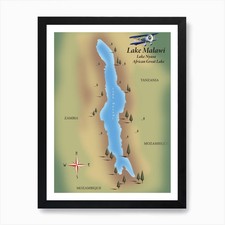
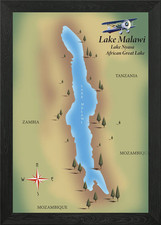
Lake Malawi is exactly the sort of place that attracts monster stories: vast, deep, beautiful, biologically extraordinary and shared by communities with long histories of fishing, travel and ritual life. UNESCO describes Lake Malawi National Park as globally important for freshwater biodiversity, with exceptional diversity among cichlid fishes and very high endemism. The lake’s real natural strangeness is already impressive before any monster is added.[UNESCO World Heritage Centre]whc.unesco.orgWorld Heritage Centre Lake Malawi National ParkWorld Heritage Centre Lake Malawi National Park
Claims about a Lake Nyasa or Lake Malawi monster circulate in cryptozoological lists, often in thinly sourced form. The most responsible reading is cautious: there is a lake-monster motif attached to the wider lake, but it is not supported by a strong modern evidential trail of photographs, specimens, official investigations or well-documented sightings. The better-attested “monster” material is cultural and ritual rather than zoological.
One example is the Namungumi or Nalumgumi, described in folklore reference writing as a whale-like or water-creature figure associated with Yao initiation traditions in Malawi, Mozambique and Tanzania. A University of Malawi thesis on environmental consciousness in Malawian oral traditions notes the use of animal metaphors in Yawo songs and identifies Namungumi as an important whale symbol.[A Book of Creatures]abookofcreatures.comA Book of Creatures NamungumiA Book of Creatures Namungumi
That distinction matters. A creature in ritual art or initiation language is not the same thing as a living unknown animal in the lake. Folkloric beings can encode water, kinship, danger, fertility, adulthood, secrecy or moral instruction. Cryptozoology often flattens them into “lake monsters”, but Malawi’s material is more interesting when left in its own setting: a deep lake whose symbolic life is as rich as its ecology.
A sceptic might explain lake-monster impressions through waves, hippos, crocodiles, otters, large fish, floating vegetation, distance, glare and expectation. A believer might see in the same reports a memory of something older or stranger. The evidence favours caution. The cultural pull is obvious: deep water invites deep stories.
Masked spirits are not cryptids, but they shape Malawi’s uncanny imagination
Any discussion of Malawi’s strange traditions has to handle Gule Wamkulu carefully. UNESCO recognises Gule Wamkulu as an intangible cultural heritage practice of the Chewa people of Malawi, Mozambique and Zambia, performed by Nyau dancers wearing masks and costumes that may represent wild animals, spirits and a wide range of social characters.[UNESCO ICH]ich.unesco.orgOpen source on unesco.org.
To an outsider, a masked figure emerging in dust, drums and secrecy may look like “monster folklore”. That is too crude. Gule Wamkulu is a living cultural and ritual performance, not a cryptid hunt. The World Encyclopedia of Puppetry Arts describes it as a ritual dance performed by initiated members of the Nyau brotherhood, while UNESCO places it within ceremonies and social life rather than paranormal spectacle.[World Encyclopedia of Puppetry Arts]wepa.unima.orgWorld Encyclopedia of Puppetry Arts Malawi | World Encyclopedia of Puppetry ArtsWorld Encyclopedia of Puppetry Arts Malawi | World Encyclopedia of Puppetry Arts
Its relevance to Forteana is not that the masks are “real monsters”. It is that Malawi’s uncanny landscape includes recognised traditions in which the boundary between person, animal, ancestor, spirit and social satire is deliberately performed. The masked figure is human and more-than-human in the dramatic logic of the event. That ambiguity is exactly the kind of charged cultural space where outsiders often misread symbolism as literal supernatural claim.
The evidence-aware approach is therefore to treat Gule Wamkulu as heritage, not as a spooky curiosity. It belongs in Malawi’s strange-history page because it helps explain how spirit imagery, animal forms and secrecy can carry serious social meaning. It should not be stripped from that context and repackaged as a monster sighting.
The “terror beast” of Dowa: cryptid headline, probable animal attack
In 2003, international and online retellings circulated the story of a “Malawi terror beast” in the Dowa district, north of Lilongwe. The account usually describes villagers fleeing attacks by a mysterious animal that killed and maimed people. Later summaries identify the likely culprit as a rabid spotted hyena, with thousands of people reportedly fleeing to a district centre for safety.[Wikipedia]WikipediaMalawi Terror BeastMalawi Terror Beast
This is a good example of how a real animal can become a Fortean animal. A rabid or otherwise abnormal predator does not behave like the ordinary creature people think they know. It may attack by day, approach settlements, fail to avoid humans, or inflict injuries that seem excessive and uncanny. The “monster” label grows in the gap between familiar animal behaviour and terrifying experience.
Hyenas already carry a heavy symbolic burden in many African traditions. Broad African folklore often links hyenas with night, witchcraft, grave-robbing, shapeshifting, moral inversion or dangerous appetite, though beliefs vary greatly by region and should not be treated as one single African idea. Sources on hyena folklore emphasise that the animal’s reputation is often far darker in human imagination than its ecological role warrants.[rangerbucksafaris.com]rangerbucksafaris.comOpen source on rangerbucksafaris.com.
For Malawi, the Dowa beast is best read as a case of ecological reality acquiring legendary shape. People were reportedly harmed; communities were frightened; a dangerous animal was blamed. But the strongest explanation remains naturalistic: a hyena, possibly rabid, not an unknown species. The Fortean value lies in the transformation of a wildlife emergency into a monster narrative.
Why Malawi’s strange stories keep returning to blood, spirits and authority
Malawi’s weird-history record has recurring motifs. Blood-sucker rumours ask who is secretly draining life from ordinary people. Witchcraft accusations ask who is causing hidden harm. Ghost stories around a palace ask whether power itself is haunted. Masked spirit traditions dramatise the presence of ancestors, animals and moral forces in public space. Lake creatures turn deep water into a stage for uncertainty.
These motifs are not random. They cluster around vulnerability. Blood, illness, night travel, poverty, official secrecy, initiation, death, animal attack and the lake are all places where ordinary explanation can feel insufficient. Fortean stories flourish in precisely those gaps: where something happens, where people are afraid, and where the available explanation does not satisfy everyone.
The believer’s interpretation is that Malawi’s strange reports point towards a world in which spiritual forces, hidden agents and ancestral presences remain active. The sceptical interpretation is that the reports show how rumour, misidentification, political mistrust, ecological danger and cultural symbolism can create powerful experiences without requiring paranormal causes. The humane interpretation is that both the stories and the consequences deserve attention.
Malawi’s Forteana is therefore not best approached as a hunt for one spectacular monster or one definitive haunting. Its strongest cases show something more unsettling: claims do not need to be proven supernatural to reshape public life. In Malawi, the uncanny has entered newspapers, courts, presidential politics, heritage debates, police work, village safety and international aid operations. That is why the country’s strange reports still matter.
Amazon book picks
Further Reading
Books and field guides related to When Malawi's Rumours Became Public Events. Use these as the next step if you want deeper reading beyond the article.

The anthropology of religion, magic, and witchcraft
First published 2007. Subjects: Anthropology of religion, Religion, Religion and culture, Anthropology.

Dark star safari
First published 2002. Subjects: Journeys, Description and travel, Africa, description and travel, New York Times reviewed, Travel.
eBay marketplace picks
Marketplace Samples
Live-tested eBay searches with available results related to this page.
Endnotes
1.
Source: reuters.com
Title: vampire scare prompts un pullout from southern malawi id USKBN1CE25C
Link:https://www.reuters.com/article/world/vampire-scare-prompts-un-pullout-from-southern-malawi-idUSKBN1CE25C/
Source snippet
Vampire scare prompts UN pullout from southern MalawiOct 10, 2017 — The United Nations said on Monday it has pulled staff out of t...
2.
Source: reuters.com
Title: malawi vigilante arrests rise to 200 in vampire scare id USKBN1CT2CV
Link:https://www.reuters.com/article/world/malawi-vigilante-arrests-rise-to-200-in-vampire-scare-idUSKBN1CT2CV/
3.
Source: reuters.com
Link:https://www.reuters.com/article/world/malawi-president-to-crack-down-on-vampires-witchcraft-after-lynchings-idUSKBN1CI25Y/
4.
Source: undispatch.com
Title: lynch mobs southern malawi hunt vampires no really
Link:https://undispatch.com/lynch-mobs-southern-malawi-hunt-vampires-no-really/
5.
Source: time.com
Title: Vigilante ‘Vampire-Hunters’ Have Killed Five People in Malawi
Link:https://time.com/4977213/vampire-mob-killing-scare-un-malawi/
6.
Source: jstor.org
Link:https://www.jstor.org/stable/26549656
7.
Source: malawilii.org
Link:https://malawilii.org/akn/mw/act/1911/4/eng%402014
8.
Source: afrobarometer.org
Link:https://www.afrobarometer.org/articles/most-malawians-believe-in-the-existence-of-witchcraft-and-support-criminalising-it/
9.
Source: jstor.org
Link:https://www.jstor.org/stable/43905004
10.
Source: cpj.org
Title: two journalists arrested after writing about presi
Link:https://cpj.org/2005/03/two-journalists-arrested-after-writing-about-presi/
11.
Source: refworld.org
Link:https://www.refworld.org/reference/annualreport/cpj/2006/en/44842
12.
Source: whc.unesco.org
Title: World Heritage Centre Lake Malawi National Park
Link:https://whc.unesco.org/en/list/289/
13.
Source: ich.unesco.org
Link:https://ich.unesco.org/en/RL/gule-wamkulu-00142
14.
Source: Wikipedia
Title: Malawi Terror Beast
Link:https://en.wikipedia.org/wiki/Malawi_Terror_Beast
15.
Source: rangerbucksafaris.com
Link:https://rangerbucksafaris.com/hyenas-in-african-culture/
16.
Source: Wikipedia
Link:https://en.wikipedia.org/wiki/Hyena
17.
Source: jstor.org
Link:https://www.jstor.org/stable/10.13110/narrcult.8.2.0240
18.
Source: reuters.com
Link:https://www.reuters.com/article/world/malawi-vampirism-mania-spreads-as-two-die-in-mob-violence-idUSKBN1CO2DQ/
19.
Source: reuters.com
Title: malawi president at inauguration pledges to root out corruption id USKCN1T11VG
Link:https://www.reuters.com/article/world/malawi-president-at-inauguration-pledges-to-root-out-corruption-idUSKCN1T11VG/
20.
Source: reuters.com
Title: malawis mutharika sworn second term president 2025 10 04
Link:https://www.reuters.com/world/africa/malawis-mutharika-sworn-second-term-president-2025-10-04/
21.
Source: media.malawilii.org
Link:https://media.malawilii.org/media/legislation/11728/source_file/1911-4.pdf
22.
Source: malawilii.org
Title: Witchcraft Act
Link:https://malawilii.org/akn/mw/act/1911/4/eng%402014-12-31/provision/sec_6
23.
Source: ich.unesco.org
Link:https://ich.unesco.org/en/video/41676
24.
Source: whc.unesco.org
Link:https://whc.unesco.org/document/180695
25.
Source: Wikipedia
Link:https://en.wikipedia.org/wiki/Werehyena
26.
Source: Wikipedia
Title: List of lake monsters
Link:https://en.wikipedia.org/wiki/List_of_lake_monsters
27.
Source: Wikipedia
Title: Lake Malawi
Link:https://en.wikipedia.org/wiki/Lake_Malawi
28.
Source: voanews.com
Link:https://www.voanews.com/a/malawi-president-crack-down-vampires-witchcraft-after-lynchings/4069571.html
29.
Source: theguardian.com
Title: The Guardian Reporters held over ‘haunted house’ story released | Media
Link:https://www.theguardian.com/media/2005/mar/17/pressandpublishing.internationalnews
30.
Source: mg.co.za
Title: Mail & Guardian Journalists arrested over presidential ghost report
Link:https://mg.co.za/news/south-africa/2005-03-15-journalists-arrested-over-presidential-ghost-report/
31.
Source: abookofcreatures.com
Title: A Book of Creatures Namungumi
Link:https://abookofcreatures.com/2021/04/30/namungumi/
32.
Source: wepa.unima.org
Title: World Encyclopedia of Puppetry Arts Malawi | World Encyclopedia of Puppetry Arts
Link:https://wepa.unima.org/en/malawi/
33.
Source: villains.fandom.com
Title: Malawi Terror Beast
Link:https://villains.fandom.com/wiki/Malawi_Terror_Beast
34.
Source: theguardian.com
Title: outrage hiv positive man slept with 100 women gets two year sentence
Link:https://www.theguardian.com/global-development/2016/nov/23/outrage-hiv-positive-man-slept-with-100-women-gets-two-year-sentence
35.
Source: researchgate.net
Link:https://www.researchgate.net/profile/Adam-Ashforth
36.
Source: naturalworldheritagesites.org
Title: Lake Malawi National Park
Link:https://www.naturalworldheritagesites.org/sites/lake-malawi-national-park
37.
Source: ecoi.net
Link:https://www.ecoi.net/en/file/local/1085201/1930_1390210386_q17414-malawi.pdf
38.
Source: abookofcreatures.com
Title: lake monsters
Link:https://abookofcreatures.com/category/lake-monsters/
39.
Source: abookofcreatures.com
Link:https://abookofcreatures.com/tag/whales/
40.
Source: abookofcreatures.com
Link:https://abookofcreatures.com/tag/african-folklore/
41.
Source: ebsco.com
Link:https://www.ebsco.com/research-starters/science/lake-malawi
42.
Source: mg.co.za
Title: 2026 05 13 malawi s century old witchcraft law leaves door open to mob killings
Link:https://mg.co.za/news/africa/2026-05-13-malawi-s-century-old-witchcraft-law-leaves-door-open-to-mob-killings/
43.
Source: news.mongabay.com
Link:https://news.mongabay.com/list/freshwater-fish/page/2/
44.
Source: humbo.com
Title: Lake Malawi National Park
Link:https://humbo.com/mw/lake-malawi-national-park
Additional References
45.
Source: facebook.com
Link:https://www.facebook.com/illustratedmenagerie/posts/the-maunnyuk-meaning-corpse-salamander-in-the-language-of-the-akanuk-is-a-massiv/3499282440164094/
46.
Source: facebook.com
Link:https://www.facebook.com/MalawiLawCommission/posts/40-prevention-and-suppression-of-witchcraft-the-commission-has-provided-for-vari/1953932371443173/
47.
Source: facebook.com
Link:https://www.facebook.com/groups/dullmensclub/posts/1902137893776076/
48.
Source: facebook.com
Link:https://www.facebook.com/MalawiLawCommission/posts/chairperson-of-the-special-law-commission-on-the-review-of-the-witchcraft-act-ho/1953374371498973/
49.
Source: facebook.com
Link:https://www.facebook.com/Bonvoyageclubmw/posts/the-spirits-of-namizimuby-chimwemwe-nyirendaif-you-enjoy-the-peace-and-quietness/10156784140951794/
50.
Source: reddit.com
Link:https://www.reddit.com/r/askscience/comments/6khe99/there_are_thousands_of_seemingly_isolated_bodies/
51.
Source: researchgate.net
Link:https://www.researchgate.net/publication/282018873_Hunting_the_Vulnerable_Witchcraft_and_the_Law_in_Malawi
52.
Source: facebook.com
Link:https://www.facebook.com/fivestarstrave/posts/is-it-true-that-there-are-ghosts-at-nguru-ya-nawambe-in-kasungu-answer-no-some-p/1564322132361472/
53.
Source: facebook.com
Link:https://www.facebook.com/MalawiDailyMailbreakingnews/posts/it-rained-fish-in-thailand-today-according-to-bbc-newswonders-of-god-how-will-sc/863815960406555/
54.
Source: facebook.com
Link:https://www.facebook.com/lilongwewildlifetrust/posts/just-add-water-%EF%B8%8F-after-just-a-few-weeks-of-rain-liwonde-national-park-is-lush-an/543857191111486/
Topic Tree
Follow this branch
Related pages 192
- Afghan Forteana
- Antigua Uncanny
- Bosnian Mysteries
- Botswana Weird
- Brazil Strange
- +187 more in sidebar