Within DR Congo Strange
When a Mystery Ape Became Real Biology
The Bili apes began as rumours of giant fearless apes, but fieldwork turned the mystery into a serious chimpanzee conservation story.
On this page
- Rumours of giant ground nesting apes
- What genetic and field research found
- Why the real animal is still remarkable
Page outline Jump by section
Introduction
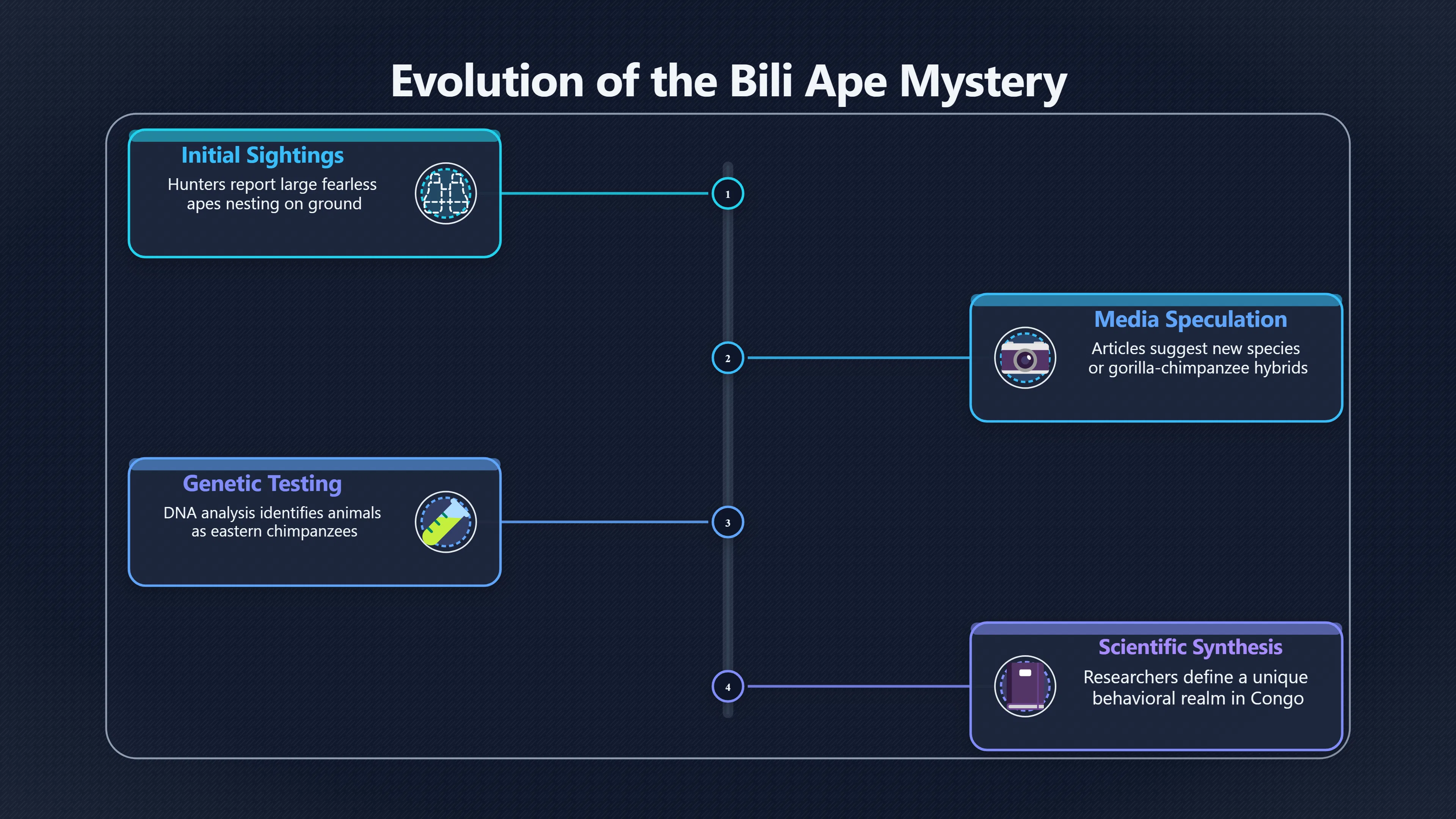
The story of the Bili apes is unusual because it begins as a classic cryptozoological mystery but ends as a genuine scientific discovery of a different kind. Early reports from the remote Bili-Uéré region of northern Democratic Republic of the Congo described enormous, fearless apes that nested on the ground like gorillas yet behaved in other ways like chimpanzees. Some observers even wondered whether they had found a new species or a hybrid between gorillas and chimpanzees. Subsequent field research and genetic testing showed that the mystery animals were not an unknown ape after all. They were eastern chimpanzees—but a population with distinctive behaviour, ecology and conservation importance that had barely been studied before. Rather than diminishing the story, that outcome made it one of the most interesting examples of a Fortean-style mystery becoming real biology.
Rumours of giant ground-nesting apes
Northern DR Congo remained one of Africa’s least-studied regions during the late twentieth century because of conflict, poor infrastructure and the sheer scale of the forest. Hunters and local communities described unusually large chimpanzees that appeared less fearful of humans than expected. Some accounts claimed they walked the ground more often than ordinary chimpanzees, built nests on the forest floor and could even confront lions.
These reports attracted international attention in the early 2000s. Wildlife photographer Karl Ammann and others documented unusual skulls, large footprints and extensive ground nests. Media coverage quickly transformed the animals into the “Bili apes” or “Bondo mystery apes”, with speculation ranging from an undiscovered chimpanzee species to a chimpanzee–gorilla hybrid. Popular articles emphasised their apparent size, calm behaviour around people and gorilla-like nesting habits, turning them into one of Africa’s best-known modern mystery-animal stories.[Wikipedia]WikipediaBili apeBili ape
The appeal was understandable. Ground nests were generally associated with gorillas, while chimpanzees were thought to spend most nights sleeping in nests built high in trees. Finding a population that apparently blurred those expectations seemed to hint at something extraordinary.
What genetic and field research found
Once long-term scientific studies became possible, the picture changed dramatically. Hair, faeces and other biological samples underwent genetic analysis, which consistently identified the animals as eastern chimpanzees (Pan troglodytes schweinfurthii), not a separate species or a hybrid.[Wikipedia]WikipediaBili apeBili ape
The disappearance of the “new species” claim did not end the scientific interest. Primatologist Thurston Hicks and colleagues spent years documenting chimpanzees across the wider Bili-Uéré landscape. Instead of finding one isolated oddity, they uncovered one of the largest known continuous chimpanzee populations in Central Africa, occupying forests, woodland and patches of savannah over an immense area. Their research argued that Bili-Uéré represents a distinctive behavioural realm, meaning a broad population sharing characteristic traditions and ecological adaptations rather than unusual genes.[PubMed]pubmed.ncbi.nlm.nih.govape relatives. About half of the world's remaining… Here we describe the insect-related tool technology of Bili-Uéré chimpanzees…Re…
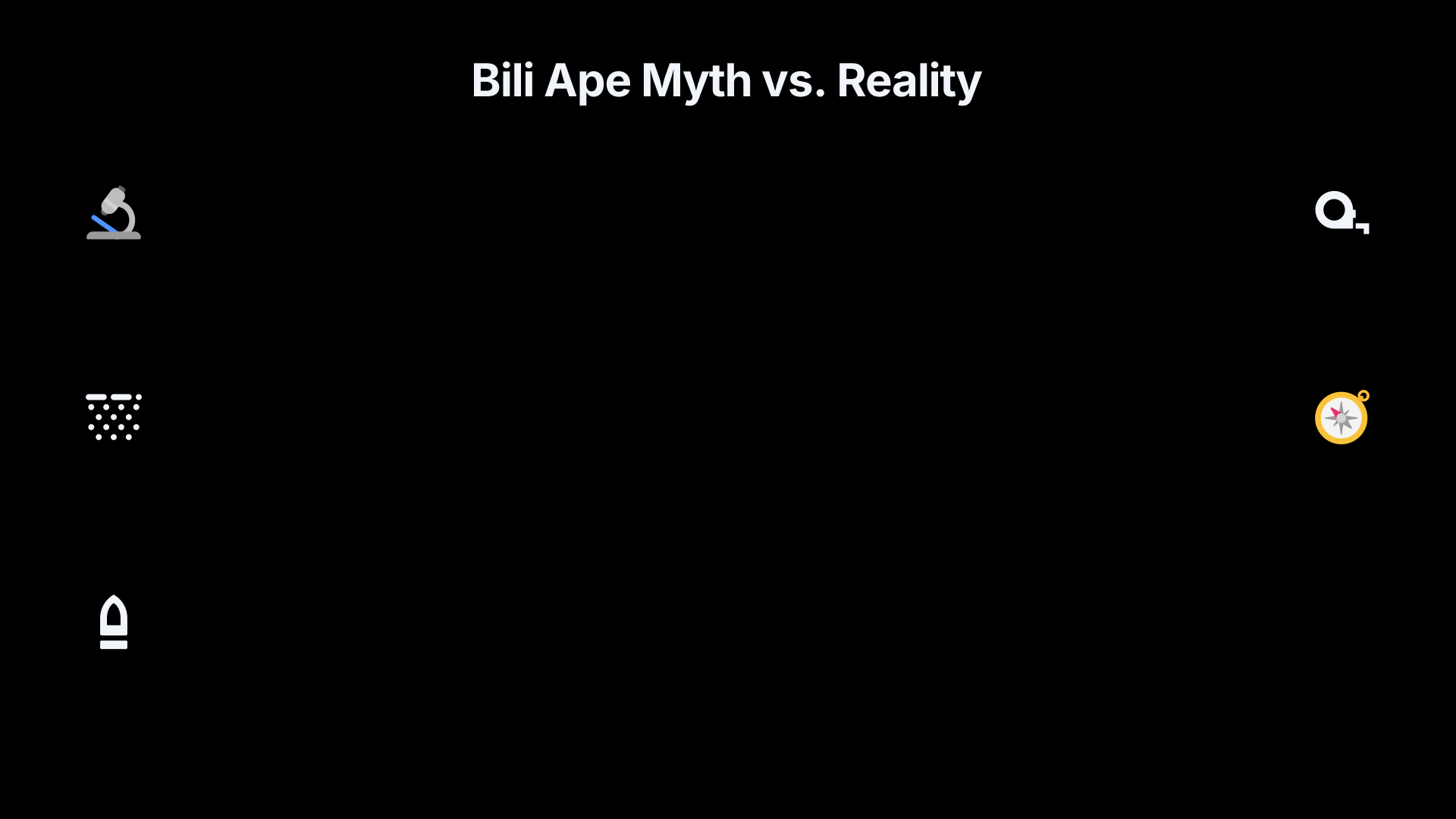
Several early mystery claims proved exaggerated or incorrect:
- The animals were not a new ape species.
- They were not chimpanzee–gorilla hybrids.
- Their impressive size fell within the natural variation of eastern chimpanzees rather than representing a separate giant form.
Other observations, however, turned out to be substantially accurate:
- Ground nesting is genuinely common in many parts of the region.
- The chimpanzees show distinctive combinations of behaviours not seen everywhere else.
- Their reactions to humans vary greatly depending on hunting pressure, with populations far from roads historically showing remarkable curiosity rather than immediate flight.[PubMed]pubmed.ncbi.nlm.nih.govape relatives. About half of the world's remaining… Here we describe the insect-related tool technology of Bili-Uéré chimpanzees…Re…
This mixture of myth and reality explains why the Bili apes remain such an instructive Fortean case. The central mystery dissolved, but the biological story became richer.
Why the real animal is still remarkable
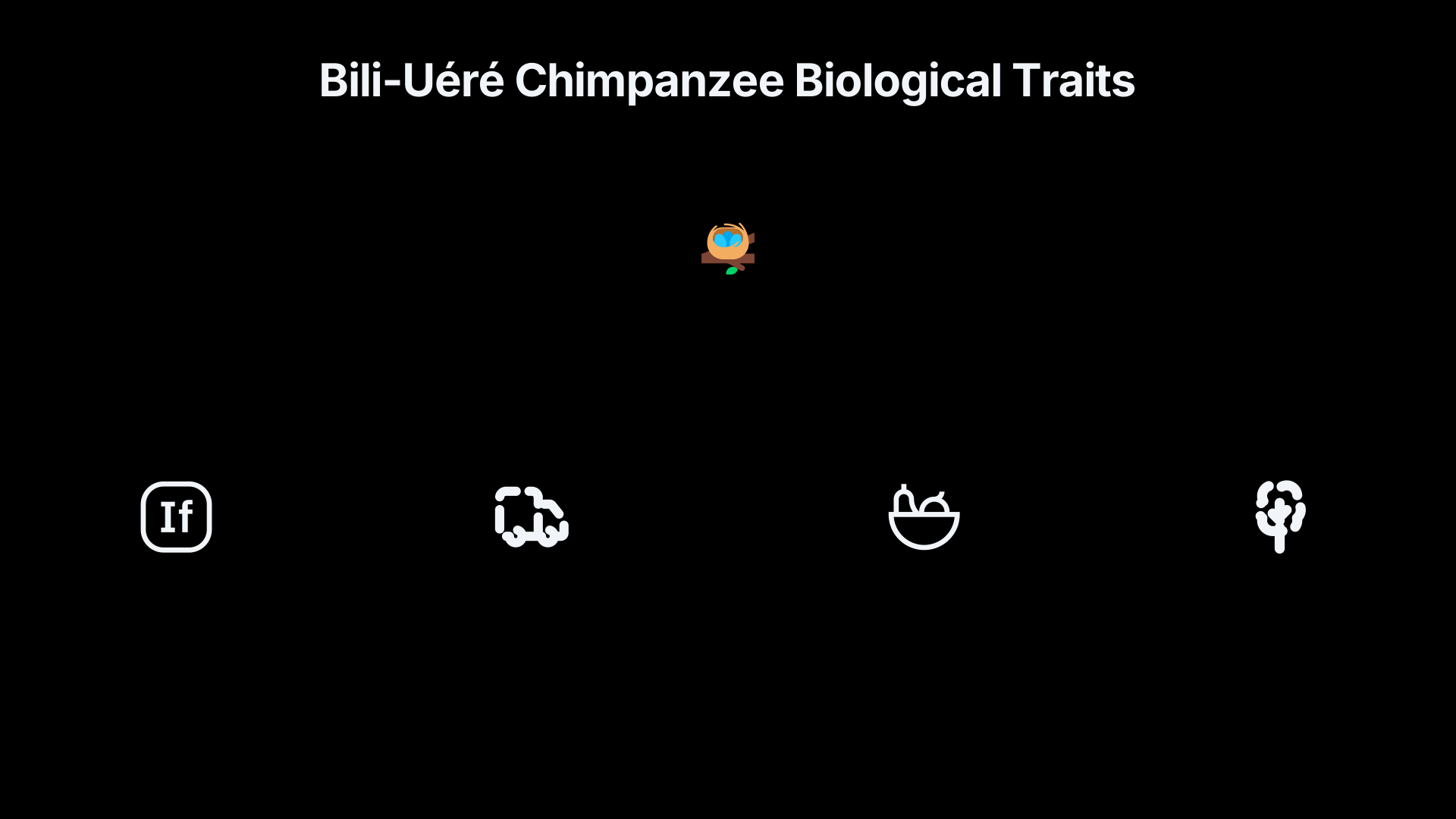
The Bili-Uéré chimpanzees remain scientifically important because they challenge assumptions about how chimpanzees live.
One of their best-known features is frequent ground nesting. Recent analysis of more than 50,000 square kilometres of survey data found that roughly one in ten nests across the wider region were built on the ground, although the proportion varied greatly between locations. Researchers discovered that dense vegetation, vine tangles and particular forest structures encouraged ground nesting, while human hunting reduced it. Surprisingly, the presence of large carnivores alone did not explain where chimpanzees chose to sleep.[edu.pl]en.uw.edu.plground nesting of chimpanzees in congoOverall, 10.4% of the Bili-Uéré chimpanzee nests were terrestrial…Read more…
The region has also revealed distinctive cultural behaviours. Different communities share characteristic ways of using tools, exploiting insects and selecting food resources. Rather than representing a biological anomaly, the Bili-Uéré landscape appears to preserve a large network of chimpanzee traditions shaped by local ecology over many generations. Researchers now regard it as one of the most extensive behavioural regions documented in wild chimpanzees.[PubMed]pubmed.ncbi.nlm.nih.govape relatives. About half of the world's remaining… Here we describe the insect-related tool technology of Bili-Uéré chimpanzees…Re…
These discoveries matter beyond chimpanzee biology. Because humans and chimpanzees share a common ancestor, unusual behaviours such as regular ground sleeping may provide clues about the ecological conditions under which early human ancestors gradually became more terrestrial.
Why the mystery still belongs in DR Congo’s strange history
The Bili ape story remains part of DR Congo’s Fortean landscape because it illustrates how genuine scientific puzzles emerge.
Unlike many cryptid tales, this one was not solved simply by declaring that witnesses were mistaken. Local reports correctly pointed researchers towards an unusual ape population living in one of Africa’s least explored forests. The error lay in assuming that unusual behaviour automatically meant a new species.
The story also highlights how media excitement can outrun evidence. Headlines about giant killer apes proved more memorable than years of careful fieldwork showing that the animals were ordinary chimpanzees with extraordinary habits. For many readers, the correction never received the same attention as the original mystery.
In that sense, the Bili apes occupy an unusual place in modern Forteana. They demonstrate that unexplained reports sometimes lead not to monsters but to better science. The mystery did not vanish—it changed form, becoming a deeper understanding of one of the world’s most remarkable chimpanzee populations and a reminder that remote landscapes can still hold genuine biological surprises without requiring unknown species to exist.
Amazon book picks
Further Reading
Books and field guides related to When a Mystery Ape Became Real Biology. Use these as the next step if you want deeper reading beyond the article.

The Sixth Extinction
First published 2014. Subjects: Extinction (Biology), Mass extinctions, Environmental disasters, SCIENCE / Environmental Science, SCIENCE...
Among the great apes
First published 2010. Subjects: Nonfiction, Science, Apes, Behavior, Conservation.

The tangled tree
First published 2018. Subjects: Molecular aspects, Phylogeny, nyt:combined-print-and-e-book-nonfiction=2018-09-02, New York Times bestsel...
eBay marketplace picks
Marketplace Samples
Live-tested eBay searches with available results related to this page.




Endnotes
1.
Source: Wikipedia
Title: Bili ape
Link:https://en.wikipedia.org/wiki/Bili_ape
2.
Source: brill.com
Title: article p173 1.xml
Link:https://brill.com/view/journals/ijfp/94/4-6/article-p173_1.xml?language=en&srsltid=AfmBOoqWYJZKBfdqzlDaPyp3HHDwbASFIre18NfYPaAt3r2Qnzmglo7c
Source snippet
Factors affecting nest height and ground nesting behaviour...by T Romani · 2023 · Cited by 8 — Most populations of nonhuman great a...
3.
Source: youtube.com
Title: The Mystery of the Bili Ape
Link:https://www.youtube.com/watch?v=Xi7I2unluGQ
Source snippet
The Bili Ape...
4.
Source: youtube.com
Title: The Bili Ape
Link:https://www.youtube.com/watch?v=pG77LO9PmxU
Source snippet
Creature Files: The Bili Ape...
5.
Source: pubmed.ncbi.nlm.nih.gov
Link:https://pubmed.ncbi.nlm.nih.gov/30799412/
Source snippet
ape relatives. About half of the world's remaining... Here we describe the insect-related tool technology of Bili-Uéré chimpanzees...Re...
6.
Source: en.uw.edu.pl
Title: ground nesting of chimpanzees in congo
Link:https://en.uw.edu.pl/ground-nesting-of-chimpanzees-in-congo/
Source snippet
Overall, 10.4% of the Bili-Uéré chimpanzee nests were terrestrial...Read more...
Additional References
7.
Source: facebook.com
Link:https://www.facebook.com/wildlifeatrisk/posts/drc-in-addition-to-unique-behavior-the-bili-chimps-are-extraordinary-in-their-ap/231576262556402/
Source snippet
DRC-In addition to unique behavior, the Bili chimps...Female Bili apes have genital swellings similar to other chimpanzees.... Local hu...
8.
Source: news.mongabay.com
Title: ground nesting chimps hold lessons for conservation and for human evolution
Link:https://news.mongabay.com/2023/04/ground-nesting-chimps-hold-lessons-for-conservation-and-for-human-evolution/
Source snippet
Animal BehaviorAnimal IntelligenceAnimalsApesBiodiversityCharismatic AnimalsChimpanzees...Read more...
9.
Source: researchgate.net
Link:https://www.researchgate.net/publication/331322960_Bili-Uere_A_Chimpanzee_Behavioural_Realm_in_Northern_Democratic_Republic_of_Congo
Source snippet
Bili-Uéré: A Chimpanzee Behavioural Realm in Northern...22 Feb 2019 — chimpanzee prey species, our evidence showed that chim...
10.
Source: youtube.com
Title: Strange Creature Found in Congo Cave – The Truth About Bili Apes!
Link:https://www.youtube.com/watch?v=n4GnDc-kces
Source snippet
Bili apes Bondo mystery ape chimpanzee Congo The Mystery of the Bili Ape The Budget Museum...
11.
Source: data.mendeley.com
Link:https://data.mendeley.com/datasets/ssdftsv88y/2
Source snippet
Bili-Uere chimpanzee ground nesting2 Mar 2023 — Datasheets on chimpanzee nests and human and animal signs. Data collected in Bili-Uere (n...
12.
Source: naturetoday.com
Link:https://www.naturetoday.com/intl/en/nature-reports/message/?msg=30565
Source snippet
Eastern chimps like to build their overnight nests on the...31 Mar 2023 — Chimpanzees, however, have neither traits and yet, on average...
13.
Source: youtube.com
Title: The Theory Of The Bondo Apes
Link:https://www.youtube.com/watch?v=rXDAsRFDeIs
Source snippet
Strange Creature Found in Congo Cave – The Truth About Bili Apes...
14.
Source: youtube.com
Title: Creature Files: The Bili Ape
Link:https://www.youtube.com/watch?v=ZU7wwmXopfQ
Source snippet
The Theory Of The Bondo Apes...
Topic Tree