Within Bolivia Weird
Who Haunts Bolivia's Mines and Roads?
Figures such as El Tio and the kharisiri show how labour danger, ritual protection and social anxiety become memorable supernatural traditions.

On this page
- El Tio and the ritual world of Cerro Rico
- Kharisiri fears on the Altiplano
- Guardian beings, danger and local moral geography
Page outline Jump by section
Introduction
Bolivia’s most enduring supernatural traditions are not simply ghost stories told for entertainment. They are living ways of explaining danger, exploitation and uncertainty. Two figures dominate this landscape: El Tío, the powerful spirit said to rule the underground mines of Cerro Rico and other mining districts, and the kharisiri, the mysterious fat-stealing stranger feared across the Altiplano. Neither legend can be understood by asking only whether the beings are “real”. Their importance lies in how they help communities make sense of hazardous work, colonial history, mistrust of outsiders and the unpredictable risks of life in the Andes. Anthropologists, historians and local writers consistently argue that these traditions remain culturally meaningful because they express genuine fears through supernatural language rather than existing as relics of a forgotten past.[haujournal.org]haujournal.orgAre anthropologists monsters?An Andean dystopian…by A Burman · 2018 · Cited by 73 — The article departs from an ethnographic experience involving the kharisiri, a…

Who Haunts Bolivia’s Mines and Roads?
Across Bolivia’s highlands, dangerous places often possess their own moral geography. A mine is not merely a workplace. A lonely road is not simply empty. Both are locations where ordinary rules are believed to weaken and unseen forces may intervene.
Unlike many European ghost stories, these traditions are closely tied to practical survival. They explain why rituals matter before entering a tunnel, why strangers can provoke suspicion in isolated communities, and why misfortune may demand more than a purely physical explanation. In this sense they belong squarely within Bolivia’s strange-history tradition: they occupy the boundary between lived belief, folklore, religion and everyday experience rather than existing only in fiction.[digitalcollections.sit.edu]digitalcollections.sit.eduIn the Realm of Supay: The Stories of the Minersby G Sutherland · 2011 — Guardian and castigator, El Tío sits in the mines as he has for…
El Tío and the Ritual World of Cerro Rico
The mountain of Cerro Rico above Potosí has produced immense quantities of silver since the sixteenth century while claiming countless lives through collapse, disease and exhaustion. In this environment emerged the figure known as El Tío (“The Uncle”), the feared guardian of the underground.
To outsiders, statues of El Tío resemble devils, complete with horns, exaggerated features and sometimes an erect phallus. Yet miners generally do not regard him as identical to the Christian Satan. Instead he occupies the underground realm, where ordinary divine protection is believed to give way to different spiritual powers. Before descending into the mine, workers commonly greet his image and leave offerings such as coca leaves, cigarettes and strong alcohol in the hope of receiving protection, rich mineral veins and safe passage through unstable tunnels.[sit.edu]digitalcollections.sit.eduIn the Realm of Supay: The Stories of the Minersby G Sutherland · 2011 — Guardian and castigator, El Tío sits in the mines as he has for…
This apparent contradiction—devout Catholics honouring a devil-like figure—makes more sense when viewed as religious blending rather than devil worship. Indigenous beliefs concerning powerful beings beneath the earth gradually merged with colonial Catholic imagery. The result is a figure who embodies both destruction and protection: El Tío may reward respectful miners while punishing greed, arrogance or carelessness.[Wikipedia]WikipediaOpen source on wikipedia.org.
The rituals surrounding El Tío also acknowledge an uncomfortable truth. Mining remains exceptionally dangerous despite modern technology. No offering can prevent a tunnel collapse, yet the ceremonies reinforce solidarity among workers and provide psychological structure in an occupation where death has always been close at hand. Researchers studying Bolivian mining communities therefore tend to interpret El Tío less as evidence of supernatural encounters than as a cultural response to extraordinary risk.[sit.edu]digitalcollections.sit.eduIn the Realm of Supay: The Stories of the Minersby G Sutherland · 2011 — Guardian and castigator, El Tío sits in the mines as he has for…
Why the Legend Endures
The endurance of El Tío reflects more than simple superstition.
- He personifies the unpredictable wealth and danger hidden beneath the mountain.
- Ritual offerings allow miners to acknowledge forces beyond human control.
- The tradition preserves elements of Indigenous cosmology that survived colonial rule through religious adaptation.
- Visitors continue to encounter shrines inside active mines, ensuring that the legend remains part of living rather than historical folklore.[sit.edu]digitalcollections.sit.eduIn the Realm of Supay: The Stories of the Minersby G Sutherland · 2011 — Guardian and castigator, El Tío sits in the mines as he has for…

Kharisiri Fears on the Altiplano
If El Tío belongs underground, the kharisiri belongs to the lonely roads, villages and open landscapes of the Altiplano.
The kharisiri is said to attack unsuspecting travellers, removing their body fat—and in many traditions also blood—without their knowledge. Victims supposedly weaken, become gravely ill and may die unless they receive specialised ritual treatment. Unlike many monsters, the kharisiri usually appears human. That uncertainty is central to the legend: almost anyone outside the community might be suspected.[bolivianexpress.org]bolivianexpress.orgmagazine sub itemHe (or she) is a frightening creature commonly associated…Read more…
Although stories vary, one consistent feature is the creature’s association with outsiders. Earlier traditions often described foreign priests, landowners or travellers. Modern versions have expanded the list to include doctors, researchers, engineers, aid workers or anyone perceived as possessing unexplained authority or wealth. Anthropologists note that the figure continually adapts to changing political and social circumstances while preserving its core message about unequal power.[haujournal.org]haujournal.orgAre anthropologists monsters?An Andean dystopian…by A Burman · 2018 · Cited by 73 — The article departs from an ethnographic experience involving the kharisiri, a…
The theft of fat may sound bizarre to readers unfamiliar with Andean belief, yet fat has long symbolised vitality, health and productive life. Losing it represents more than physical injury: it signifies the draining away of a person’s strength, prosperity and social wellbeing. This symbolism helps explain why the kharisiri remains emotionally powerful despite modern medicine.[JSTOR]jstor.orgFear and Loathing on the Kharisiri Trail: Alterity and Identity…by A Canessa · 2000 · Cited by 80 — The fat-stealer is also known…
A Folklore of Colonial Memory
Many scholars connect the kharisiri tradition with centuries of exploitation during and after Spanish colonisation. Stories that powerful outsiders literally consume Indigenous bodies become understandable against a background of forced labour, extraction of wealth and racial inequality.
Rather than viewing the kharisiri as a simple monster, researchers increasingly interpret it as a metaphor for systems that profit from Indigenous communities while leaving them physically and economically diminished. The legend has therefore proved remarkably adaptable, resurfacing whenever new forms of authority or outside intervention generate anxiety.[haujournal.org]haujournal.orgAre anthropologists monsters?An Andean dystopian…by A Burman · 2018 · Cited by 73 — The article departs from an ethnographic experience involving the kharisiri, a…
Guardian Beings, Danger and Local Moral Geography
Although El Tío and the kharisiri appear very different, they perform related cultural work.
El Tío is dangerous but negotiable. Respect him through proper ritual and he may protect miners. The kharisiri is almost the opposite: an untrustworthy predator whose apparent normality makes him especially frightening. One governs a specific place beneath the earth; the other moves unpredictably through human landscapes.
Together they reveal how Bolivian folklore maps danger onto real environments. Mines become spaces requiring ritual discipline. Remote roads become places where strangers deserve caution. The supernatural does not replace practical knowledge but sits alongside it, reinforcing ideas about community, responsibility and survival.[sit.edu]digitalcollections.sit.eduIn the Realm of Supay: The Stories of the Minersby G Sutherland · 2011 — Guardian and castigator, El Tío sits in the mines as he has for…
This local moral geography also explains why these traditions remain resistant to straightforward debunking. Whether or not anyone literally believes that El Tío grants silver veins or that a kharisiri extracts body fat, the stories continue to express truths about hazardous labour, unequal power and the vulnerability of isolated communities.
Why These Traditions Matter in Bolivia’s Weird History
For readers interested in Fortean traditions, El Tío and the kharisiri illustrate an important distinction between supernatural claims and supernatural belief. Neither legend rests on a single famous encounter or dramatic eyewitness report. Instead, they have persisted because generations of Bolivians have found them useful ways to discuss experiences that are otherwise difficult to explain: deadly workplaces, exploitative outsiders, unexplained illness and the uneasy relationship between wealth and suffering.
That makes them central to Bolivia’s strange cultural landscape. They are not merely monsters lurking in folklore but enduring expressions of how communities living among some of the world’s richest mineral deposits and harshest mountain environments have transformed fear into stories that still shape ritual, identity and memory today.[haujournal.org]haujournal.orgAre anthropologists monsters?An Andean dystopian…by A Burman · 2018 · Cited by 73 — The article departs from an ethnographic experience involving the kharisiri, a…
Amazon book picks
Further Reading
Books and field guides related to Who Haunts Bolivia's Mines and Roads?. Use these as the next step if you want deeper reading beyond the article.
UFOs : Generals, Pilots, and Government Officials Go on the R...
Useful comparison for reported unexplained aerial events.
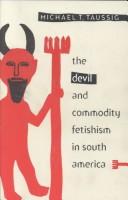
The devil and commodity fetishism in South America
Directly addresses Andean beliefs surrounding mines, labour and the devil.
eBay marketplace picks
Marketplace Samples
Live-tested eBay searches with available results related to this page.




Endnotes
1.
Source: haujournal.org
Title: Are anthropologists monsters?
Link:https://www.haujournal.org/index.php/hau/article/view/698413
Source snippet
An Andean dystopian...by A Burman · 2018 · Cited by 73 — The article departs from an ethnographic experience involving the kharisiri, a...
2.
Source: digitalcollections.sit.edu
Link:https://digitalcollections.sit.edu/cgi/viewcontent.cgi?article=2220&context=isp_collection
Source snippet
In the Realm of Supay: The Stories of the Minersby G Sutherland · 2011 — Guardian and castigator, El Tío sits in the mines as he has for...
3.
Source: jstor.org
Link:https://www.jstor.org/stable/4540653
Source snippet
Religious Practices in the Andes and Their Relevance to...by H Bonilla · 2006 · Cited by 15 — The Tio and the rituals surrounding him al...
4.
Source: Wikipedia
Link:https://en.wikipedia.org/wiki/El_T%C3%ADo
5.
Source: bolivianexpress.org
Title: magazine sub item
Link:https://bolivianexpress.org/magazine-sub-item/1061
Source snippet
He (or she) is a frightening creature commonly associated...Read more...
6.
Source: jstor.org
Link:https://www.jstor.org/stable/2661038
Source snippet
Fear and Loathing on the Kharisiri Trail: Alterity and Identity...by A Canessa · 2000 · Cited by 80 — The fat-stealer is also known...
7.
Source: atlasobscura.com
Link:https://www.atlasobscura.com/articles/what-are-potosi-silver-mines-like
Source snippet
Atlas ObscuraThe Liquor-Soaked Devil Shrines of Bolivia's Deadliest MineOct 25, 2019 — The liquor-soaked devil shrines of Bolivia's deadl...
8.
Source: citizendium.org
Link:https://citizendium.org/wiki/El_T%C3%ADo
Source snippet
Aug 10, 2024 — An icon of the Tío is situated in each mineshaft to receive sacrificial offerings of alcohol, coca, cigarettes, llama bloo...
9.
Source: digitalcommons.trinity.edu
Link:https://digitalcommons.trinity.edu/cgi/viewcontent.cgi?article=1210&context=tipiti
Source snippet
just two pathogenic figures who steal and eat human life force (fat and...Read more...
Additional References
10.
Source: academia.edu
Link:https://www.academia.edu/90040263/Alterity_Predation_and_Questions_of_Representation_The_Problem_of_the_Kharisiri_in_the_Andes
Source snippet
(PDF) Alterity, Predation, and Questions of RepresentationConsidered to steal blood or fat from un-suspecting humans, the kharisiri has g...
11.
Source: researchgate.net
Link:https://www.researchgate.net/publication/290186206_Fear_and_loathing_on_the_kharisiri_trail_Alterity_and_identity_in_the_Andes
Source snippet
(PDF) Fear and loathing on the kharisiri trail: Alterity and...Kharisiris steal fat, and by understanding the role of fat in Andean culture...
12.
Source: facebook.com
Link:https://www.facebook.com/bolivianexpress/posts/the-kharisiri-of-the-altiplanoa-history-of-colonisation-repression-and-exploitat/10156825639543106/
Source snippet
His appearance is monstrous, and he steals the fat of natives peoples. He is also known to skin...Read more...
13.
Source: medium.com
Link:https://medium.com/%40MichaelWayne/the-domain-of-el-tio-steps-into-the-cerro-rico-of-potos%C3%AD-bolivia-51189ee024d
Source snippet
the mines, then he anointed him with grain alcohol on the head (“...Read more...
14.
Source: cousinjacksworld.com
Link:https://www.cousinjacksworld.com/the-mountain-that-eats-men-a-visit-to-john-penberthys-potosi/
Source snippet
a leaves, cigarettes and llama blood in return for his goodwill...
15.
Source: gup.ub.gu.se
Title: se Are Anthropologists Monsters?
Link:https://gup.ub.gu.se/publication/273646
Source snippet
An Andean Dystopian...The article departs from an ethnographic experience involving the kharisiri, a dystopian, fat-stealing monster of...
16.
Source: youtube.com
Title: ‘The mountain that eats men’ in Bolivia
Link:https://www.youtube.com/watch?v=XHZS74Z9qlM
Source snippet
BBC NewsBolivia's Cerro Rico: The Mountain That Eats Men | FULL DOC. SLICE... Miners of Potosi: the most dangerous trade in the world |...
17.
Source: anthrosource.onlinelibrary.wiley.com
Link:https://anthrosource.onlinelibrary.wiley.com/doi/10.1111/amet.13201
Source snippet
after anthropology - 2023 - American Ethnologist13 July 2023 — 51) argues that anthropologists are kharisiri, or monsters that prey on Ay...
Published: July 2023
18.
Source: journals.uchicago.edu
Link:https://www.journals.uchicago.edu/doi/abs/10.1086/698413
Source snippet
An Andean dystopian...by A Burman · 2018 · Cited by 73 — The article departs from an ethnographic experience involving the kharisiri, a...
19.
Source: youtube.com
Title: Inside the “Mountain the Eats Men” in Bolivia
Link:https://www.youtube.com/watch?v=uBEWe_yffAk
Source snippet
Why Silver Is Breaking New Records | Risky Business...
Topic Tree