Within Guinea Weird
How Ebola Became a Mysterious Killer
Guinea's early Ebola outbreak became a weird-history case because fear and mistrust shaped how people understood a real disease.
On this page
- From unexplained illness to recognised outbreak
- Burial practice, mistrust and rumour
- Why medical crises become uncanny
Page outline Jump by section
Introduction
When Ebola first emerged in south-eastern Guinea in late 2013 and was recognised in early 2014, it was not immediately understood as a known viral disease. To many local communities it appeared to be a terrifying new illness that killed rapidly, resisted familiar treatments and was accompanied by the arrival of outsiders in protective suits. That combination created one of the most striking examples of modern rumour-driven panic. The strange element was not that Ebola itself was mysterious—scientists quickly identified the virus—but that fear, grief and mistrust transformed a real epidemic into a landscape of competing explanations involving poisoning, witchcraft, political manipulation and hidden agendas. The resulting rumours became a major part of Guinea’s modern weird-history record because they shaped how people responded to the outbreak as much as the virus itself.[World Health Organization]who.intWorld Health OrganizationEbola globalThere were more cases and deaths in this outbreak than all others combined. It also spread between c…
From unexplained illness to recognised outbreak
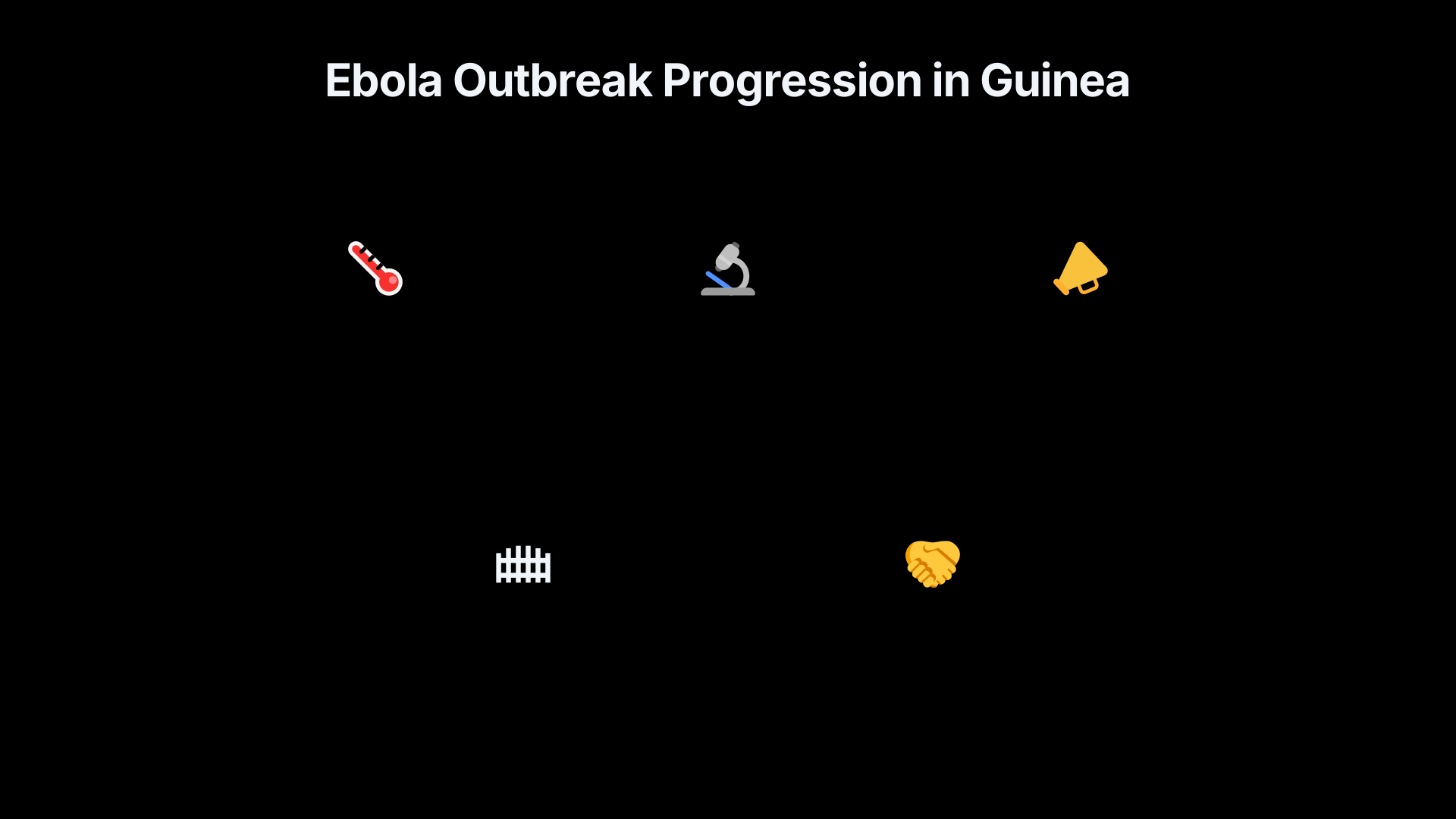
The outbreak began in the forest region of Guinea, where early cases resembled other tropical illnesses. Fever, vomiting and diarrhoea could easily be mistaken for malaria, typhoid or cholera. Because West Africa had never experienced a recorded Ebola epidemic before, neither local communities nor many health professionals initially suspected the virus. The illness therefore acquired the aura of an unknown killer before laboratories confirmed it was Ebola virus disease.[World Health Organization]who.intWorld Health OrganizationEbola globalThere were more cases and deaths in this outbreak than all others combined. It also spread between c…
That uncertainty encouraged multiple explanations to circulate at once. Some people believed the disease was supernatural. Others suspected deliberate poisoning, a government invention or a foreign plot. In areas with long histories of political marginalisation and distrust of state institutions, these interpretations often appeared more convincing than official messages delivered by unfamiliar officials or international aid organisations. Anthropologists studying the epidemic later argued that such beliefs were not simply irrational rumours but reflected existing experiences of exclusion, unequal power and historical mistrust.[cambridge.org]cambridge.orgCambridge University Press & AssessmentUnderstanding Social Resistance to the Ebola Response…by J Fairhead · 2016 · Cited by 217 — The…
From a Fortean perspective, this period shows how an entirely real biological event acquired many of the features usually associated with mysterious phenomena. Invisible danger, contradictory testimony, frightening stories and uncertain causes produced an atmosphere in which extraordinary explanations flourished.
Burial practice, mistrust and rumour
Burial customs became one of the central points where medical advice and local tradition collided. In many communities, washing, dressing and touching the deceased formed an essential part of showing respect to family members. Unfortunately, Ebola remains highly infectious after death, making these rituals a significant route of transmission. Public health teams introduced “safe and dignified burials”, but many families experienced these procedures as shocking interruptions to long-established customs.[rug.nl]rug.nlThe burial rites included familyUniversity of GroningenEbola, Burial Practices and the Right to Health in West AfricaMay 9, 2022 — 2 Oct 2017 — The WHO identified burial…
This tension fed rumours that treatment centres were harming patients rather than helping them. Stories spread that aid workers were stealing organs, harvesting blood or inventing Ebola to attract foreign funding. Others claimed hospitals were places where healthy people were taken to die. These rumours discouraged some families from reporting illness or cooperating with health authorities, allowing further transmission.[sciencedaily.com]sciencedaily.comReturning West Africa researcher says distrust of health…Nov 17, 2014 — Widespread rumor among rural Guinea residents held…
The most tragic illustration came in September 2014 in the village of Womey, where members of an Ebola education team—including local officials, health workers and journalists—were attacked and killed after suspicion spread that outsiders had come to poison villagers rather than help them. The incident demonstrated how quickly fear surrounding an unseen disease could become deadly in its own right.[Cambridge University Press & Assessment]cambridge.orgCambridge University Press & AssessmentUnderstanding Social Resistance to the Ebola Response…by J Fairhead · 2016 · Cited by 217 — The…
Researchers have also shown that funerals themselves could become major transmission events. One investigation linked dozens of confirmed infections to a single traditional funeral in Guinea, illustrating why burial practices became such an intense focus of both public health measures and community anxiety.[CDC]cdc.govEbola Transmission Linked to a Single Traditional Funeral…by KR Victory · Cited by 93 — The investigation found that 85 confirmed E…
Why medical crises become uncanny
Medical emergencies often generate folklore because they involve invisible threats that spread through ordinary social life. During Guinea’s Ebola outbreak, people faced an illness that could not be recognised by sight alone during its early stages, spread through close family care and transformed familiar acts of compassion into sources of danger.
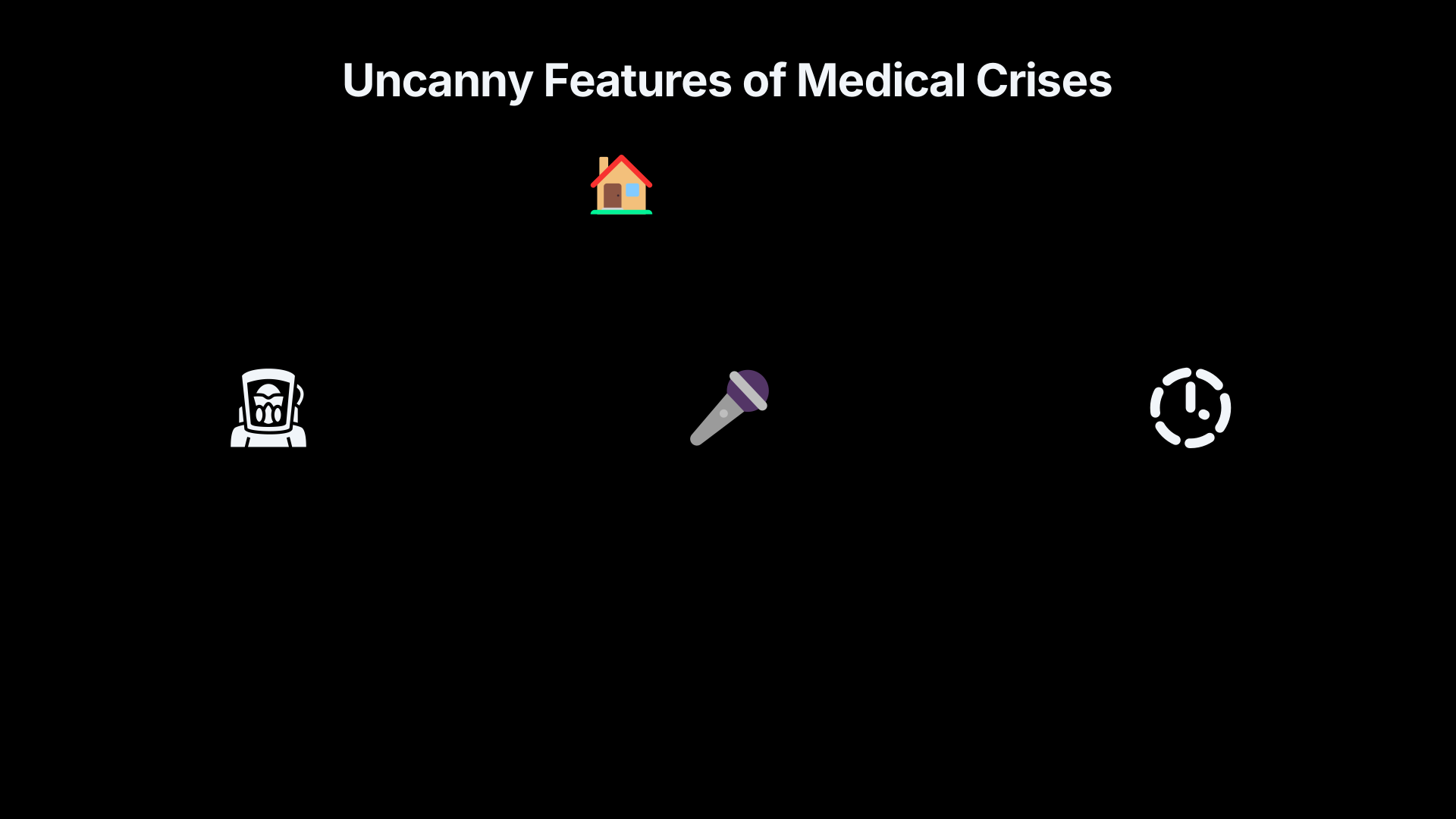
Several recurring themes made the epidemic feel uncanny:
- Invisible contamination: apparently healthy neighbours could suddenly become gravely ill.
- Protective clothing: responders wearing full-body protective suits appeared unfamiliar and frightening, reinforcing impressions that something extraordinary was happening.
- Conflicting authorities: local leaders, traditional healers, religious figures, governments and international organisations sometimes gave competing messages.
- Rapid death: the speed with which some patients deteriorated encouraged speculation about curses or poisoning before laboratory explanations became widely understood.[cdc.gov]cdc.govLessons of Risk Communication and Health Promotionby SR Bedrosian · 2016 · Cited by 98 — The numbers of persons infected and lives los…
These features resemble many historical “mysterious disease” panics, where uncertainty encourages stories that blend observation with speculation. The rumours surrounding Ebola therefore belong less to the history of the paranormal than to the history of how societies explain frightening events before trust and evidence become firmly established.
What researchers learned from the rumours
One important lesson from Guinea was that simply correcting false information rarely eliminated rumours. Later studies concluded that communities often rejected official explanations not because they lacked information, but because they distrusted those delivering it. Public health strategies gradually shifted towards working with respected local leaders, adapting burial procedures where possible and listening to community concerns instead of dismissing them outright.[thelancet.com]thelancet.comThe LancetEbola: limitations of correcting misinformationby C Chandler · 2015 · Cited by 192 — A principle underpinning these efforts is…
Anthropologists likewise argued that resistance to Ebola measures reflected broader social relationships rather than simple ignorance. The outbreak disrupted local ideas about family care, funerals, authority and the treatment of the dead. Understanding those tensions proved essential for bringing the epidemic under control.[Cambridge University Press & Assessment]cambridge.orgCambridge University Press & AssessmentUnderstanding Social Resistance to the Ebola Response…by J Fairhead · 2016 · Cited by 217 — The…
Why the episode belongs in Guinea’s strange-history record
Unlike legends of ghosts or mystery creatures, the Ebola rumours grew around a disease that unquestionably existed. The “mystery” lay in the competing explanations people created while trying to understand an unprecedented crisis. For Guinea’s Fortean landscape, this episode illustrates how real disasters can produce narratives every bit as strange as older folklore.
Rather than revealing supernatural forces, the rumours reveal something equally compelling: how invisible danger, social distrust and cultural expectations can transform a public health emergency into a modern legend of hidden causes and mysterious intent. It remains a powerful reminder that fear itself can become part of the story, shaping events alongside the disease that first inspired it.


eBay marketplace picks
Marketplace Samples
Live-tested eBay searches with available results related to this page.



Endnotes
1.
Source: cambridge.org
Link:https://www.cambridge.org/core/journals/african-studies-review/article/understanding-social-resistance-to-the-ebola-response-in-the-forest-region-of-the-republic-of-guinea-an-anthropological-perspective/79914D998AA67442119F1C45E274764E
Source snippet
Cambridge University Press & AssessmentUnderstanding Social Resistance to the Ebola Response...by J Fairhead · 2016 · Cited by 217 — The...
2.
Source: gh.bmj.com
Link:https://gh.bmj.com/content/4/1/e001272
Source snippet
BMJ Global HealthTechnologies of trust in epidemic response: openness...by MJ Ryan · 2019 · Cited by 76 — Rumours, suspicions and mistru...
3.
Source: cdc.gov
Link:https://www.cdc.gov/mmwr/preview/mmwrhtml/mm6414a4.htm
Source snippet
Ebola Transmission Linked to a Single Traditional Funeral...by KR Victory · Cited by 93 — The investigation found that 85 confirmed E...
4.
Source: sciencedaily.com
Link:https://www.sciencedaily.com/releases/2014/11/141117111016.htm
Source snippet
Returning West Africa researcher says distrust of health...Nov 17, 2014 — Widespread rumor among rural Guinea residents held...
5.
Source: cdc.gov
Link:https://www.cdc.gov/mmwr/volumes/65/su/su6503a10.htm
Source snippet
Lessons of Risk Communication and Health Promotionby SR Bedrosian · 2016 · Cited by 98 — The numbers of persons infected and lives los...
6.
Source: who.int
Link:https://www.who.int/health-topics/ebola
Source snippet
World Health OrganizationEbola globalThere were more cases and deaths in this outbreak than all others combined. It also spread between c...
7.
Source: who.int
Link:https://www.who.int/news-room/spotlight/one-year-into-the-ebola-epidemic/factors-that-contributed-to-undetected-spread-of-the-ebola-virus-and-impeded-rapid-containment
Source snippet
Factors that contributed to undetected spreadClinicians in equatorial Africa have good reasons to suspect Ebola when a “mysterious” disea...
8.
Source: thelancet.com
Link:https://www.thelancet.com/journals/lancet/article/PIIS0140-6736%2814%29623825/fulltext
Source snippet
The LancetEbola: limitations of correcting misinformationby C Chandler · 2015 · Cited by 192 — A principle underpinning these efforts is...
9.
Source: rug.nl
Title: The burial rites included family
Link:https://www.rug.nl/rechten/onderzoek/expertisecentra/gchl/blog/ebola-burial-practices-and-the-right-to-health-in-west-africa-integrating-international-human?lang=en
Source snippet
University of GroningenEbola, Burial Practices and the Right to Health in West AfricaMay 9, 2022 — 2 Oct 2017 — The WHO identified burial...
Published: May 9, 2022
10.
Source: etdh.resolvetosavelives.org
Link:https://etdh.resolvetosavelives.org/2022/ebola/
Source snippet
in West Africa - Epidemics that didn't happenHow Guinea and DRC contained 2021 Ebola outbreaks in months, thanks to stronger surveillance...
Additional References
11.
Source: socialscienceinaction.org
Link:https://www.socialscienceinaction.org/emergency/ebola-outbreak-in-guinea/
Source snippet
Ebola outbreak in GuineaEbola outbreak in Guinea. The Social Science in Humanitarian Action Platform is supporting partners responding to...
12.
Source: odihpn.org
Link:https://odihpn.org/wp-content/uploads/2020/03/HE-77-web.pdf
13.
Source: unicef.org
Link:https://www.unicef.org/guinea/communiqu%C3%A9s-de-presse/unicef-congratulates-guinea-ending-ebola-virus-transmission
14.
Source: files.ethz.ch
Link:https://www.files.ethz.ch/isn/189976/FULLTEXT01.pdf
Source snippet
ethz.chEbola: Accurate Information Prevents Rumours and Panicby P Crentsil — Experts say dead bodies should not be touched, even as part...
15.
Source: pmc.ncbi.nlm.nih.gov
Title: Discriminatory attitudes towards Ebola survivors
Link:https://pmc.ncbi.nlm.nih.gov/articles/PMC9027331/
Source snippet
and Rumors about Ebola Virus Disease in...by BA Muzembo · 2022 · Cited by 27 — Burial practices where people touch Ebola-infected corpse...
16.
Source: glopid-r.org
Link:https://www.glopid-r.org/wp-content/uploads/2019/07/data-sharing-during-west-africa-ebola-public-health-emergency-case-study-report-georgetown.pdf
Source snippet
African communities was the misinformation spread about Ebola.... medical misinformation.Read more...
17.
Source: youtube.com
Title: How A Virus Spreads: Ebola, Institutional Trust, and Misinformation in the DRC
Link:https://www.youtube.com/watch?v=an0ajpka0FQ
Source snippet
Ebola 2014 Guinea misinformation distrust response Ebola misinformation spreads as DRC health workers battle distrust in Bunia Al Jazeera...
18.
Source: instagram.com
Title: That’s why UNICEF is on the ground in DRC and Uganda,
Link:https://www.instagram.com/reel/DaD88AiCUgb/
Source snippet
UNICEF on Instagram: "Why is the threat of Ebola extremely...In this current outbreak, children with Ebola are almost twice as likely to...
19.
Source: facebook.com
Link:https://www.facebook.com/UNICEF-USA/videos/ebola-outbreak-what-you-need-to-know-unicefs-response/978782204893657/
Source snippet
history, killed more than 11, 000 people, primarily in Guinea...
20.
Source: oatext.com
Title: revisiting ebola communication
Link:https://www.oatext.com/revisiting-ebola-communication.php
Source snippet
WHO (2015) Health worker Ebola infections in Guinea, Liberia and Sierra Leone.... (2015) Ebola: limitations of correcting misinformation...
Topic Tree