Within American Forteana
Why Do American Monsters Belong to Places?
From Bigfoot to the Jersey Devil, American monsters often work as folklore, tourism, local identity and unresolved animal claims at once.
On this page
- Bigfoot, the Jersey Devil and Mothman as local icons
- Lake monsters, forests and regional identity
- Hoaxes, misidentification and tourist afterlives
Page outline Jump by section
Introduction
American cryptids are not simply mysterious creatures said to roam forests, lakes or mountains. They are also expressions of local identity. Bigfoot belongs to the forests of the Pacific Northwest, the Jersey Devil to New Jersey’s Pine Barrens, Mothman to Point Pleasant in West Virginia, and countless regional monsters are tied so closely to particular landscapes that they function almost like unofficial mascots. Whether anyone believes the creatures exist is only part of the story. Their lasting importance lies in how they connect folklore, history, tourism, media, and community pride.
Unlike many mythical monsters that float free of geography, American cryptids usually have a fixed home address. Their legends grow from particular places, often drawing on older folklore, newspaper reports, eyewitness claims and changing local economies. Over time these creatures frequently become brands as much as mysteries, appearing on museum signs, festival posters, brewery labels and roadside statues while continuing to inspire debates about evidence and unexplained sightings.[Smithsonian Folklife Center]folklife.si.edumothman point pleasant west virginiacryptid revival of the last twenty years. Cryptids—creatures whose existence is unsubstantiated, like Bigfoot and the Loch Ness Monster—are…
Why do American monsters become symbols of place?
Many American cryptids emerged where dramatic landscapes already encouraged stories about hidden wildlife or unexplored wilderness. Vast forests, isolated wetlands and deep lakes leave room for imagination in ways that crowded cities rarely do. Local newspapers amplified unusual reports, while television, books and later the internet transformed regional folklore into national phenomena.
Yet these creatures rarely lose their geographical identity. A sighting elsewhere may attract attention, but the “real” home remains the original location. This connection gives communities something distinctive that neighbouring towns cannot easily imitate. A monster becomes part of local heritage regardless of whether anyone expects zoologists to discover it.
This mixture of folklore and place serves several purposes simultaneously:
- It preserves regional storytelling traditions.
- It distinguishes one landscape from another.
- It encourages visitors seeking unusual attractions.
- It provides a shared identity that locals can celebrate with varying degrees of seriousness.
- It allows genuine unexplained reports, folklore and humour to coexist without requiring a single explanation.[Smithsonian Folklife Center]folklife.si.edumothman point pleasant west virginiacryptid revival of the last twenty years. Cryptids—creatures whose existence is unsubstantiated, like Bigfoot and the Loch Ness Monster—are…
Bigfoot, the Jersey Devil and Mothman as local icons
Bigfoot: wilderness made visible
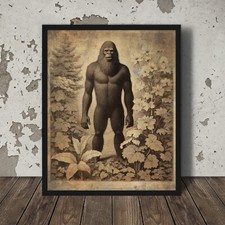
Bigfoot, or Sasquatch, has become America’s best-known cryptid, but its strongest identity remains rooted in the forests of Washington, Oregon and northern California. Indigenous traditions describing large hairy beings long predate the modern Bigfoot phenomenon, although these traditions vary greatly and should not simply be treated as early versions of the modern creature.
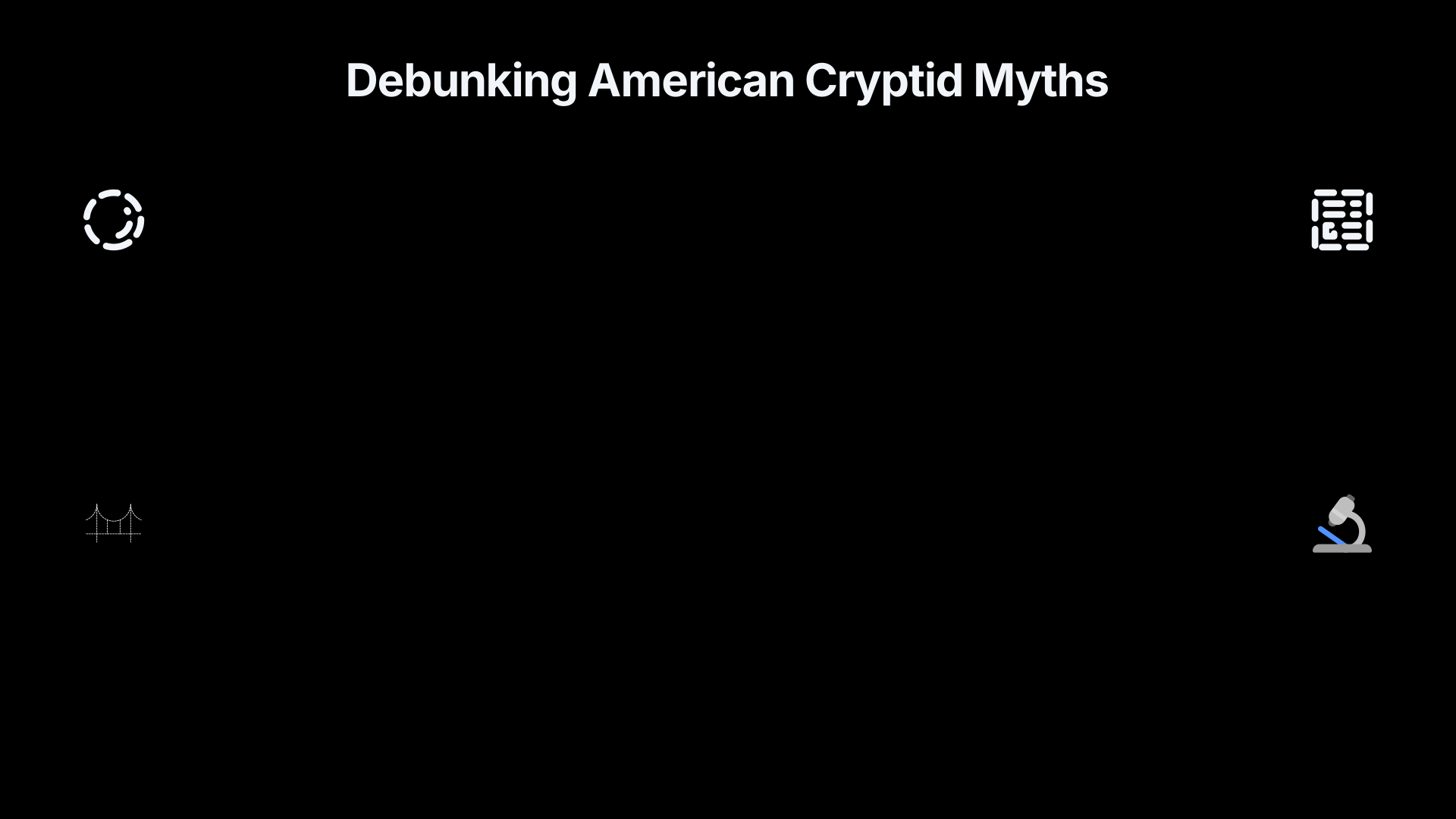
The contemporary image of Bigfoot developed largely during the twentieth century through footprint discoveries, newspaper coverage and famous films such as the 1967 Patterson–Gimlin footage. Scientific consensus remains that no reliable physical evidence demonstrates the existence of an unknown North American ape, and many alleged footprints, photographs and hair samples have proved to be hoaxes or misidentifications.[Wikipedia]WikipediaOpen source on wikipedia.org.
Even so, Bigfoot has become economically valuable. Numerous Pacific Northwest communities host festivals, museums, guided tours and themed businesses celebrating the creature. The appeal lies less in proving Bigfoot exists than in celebrating the image of untamed wilderness and the possibility that nature still contains genuine mysteries.
The Jersey Devil: folklore shaped by history
The Jersey Devil demonstrates how a cryptid can emerge from folklore, politics and regional identity rather than repeated modern sightings alone.
According to the familiar legend, “Mother Leeds” gave birth to a cursed thirteenth child that transformed into a winged monster and escaped into the Pine Barrens. Historians, however, have shown that the story is more complicated. Research by Brian Regal and others links the legend to the colonial Leeds family, political disputes, religious rivalries and eighteenth-century printed almanacs rather than a single supernatural event. The monster gradually evolved from the “Leeds Devil” into the modern Jersey Devil through newspapers, folklore collections and popular retellings.[Wikipedia]WikipediaJersey DevilJersey Devil
Today the creature appears on souvenirs, sports branding, local businesses and tourist promotions. Its cultural importance lies not in convincing evidence of an unknown animal but in its remarkable evolution from colonial controversy into one of America’s best-known regional legends.
Mothman: from frightening reports to civic mascot
The Mothman story began with reports around Point Pleasant, West Virginia, during 1966 and 1967. Witnesses described a large winged figure with glowing red eyes near the abandoned TNT industrial area. The sightings coincided with numerous rumours about strange lights, unusual animals and unexplained experiences before the tragic collapse of the Silver Bridge in December 1967.
Some later writers connected Mothman with the bridge disaster as a supernatural warning, but no evidence suggests that an unknown creature caused the collapse. Engineers instead identified structural failure as the cause. Nevertheless, the timing permanently linked the monster with local memory.[Smithsonian Folklife Center]folklife.si.edumothman point pleasant west virginiacryptid revival of the last twenty years. Cryptids—creatures whose existence is unsubstantiated, like Bigfoot and the Loch Ness Monster—are…
Rather than fading away, Mothman became central to Point Pleasant’s identity. The town now embraces the legend through museums, annual festivals, public art and businesses, demonstrating how a frightening story can eventually become a source of civic pride and economic activity. The Smithsonian Folklife Center has noted that Mothman’s revival promotes both tourism and “pride of place”, illustrating how cryptids can become cultural ambassadors for small communities.[Smithsonian Folklife Center]folklife.si.edumothman point pleasant west virginiacryptid revival of the last twenty years. Cryptids—creatures whose existence is unsubstantiated, like Bigfoot and the Loch Ness Monster—are…

Why lakes and forests produce so many monsters
American cryptids are closely tied to distinctive environments.
Dense forests encourage stories because visibility is limited, unfamiliar sounds are common, and wildlife can be difficult to identify. Large lakes provide another ideal setting, allowing reports of unusual wakes, distant shapes and fleeting glimpses that are hard to verify after the fact.
Examples include:
- Lake Champlain’s Champ, associated with New York, Vermont and neighbouring Canada, where reports stretch back centuries but remain disputed.
- Bigfoot, whose preferred habitat is usually described as remote woodland.
- The Fouke Monster of Arkansas, closely associated with swamps and forests.
- The Skunk Ape, linked to the wetlands of Florida.
In each case the landscape is not simply a backdrop. It becomes part of the creature’s identity. Remove Bigfoot from the old-growth forests or Champ from Lake Champlain, and much of the legend’s emotional power disappears.[Thrillist]thrillist.comPoint Pleasant, WV · The Slide-Rock Bolter; Char-Man. Ojai Valley, CA · Champ; Bigfoot. Pacific Northwest · Pigman; The Jersey Devil…
Why sightings remain controversial
Most cryptid reports fall into several familiar categories.
Some involve sincere eyewitnesses describing something unusual under poor viewing conditions. Human perception is remarkably vulnerable to distance, darkness, expectation and surprise.
Others involve known animals observed briefly or from unusual angles. Bears walking upright, large birds, deer, escaped exotic animals and floating debris have all contributed to mistaken identifications.
Hoaxes also form an important part of cryptid history. Fake footprints, altered photographs, fabricated hair samples and staged carcasses have repeatedly attracted publicity. Such incidents do not necessarily explain every report, but they demonstrate why extraordinary claims require careful investigation.[Wikipedia]WikipediaOpen source on wikipedia.org.
Scientists generally conclude that no convincing physical evidence currently supports the existence of creatures such as Bigfoot or the Jersey Devil as undiscovered species. Cryptozoology itself is regarded by mainstream science as a pseudoscientific field because it has not produced reproducible evidence meeting modern zoological standards.[Wikipedia]WikipediaOpen source on wikipedia.org.
How cryptids became tourist brands
One of the most distinctive features of American cryptids is their commercial afterlife.
Rather than disappearing once doubts arise, many monsters become increasingly valuable as cultural symbols. Communities often discover that uncertainty itself attracts visitors. People enjoy visiting places where “something strange happened” even if they remain sceptical.
Common features of successful cryptid destinations include:
- Annual festivals celebrating local folklore.
- Museums devoted to reported sightings.
- Public statues designed as visitor landmarks.
- Walking trails linked to famous locations.
- Shops selling locally themed artwork and souvenirs.
- Restaurants and breweries incorporating monster imagery into branding.
Point Pleasant’s Mothman Festival illustrates this transformation particularly well, drawing thousands of visitors each year while supporting local businesses. Similar patterns appear in Bigfoot country across the Pacific Northwest and in New Jersey’s long-running fascination with the Jersey Devil.[Smithsonian Folklife Center]folklife.si.edumothman point pleasant west virginiacryptid revival of the last twenty years. Cryptids—creatures whose existence is unsubstantiated, like Bigfoot and the Loch Ness Monster—are…
Why these legends endure
American cryptids survive because they satisfy several different audiences at once.
Believers continue searching for evidence of unknown animals. Folklorists study how stories develop and spread. Historians trace the interaction between newspapers, local politics and oral tradition. Tourists enjoy colourful attractions regardless of their beliefs. Local residents often embrace the creatures as symbols of regional distinctiveness rather than literal biological discoveries.
This flexibility helps explain why cryptids remain such durable features of American culture. They are simultaneously mysteries, cautionary tales, historical curiosities, economic assets and expressions of local pride. Whether viewed as unresolved zoological questions, evolving folklore or clever place-branding, American cryptids reveal how communities transform strange stories into lasting identities that become inseparable from the landscapes where they first took shape.
Amazon book picks
Further Reading
Books and field guides related to Why Do American Monsters Belong to Places?. Use these as the next step if you want deeper reading beyond the article.


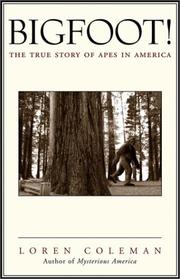
Bigfoot: The Life and Times of a Legend
Examines Bigfoot as folklore, media and culture.
eBay marketplace picks
Marketplace Samples
Live-tested eBay searches with available results related to this page.
Endnotes
1.
Source: Wikipedia
Link:https://en.wikipedia.org/wiki/Bigfoot
2.
Source: Wikipedia
Title: Jersey Devil
Link:https://en.wikipedia.org/wiki/Jersey_Devil
3.
Source: thrillist.com
Link:https://www.thrillist.com/travel/nation/iconic-american-cryptids-mothman-bigfoot-and-the-jersey-devil
Source snippet
Point Pleasant, WV · The Slide-Rock Bolter; Char-Man. Ojai Valley, CA · Champ; Bigfoot. Pacific Northwest · Pigman; The Jersey Devil...
4.
Source: Wikipedia
Link:https://en.wikipedia.org/wiki/Cryptozoology
5.
Source: Wikipedia
Title: Cryptid town
Link:https://en.wikipedia.org/wiki/Cryptid_town
6.
Source: folklife.si.edu
Title: mothman point pleasant west virginia
Link:https://folklife.si.edu/magazine/mothman-point-pleasant-west-virginia
Source snippet
cryptid revival of the last twenty years. Cryptids—creatures whose existence is unsubstantiated, like Bigfoot and the Loch Ness Monster—are...
7.
Source: cryptidempire.com
Title: Cryptids | American Folklore Art Jersey Devil
Link:https://cryptidempire.com/cryptids
Source snippet
Cryptids | American Folklore ArtJersey Devil - Cryptid Empire - Original... MothmanBigfootFlatwoods MonsterWendigoChupacabraJersey Devil...
Additional References
8.
Source: vice.com
Title: west virginia is for cryptid lovers welcome to the mothman festival
Link:https://www.vice.com/en/article/west-virginia-is-for-cryptid-lovers-welcome-to-the-mothman-festival/
Source snippet
West Virginia Is for Cryptid Lovers2 Oct 2025 —... Mothman, a cryptid who's become synonymous with fellow mythical American beasts Bigfo...
9.
Source: youtube.com
Link:http://www.youtube.com/watch?v=EmIEg7117mk
Source snippet
Mothman Point Pleasant tourism festival folklore The Mothman Festival: A Guide for the Hopelessly Superstitious Wandering The [United States]({{ 'united-states/' | relative_url }})...
10.
Source: amazon.de
Link:https://www.amazon.de/-/en/Mysterious-Creatures-American-Cryptids-Chupacabra/dp/B0BHC22JLH?tag=searcht-20
Source snippet
man, The Beast of Bray Road, The Mothman, The Jersey Devil, Chupacabra and...
11.
Source: blog.eyewire.org
Title: creepy cryptids jersey devil vs mothman
Link:https://blog.eyewire.org/creepy-cryptids-jersey-devil-vs-mothman/
Source snippet
Cryptids: Jersey Devil vs. Mothman17 Oct 2017 — Which of these mid-Atlantic cryptids is more your style? Jersey Devil. “Native” to the Pi...
12.
Source: researchrepository.wvu.edu
Title: Jersey. Devil, the Legend of Mothman
Link:https://researchrepository.wvu.edu/cgi/viewcontent.cgi?article=1017&context=munn
Source snippet
Folklore and West Virginian Identity Formation15 Jul 2025 — Rumors of sightings of creatures (known as “cryptids”) such as Mothman, Bigfo...
13.
Source: facebook.com
Link:https://www.facebook.com/groups/397294058643766/posts/428993392140499/
Source snippet
food chain. JD is a partially spiritual entity that our...
14.
Source: mattgyver.com
Title: cryptids of north america
Link:https://www.mattgyver.com/tutorials/2022/10/1/cryptids-of-north-america
Source snippet
1 Oct 2022 — The Cryptids of North America. Each cryptid was first doodled in a very small notebook, then brought into Adobe Illustrator...
15.
Source: youtube.com
Title: What’s it like to visit the MOTHMAN MUSEUM | Point Pleasant, West Virginia
Link:http://www.youtube.com/watch?v=5e8OBorWeNs
Source snippet
This Town Has Been Terrorized by a Monster for Over 50 Years...
16.
Source: youtube.com
Title: Fouke Monster Mart Arkansas What’s Inside This Stop?
Link:http://www.youtube.com/watch?v=RjUENYPjqMg
Source snippet
Exploring Washington State's Weird Folklore: Myths and Legends of the United States...
17.
Source: youtube.com
Title: This Town Has Been Terrorized by a Monster for Over 50 Years
Link:http://www.youtube.com/watch?v=2j4V7V4u6h0
Source snippet
The Mothman Festival: A Guide for the Hopelessly Superstitious...
Topic Tree