Within Sudan Strange
Was the Lau a Monster or a Marshland Mix Up?
The lau legend shows how wetlands, dangerous animals and colonial-era retellings can turn half-seen creatures into monster lore.
On this page
- Where the lau was reported
- What witnesses and writers described
- Pythons, catfish and wetland fear
Page outline Jump by section
Introduction
The lau is one of the most intriguing monster traditions associated with the Upper Nile marshes of what was historically southern Sudan, much of which now lies in South Sudan. Unlike many famous lake monsters, the lau was never described consistently. Some witnesses and storytellers spoke of an enormous snake, others of a giant fish with whisker-like appendages, while still others imagined something closer to a prehistoric reptile. That inconsistency is precisely what makes the story interesting. Rather than pointing towards a single unknown animal, the evidence suggests a blend of real wildlife, dangerous wetlands, oral tradition and colonial-era retellings. The lau survives as an excellent example of how genuine encounters with unfamiliar or frightening animals can evolve into enduring monster lore.
Where the lau was reported
Most accounts place the lau in the vast wetlands of the White Nile system, especially around the Sudd, Bahr el Zeraf, Lake No and neighbouring marshes of the Upper Nile. Early twentieth-century reports were collected while the region formed part of Anglo-Egyptian Sudan, meaning older literature usually describes the creature as a Sudanese mystery even though the principal locations now fall within South Sudan.[Cryptid Archives]cryptidarchives.fandom.comCryptid Archives Lau | Encyclopaedia of Cryptozoology | FandomCryptid Archives Lau | Encyclopaedia of Cryptozoology | Fandom
The setting mattered as much as the alleged creature itself. The Sudd is one of the world’s largest wetlands, a maze of floating vegetation, papyrus, deep channels and shifting islands. Visibility is often poor, animals disappear beneath mats of reeds, and echoes carry over long distances. Travellers unfamiliar with the marshes could easily mistake partial glimpses, unusual sounds or disturbed vegetation for something far larger than reality.
Several colonial officials, hunters and travellers recorded stories rather than claiming clear personal encounters. The creature therefore entered European literature through second-hand testimony gathered from Nuer, Dinka and Shilluk communities, with each retelling introducing small differences in names and descriptions.[Cryptid Archives]cryptidarchives.fandom.comCryptid Archives Lau | Encyclopaedia of Cryptozoology | FandomCryptid Archives Lau | Encyclopaedia of Cryptozoology | Fandom
What witnesses and writers described
Descriptions of the lau vary so dramatically that they are difficult to reconcile as observations of a single animal.
Recurring features include:
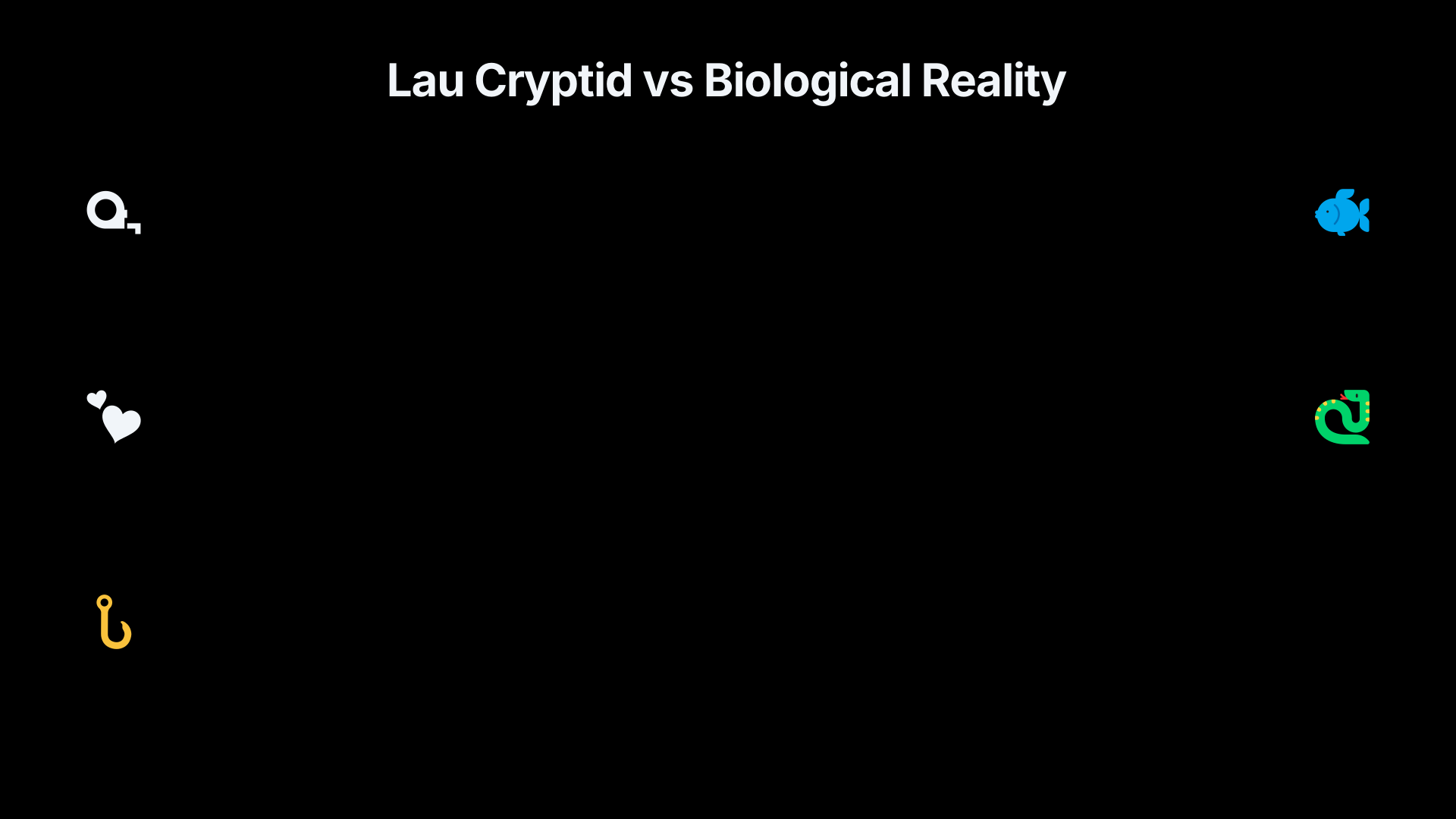
- a length ranging from roughly 4 metres to extravagant estimates approaching 30 metres;
- a thick, snake-like body living in rivers and marshes;
- yellow or brown colouring;
- whiskers, tentacles or hair-like projections around the head;
- loud booming or rumbling calls heard at night;
- great danger to canoe travellers.
Some traditions also claimed the creature left broad tracks through marsh vegetation or emerged from burrows in riverbanks. Others attributed supernatural qualities to it, including fatal powers associated with merely seeing the animal or possessing its bones as protective charms.[Cryptid Archives]cryptidarchives.fandom.comCryptid Archives Lau | Encyclopaedia of Cryptozoology | FandomCryptid Archives Lau | Encyclopaedia of Cryptozoology | Fandom
These descriptions became increasingly dramatic as they travelled into popular adventure writing. By the 1920s and later cryptozoological books, the lau was sometimes presented almost as an African equivalent of a sea serpent, despite the original reports containing much greater uncertainty.
One frequently repeated story concerns vertebrae allegedly taken from a lau killed near the Machar Marshes. The bones reportedly reached colonial officials and were forwarded for examination, but no convincing evidence ever emerged that they belonged to an unknown species. Contemporary correspondence instead suggested they may simply have come from a large rock python.[Cryptid Archives]cryptidarchives.fandom.comCryptid Archives Lau | Encyclopaedia of Cryptozoology | FandomCryptid Archives Lau | Encyclopaedia of Cryptozoology | Fandom
Pythons, catfish and wetland fear
The strongest modern explanation is not that witnesses invented everything, but that the lau became a composite creature assembled from several familiar animals encountered under difficult conditions.
Large African rock pythons are an obvious contributor. They inhabit Nile wetlands, can exceed six metres in exceptional cases, swim well and are capable of attacking large prey. A startled observer seeing only part of a massive python disappearing through reeds might reasonably exaggerate its size.[Cryptid Archives]cryptidarchives.fandom.comCryptid Archives Lau | Encyclopaedia of Cryptozoology | FandomCryptid Archives Lau | Encyclopaedia of Cryptozoology | Fandom
The reported whiskers point in a different direction. Many African catfish possess long sensory barbels that resemble hair or tentacles. Some species also produce audible sounds and can survive in oxygen-poor water, occasionally travelling across damp ground between pools. Bernard Heuvelmans, one of the founders of modern cryptozoology, argued that these characteristics explain several of the lau’s stranger features far better than an enormous reptile.[Cryptid Archives]cryptidarchives.fandom.comCryptid Archives Lau | Encyclopaedia of Cryptozoology | FandomCryptid Archives Lau | Encyclopaedia of Cryptozoology | Fandom
Other animals may also have contributed:
- Lungfish, whose elongated bodies and habit of burrowing into mud resemble some descriptions.
- Electric catfish, memorable enough to inspire stories of mysterious killing powers.
- Nile bichirs, whose dorsal finlets could appear as a crest when briefly seen near the surface.
- Crocodiles, hippopotamuses and floating vegetation, which can create confusing silhouettes in poor light.[Cryptid Archives]cryptidarchives.fandom.comCryptid Archives Lau | Encyclopaedia of Cryptozoology | FandomCryptid Archives Lau | Encyclopaedia of Cryptozoology | Fandom
Instead of one unidentified beast, the lau may therefore represent the accumulated characteristics of several impressive wetland animals encountered over generations.

Why the descriptions became so inconsistent
The contradictions are one of the strongest arguments against the lau representing a single undiscovered species.
Different communities gave different names, or applied familiar names to different dangerous water creatures. Colonial writers also struggled with unfamiliar languages and sometimes merged distinct traditions into one narrative. Later authors often copied earlier accounts while adding speculative illustrations influenced by contemporary fascination with surviving dinosaurs and prehistoric monsters.[Cryptid Archives]cryptidarchives.fandom.comCryptid Archives Lau | Encyclopaedia of Cryptozoology | FandomCryptid Archives Lau | Encyclopaedia of Cryptozoology | Fandom
This process gradually transformed a flexible body of local stories into what appeared, on paper, to be a single cryptid with an established appearance. In reality, the descriptions became less consistent rather than more precise as the legend spread.
Why the lau still matters
The lau remains significant not because it provides persuasive evidence for an unknown giant animal, but because it illustrates how monster traditions develop.
The Upper Nile wetlands contain genuinely dangerous wildlife, limited visibility and landscapes that naturally encourage uncertainty. Oral traditions preserve warnings about hazardous places, while colonial explorers often interpreted local stories through the lens of adventure literature and natural-history collecting. The result was a creature that borrowed features from snakes, fishes and folklore until it became a celebrated African mystery.
Today, the lau occupies an interesting middle ground in Sudanese and South Sudanese Fortean history. It is neither a straightforward myth nor a convincing zoological discovery. Instead, it demonstrates how fear, environment, language and imperfect observation can combine to create a memorable monster whose real origins probably lie in the remarkable ecology of the Upper Nile rather than in an undiscovered giant beast.
Amazon book picks
Further Reading
Books and field guides related to Was the Lau a Monster or a Marshland Mix-Up?. Use these as the next step if you want deeper reading beyond the article.


Still in Search of Prehistoric Survivors
Covers lesser-known monster traditions from around the world.
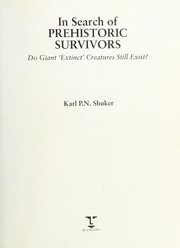
In search of prehistoric survivors
First published 1995. Subjects: Living fossils, Cryptozoology, Paleontology, Popular works, Extinction (Biology).
Abominable Science
Shows how monster reports emerge from folklore and misidentification.
eBay marketplace picks
Marketplace Samples
Live-tested eBay searches with available results related to this page.




Endnotes
1.
Source: cryptidarchives.fandom.com
Title: Cryptid Archives Lau | Encyclopaedia of Cryptozoology | Fandom
Link:https://cryptidarchives.fandom.com/wiki/Lau
2.
Source: thecreaturecodex.tumblr.com
Link:https://thecreaturecodex.tumblr.com/post/701486626339209216/lau
Source snippet
A celebration of monsters. Original monsters written for the Pathfinder RPG, 1st Edition thecreaturecodex LAU Imag...
3.
Source: cryptidarchives.fandom.com
Link:https://cryptidarchives.fandom.com/wiki/Lukwata
Source snippet
The largest known catfish in Africa is the vundu (Heterobranchus longifillis...
4.
Source: cryptidz.fandom.com
Link:https://cryptidz.fandom.com/wiki/Lau
Source snippet
Cryptid Wiki | FandomLAU Sign In to Save Save Edit * History * Purge * Talk (0) iframe LAU Artist's Rendering Sudan BACKGROUND TYPE Din...
5.
Source: toonboyfans2022.fandom.com
Title: Lau (Creature)
Link:https://toonboyfans2022.fandom.com/wiki/Lau_%28Creature%29
Source snippet
(Creature) | Toonboyfans2022 Wiki | FandomLAU (CREATURE) Sign In to Save Save Edit * History * Purge * Talk (0) iframe The lau was a cryp...
6.
Source: cryptidarchives.fandom.com
Title: Hichens, W. (1937) African Mystery Beasts. Discovery (Dec)
Link:https://cryptidarchives.fandom.com/wiki/Encyclopaedia_of_Cryptozoology%3AProject_CryptoResources/Hichens%2C_W.%281937%29_African_Mystery_Beasts._Discovery%28Dec%29
Source snippet
(1937) African Mystery Beasts. Discovery (Dec) | Encyclopaedia of Cryptozoology | Fandomin: Project CryptoResources ENCYCLOPAEDIA OF CRYP...
7.
Source: cryptidarchives.fandom.com
Link:https://cryptidarchives.fandom.com/wiki/Nsanga
Source snippet
Encyclopaedia of Cryptozoology | FandomLocal people told him of monsters in the marshes around the lake, and, although he did not see a...
8.
Source: cryptidarchives.fandom.com
Title: Lake Chad monster
Link:https://cryptidarchives.fandom.com/wiki/Lake_Chad_monster
Source snippet
Chad monster | Encyclopaedia of Cryptozoology | FandomLAKE CHAD MONSTER Sign In to Save Save Edit * History * Purge * Talk (0) iframe Lak...
Additional References
9.
Source: sciencedirect.com
Link:https://www.sciencedirect.com/science/article/abs/pii/S0160932725000286
Source snippet
ENDEAVOUR Volume 49, Issue 3, September 2025, 101005 In Vivo Hoops, loops and eyewitness reliability: a history of biologica...
Published: September 2025
10.
Source: sciencedirect.com
Link:https://www.sciencedirect.com/science/article/pii/S0160932725000286?dgcid=author
Source snippet
ENDEAVOUR Volume 49, Issue 3, September 2025, 101005 In Vivo Hoops, loops and eyewitness reliability: a history of biologica...
Published: September 2025
11.
Source: search.mandumah.com
Link:https://search.mandumah.com/Record/1373581
Source snippet
mandumah.comالوصف: رمزية التمساح في الثقافة النوبية:رمزية التمساح في الثقافة النوبية: دراسة ميدانية في الأنثروبولوجيا المصدر: | المجلة ال...
12.
Source: cambridge.org
Link:https://www.cambridge.org/core/journals/journal-of-african-history/article/abs/tribal-boundaries-and-border-wars-nuerdinka-relations-in-the-sobat-and-zaraf-valleys-c-186019761/97D0737AA38031D07CFCECFCECE5C754
Source snippet
1860–19761 | The Journal of African History | Cambridge CoreJanuary 22, 2009 — 96 ^{96} ‘Nuer District Commissioners Meeting’ (1943), CRO...
Published: January 22, 2009
13.
Source: jestressforgottenstories.com
Link:https://jestressforgottenstories.com/tag/monster/
Source snippet
monster – Jestress's Forgotten Books and StoriesSeptember 24, 2025 — MY REACTION AND SOME SPOILERS The lau is a cryptid in the real world...
Published: September 24, 2025
14.
Source: jordanzad.com
Title: حيوان غريب يثير الرعب في جامعة أسيوط بمصر | من هنا و هناك | زاد الاردن الاخباري
Link:https://www.jordanzad.com/index.php?id=255055&page=article
Source snippet
أخبار الأردنNovember 16, 2016 — الصفحة الرئيسية من هنا و هناك حيوان غريب يثير الرعب في جامعة أسيوط بمصر حيوان غريب يثير الرعب في جامعة أس...
Published: November 16, 2016
15.
Source: paperzz.com
Title: A Cultural Herpetology of Nile Crocodiles in Africawhere indexes are lacking
Link:https://paperzz.com/doc/8147445/a-cultural-herpetology-of-nile-crocodiles-in-africa
Source snippet
Texts, which included discussion of Nile crocodiles (beyond passing mentions) were selected, yielding 78 books by 57 authors. The geograp...
16.
Source: nature.com
Title: The Abyssinian Sources of the Nile1 | Nature
Link:https://www.nature.com/articles/117806a0
Source snippet
G. L.^{} Nature volume 117, page 806 (1926) * 607 Accesses * Metrics details ABSTRACT IN pursuance of the policy to...
17.
Source: latimes.com
Title: Enormous Perch Have Brought a Nightmare to Lake Victoria
Link:https://www.latimes.com/archives/la-xpm-1986-01-05-mn-24589-story.html
Source snippet
Times Archives Jan. 5, 1986 12 AM PT * Share via Close extra sharing options United Press International GLAND, Switzerland — Monstro...
18.
Source: pubmed.ncbi.nlm.nih.gov
Link:https://pubmed.ncbi.nlm.nih.gov/40570750/
Source snippet
2025 Sep;49(3):101005. doi: 10.1016/j.endeavour.2025.101005. Epub 2025 Jun 25. HOOPS, LOOPS AND EYEWITNESS RELIABILITY: A HISTORY OF BIOL...
Topic Tree