Within Portugal Mysteries
Portugal's Monsters, Spirits And Old Legends
Portugal's legends of creatures, spirits and enchanted places show how communities turned fears and landscapes into lasting stories.
On this page
- Creatures such as the Coca and Bicho Papão
- Werewolf and supernatural traditions
- Folklore as cultural memory
Page outline Jump by section
Introduction
Portugals monsters and folklore traditions are less about a catalogue of frightening beasts than about the stories communities used to explain danger, morality and the unknown. Across villages, mountains, rivers and old paths, Portuguese tradition preserved tales of child-snatching bogey figures, enchanted women guarding hidden treasures, shape-shifters, spirits and creatures that lived just beyond the edge of ordinary life. These beings were not usually treated as modern monster sightings; they belonged to a world of oral storytelling where a strange noise in the woods, a dangerous place or a social warning could become a memorable character.[RTP Antena 1]antena1.rtp.ptbestiario tradicional portuguesRTP Antena 1Bestirio Tradicional Portugus | RTP Antena 1November 13, 2018…
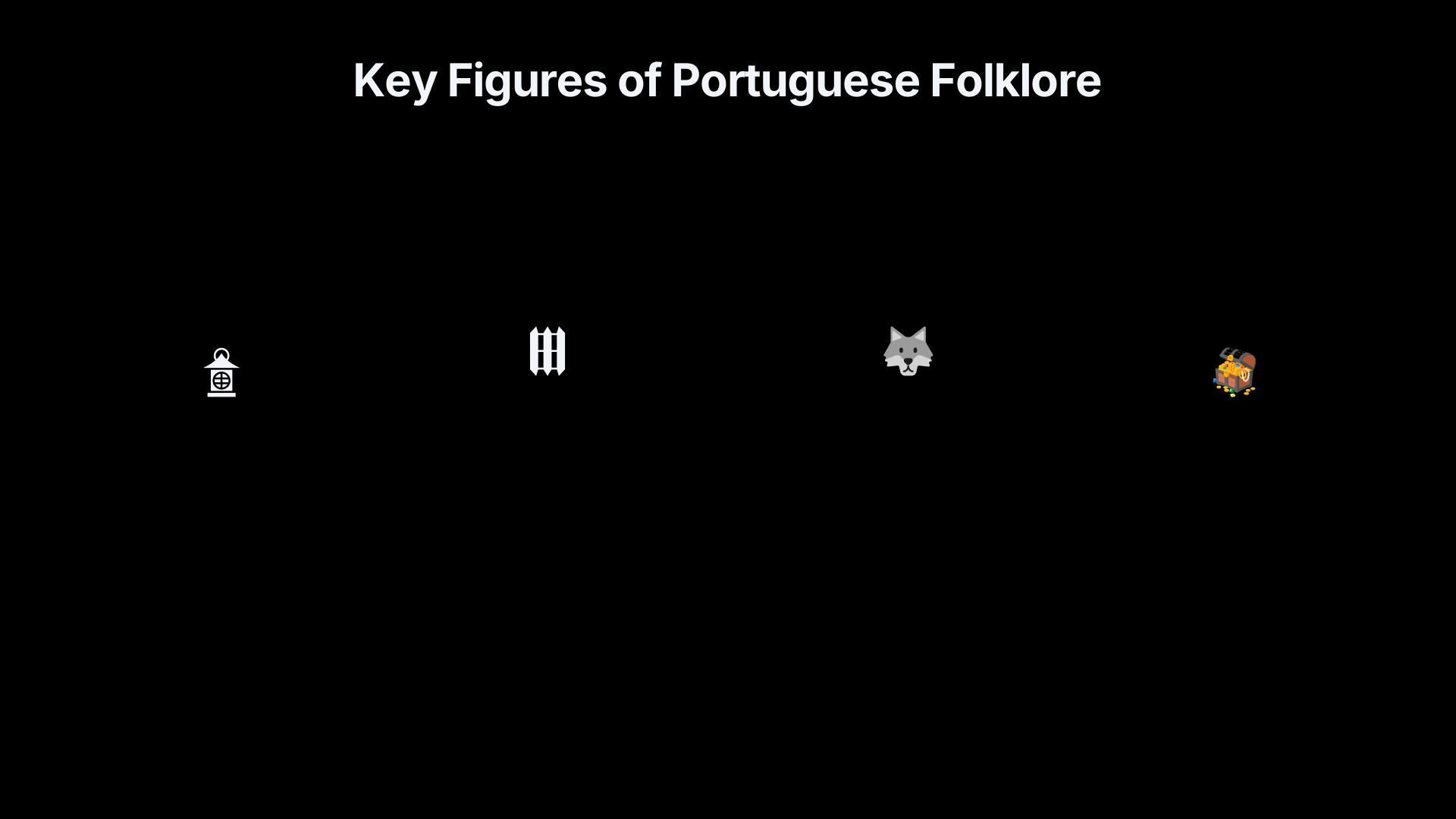
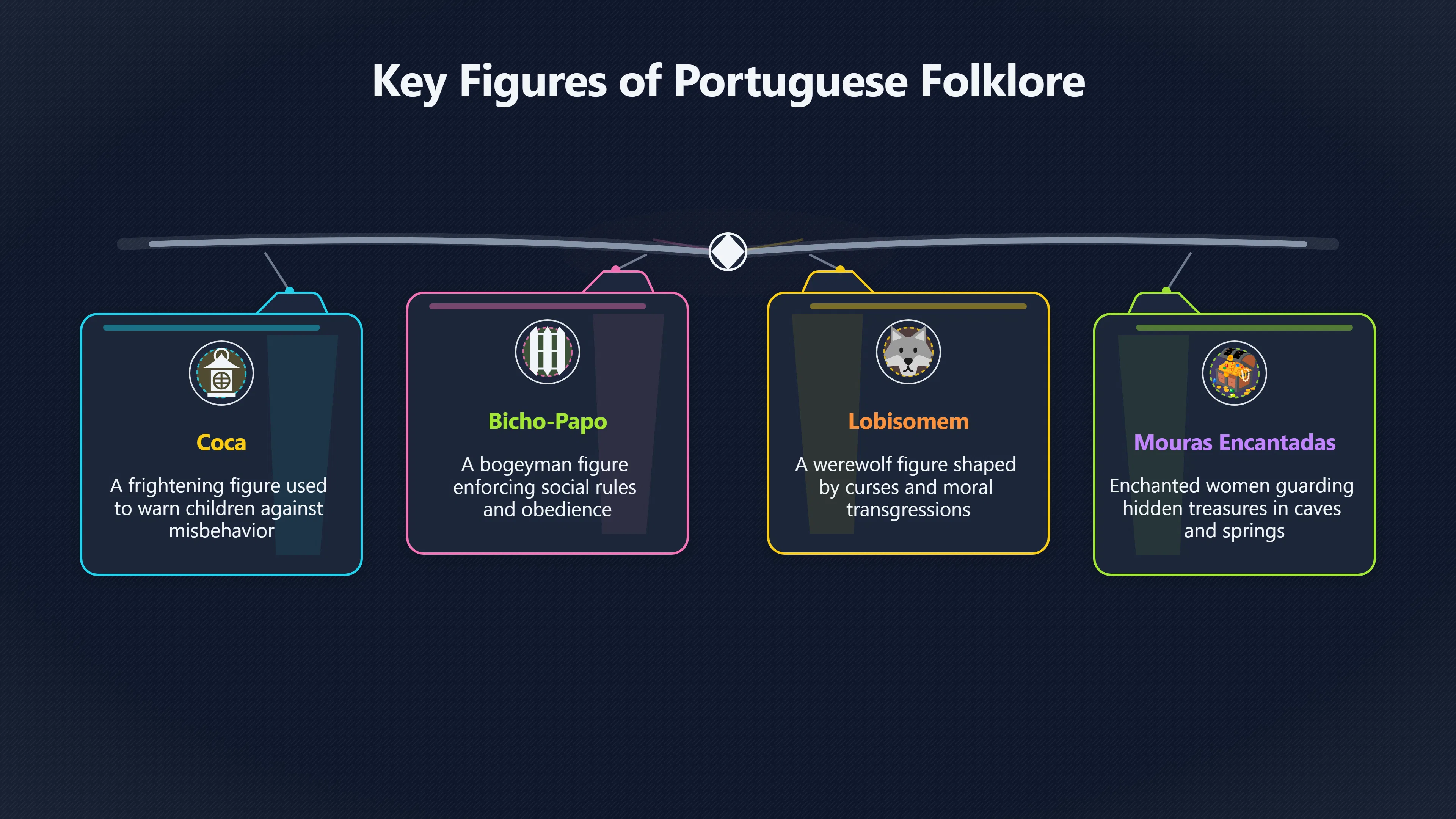
Among the best-known figures are the Coca, a frightening child-warning creature related to the broader European bogeyman tradition; the Bicho-Papo, the Portuguese equivalent of the terrifying figure used to frighten children into obedience; the Lobisomem, Portugals werewolf tradition; and the Mouras Encantadas, mysterious enchanted beings linked with caves, springs and hidden treasure. These legends reveal how Portuguese folklore blended medieval imagination, Christian beliefs, local landscapes and memories of older cultures.[wikipedia.org]WikipediaCoca (folcloreCoca (folclore
Creatures such as the Coca and Bicho-Papo
The Coca is one of Portugals most distinctive fear figures. Unlike a modern monster with a fixed appearance, the Coca exists mainly as an idea: a threatening presence used to warn children against wandering, misbehaving or staying awake when they should be sleeping. Traditional descriptions vary, but the creature has often been imagined as a frightening female figure or a shadowy being associated with darkness and fear. Some traditions connected it with a hollow object such as a lantern-like head, while others treated it simply as an unseen danger waiting outside the home.[Wikipedia]WikipediaCoca (folcloreCoca (folclore
This uncertainty is part of what made the Coca effective. A creature that has no single shape can adapt to every village and every generation. Parents could invoke the Coca in the same way many European communities used bogeyman figures: not as a formal religious belief, but as a storytelling tool that gave children a name for dangers they could not understand.
The Bicho-Papo worked in a similar way. It belongs to the wider family of bogeyman traditions found throughout Europe and beyond, where adults transform social rules into a frightening character. In Portuguese-speaking traditions, the Bicho-Papo became associated with the consequences of disobedience, particularly for children who refused to sleep or behaved badly.[Brasil Escola]brasilescola.uol.com.brBrasil Escola Bicho-papo: o que diz a lenda, origemBrasil EscolaBicho-papo: o que diz a lenda, origem - Brasil Escola…
Modern audiences sometimes search for a single real Portuguese monster behind these names, but folklore rarely works that way. These figures survive because they are flexible. The details change, but the purpose remains: turning invisible fears into stories that can be remembered and passed on.
Werewolf and supernatural traditions
The Portuguese werewolf, or Lobisomem, shows how European supernatural traditions were reshaped locally. Unlike the Hollywood image of a wolf-man transformed under a full moon, Iberian werewolf stories often focused on curses, family circumstances and moral consequences. In some Portuguese versions, a person could become a werewolf because of a supernatural fate or because of a transgression that placed them outside normal society.[Brasil Escola]brasilescola.uol.com.brBrasil Escola Lobisomem: a lenda, de onde surgiu e no BrasilBrasil EscolaLobisomem: a lenda, de onde surgiu e no Brasil - Brasil Escola…
The Lobisomem was also connected with the countryside at night: crossroads, abandoned paths, fields and isolated places where ordinary sounds could become frightening. The figure reflected older rural concerns about travelling after dark, unexplained illnesses and the fear that someone familiar could become something unknown.
Portuguese folklore also contains related supernatural figures that blur the line between monster, spirit and warning. The Tardo, for example, appears in some traditions as a nocturnal being associated with strange encounters, while collections of Portuguese folklore creatures include many smaller household spirits, frightening beings and strange animals. Folklorists and modern collectors have attempted to preserve these scattered traditions, including works such as Bestirio Tradicional Portugus, which gathered dozens of creatures from oral traditions and earlier ethnographic collections.[RTP Antena 1]antena1.rtp.ptbestiario tradicional portuguesRTP Antena 1Bestirio Tradicional Portugus | RTP Antena 1November 13, 2018…
The importance of these stories is not that they prove the existence of supernatural beings. Their value lies in showing how communities interpreted uncertainty. Before modern explanations for disease, unusual behaviour, sounds in the landscape or unexplained events were widely available, folklore provided narratives that made frightening experiences understandable.
Enchanted places and the Mouras Encantadas
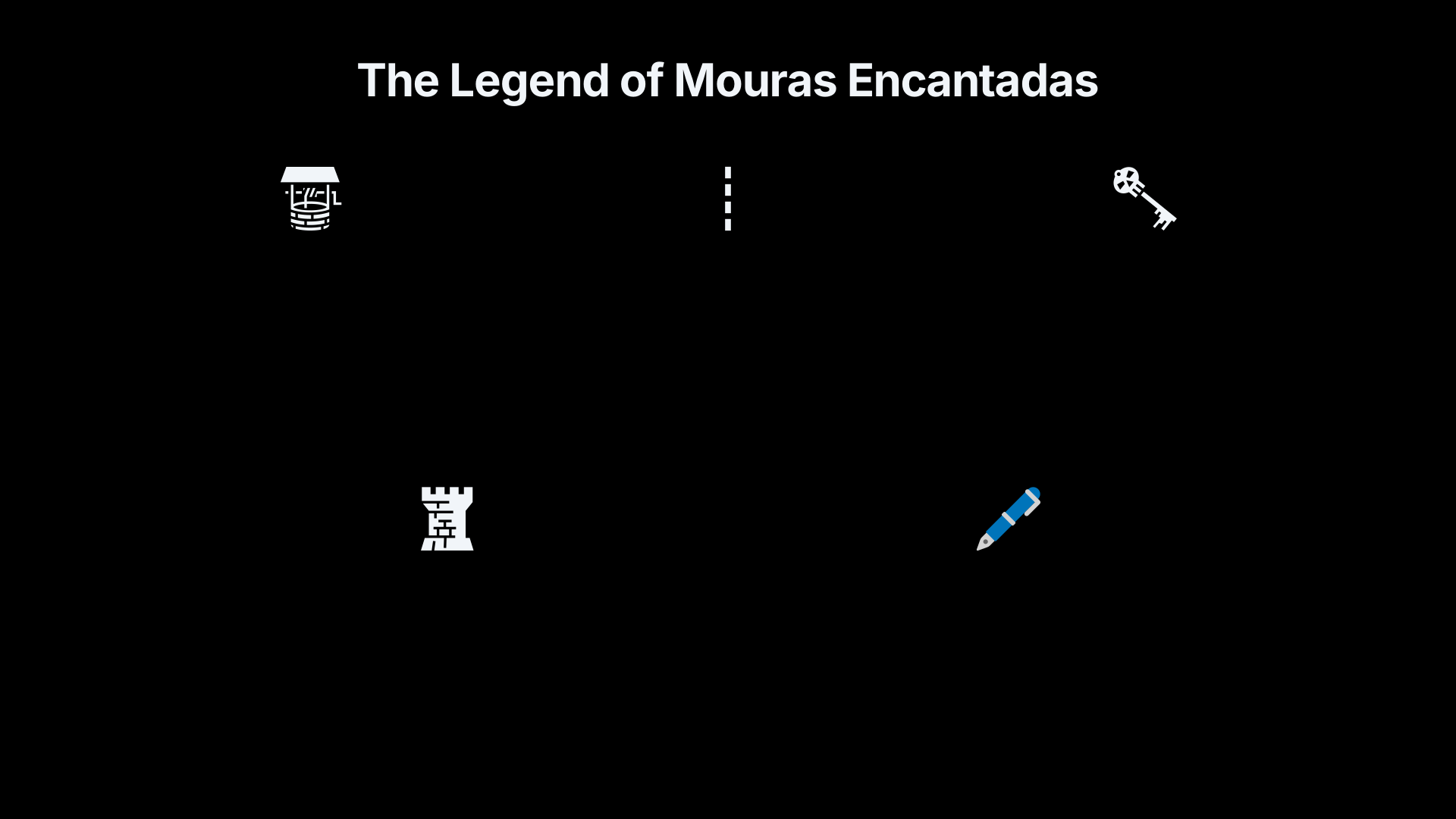
Among Portugals most enduring legends are the Mouras Encantadas, mysterious enchanted figures associated with springs, caves, rocks and ancient sites. These stories often describe a beautiful woman who appears in a lonely place, sometimes offering a reward to someone who can break her enchantment or complete a difficult task. Versions vary greatly, but the recurring themes are hidden treasure, forgotten histories and the strange power of certain landscapes.[Wikipedia]WikipediaMoura encantadaMoura encantada
The Mouras are especially interesting because they occupy an uncertain space between monster, fairy being and ancestral memory. They are not simply villains. In many tales they are tragic figures, trapped by enchantment and waiting for release. Their stories became attached to old ruins, wells and natural features, giving ordinary locations a deeper identity.
Some interpretations connect these legends with memories of the medieval Islamic presence in the Iberian Peninsula, while others see them as part of older European traditions about enchanted women, water spirits and hidden worlds. Folklore scholars generally treat these explanations carefully because oral traditions often combine several historical layers rather than preserving a single origin story.[Wikipedia]WikipediaMoura encantadaMoura encantada
A related example is the legend of the Dama P-de-Cabra (Lady of the Goats Foot), a supernatural woman from Portuguese medieval legend. The story was preserved in medieval genealogical traditions and later popularised by the writer Alexandre Herculano in the nineteenth century. It tells of a mysterious noblewoman whose hidden non-human nature is eventually revealed, blending romance, family history and supernatural warning.[Wikipedia]WikipediaLenda da Dama P-de-CabraLenda da Dama P-de-Cabra
Folklore as cultural memory
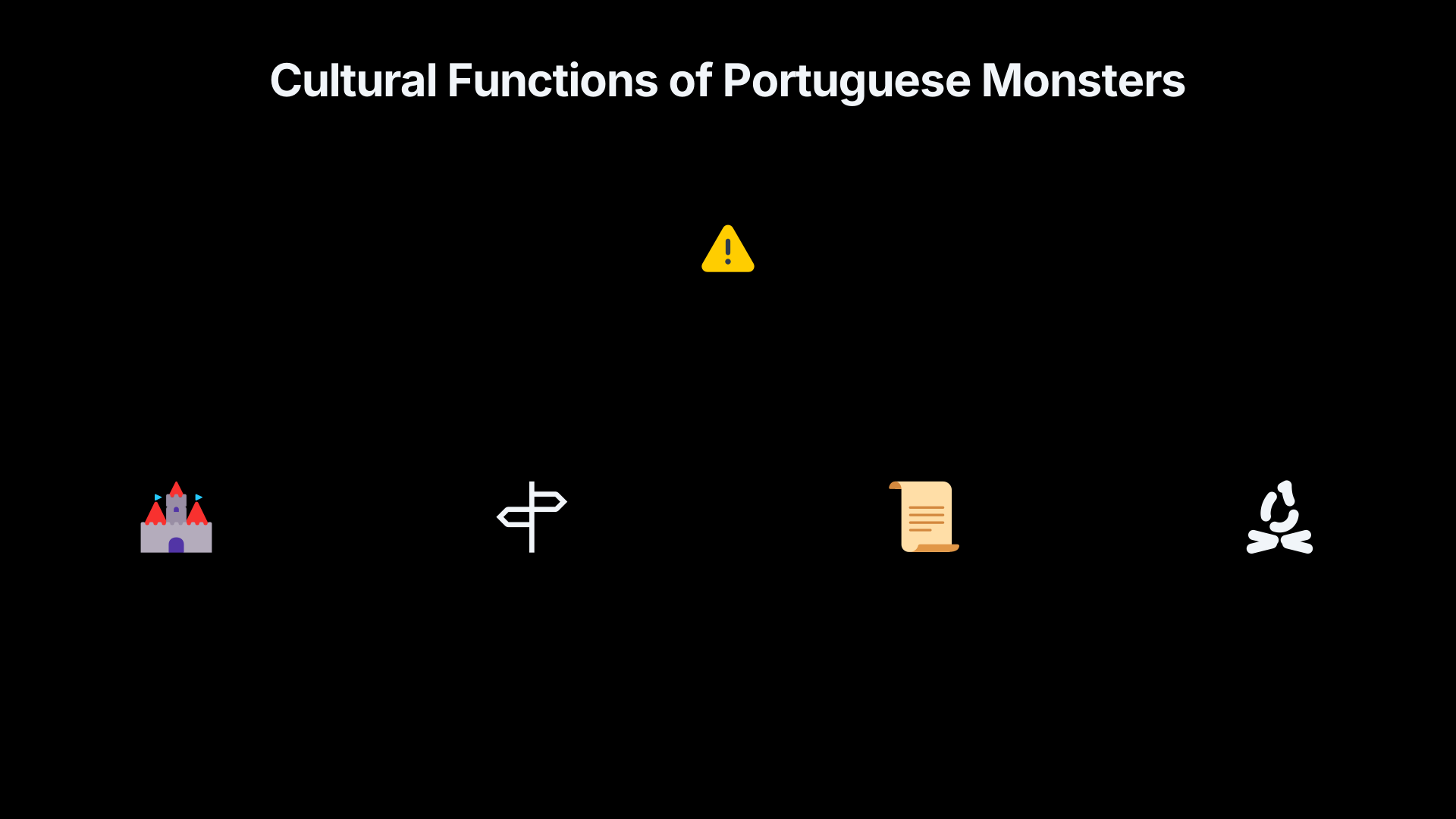
Portuguese monsters were never only about fear. They were also ways of remembering places and preserving community identity. A haunted spring, a dangerous mountain path or an old ruined building could become meaningful because stories attached human drama and supernatural mystery to it.
This is why folklore creatures often reveal more about the people who told the stories than about the creatures themselves. The Coca reflects concerns about childhood safety. The Lobisomem reflects anxieties about transformation and social boundaries. The Mouras Encantadas preserve a sense that landscapes contain forgotten histories. Even the strangest legends are often rooted in ordinary human experiences: fear of the dark, curiosity about abandoned places, suspicion of outsiders and the desire to explain what cannot easily be explained.
Modern Portugal continues to reinterpret these traditions through books, festivals, tourism and popular culture. Collections of traditional creatures have helped bring lesser-known beings back into public awareness, while local legends remain part of how communities describe their own landscapes and histories.[RTP Antena 1]antena1.rtp.ptbestiario tradicional portuguesRTP Antena 1Bestirio Tradicional Portugus | RTP Antena 1November 13, 2018…
The enduring appeal of Portuguese folklore is therefore not simply that it contains monsters. It is that these monsters preserve a record of imagination itself: the fears people inherited, the places they considered mysterious and the stories they chose to keep alive.
Amazon book picks
Further Reading
Books and field guides related to Portugal's Monsters, Spirits And Old Legends. Use these as the next step if you want deeper reading beyond the article.

The Oxford companion to fairy tales
Supports discussion of monsters, spirits, and European storytelling traditions.

The Book of Mythical Beasts and Magical Creatures
Accessible creature mythology reference for general audiences.

The Penguin Book of Dragons
Covers legendary creatures and myth traditions that overlap with monster folklore.
A dictionary of fairies
Useful for supernatural beings and traditional folklore study.
eBay marketplace picks
Marketplace Samples
Live-tested eBay searches with available results related to this page.
Endnotes
1.
Source: antena1.rtp.pt
Title: bestiario tradicional portugues
Link:https://antena1.rtp.pt/antena1/bestiario-tradicional-portugues/
Source snippet
RTP Antena 1Bestirio Tradicional Portugus | RTP Antena 1November 13, 2018...
Published: November 13, 2018
2.
Source: Wikipedia
Title: Coca (folclore)
Link:https://pt.wikipedia.org/wiki/Coca_%28folclore%29
3.
Source: Wikipedia
Title: Moura encantada
Link:https://pt.wikipedia.org/wiki/Moura_encantada
4.
Source: Wikipedia
Title: Lenda da Dama P-de-Cabra
Link:https://pt.wikipedia.org/wiki/Lenda_da_Dama_P%C3%A9-de-Cabra
5.
Source: portugal.com
Title: Portuguese Islands Folk Tales
Link:https://www.portugal.com/history-and-culture/portuguese-islands-folk-tales/
Source snippet
26, 2026 PORTUGUESE ISLANDS FOLK TALES Written By Z Eduardo Penedo June 26, 2026 0 Image: azores-islands-portugalBoth the Azores and...
Published: June 26, 2026
6.
Source: portugal.com
Title: Photo by Sergei
Link:https://www.portugal.com/history-and-culture/northern-portugals-folk-tales/
Source snippet
Northern Portugals Folk Tales - Portugal.comJanuary 16, 2024 NORTHERN PORTUGALS FOLK TALES Written By Z Eduardo Penedo January 16, 2...
Published: January 16, 2024
7.
Source: media.rtp.pt
Link:https://media.rtp.pt/zigzag/hora-do-conto/lenda-da-dama-pe-cabra/
Source snippet
da Dama P de Cabra | Zig Zag | RTP v2LENDA DA DAMA P DE CABRA Hora do Conto iframe Na Lenda da Dama P de Cabra, o nobre Diogo Lopes an...
8.
Source: brasilescola.uol.com.br
Title: Brasil Escola Bicho-papo: o que diz a lenda, origem
Link:https://brasilescola.uol.com.br/folclore/bichopapao.htm
Source snippet
Brasil EscolaBicho-papo: o que diz a lenda, origem - Brasil Escola...
9.
Source: brasilescola.uol.com.br
Title: Brasil Escola Lobisomem: a lenda, de onde surgiu e no Brasil
Link:https://brasilescola.uol.com.br/folclore/lobisomem.htm
Source snippet
Brasil EscolaLobisomem: a lenda, de onde surgiu e no Brasil - Brasil Escola...
10.
Source: portugalnummapa.com
Title: Na verdade, alargando o espectro, um lugar
Link:https://www.portugalnummapa.com/lobisomem/
Source snippet
Lobisomem - Portugal Num MapaMarch 9, 2016 LOBISOMEM by Ricardo Braz Frade | 9 Mar, 2016 | Lendas, Mitos e Lendas Image: Lobisomem O lo...
Published: March 9, 2016
11.
Source: brasilescola.uol.com.br
Title: Uma das lendas mais tradicionais do folclore brasileiro a da Cuca, ser
Link:https://brasilescola.uol.com.br/amp/folclore/cuca.htm
Source snippet
uol.com.brCuca: origem e o que diz a lenda no Brasil - Brasil EscolaCUCA Cuca, uma lenda presente no folclore brasileiro, conhecida por...
12.
Source: fantasia.fandom.com
Title: Mouras encantadas
Link:https://fantasia.fandom.com/pt/wiki/Mouras_encantadas
Source snippet
encantadas | Fantastipedia | FandomMOURAS ENCANTADAS Entre para salvar Salvar Editar * Editar cdigo-fonte * Histrico * Atualizar * Disc...
13.
Source: lendas-do-folclore-brasileiro.fandom.com
Link:https://lendas-do-folclore-brasileiro.fandom.com/pt-br/wiki/Lobisomem
Source snippet
Uma verso diz que a stima criana em uma sequncia de filhos do mesmo sexo tornar-se- um lobisomem...
14.
Source: ci.nii.ac.jp
Title: nii.ac.jp Ci Nii Books
Link:https://ci.nii.ac.jp/ncid/BB15942210
Source snippet
Books - Lendas de Portugal: contos de mouras encantadasLENDAS DE PORTUGAL: CONTOS DE MOURAS ENCANTADAS AUTHOR(S) * * Chaves, Lus BIBLI...
Additional References
15.
Source: wook.pt
Link:https://www.wook.pt/en/livro/bestiario-tradicional-portugues-nuno-matos-valente/18979212
Source snippet
Livro - WOOKOctober 1, 2016 Image: Bestirio Tradicional Portugus - Preview [Button: ] Image: Capa do artigo Bestirio Tradicional Por...
Published: October 1, 2016
16.
Source: ualg.pt
Link:https://www.ualg.pt/conferencia-lendas-sobre-mouras-encantadas-tradicao-algarvia-portuguesa-europeia-ou-universal
Source snippet
April 27, 2017 CONFERNCIA "AS LENDAS SOBRE MOURAS ENCANTADAS: TRADIO ALGARVIA, PORTUGUESA, EUROPEIA OU UNIVERSAL?" 27 Abril 2017 15h...
Published: April 27, 2017
17.
Source: tabulasupernaturalis.com
Link:https://www.tabulasupernaturalis.com/
Source snippet
Folklore, Cryptids & Mythical Creatures Atlas | Tabula SupernaturalisLEGENDS & CRYPTIDS A Scholarly Compendium of Global Folklore Carto...
18.
Source: pantheon.ufrj.br
Link:https://pantheon.ufrj.br/handle/11422/21850
Source snippet
ufrj.brPantheon: Lendas das mouras encantadas: uma anlise das perspectivas tradicional e popular acerca da influncia moura e a coexist...
19.
Source: pantheon.ufrj.br
Link:https://pantheon.ufrj.br/handle/11422/21850?locale=pt_BR
Source snippet
ufrj.brPantheon: Lendas das mouras encantadas: uma anlise das perspectivas tradicional e popular acerca da influncia moura e a coexist...
20.
Source: pantheon.ufrj.br
Link:https://pantheon.ufrj.br/handle/11422/21850?mode=full
Source snippet
ufrj.brPantheon: Lendas das mouras encantadas: uma anlise das perspectivas tradicional e popular acerca da influncia moura e a coexist...
21.
Source: novaresearch.unl.pt
Link:https://novaresearch.unl.pt/en/publications/god-created-according-to-their-kinds-the-sea-monsters-and-every-l/
Source snippet
created, according to their kinds, the sea monsters and every living creature that moves in the waters: The centrality of the monstrous i...
22.
Source: novaresearch.unl.pt
Link:https://novaresearch.unl.pt/en/publications/suspeita-terror-e-atra%C3%A7%C3%A3o-seres-noturnos-e-imirabilia-iem-t%C3%BAmulos/
Source snippet
unl.ptSuspeita, terror e atrao: seres noturnos e >mirabilia >em tmulos rgios portugueses do sculo XIV - Universidade NOVA de LisboaD...
23.
Source: repositorio.ulisboa.pt
Link:https://repositorio.ulisboa.pt/entities/publication/49714c7b-b506-4130-9915-475c337d0e93
Source snippet
monstruosidade ao servio da arte romnica portuguesa: das fontes expresso artsticaJanuary 31, 2022 Publicao A MONSTRUOSIDADE AO...
Published: January 31, 2022
24.
Source: repositorioaberto.uab.pt
Link:https://repositorioaberto.uab.pt/entities/publication/c80d98cf-f579-42aa-9461-6dc5aee593fb
Source snippet
uab.ptMouras, mouros e mourinhos encantados em lendas do norte e sul de PortugalMOURAS, MOUROS E MOURINHOS ENCANTADOS EM LENDAS DO NORTE...
Topic Tree