Within Guinea Weird
When a Mask Becomes a Village Presence
Baga masks turn sculpture, dance, secrecy and social authority into public encounters with the uncanny.
On this page
- Nimba and D'mba in performance
- The serpent headdress and spiritual medicine
- Why outsiders misread ritual objects
Page outline Jump by section
Introduction
Among Guinea’s most striking expressions of the uncanny are the masked performances of the Baga peoples of the Atlantic coast. To an outsider, they can appear to be spectacular wooden sculptures animated by dancers. Within Baga ritual life, however, they were never simply artworks or theatrical costumes. A mask became a temporary public presence through performance, music, costume and restricted ritual knowledge, making invisible social and spiritual forces visible. This transformation is what gives Baga masquerades their enduring fascination in the context of Guinea’s strange folklore. They occupy a space between religion, public ceremony, social authority and visual illusion, where an apparently inert object becomes a being that commands respect without requiring outsiders to accept supernatural claims as historical fact.[metmuseum.org]metmuseum.orgThe Metropolitan Museum of Arta-Mantsho-ña-Tshol (master of medicine) headdress - BagaThe primary physical manifestation of a-Mantsho-ña…
Rather than asking whether the masks were “really” inhabited by spirits, historians and anthropologists have focused on a more revealing question: how ritual performance created an experience in which a village collectively encountered a powerful presence. That distinction explains why these traditions remain central to understanding Guinea’s ritual history and why they have so often been misunderstood by collectors, missionaries and tourists.[Christie's]christies.comChristie'sMASQUE D'EPAULE BAGA, D'MBA/YAMBABaga shoulder…En effet, d'autres œuvres baga remarquables sont apparues au même moment, not…
Nimba and D’mba in performance
The best-known Baga mask is commonly called Nimba, although specialists increasingly prefer the Baga name D’mba. Earlier European writers frequently described it as a fertility goddess or even an idol. More recent scholarship argues that this oversimplifies its role. D’mba is better understood as an ideal image of mature womanhood, agricultural abundance, nurture, endurance and social continuity rather than a single named deity.[dma.org]dma.orgOpen source on dma.org.
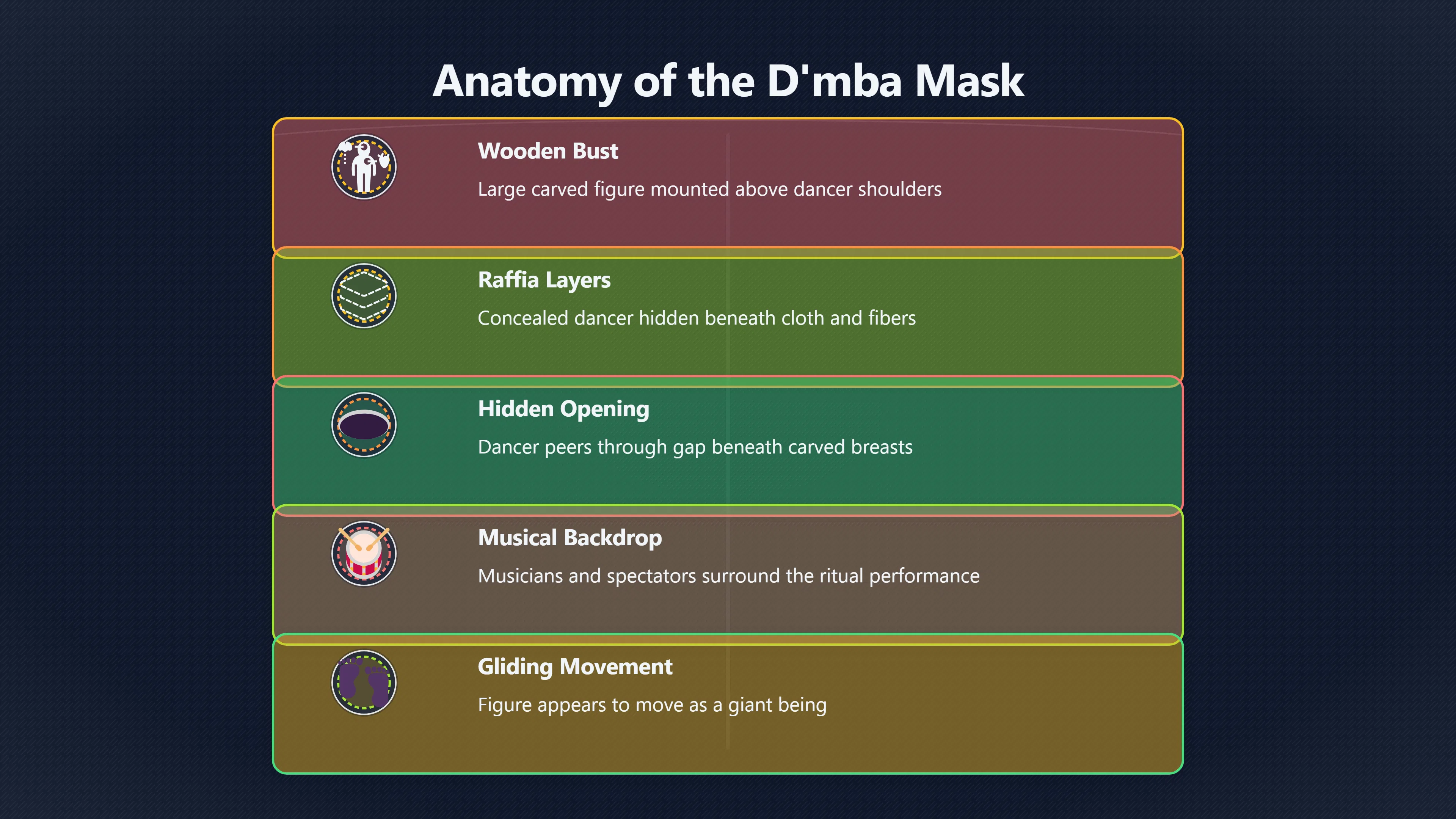
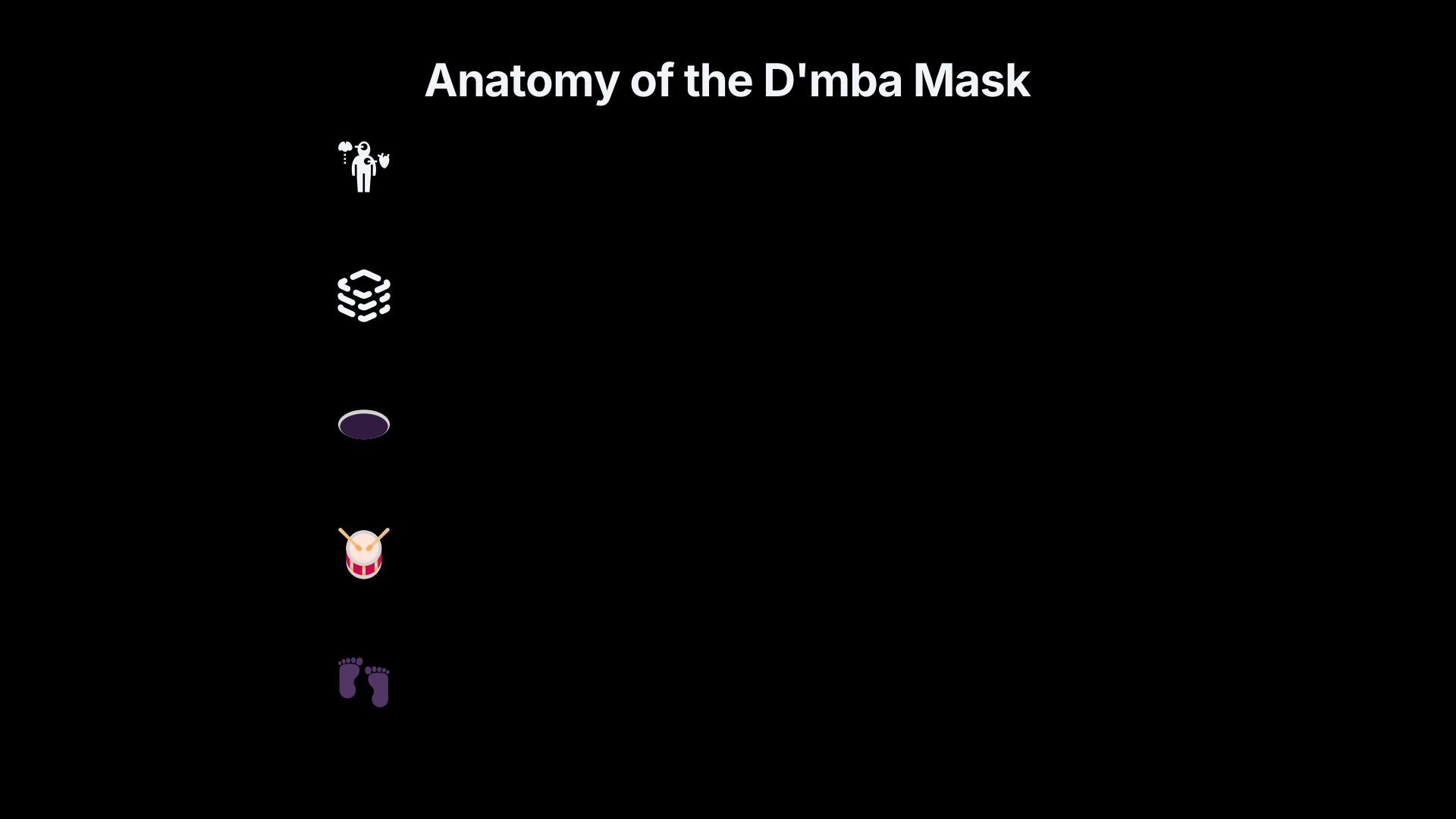
The sculpture itself is only part of the performance. A large carved wooden bust is mounted above the shoulders of a concealed male dancer, whose entire body disappears beneath layers of raffia and cloth. The dancer peers through an opening hidden beneath the carved breasts while musicians and spectators surround the performance. The resulting figure appears to glide across the village as a being far larger than any ordinary person. Because the audience cannot see the performer, attention shifts away from the individual and towards the ritual presence represented by the mask.[dma.org]dma.orgOpen source on dma.org.
D’mba traditionally appeared during events marking communal renewal rather than private worship. These included harvest celebrations, marriages, births, funerals of important people and other occasions when the well-being of the community was at stake. The performance celebrated fertility in a broad sense: healthy families, successful farming, continuity between generations and the moral responsibilities expected of adults. Its power therefore lay as much in social instruction as in religious symbolism.[christies.com]christies.comChristie'sMASQUE D'EPAULE BAGA, D'MBA/YAMBABaga shoulder…En effet, d'autres œuvres baga remarquables sont apparues au même moment, not…
For readers interested in Fortean traditions, the striking feature is not that witnesses claimed to see obvious miracles. Instead, the ritual deliberately blurred categories that modern observers often keep separate. Sculpture became movement, a hidden dancer became a visible public authority, and symbolic ideas were experienced as a living encounter.
The serpent headdress and spiritual medicine
If D’mba represents the most recognisable Baga image, the towering serpent headdress known as a-Mantsho-ña-Tshol, often translated as “master of medicine”, demonstrates even more clearly how ritual power was understood.
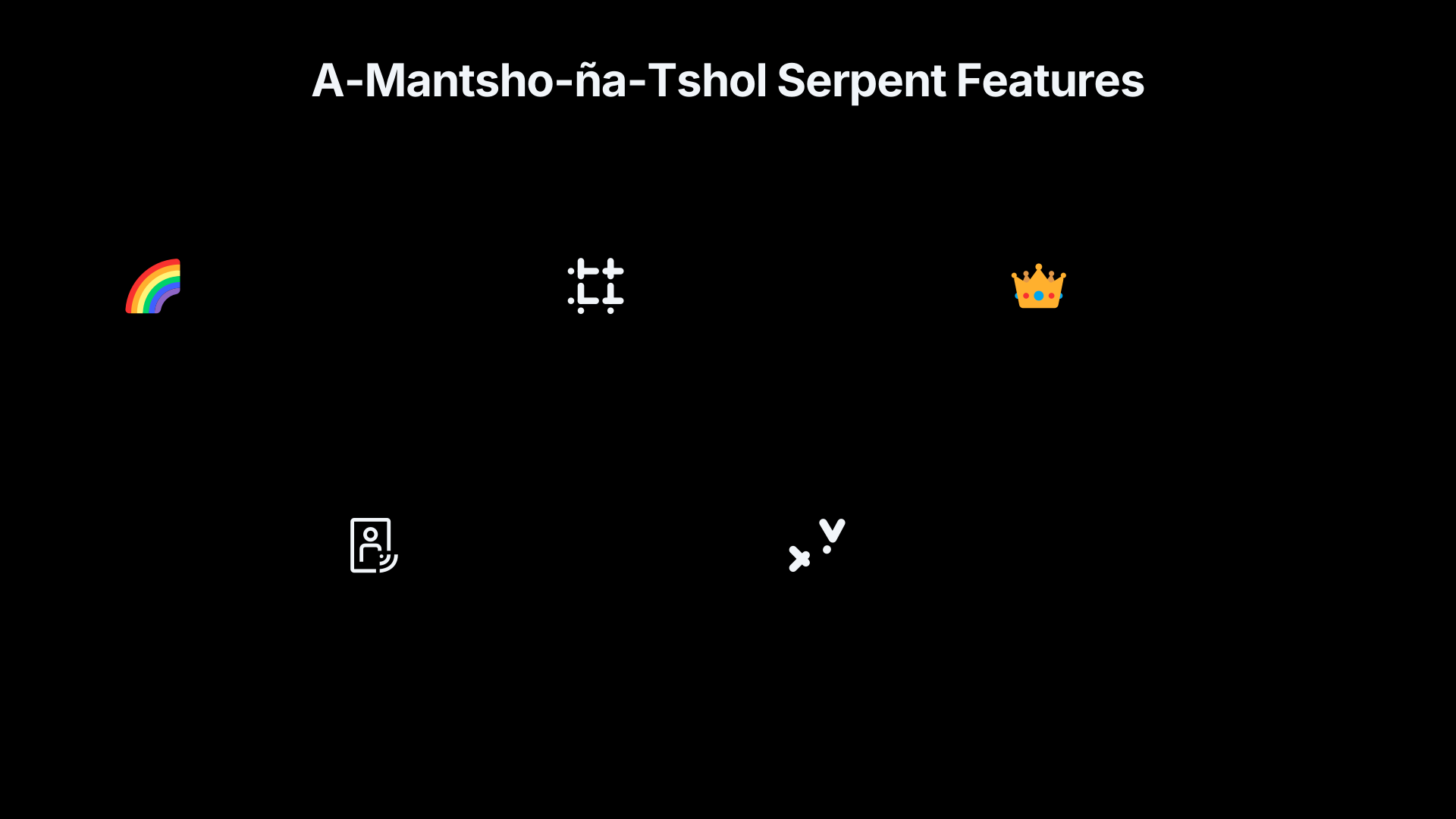
According to the Metropolitan Museum of Art, the spiritual force associated with the headdress could manifest in different forms: as a gigantic aquatic serpent, a being with human characteristics or even the rainbow emerging from river sources after rain. These changing forms linked the being with beginnings and endings, rivers, rainfall, life, death and the continuation of family lineages. The emphasis is on transformation rather than fixed appearance, making it one of Guinea’s richest examples of shape-shifting ritual imagery.[The Metropolitan Museum of Art]metmuseum.orgThe Metropolitan Museum of Arta-Mantsho-ña-Tshol (master of medicine) headdress - BagaThe primary physical manifestation of a-Mantsho-ña…
The headdress itself is remarkable. A long painted serpent sculpture was fixed above a hidden framework worn by a dancer concealed beneath palm fibres, cloth and feathers. Despite its size, performers manipulated it with impressive speed and balance, creating sweeping movements that reinforced the impression that the serpent possessed an independent life. The choreography was itself part of the ritual power: movement completed what the carving alone could never achieve.[The Metropolitan Museum of Art]metmuseum.orgThe Metropolitan Museum of Arta-Mantsho-ña-Tshol (master of medicine) headdress - BagaThe primary physical manifestation of a-Mantsho-ña…
The serpent was associated with male ritual knowledge and with leaders of secret associations and important lineages. Public access to such ritual objects was limited, not because they were museum pieces but because authority depended partly upon controlling when, where and by whom these presences could appear. The headdresses also served as emblems of clan identity and could feature in competitions between family groups while simultaneously carrying broader spiritual meanings.[The Metropolitan Museum of Art]metmuseum.orgThe Metropolitan Museum of Arta-Mantsho-ña-Tshol (master of medicine) headdress - BagaThe primary physical manifestation of a-Mantsho-ña…
For modern readers, the title “master of medicine” can be misleading if interpreted through contemporary healthcare. In this context, “medicine” referred to ritual power, protection and the management of unseen forces affecting community life, not simply the treatment of physical illness. The serpent therefore occupied a place where healing, authority, environmental symbolism and social order overlapped.
Why outsiders so often misread the masks
European travellers, colonial officials, missionaries and early collectors frequently described Baga masks as idols, pagan gods or primitive curiosities. Such descriptions reflected European assumptions more than Baga beliefs.
Modern research has challenged several persistent misunderstandings:
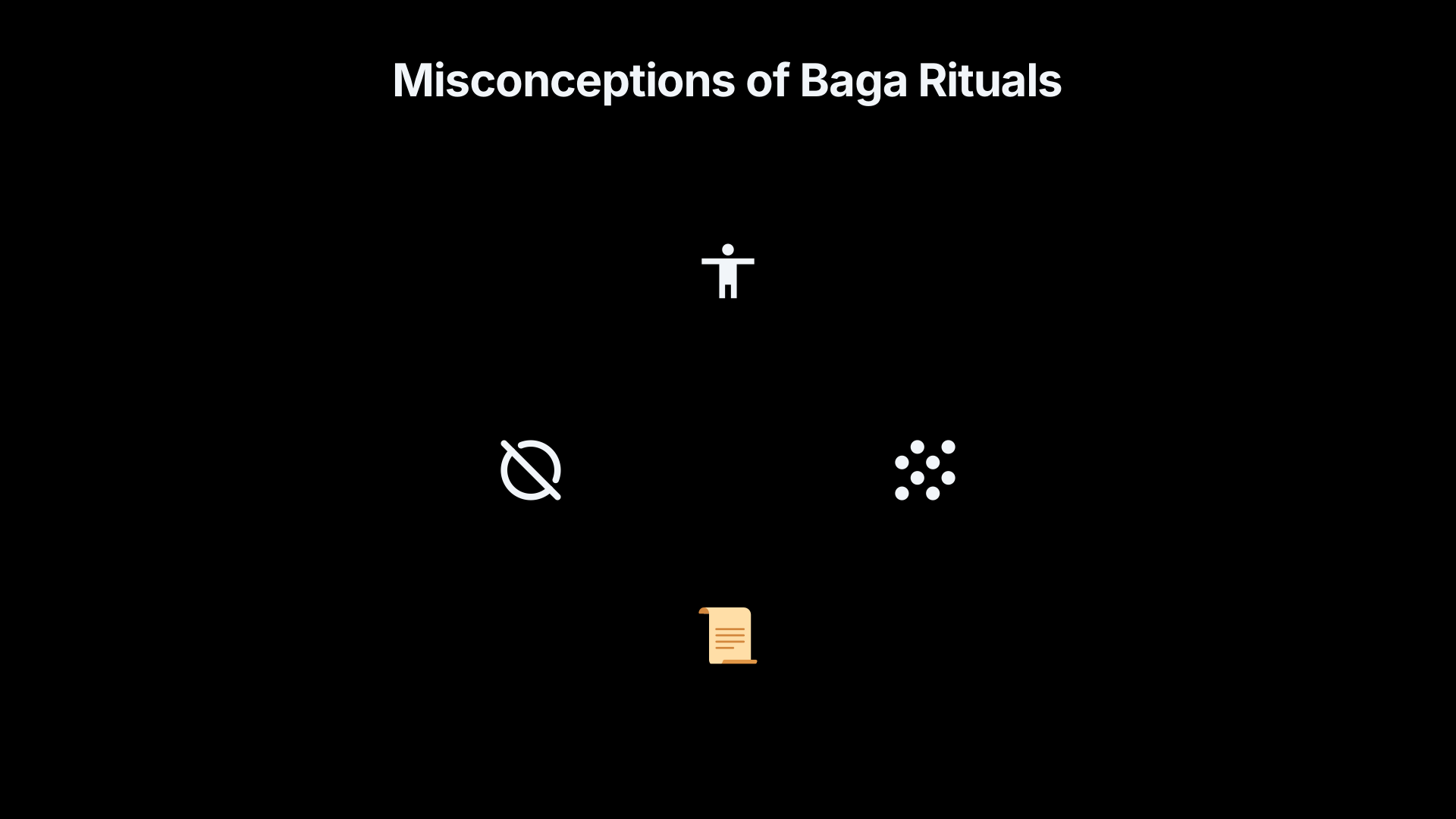
- They were not merely sculptures. Their meaning depended upon dance, music, costume, restricted knowledge and communal participation.
- They were not simply objects of worship. Many represented ideals, relationships or spiritual forces rather than individual deities.
- Their secrecy had a social function. Restricting knowledge reinforced initiation systems, lineage authority and ritual responsibility rather than creating mystery for its own sake.
- Their visual impact was intentional. Their extraordinary scale and movement produced emotional responses that helped communicate authority without requiring spoken explanation.[metmuseum.org]metmuseum.orgThe Metropolitan Museum of Arta-Mantsho-ña-Tshol (master of medicine) headdress - BagaThe primary physical manifestation of a-Mantsho-ña…
This distinction matters for anyone interested in Fortean traditions. The uncanny effect came not from claims of supernatural spectacle alone but from a carefully constructed public performance in which the community temporarily accepted a different way of understanding presence and identity.
Ritual disruption and revival
The continuity of many Baga masquerades was interrupted during the twentieth century. Islamisation had already reduced some older ritual practices in parts of the region, and after Guinea’s independence the government of President Ahmed Sékou Touré discouraged many traditional ceremonial institutions in favour of a new national political culture. Numerous ritual performances ceased, while carvings entered museums and private collections abroad.[The Metropolitan Museum of Art]metmuseum.orgThe Metropolitan Museum of Arta-Mantsho-ña-Tshol (master of medicine) headdress - BagaThe primary physical manifestation of a-Mantsho-ña…
Beginning in the 1990s, however, some communities revived older performances, including the great serpent masquerades. These revivals were not simply attempts to recreate a frozen past. They reflected changing ideas about cultural identity, heritage and the value of traditions once dismissed as backward. As a result, many surviving performances today exist in a complex space between ritual practice, historical memory and cultural preservation.[The Metropolitan Museum of Art]metmuseum.orgThe Metropolitan Museum of Arta-Mantsho-ña-Tshol (master of medicine) headdress - BagaThe primary physical manifestation of a-Mantsho-ña…
Why these traditions belong in Guinea’s strange-history record
Baga masked spirits are compelling not because they provide evidence for the supernatural in any straightforward sense, but because they demonstrate how ritual can make invisible ideas feel vividly present. The experience depended on concealment, choreography, symbolism and shared expectation rather than on spectacle alone.
For believers within the tradition, the masquerades embodied genuine spiritual and social power that maintained the health of the community. More sceptical observers interpret them as highly sophisticated ritual theatre expressing collective values through performance. Neither perspective diminishes their cultural significance. Their enduring fascination lies precisely in the way they dissolve familiar boundaries between sculpture and living being, performer and presence, entertainment and authority.
Within Guinea’s wider landscape of unusual traditions, few examples illustrate the intersection of ritual, mystery and public experience more clearly than the Baga masquerades. They remain among the country’s strongest reminders that the uncanny is not always found in unexplained events; sometimes it is deliberately created, carefully managed and collectively understood through ritual itself.
Amazon book picks
Further Reading
Books and field guides related to When a Mask Becomes a Village Presence. Use these as the next step if you want deeper reading beyond the article.
African religions & philosophy
Explains religious frameworks behind masquerade traditions.

eBay marketplace picks
Marketplace Samples
Example marketplace items related to this page. Use the search link to explore similar finds on eBay.
Endnotes
1.
Source: metmuseum.org
Link:https://www.metmuseum.org/art/collection/search/312304
Source snippet
The Metropolitan Museum of Arta-Mantsho-ña-Tshol (master of medicine) headdress - BagaThe primary physical manifestation of a-Mantsho-ña...
2.
Source: dma.org
Link:https://dma.org/art/collection/object/3069658
3.
Source: christies.com
Link:https://www.christies.com/en/lot/lot-5911763
Source snippet
Christie'sMASQUE D'EPAULE BAGA, D'MBA/YAMBABaga shoulder...En effet, d'autres œuvres baga remarquables sont apparues au même moment, not...
4.
Source: Wikipedia
Title: Baga people
Link:https://en.wikipedia.org/wiki/Baga_people
Additional References
5.
Source: randafricanart.com
Link:https://www.randafricanart.com/Baga_Bansonyi_serpent.html
Source snippet
Baga Bansonyi snakeBaga serpent (Bansonyi or a-Mantsho-na-Tshol) The Baga Snake, “Bansonyi,” normally displayed as an upright static scul...
6.
Source: artic.edu
Link:https://www.artic.edu/artworks/192676/snake-headdress-a-mantsho-na-tshol-or-inap
Source snippet
Snake Headdress (a-Mantsho-ña-Tshol or Inap)This snake headdress was worn in performances that required extraordinary strength and agilit...
7.
Source: un.org
Link:https://www.un.org/ungifts/nimba
Source snippet
ited NationsNimba | United Nations GiftsThis artwork is a headdress that is worn over the shoulders of a male dancer accompanied by an...
8.
Source: sm76626.wordpress.com
Title: five baga objects of african tribal art
Link:https://sm76626.wordpress.com/2014/10/12/five-baga-objects-of-african-tribal-art/
Source snippet
Baga Objects of African Tribal Art12 Oct 2014 — The top of the headdress features the horns of an antelope, the body of a serpent, and th...
9.
Source: youtube.com
Title: Art of the Baga: A Drama of Cultural Reinvention
Link:https://www.youtube.com/watch?v=ovAZyo_Xlh8
Source snippet
"6ft Baga Snake, African Art Snobs & A Reimagined Kota Print...
10.
Source: pinterest.com
Title: Baga artist
Link:https://www.pinterest.com/pin/inspiration-for-art-and-furniture–505810601873179475/
Source snippet
Guinea24 Aug 2014 —... Mantsho-ña-Tshol... Snake. Snake Headdress. Serpent-shaped Musical Instrument. Traditional African Masks And Shi...
11.
Source: youtube.com
Link:https://www.youtube.com/watch?v=U9nskX7TlYI
Source snippet
r. 92K views; The Professor Who Taught...
12.
Source: youtube.com
Title: D’mba mask (Baga peoples)
Link:https://www.youtube.com/watch?v=RP4yPAErFbw
Source snippet
Traditional Dance for D'mba, the Nimba mask...
13.
Source: youtube.com
Title: Traditional Dance for D’mba, the Nimba mask
Link:https://www.youtube.com/watch?v=pggvZ6n46BU
14.
Source: youtube.com
Link:https://www.youtube.com/watch?v=X8ijSnzTY_8
Source snippet
Art of the Baga: A Drama of Cultural Reinvention...
Topic Tree