What Makes Nauru's Weird History So Unsettling?
Nauru is not famous for a crowded catalogue of UFO waves, lake monsters or spectacular newspaper phantoms.
Page outline Jump by section
Introduction
The evidence is uneven. Nauru’s government preserves a small set of traditional stories online, while older ethnographic material survives through books and archives rather than a large public folklore corpus. That thinness matters. It means the strongest strange material is not a long list of “cases”, but a few durable motifs: ancestors and spirits, sea-beings, sky journeys, transformed landscapes and the way a tiny island can become mythic through both story and extraction.[archive.org]archive.orgOpen source on archive.org.
What Counts as Nauruan Forteana?
Nauru’s strange-history record is best understood in three layers. The first is traditional cosmology and oral narrative: stories of Areop-Enap, Eigigu and Detora, where the sky, sea, moon, fishing grounds and underworld are animated by beings who cross the boundary between human and more-than-human worlds. The second is spirit belief and ancestor practice, including references to family ancestors, protective presences, mediums and a spirit land called Buitani. The third is modern uncanny landscape, created not by ghosts but by phosphate mining: a central plateau of limestone pinnacles, damaged land and abandoned industrial traces that make Nauru look, to outsiders, like a ruin made by a mythic curse rather than by commerce.[omnika.org]omnika.orgAreop-Enap, Two Snails, and the WormAreop-Enap, Two Snails, and the Worm
This matters because Nauru’s “weirdness” is often mishandled. Travel writing and online oddity lists can turn the country into a punchline: the tiny island with no capital, no rivers, ruined land and strange politics. A better reading keeps people and sources in view. Nauru is a real country of about 21 square kilometres, with a raised fossilised coral landscape, a narrow habitable coastal belt and a heavily mined interior; those facts explain why its traditional stories lean so strongly towards sea, sky, family lines and the rare inland places that still hold water or vegetation.[dfat.gov.au]dfat.gov.aunauru country briefnauru country brief
The Spider, the Shell and the World-Making Trick
The most striking Nauruan creation story centres on Areop-Enap, commonly described as a spider or spider-like creator. In one accessible summary, the world begins with Areop-Enap and the sea; the creator encounters a great shell, works within its darkness, and the parts of the shell, snails and worm become the earth, sky, sun, moon, sea and Milky Way. OMNIKA’s mythology index summarises the tale as a Nauruan creation myth in which Areop-Enap uses a mussel shell, two snails and a worm to separate sky and earth and bring light into the world.[Omnika]omnika.orgAreop-Enap, Two Snails, and the WormAreop-Enap, Two Snails, and the Worm
For a Fortean reader, the story has the right kind of strangeness: not a monster report, but a compact cosmology in which small, almost comic creatures perform vast cosmic labour. The worm’s effort becomes the sea; the shell becomes the world; humble marine life becomes astronomical architecture. It is tempting to call this “surreal”, but that can flatten it. On an island surrounded by reef and dependent on marine life, a shell-world is not random fantasy. It is a creation account built from the materials closest to hand: sea, shell, animal, darkness, light and the difficulty of opening a closed world.[Omnika]omnika.orgAreop-Enap, Two Snails, and the WormAreop-Enap, Two Snails, and the Worm
Sceptically, the Areop-Enap story should not be treated as a cryptic account of a literal geological event. It is a mythic narrative, preserved through later recording and retelling. But it does carry what folklore often carries: a map of what a community notices. Nauru’s story makes the ocean primary, not background scenery. It places creation in a marine container. It imagines sky and earth as separated parts of one enclosing form. That makes it valuable not as “evidence” for an anomaly, but as evidence of a distinctive island imagination.[Internet Archive]archive.orgOpen source on archive.org.
Spirits, Ancestors and the Island of Buitani
The clearest ghostly strand in the available sources is not a Victorian-style haunted house tradition, but ancestor and spirit belief. Summaries of Nauruan traditional religion describe belief in Eijebong, in ancestral offerings, and in a spirit land or spirit island called Buitani. One cultural source notes that family ancestors were honoured with food offerings on an altar outside each homestead, while other summaries describe dead spirits being invoked through trance by a medium and associated with Buitani.[everyculture.com]everyculture.comEvery Culture Religion and expressive cultureEvery Culture Religion and expressive culture
This is the sort of material that belongs in country-level Forteana because it shows how the dead were imagined as socially present. The strange claim is not merely “there were ghosts”; it is that unseen family presences, ritual offerings and spirit geography formed part of how people understood household, land and obligation. In this setting, a ghost is less a jump-scare apparition than a relationship: the dead remain part of the moral and domestic landscape.[Every Culture]everyculture.comEvery Culture Religion and expressive cultureEvery Culture Religion and expressive culture
The evidence also warns against overconfidence. Much of what survives publicly is filtered through colonial-era ethnography, later encyclopaedic summaries and modern web retellings. Even when those summaries point back to named works, such as Solange Petit-Skinner’s The Nauruans: Nature and Supernature in an Island of the Central Pacific, access is limited and the chain of transmission is not always easy for a general reader to audit. That does not make the traditions worthless; it means they should be presented as recorded traditions and belief summaries, not as a neat, complete “Nauruan ghost system”.[Internet Archive]archive.orgOpen source on archive.org.
Eigigu and the Moon as a Haunted Sky Story
The story of Eigigu is one of the most vivid traditional tales preserved on the Republic of Nauru’s own website. In the official version, a woman called Eigigu lives with her husband Gadia and three daughters, all also called Eigigu. The story begins with family life and puberty rites, then moves into a more uncanny register involving injury, separation and ascent. Other retellings describe Eigigu climbing a tree that reaches the sky and becoming associated with the moon.[Nauru Government]nauru.gov.nrNauru Government The Story of EigiguNauru Government The Story of Eigigu
What makes the story Fortean is not that it reports a modern sighting, but that it gives the moon a human presence. In the French encyclopaedic retelling, Nauruans are said to identify Eigigu on clear nights as a figure seated on the crescent moon. Read literally, that is a sky apparition; read culturally, it is a lunar myth that turns an astronomical shape into a remembered person.[Wikipedia]WikipediaOpen source on wikipedia.org.
A sceptical explanation is straightforward: the crescent moon naturally invites pattern-seeing, and many cultures humanise the moon through stories. But that does not empty the tale of value. Eigigu shows how a local story can turn the sky into a family drama. It is also a reminder that “strange lights in the sky” do not always begin as UFO reports. Sometimes the strangeness is older, quieter and woven into the way a community explains what a night sky looks like.[Nauru Government]nauru.gov.nrNauru Government The Story of EigiguNauru Government The Story of Eigigu
Detora, Undersea Kin and the King of the Sea
The government-preserved story of Detora begins with an undersea family. Denunengawongo lives beneath the sea with his wife Eiduwongo and their son Madaradar; the child reaches the shore of an island, is found by Eigeruguba, marries, and later the family line produces Detora. As Detora grows, he is taught fishing knowledge by his father and told about grandparents who live under the sea.[Nauru Government]nauru.gov.nrNauru Government The story of Detora, the King of the seaNauru Government The story of Detora, the King of the sea
This is classic maritime wonder material. The sea is not empty water; it is a place of kinship, instruction and power. Detora’s world includes underwater relatives, special hooks, fishing contests and the possibility that expertise comes from contact with beings below the surface. In modern paranormal terms, one might be tempted to compare such tales with merfolk, sea spirits or undersea kingdoms elsewhere. Within Nauru, the more grounded interpretation is that the story sacralises fishing knowledge and turns practical skill into a heroic inheritance.[Nauru Government]nauru.gov.nrNauru Government The story of Detora, the King of the seaNauru Government The story of Detora, the King of the sea
That dual reading is important. Believers in the old story-world could see Detora as part of a living spiritual geography. A folklorist or sceptic might see a narrative that encodes social values: respect for elders, specialist knowledge, the dangers of envy among siblings, and the importance of the sea as provider. The tale’s power comes from holding both together. It is weird because it is marvellous; it lasts because it is useful.[Nauru Government]nauru.gov.nrNauru Government The story of Detora, the King of the seaNauru Government The story of Detora, the King of the sea
The “Ghost Isle” Made by Phosphate
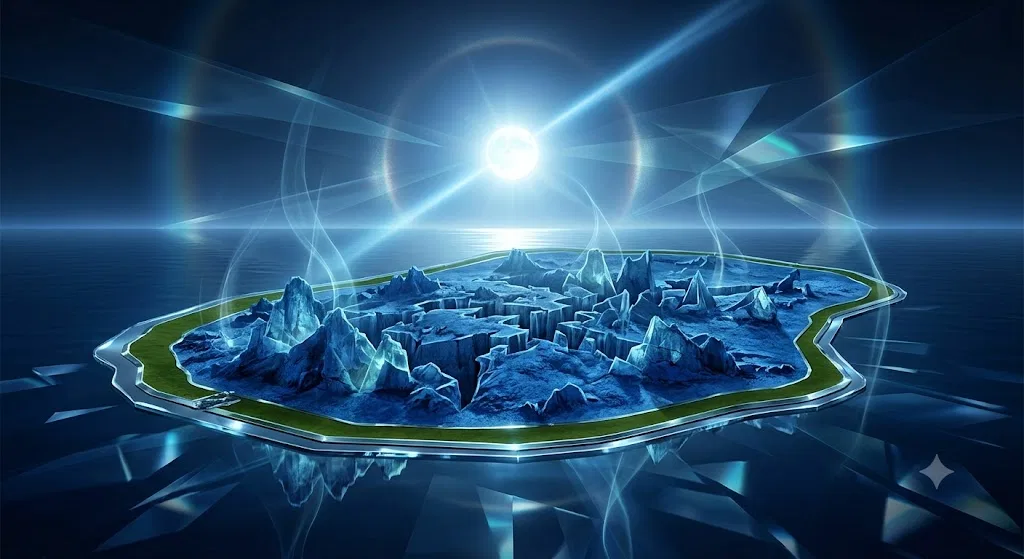
Nauru’s most modern uncanny image is not a phantom but a landscape. Phosphate mining removed much of the central plateau’s usable surface, leaving jagged limestone pinnacles and a damaged interior. A peer-reviewed land restoration study states that about 80 per cent of Nauru has been mined for phosphate, leaving limestone pinnacles and land that is largely unusable. Nauru’s own Department of Human Resources describes inland pinnacles as a familiar sight and an icon that reminds young and old of the island’s history.[PMC]pmc.ncbi.nlm.nih.govPMCMining, land restoration and sustainable developmentPMCMining, land restoration and sustainable development
This is where the Fortean tone becomes uncomfortable. The landscape looks anomalous, but the cause is known. It is not a cursed plateau in any supernatural sense; it is an extractive ruin. Yet that does not make it less eerie. The central “Topside” can read like a petrified forest, a battlefield or a maze of stone teeth. A 1954 Australian newspaper item even carried the headline “Nauru As ‘Ghost Isle’ In 50 Years”, reporting concern over the future of the phosphate-producing island’s inhabitants. The phrase is melodramatic, but it caught a real fear: what happens when an island’s wealth is also the thing that eats its land?[Trove]trove.nla.gov.auOpen source on nla.gov.au.
The strongest sceptical reading is also the strongest moral reading. No paranormal explanation is needed. The “ghost” is a metaphor produced by mining, colonial administration and the long delay between profit and repair. Nauru took Australia to the International Court of Justice over phosphate lands, claiming breaches connected with trusteeship obligations and rehabilitation; the case was later discontinued after settlement. That legal history gives the haunted-landscape image a documentary backbone.[International Court of Justice]icj-cij.orgOpen source on icj-cij.org.
Buada Lagoon and the Strange Value of Water
Nauru has no rivers, and that simple fact gives its rare water places an outsized imaginative weight. Public travel and country-profile sources describe Nauru as a 21-square-kilometre island without rivers, dependent on rainfall collection and desalination, with Buada Lagoon standing out as a rare inland water feature.[nauruisland.org]nauruisland.orgOpen source on nauruisland.org.
Buada Lagoon is not a lake monster site in the familiar Loch Ness sense. There is no strong evidence for a major Nauruan monster tradition attached to it in the accessible sources. Its Fortean interest lies elsewhere: it is an oasis-like anomaly in a dry, porous, mined island landscape. Where water is scarce, a still inland lagoon easily becomes a place where stories, memories and ecological anxieties cluster.[nauruisland.org]nauruisland.orgOpen source on nauruisland.org.
The practical history is just as interesting as any rumour. Nauruans traditionally practised milkfish aquaculture, catching juvenile fish and raising them in Buada Lagoon; this made the lagoon a managed food source as well as a striking natural feature. That transforms the place from “mysterious pond” into a living cultural technology: a body of water that linked fish, family, food and island survival.[Wikipedia]WikipediaOpen source on wikipedia.org.
Missing UFO Waves, Thin Archives and Honest Uncertainty
A fresh search for Nauru-specific UFO waves, anomalous rains, phantom animals or well-documented newspaper marvels turns up little that is strong enough to carry a responsible public article. There are scattered false starts: aviation anecdotes about Nauru weather, generic “strange island” travel pieces, and search results where “ghost” refers to metaphor, entertainment listings or unrelated places. None of these amount to a robust Nauruan UFO or cryptid tradition.[Trove]trove.nla.gov.auOpen source on nla.gov.au.
That absence is itself worth saying. Small islands often appear in global Forteana only when outsiders notice them, misread them or fold them into wider Pacific mystery tropes. Nauru’s accessible record does not support turning it into a hotspot of flying saucers or lake beasts. The stronger, more honest page is one that foregrounds indigenous story, spirit belief and the uncanny material consequences of mining.[nauru.gov.nr]nauru.gov.nrNauru Government Nauruan StoriesNauru Government Nauruan Stories
The best future evidence would come from oral-history projects, Nauruan-language materials, local radio archives, school collections, church records, family traditions and careful newspaper research across Australian and Pacific archives. Until then, the correct tone is curious but restrained. Nauru’s strange record is not empty; it is simply not the same kind of record one finds in countries with large tabloid archives or heavily commercialised ghost tourism.
Why Nauru’s Weird History Still Has Cultural Pull
Nauru’s Fortean appeal comes from compression. Almost everything is close together: ocean, reef, mined plateau, lagoon, government district, church, family land, ancestral memory and global resource politics. On a larger landmass, creation myths, ghost beliefs and industrial ruins might feel like separate subjects. On Nauru, they press against each other. A spider creates the world from shell and sea; a girl is remembered in the moon; a fishing hero moves between shore and undersea kin; a mined interior becomes a field of stone pinnacles; a newspaper imagines the island as a future ghost.[omnika.org]omnika.orgAreop-Enap, Two Snails, and the WormAreop-Enap, Two Snails, and the Worm
That is why Nauru belongs in a country-by-country survey of strange history. Not because it offers a sensational unsolved mystery, but because it shows how the uncanny can arise from scale, memory and damage. Its old stories make the sea and sky intimate. Its modern landscape makes extraction visible in almost mythic form. Between them is a lesson every good Fortean page should remember: sometimes the strangest thing about a place is not that the evidence defies explanation, but that the explanation is known and still feels impossible to look at directly.
Amazon book picks
Further Reading
Books and field guides related to What Makes Nauru's Weird History So Unsettling?. Use these as the next step if you want deeper reading beyond the article.
The happy isles of Oceania
Provides rich cultural and historical context for Pacific islands including Nauru.
We, the navigators
Explains Oceanic traditions, navigation and worldview relevant to island mythology.

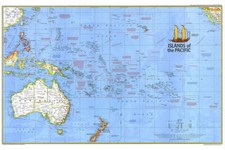
The Penguin Historical Atlas of the Pacific (Hist Atlas)
First published 1998. Subjects: Pacific area, history, Historical geography.
The Penguin Historical Atlas of the Pacific
Places Nauru's unusual history within the wider Pacific context.
eBay marketplace picks
Marketplace Samples
Live-tested eBay searches with available results related to this page.
Endnotes
1.
Source: nauru.gov.nr
Title: Nauru Government Nauruan Stories
Link:https://www.nauru.gov.nr/about-nauru/nauruans%27-stories.aspx
2.
Source: omnika.org
Title: Areop-Enap, Two Snails, and the Worm
Link:https://omnika.org/myths/areop-enap-two-snails-and-the-worm
3.
Source: trove.nla.gov.au
Link:https://trove.nla.gov.au/newspaper/article/161611317
4.
Source: nauruhr.gov.nr
Title: Pinnacle Story
Link:https://nauruhr.gov.nr/pinnacle-story/
5.
Source: archive.org
Link:https://archive.org/details/nauruansnaturesu0000peti
6.
Source: Wikipedia
Title: Nauruan indigenous religion
Link:https://en.wikipedia.org/wiki/Nauruan_indigenous_religion
7.
Source: dfat.gov.au
Title: nauru country brief
Link:https://www.dfat.gov.au/geo/nauru/nauru-country-brief
8.
Source: nauruisland.org
Link:https://www.nauruisland.org/travel/ten-interesting-facts-about-nauru
9.
Source: nauru.gov.nr
Title: Nauru Government The Story of Eigigu
Link:https://www.nauru.gov.nr/about-nauru/nauruans%27-stories/the-story-of-eigigu.aspx
10.
Source: Wikipedia
Link:https://fr.wikipedia.org/wiki/Eigigu
11.
Source: nauru.gov.nr
Title: Nauru Government The story of Detora, the King of the sea
Link:https://www.nauru.gov.nr/about-nauru/nauruans%27-stories/the-story-of-detora.aspx
12.
Source: nauruisland.org
Link:https://www.nauruisland.org/culture/exploring-naurus-ancient-legends
13.
Source: pmc.ncbi.nlm.nih.gov
Title: PMCMining, land restoration and sustainable development
Link:https://pmc.ncbi.nlm.nih.gov/articles/PMC6411803/
14.
Source: nauruisland.org
Link:https://www.nauruisland.org/travel/naurus-natural-hidden-gems
15.
Source: Wikipedia
Title: Buada Lagoon
Link:https://en.wikipedia.org/wiki/Buada_Lagoon
16.
Source: Wikipedia
Link:https://en.wikipedia.org/wiki/Nauru
17.
Source: trove.nla.gov.au
Link:https://trove.nla.gov.au/newspaper/article/213216923
18.
Source: trove.nla.gov.au
Link:https://trove.nla.gov.au/newspaper/article/17058029
19.
Source: Wikipedia
Title: List of reported UFO sightings
Link:https://en.wikipedia.org/wiki/List_of_reported_UFO_sightings
20.
Source: Wikipedia
Title: Areop Enap
Link:https://en.wikipedia.org/wiki/Areop-Enap
21.
Source: Wikipedia
Title: Mythologie nauruane
Link:https://fr.wikipedia.org/wiki/Mythologie_nauruane
22.
Source: Wikipedia
Title: Phosphate mining in Banaba and Nauru
Link:https://en.wikipedia.org/wiki/Phosphate_mining_in_Banaba_and_Nauru
23.
Source: Wikipedia
Title: Buada Lagune
Link:https://de.wikipedia.org/wiki/Buada-Lagune
24.
Source: Wikipedia
Title: Effects of mining in Nauru
Link:https://en.wikipedia.org/wiki/Effects_of_mining_in_Nauru
25.
Source: Wikipedia
Title: Climate of Nauru
Link:https://en.wikipedia.org/wiki/Climate_of_Nauru?oldformat=true
26.
Source: Wikipedia
Link:https://ru.wikipedia.org/wiki/%D0%A2%D1%80%D0%B0%D0%B4%D0%B8%D1%86%D0%B8%D0%BE%D0%BD%D0%BD%D1%8B%D0%B5%D0%B2%D0%B5%D1%80%D0%BE%D0%B2%D0%B0%D0%BD%D0%B8%D1%8F%D0%9D%D0%B0%D1%83%D1%80%D1%83
27.
Source: trove.nla.gov.au
Link:https://trove.nla.gov.au/newspaper/article/18368415
28.
Source: trove.nla.gov.au
Link:https://trove.nla.gov.au/newspaper/article/17109663
29.
Source: trove.nla.gov.au
Link:https://trove.nla.gov.au/newspaper/page/15647212
30.
Source: trove.nla.gov.au
Link:https://trove.nla.gov.au/newspaper/article/16960018
31.
Source: trove.nla.gov.au
Link:https://trove.nla.gov.au/newspaper/article/17273505
32.
Source: trove.nla.gov.au
Link:https://trove.nla.gov.au/newspaper/article/17306868
33.
Source: trove.nla.gov.au
Link:https://trove.nla.gov.au/newspaper/article/4509549
34.
Source: trove.nla.gov.au
Link:https://trove.nla.gov.au/newspaper/article/17214517
35.
Source: trove.nla.gov.au
Link:https://trove.nla.gov.au/newspaper/article/17273780
36.
Source: data.qld.gov.au
Link:https://www.data.qld.gov.au/datastore/dump/f9965517-3813-4cfc-8725-24e9cb80c46f?bom=True
37.
Source: thehorrorscopeproject.medium.com
Title: ghosts in indian folklore and urban legends 786d0aaa7163
Link:https://thehorrorscopeproject.medium.com/ghosts-in-indian-folklore-and-urban-legends-786d0aaa7163
38.
Source: everyculture.com
Title: Every Culture Religion and expressive culture
Link:https://www.everyculture.com/Oceania/Nauru-Religion-and-Expressive-Culture.html
39.
Source: pacific-r2r.org
Link:https://www.pacific-r2r.org/partners/member-countries/nauru
40.
Source: icj-cij.org
Link:https://www.icj-cij.org/case/80
41.
Source: tripadvisor.com
Title: Buada Lagoon
Link:https://www.tripadvisor.com/Attraction_Review-g294127-d447238-Reviews-Buada_Lagoon-Nauru.html
42.
Source: mythlok.com
Link:https://mythlok.com/eijebong/
43.
Source: godchecker.com
Link:https://www.godchecker.com/micronesian-mythology/AREOP-ENAP/
44.
Source: lawanddevelopment.org
Link:https://lawanddevelopment.org/docs/nauru.pdf
45.
Source: unfccc.int
Title: Republic of Nauru
Link:https://unfccc.int/sites/default/files/resource/Final_Nauru_SNC_Report_revised.pdf
46.
Source: ebsco.com
Link:https://www.ebsco.com/research-starters/geography-and-cartography/nauru
47.
Source: earth.northwestern.edu
Link:https://www.earth.northwestern.edu/people/emile/nauru.html
48.
Source: traveldocs.com
Title: About Nauru
Link:https://www.traveldocs.com/world-atlas/Nauru-atlas154
49.
Source: worldatlas.com
Link:https://www.worldatlas.com/maps/nauru
50.
Source: am.celebri.com
Link:https://am.celebri.com/books?subjects=nauru
51.
Source: worldbooktour.wordpress.com
Link:https://worldbooktour.wordpress.com/2017/03/26/nauru/
Additional References
52.
Source: youtube.com
Title: The Rise and Fall of Nauru’s Hidden Wealth
Link:https://www.youtube.com/watch?v=zgWLllhn9Kk
Source snippet
The History of Nauru: How The World's Wealthiest Country Lost Everything...
53.
Source: youtube.com
Title: Nauru: The World’s Smallest Island That Lost Everything
Link:https://www.youtube.com/watch?v=tZiWF-xPpas
Source snippet
The Tiny Island That Made a Fortune & Lost It All...
54.
Source: facebook.com
Link:https://www.facebook.com/TheNTNews/posts/can-neither-confirm-or-deny-northern-territory-police-have-received-multiple-ufo/1505194630956170/
55.
Source: instagram.com
Link:https://www.instagram.com/naurutravelguide/
56.
Source: academia.edu
Link:https://www.academia.edu/94584359/Nauruan_Tale_of_Edabanono_as_Retold
57.
Source: researchgate.net
Link:https://www.researchgate.net/publication/257652601_Large_igneous_provinces_and_silicic_large_igneous_provinces_Progress_in_our_understanding_over_the_last_25_years
58.
Source: facebook.com
Link:https://www.facebook.com/100028560563785/posts/a-world-map-of-private-islands/2972262959549531/
59.
Source: mythlok.com
Link:https://mythlok.com/areop-enap/
60.
Source: alluringworld.com
Link:https://www.alluringworld.com/buada-lagoon/
61.
Source: degruyterbrill.com
Link:https://www.degruyterbrill.com/document/doi/10.1515/9780824860110-009/html?srsltid=AfmBOop92Sn4jJG1lBLB_gNJ4c3aRwTYmb3RmG_6FgoJqeDx4wx7yM17
Topic Tree
Follow this branch
Related pages 192
- Afghan Forteana
- Antigua Uncanny
- Bosnian Mysteries
- Botswana Weird
- Brazil Strange
- +187 more in sidebar