What Makes Mali's Weird History So Compelling?
Mali’s strongest strange-history material is not a neat catalogue of ghosts and UFO flaps.
Page outline Jump by section
Introduction
The best-known case is the Dogon “Sirius mystery”, the claim that Dogon tradition preserved detailed knowledge of Sirius B, a white dwarf invisible to the naked eye. It has been used to argue for ancient astronauts, but later anthropological and astronomical critiques make cultural contact, over-interpretation and symbolic reading far more plausible. Mali’s weird record is therefore less about proving the supernatural than about watching powerful stories change as they pass between local ritual, European researchers, popular science, sceptics and modern fringe culture.[chandra.harvard.edu]chandra.harvard.eduChandra:: Chronicles:: Sirius Matters: Alien ContactChandra:: Chronicles:: Sirius Matters: Alien Contact
The Dogon Sirius mystery: Mali’s famous ancient-astronaut case
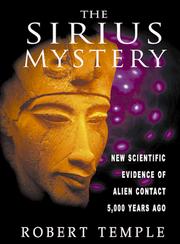
The Dogon people of central Mali became famous far beyond West Africa because of a claim first built from the work of French anthropologists Marcel Griaule and Germaine Dieterlen, who studied Dogon traditions in the 1930s and 1940s. Popularised especially by Robert Temple’s 1976 book The Sirius Mystery, the claim was that Dogon cosmology contained knowledge of Sirius B: a small, dense companion star of Sirius A, invisible without a telescope and not understood scientifically as a white dwarf until modern astronomy had developed the necessary tools.[chandra.harvard.edu]chandra.harvard.eduChandra:: Chronicles:: Sirius Matters: Alien ContactChandra:: Chronicles:: Sirius Matters: Alien Contact
That is why the story became irresistible to fringe writers. If a community in Mali really knew that Sirius had an invisible, heavy companion with a roughly fifty-year orbit before modern science could have told them, the explanation would seem to demand something dramatic. Temple’s answer was extraterrestrial contact, linking Dogon traditions about the Nommo — often presented in fringe retellings as amphibious culture-bringers — to beings from the Sirius system.[hallofmaat.com]hallofmaat.comInvestigating the Sirius ‘Mystery’Investigating the Sirius ‘Mystery’
The problem is that the mystery weakens when treated as evidence rather than as a legend about evidence. NASA’s Chandra educational archive summarises the core puzzle but also notes Carl Sagan’s more down-to-earth view: if specific astronomical details entered Dogon discourse, they were more likely to have arrived through contact with scientifically informed Europeans than through visitors from another star. The same account points out that Griaule himself had studied astronomy in Paris and may have shaped or over-interpreted the material he collected.[chandra.harvard.edu]chandra.harvard.eduChandra:: Chronicles:: Sirius Matters: Alien ContactChandra:: Chronicles:: Sirius Matters: Alien Contact
Ian Ridpath’s sceptical analysis is sharper. He argues that the Dogon Sirius material is full of ambiguities if read literally: diagrams may be symbolic rather than astronomical, the supposed orbital period is entangled with ritual cycles and ideas of twinning, and the most “accurate” details resemble the astronomical knowledge circulating in Europe in the early twentieth century. He also stresses that the Dogon were not an impossibly isolated people; they lived near trade routes, had contact with Europeans, and were within reach of schools and missionaries before Griaule and Dieterlen’s work.[hallofmaat.com]hallofmaat.comInvestigating the Sirius ‘Mystery’Investigating the Sirius ‘Mystery’
This does not make the Dogon material uninteresting. It makes it more interesting in a different way. The Fortean question is not “did aliens visit Mali?” but “how did a complex religious and symbolic system become recast as a technical astronomy report?” Mali’s Sirius mystery survives because it flatters two opposite desires at once: the desire to believe ancient peoples possessed hidden scientific knowledge, and the desire to catch modern interpreters projecting their own obsessions onto other cultures.

Bandiagara masks: apparitions, ancestors and the bush
The Bandiagara escarpment, the best-known Dogon cultural landscape, is central to Mali’s strange reputation because it is both visually dramatic and ritually dense. UNESCO describes it as a landscape of cliffs, sandy plateaux, houses, granaries, altars, sanctuaries and communal meeting places, where social traditions including masks, feasts, rituals and ancestor-related ceremonies remain part of the region’s significance.[UNESCO World Heritage Centre]whc.unesco.orgWorld Heritage Centre Cliff of Bandiagara (Land of the DogonsWorld Heritage Centre Cliff of Bandiagara (Land of the Dogons
For a Fortean reader, Dogon masks can look like “spirit costumes”, but that wording can be misleading if it turns living ritual into spooky decoration. The kanaga mask, for example, is worn in the dama, a collective funerary rite whose purpose is to help the spirits of deceased men pass to the world of the ancestors. Smarthistory notes that the rite is organised by the Awa, a male initiation society with ritual and political roles, and that more than eighty types of masks have been documented in dama performances.[Smarthistory]smarthistory.orgmask kanagaMask (Kanaga) (Dogon peoples)…
The strangeness here lies in performance rather than in a single apparition report. Anthropologist Walter van Beek argues that Dogon masks are not merely static symbols: they are presences that become meaningful through arrival, movement, dance and departure. In his reading, masks cross the border between bush and village, bringing wild power, fertility and danger into human space before returning outward again. A carved headpiece in a museum, he suggests, is only part of the phenomenon; without costume, sound and motion, it is like trying to understand a ballet from a dancer’s shoes.[MDPI]mdpi.comMatter in Motion: A Dogon Kanaga MaskMatter in Motion: A Dogon Kanaga Mask
That matters because many outside retellings flatten Dogon ritual into either “ancient cosmic wisdom” or “tribal superstition”. The stronger reading is subtler. In Mali’s Bandiagara country, the uncanny is structured: death disrupts the social world, masks appear from outside ordinary village order, and movement helps turn loss into continuity. The dead are not presented as Halloween ghosts, but the boundary between the living, the dead, the animal, the human, the village and the bush is deliberately made visible.
Djinn and possession in modern Mali
Mali’s spirit traditions are not only rural, ancient or museum-bound. Jean-Paul Colleyn’s 2022 article on possession and exorcism in Mali describes the country as a place where spirits interact with human beings, with some cults seeking compromise with spirits and others trying to get rid of them. He also warns against one-size-fits-all explanations: some Malian possession cases fit theories of possession as protest or crisis response, while others, especially in the Minianka area, complicate that model.[Sage Journals]journals.sagepub.comSage Journals Possession and exorcism on the margins of Islam: MaliSage Journals Possession and exorcism on the margins of Islam: Mali
A useful urban example comes from research in Bamako on healing practices involving djinn. In one thesis account, the practice is described as treating afflictions caused by djinn, “commonly described as Muslim spirits”; healers are possessed by particular djinn who prescribe rituals to mediate between the djinn world and the Mande people. The researcher also uses “affliction” broadly, not just for illness but for social, economic and political trouble.[rex.libraries.wsu.edu]rex.libraries.wsu.eduMicrosoft WordMicrosoft Word
This is important for a Mali Forteana page because it prevents a lazy split between “traditional belief” and “modern life”. Spirit causation may be used to talk about misfortune, sickness, social strain, family conflict or distress in ways that overlap with religion, performance, therapy and community gathering. To believers, the spirits are active agents. To sceptics and social scientists, possession can be read as a culturally organised way of expressing and managing suffering. Both readings help explain why such practices endure.
The oddness, then, is not that people in Mali “believe in spirits” as a quaint survival from the past. It is that spirit language can still provide a working grammar for problems that purely medical, political or economic language may not fully contain. Forteana often survives in precisely those gaps.
Hyenas, masks and the fear of becoming animal
Hyenas have a large place in African folklore, and Mali has its own distinctive version through Bamana ritual art. In the Kore, a high-ranking Bamana initiation society, the hyena mask is associated with ceremonies that maintain harmony between humans and the natural world. Princeton University Art Museum describes a Bamana suruku, or hyena mask, as protecting the secrecy of Kore rituals, while also noting how later art-market handling may have changed the object’s surface by removing ritual encrustations.[Princeton University Art Museum]artmuseum.princeton.eduUniversity Art Museum Suruku (hyena) mask | Princeton University Art MuseumUniversity Art Museum Suruku (hyena) mask | Princeton University Art Museum
This is not quite the same as a werewolf-style monster legend, although outsiders often pull African hyena traditions in that direction. The Mali material is more disciplined and symbolic. The hyena can stand for greed, appetite, secrecy, wildness and the dangerous knowledge of the bush. In performance, it helps stage a controlled encounter with traits that must be recognised, mocked, feared or overcome.
That said, the broader West African “werehyena” complex gives Mali’s hyena masks an obvious Fortean resonance. Stories across parts of Africa and the wider region imagine human beings who transform into hyenas, or hyenas that pass as human. In Mali, the safer evidence is not a dated monster sighting but a ritual system in which becoming hyena-like is performed, taught and contained. The uncanny point is moral rather than zoological: the animal is not just out there in the dark, but potentially inside human behaviour.
The Chergach meteorite: when stones really did fall from the sky
Some Fortean “falls” dissolve into rumour, weather, hoax or bad reporting. Mali has at least one properly documented fall of material from the sky: the Chergach meteorite. The Meteoritical Bulletin lists Chergach as an official observed fall in Mali, classified as an H5 ordinary chondrite, with a recorded mass of about 100 kilograms. It fell on 2 or 3 July 2007 in the Erg Chech area, north of Taoudenni in the Timbuktu district.[LPI]lpi.usra.eduLPIMeteoritical Bulletin: Entry for ChergachLPIMeteoritical Bulletin: Entry for Chergach
The eyewitness element is wonderfully Fortean in the old sense. According to the Meteoritical Bulletin write-up, nomads reported that stones fell after a smoke cloud was seen and several detonations were heard over a wide area during the daytime. Around 100 kilograms of meteorites were collected in autumn and winter 2007.[LPI]lpi.usra.eduLPIMeteoritical Bulletin: Entry for ChergachLPIMeteoritical Bulletin: Entry for Chergach
There is no need to make this supernatural. Meteorites are natural objects, and ordinary chondrites are among the better-understood materials from the early Solar System. But from the ground, without the later lab work, the event belongs to the same human category as the classic “rains of stones” that fascinated Charles Fort: noise from the sky, smoke, falling black rocks and a landscape suddenly seeded with objects from beyond Earth.
Chergach is therefore one of Mali’s best evidence-backed strange events. It gives the country’s Fortean record a rare case where the anomaly is not merely reported but physically recoverable, classified and named.
Desert optics and the lure of false horizons
Northern Mali’s Saharan geography also matters to its strange-history atmosphere. The Taoudenni salt route, one of the great desert caravan routes linked to Timbuktu, crosses severe terrain where heat, distance and emptiness shape perception. Taoudenni salt is extracted from the bed of an ancient salt lake and historically transported by camel caravans through remote desert country.[Wikipedia]WikipediaOpen source on wikipedia.org.
This is prime country for mirage lore, even when individual Malian mirage stories are hard to verify. Desert mirages occur when light bends through layers of air at different temperatures; the hot ground heats the air above it, bending rays so that sky can appear like water on the ground. More complex Fata Morgana effects can stack, stretch or distort distant objects into uncanny forms near the horizon.[Better Planet Education]betterplaneteducation.org.ukBetter Planet Education MirageBetter Planet Education Mirage
For Mali, mirages are best treated as an explanatory background rather than a named monster. They help explain why desert travel everywhere produces tales of impossible lakes, false settlements, hovering objects and unreachable horizons. In a country whose northern imagination includes salt caravans, abandoned tracks, extreme heat and long-distance navigation, the natural physics of light can still feel like a trickster intelligence.
What Mali’s strange record is not
Mali does not appear, on the stronger accessible evidence, to have a well-documented modern UFO flap comparable to famous cases in the United States, France, Belgium or South America. Nor is there a robust public record of a nationally famous lake monster, poltergeist case or newspaper “rain of frogs” that can be cleanly anchored to Mali with reliable sources. That absence is worth saying plainly rather than filling the gap with recycled folklore from neighbouring countries.
The strongest Mali material clusters around four better-supported themes:
- A global fringe controversy: the Dogon Sirius mystery, important because of how anthropology, astronomy and ancient-astronaut speculation collided.
- Ritual apparitions: Dogon and Bamana masks that make death, animality, secrecy and bush power visible through performance.
- Living spirit practice: djinn and possession healing, especially where religious, social and therapeutic meanings overlap.
- A physical sky-fall: the Chergach meteorite, a documented case of stones falling after detonations and smoke.
That mix makes Mali especially useful for country-level Forteana because it shows how “the unexplained” is often not one thing. Sometimes it is a misunderstood ritual. Sometimes it is a story inflated by outsiders. Sometimes it is a social language for suffering. Sometimes it is a meteorite.

Why Mali keeps attracting strange interpretations
Mali’s weird-history record has cultural pull because it sits at a crossroads of powerful images: the cliffs of Bandiagara, the libraries and desert aura of Timbuktu, the Niger River, masked dancers, salt caravans, Islamic scholarship, spirit healing, and one of the most famous alleged ancient-astronaut puzzles in the world. Outsiders have often treated these images as raw material for mystery-making.
The danger is that “mystery” can become a way of not listening. Dogon astronomy becomes aliens; masks become props; possession becomes either fraud or superstition; desert perception becomes hallucination. A better Fortean reading keeps the strangeness but restores proportion. The Dogon Sirius case is fascinating because it shows how symbolic systems can be mistranslated into pseudo-science. The masks are uncanny because they work through movement, death and social transformation. Djinn practices matter because they organise affliction into a shared world of meaning. Chergach matters because sometimes the sky really does drop stones.
Mali’s Forteana is therefore not a cabinet of random oddities. It is a lesson in interpretation: the strange is real as experience, story, performance and sometimes physical event, but the explanation changes depending on whether one begins with astronomy, ritual, psychology, folklore, colonial history or the desert itself.
Amazon book picks
Further Reading
Books and field guides related to What Makes Mali's Weird History So Compelling?. Use these as the next step if you want deeper reading beyond the article.
The World's Greatest Unsolved Mysteries
Includes famous historical mysteries such as the Dogon case.

African religions & philosophy
Provides context for ritual, belief and cosmology across Africa.
eBay marketplace picks
Marketplace Samples
Live-tested eBay searches with available results related to this page.
Endnotes
1.
Source: chandra.harvard.edu
Title: Chandra:: Chronicles:: Sirius Matters: Alien Contact
Link:https://chandra.harvard.edu/chronicle/0400/sirius_part2.html
2.
Source: hallofmaat.com
Title: Investigating the Sirius ‘Mystery’
Link:https://www.hallofmaat.com/aa/investigating-the-sirius-mystery/
3.
Source: whc.unesco.org
Title: World Heritage Centre Cliff of Bandiagara (Land of the Dogons)
Link:https://whc.unesco.org/en/list/516/
4.
Source: smarthistory.org
Title: mask kanaga
Link:https://smarthistory.org/mask-kanaga/
Source snippet
Mask (Kanaga) (Dogon peoples)...
5.
Source: mdpi.com
Title: Matter in Motion: A Dogon Kanaga Mask
Link:https://www.mdpi.com/2077-1444/9/9/264
6.
Source: rex.libraries.wsu.edu
Title: Microsoft Word
Link:https://rex.libraries.wsu.edu/view/pdfCoverPage?download=true&filePid=13338224810001842&instCode=01ALLIANCE_WSU
7.
Source: artmuseum.princeton.edu
Title: University Art Museum Suruku (hyena) mask | Princeton University Art Museum
Link:https://artmuseum.princeton.edu/art/collections/objects/36802
8.
Source: lpi.usra.edu
Title: LPIMeteoritical Bulletin: Entry for Chergach
Link:https://www.lpi.usra.edu/meteor/metbull.php?code=47347
9.
Source: Wikipedia
Link:https://en.wikipedia.org/wiki/Taoudenni
10.
Source: Wikipedia
Title: Dogon people
Link:https://en.wikipedia.org/wiki/Dogon_people
11.
Source: Wikipedia
Title: Ghosts and spirits in Māori culture
Link:https://en.wikipedia.org/wiki/Ghosts_and_spirits_in_M%C4%81ori_culture
12.
Source: Wikipedia
Title: The Sirius Mystery
Link:https://en.wikipedia.org/wiki/The_Sirius_Mystery
13.
Source: Wikipedia
Title: Marfa lights
Link:https://en.wikipedia.org/wiki/Marfa_lights
14.
Source: Wikipedia
Title: Germaine Dieterlen
Link:https://en.wikipedia.org/wiki/Germaine_Dieterlen
15.
Source: Wikipedia
Link:https://en.wikipedia.org/wiki/Werehyena
16.
Source: Wikipedia
Title: Lake Débo
Link:https://en.wikipedia.org/wiki/Lake_D%C3%A9bo
17.
Source: Wikipedia
Title: West African mythology
Link:https://en.wikipedia.org/wiki/West_African_mythology
18.
Source: Wikipedia
Link:https://en.wikipedia.org/wiki/Jinn
19.
Source: Wikipedia
Title: Meteorite fall
Link:https://en.wikipedia.org/wiki/Meteorite_fall
20.
Source: Wikipedia
Link:https://de.wikipedia.org/wiki/Chergach
21.
Source: Wikipedia
Link:https://en.wikipedia.org/wiki/Chergach
22.
Source: Wikipedia
Title: Dogon religion
Link:https://en.wikipedia.org/wiki/Dogon_religion
23.
Source: Wikipedia
Title: Kanaga mask
Link:https://en.wikipedia.org/wiki/Kanaga_mask
24.
Source: Wikipedia
Title: Fata Morgana (mirage)
Link:https://en.wikipedia.org/wiki/Fata_Morgana_%28mirage%29
25.
Source: Wikipedia
Link:https://en.wikipedia.org/wiki/Azalai
26.
Source: ares.jsc.nasa.gov
Link:https://ares.jsc.nasa.gov/meteorite-falls/events/
27.
Source: unesco.org
Title: document 1162
Link:https://www.unesco.org/archives/multimedia/document-1162
28.
Source: icq.eps.harvard.edu
Link:https://www.icq.eps.harvard.edu/meteorites.html
29.
Source: ui.adsabs.harvard.edu
Link:https://ui.adsabs.harvard.edu/abs/2023M%26PS…58.1773B/abstract
30.
Source: adsabs.harvard.edu
Link:https://adsabs.harvard.edu/full/1990Metic..25…59G
31.
Source: space.com
Title: rare daytime fireball spotted from orbit as residents report powerful sonic boom
Link:https://www.space.com/stargazing/meteor-showers/rare-daytime-fireball-spotted-from-orbit-as-residents-report-powerful-sonic-boom
32.
Source: meteoritical.org
Link:https://meteoritical.org/publications/meteoritical-bulletin
33.
Source: journals.sagepub.com
Title: Sage Journals Possession and exorcism on the margins of Islam: Mali
Link:https://journals.sagepub.com/doi/10.1177/00377686221133943
34.
Source: betterplaneteducation.org.uk
Title: Better Planet Education Mirage
Link:https://betterplaneteducation.org.uk/factsheets/mirage-what-is-a-mirage
35.
Source: skybrary.aero
Link:https://skybrary.aero/articles/fata-morgana
36.
Source: meteoriteguy.com
Link:https://meteoriteguy.com/collection/chergach.htm
37.
Source: sm76626.wordpress.com
Link:https://sm76626.wordpress.com/tag/kore/
38.
Source: aliens.fandom.com
Link:https://aliens.fandom.com/wiki/Nommo
39.
Source: werecreature.fandom.com
Link:https://werecreature.fandom.com/wiki/Werehyena
40.
Source: cryptidz.fandom.com
Link:https://cryptidz.fandom.com/wiki/Mali
41.
Source: ebsco.com
Link:https://www.ebsco.com/research-starters/language-and-linguistics/dogon
42.
Source: galactic-stone.com
Link:https://galactic-stone.com/pages/falls
43.
Source: meteolovers.com
Link:https://meteolovers.com/collection/page/4/
44.
Source: meteorites.asu.edu
Link:https://meteorites.asu.edu/collection/collection-highlights/page/16
45.
Source: mapmyths.com
Title: niger river
Link:https://mapmyths.com/blog/niger-river/
46.
Source: badarchaeology.com
Title: the sirius mystery
Link:https://www.badarchaeology.com/extraterrestrials/the-sirius-mystery/
Additional References
47.
Source: youtube.com
Title: How did this African tribe get ADVANCED ASTRONOMICAL KNOWLEDGE?
Link:https://www.youtube.com/watch?v=Sqk3Hnv6nnQ
Source snippet
Ancient Black Astronomers: The Remarkable Dogon People...
48.
Source: youtube.com
Title: Dogon: The Mystery of Sirius. Ancient Knowledge or Cosmic Enigma?
Link:https://www.youtube.com/watch?v=g-vWQmPGyoc
Source snippet
The Dogon Tribe and their mysterious ideology...
49.
Source: youtube.com
Title: The Dogon Tribe and their mysterious ideology
Link:https://www.youtube.com/watch?v=lOJHxoSLZp0
Source snippet
How did this African tribe get ADVANCED ASTRONOMICAL KNOWLEDGE?...
50.
Source: researchgate.net
Link:https://www.researchgate.net/publication/242865509_The_Sirius_Mystery
51.
Source: mauritius-images.com
Link:https://www.mauritius-images.com/en/asset/ME-PI-2051082_mauritius_images_image_number_06754182_a-36-7-g-2-oz-fragment-of-the-chergach-meteorite-which-fell-in-mali-in-july-2007-local-people-reported-seeing-a-smoke-cloud-and-hearing-detonations-and-seeing-stars-fall-from-the-sky
52.
Source: sdmart.org
Link:https://www.sdmart.org/exhibition/dogon-figure-from-mali-bridge-to-the-spirit-world/
53.
Source: instagram.com
Link:https://www.instagram.com/reel/DWUid-uFTcm/
54.
Source: instagram.com
Link:https://www.instagram.com/p/DX2W0wLisQD/
55.
Source: instagram.com
Link:https://www.instagram.com/reel/DVw2__vgiH9/?hl=en
56.
Source: finch-and-co.co.uk
Link:https://www.finch-and-co.co.uk/artwork-detail/828396/18660/african-mali-bambara-kore-society-men
Topic Tree
Follow this branch
Related pages 192
- Afghan Forteana
- Antigua Uncanny
- Bosnian Mysteries
- Botswana Weird
- Brazil Strange
- +187 more in sidebar