Within Tonga
Was Tonga's Stonehenge Really an Observatory?
Tonga's great trilithon mixes chiefly history, Maui legend and disputed astronomical claims without needing alien builders.
On this page
- The monument in Tonga's chiefly landscape
- Maui stories and the problem of giant stones
- Solar claims, tourism and cautious archaeology
Page outline Jump by section
Introduction
Ha’amonga ‘a Maui is often called the “Stonehenge of the Pacific”, but that nickname can be misleading. The great stone trilithon on Tongatapu is a genuine archaeological monument of exceptional importance, yet the debates surrounding it often drift into claims about lost civilisations, forgotten astronomers or even alien builders. The evidence tells a more interesting story. The monument stands at the intersection of Tongan chiefly history, Polynesian mythology and ongoing arguments about how ancient Pacific societies understood the sky. Rather than proving extraordinary theories, Ha’amonga ‘a Maui shows how a remarkable feat of indigenous engineering can acquire layers of legend, speculation and modern reinterpretation without losing its historical significance.[UNESCO World Heritage Centre]whc.unesco.orgWorld Heritage Centre The Ancient Capitals of the Kingdom of TongaUNESCO World Heritage CentreThe Ancient Capitals of the Kingdom of Tonga - UNESCO World Heritage CentreAugust 9, 2007…

The monument in Tonga’s chiefly landscape
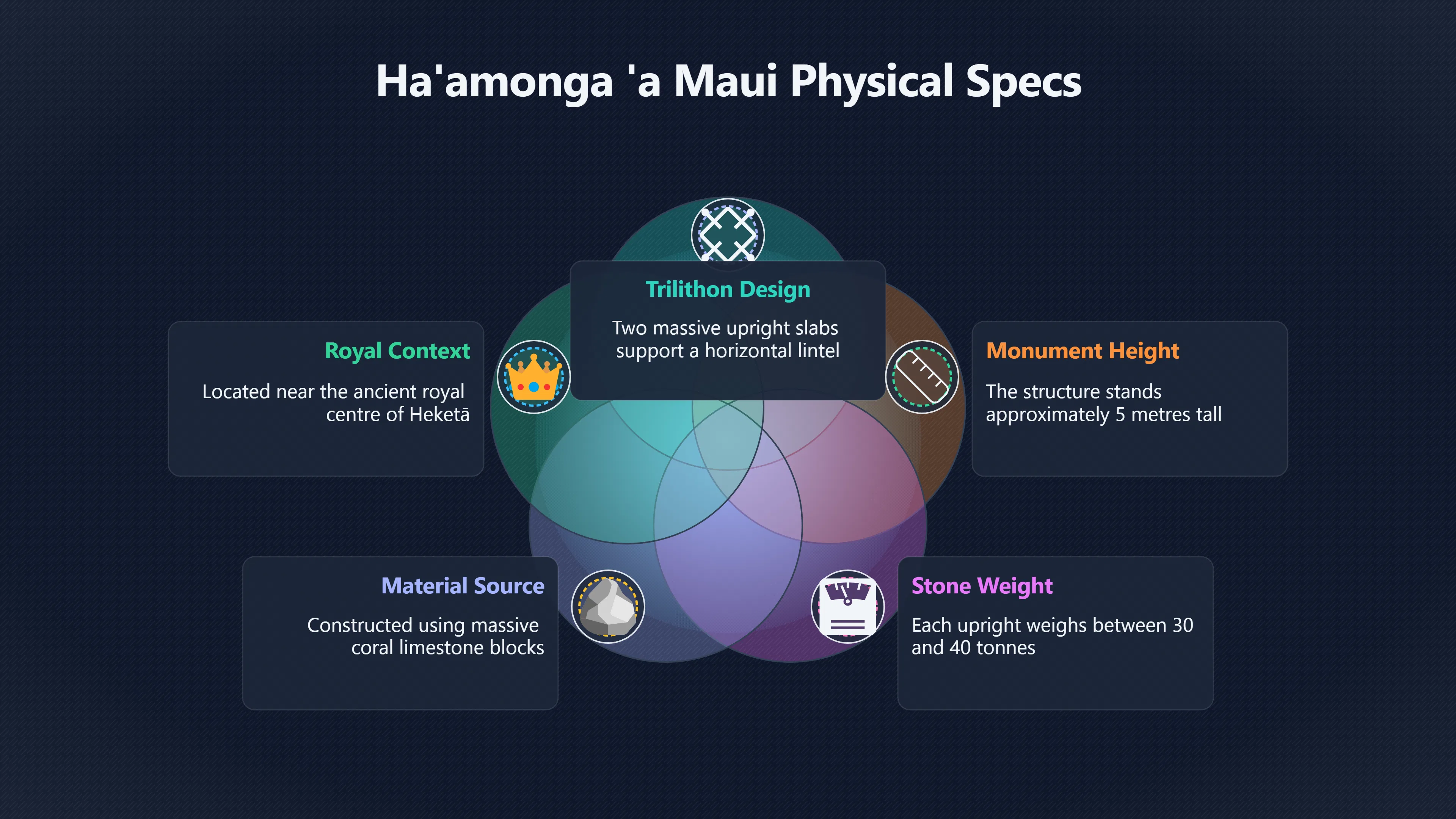
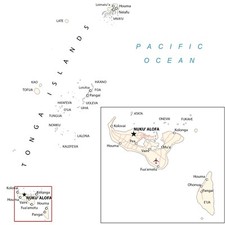
Ha’amonga ‘a Maui stands near the ancient royal centre of Heketā on the eastern side of Tongatapu. It consists of two massive upright coral limestone slabs supporting a horizontal lintel, creating a monumental gateway around 5 metres high. Each upright is estimated to weigh between 30 and 40 tonnes, making the structure one of the most impressive surviving works of prehistoric Polynesian stone construction.[Wikipedia]WikipediaHaʻamonga ʻa MauiHaʻamonga ʻa Maui
Archaeologists generally associate the monument with the Tu’i Tonga dynasty, the sacred royal line that dominated much of Polynesia for centuries. Oral traditions and historical accounts usually attribute its construction to the 11th Tu’i Tonga, Tu’itātui, during the thirteenth century. The surrounding landscape once formed part of an extensive royal compound, linking the trilithon to political authority rather than to an isolated ceremonial monument.[UNESCO World Heritage Centre]whc.unesco.orgWorld Heritage Centre The Ancient Capitals of the Kingdom of TongaUNESCO World Heritage CentreThe Ancient Capitals of the Kingdom of Tonga - UNESCO World Heritage CentreAugust 9, 2007…
Nearby lies another important stone known as the Maka Faakinanga, traditionally described as a royal seat. Some accounts say the king could sit there while guards watched for assassins approaching from behind, illustrating how the monument belonged to a wider ceremonial and political complex rather than standing alone in the landscape.[UNESCO World Heritage Centre]whc.unesco.orgWorld Heritage Centre The Ancient Capitals of the Kingdom of TongaUNESCO World Heritage CentreThe Ancient Capitals of the Kingdom of Tonga - UNESCO World Heritage CentreAugust 9, 2007…
This context is important because comparisons with Stonehenge often obscure the fact that Ha’amonga ‘a Maui was embedded within an active royal capital whose history survives in both archaeology and Tongan genealogies.
Why people call it the Pacific Stonehenge
The nickname emerged because both monuments use the distinctive trilithon form: two upright stones supporting a horizontal lintel. Visually the resemblance is obvious, and both structures have attracted suggestions that they were astronomical monuments.
The similarities, however, end fairly quickly.
Stonehenge developed over many centuries and forms part of a vast ceremonial landscape with circles, avenues and burial monuments. Ha’amonga ‘a Maui is a single gateway-like structure within a chiefly settlement. It belongs to an entirely different culture, period and architectural tradition. The resemblance reflects a similar engineering solution rather than evidence of direct contact between Britain and Polynesia.[UNESCO World Heritage Centre]unesco.orgWorld Heritage Centre The Ancient Capitals of the Kingdom of TongaUNESCO World Heritage CentreThe Ancient Capitals of the Kingdom of Tonga - UNESCO World Heritage CentreAugust 9, 2007
Even UNESCO’s discussion of Tonga’s tentative World Heritage nomination notes the comparison while emphasising that each monument has its own distinct historical story. The analogy is therefore useful as a visual shorthand but poor as an explanation of the site’s original purpose.[UNESCO World Heritage Centre]unesco.orgWorld Heritage Centre The Ancient Capitals of the Kingdom of TongaUNESCO World Heritage CentreThe Ancient Capitals of the Kingdom of Tonga - UNESCO World Heritage CentreAugust 9, 2007
Maui stories and the problem of giant stones
The monument’s name translates roughly as “The Burden of Maui.” In Polynesian traditions, Maui is the great culture hero famous for feats such as slowing the Sun, fishing islands from the sea and performing impossible acts of strength.
As with many impressive ancient monuments around the world, later tradition sometimes credited supernatural beings with moving stones too large for ordinary people. Such stories are not engineering manuals or eyewitness histories. They belong to a widespread pattern in folklore in which extraordinary landscapes become associated with legendary figures whose powers explain the seemingly impossible.
Because Maui appears throughout Polynesia in many different forms, his association with the monument reflects the shared mythological heritage of the region rather than evidence that he was regarded as a historical builder. The legendary explanation and the archaeological explanation can therefore coexist without serving the same purpose: one explains cultural meaning, the other investigates historical construction.[Wikipedia]WikipediaHaʻamonga ʻa MauiHaʻamonga ʻa Maui
Modern fringe writers sometimes take the giant-stone tradition literally, arguing that the monument must preserve memories of forgotten superhuman builders. There is no archaeological evidence supporting this interpretation. Large megalithic construction is well documented in many ancient societies using organised labour, careful planning, ramps and simple mechanical techniques rather than unknown technology.
Was it really an observatory?
The most persistent modern debate concerns whether Ha’amonga ‘a Maui functioned as an astronomical instrument.
The best-known version of this idea emerged after research encouraged by King Taufa’ahau Tupou IV during the late 1960s. According to this interpretation, carvings or notches on the lintel correspond with the positions of the rising Sun at the solstices and equinoxes. If correct, the monument would have helped observers mark seasonal changes important for navigation, agriculture and ceremonial life. The theory has been influential enough to appear in government heritage material and tourism literature.[UNESCO World Heritage Centre]whc.unesco.orgWorld Heritage Centre The Ancient Capitals of the Kingdom of TongaUNESCO World Heritage CentreThe Ancient Capitals of the Kingdom of Tonga - UNESCO World Heritage CentreAugust 9, 2007…
The proposal is plausible in one important respect. Polynesian societies possessed sophisticated navigational astronomy, using stars, solar movements and ocean swells to undertake some of humanity’s greatest voyages. There is therefore nothing inherently implausible about an astronomical component in a major royal monument.
The difficulty lies in demonstrating exactly how the monument functioned.
UNESCO’s own discussion of the site adopts a cautious position. It notes that solar alignment claims are widely accepted in modern presentations of the monument but also observes that the origin of the belief is uncertain and may represent an interpretation introduced during the twentieth century rather than an uninterrupted ancient tradition. Meanwhile, nineteenth-century missionary records consistently identify the monument within the political landscape of the Tu’i Tonga rather than describing it as an observatory.[UNESCO World Heritage Centre]unesco.orgWorld Heritage Centre The Ancient Capitals of the Kingdom of TongaUNESCO World Heritage CentreThe Ancient Capitals of the Kingdom of Tonga - UNESCO World Heritage CentreAugust 9, 2007
Some researchers have also questioned whether the alleged alignment marks are sufficiently precise to support the astronomical interpretation. Critics argue that the supposed indicators are too small or ambiguous to function as accurate observational devices. In their view, the evidence does not conclusively establish the monument as a purpose-built solar calendar.[Wikipedia]WikipediaHaʻamonga ʻa MauiHaʻamonga ʻa Maui
Why the monument attracts fringe theories
[Haʻamonga ʻa Maui]WikipediaHaʻamonga ʻa Maui possesses several features that repeatedly attract Fortean speculation.
First, its engineering is genuinely impressive. Transporting coral limestone blocks weighing dozens of tonnes naturally invites questions about ancient construction methods.
Second, the monument stands largely alone. Unlike vast megalithic landscapes elsewhere, the trilithon appears isolated to many visitors, encouraging speculation that it represents the surviving fragment of a lost civilisation.
Third, the combination of giant stones, legendary builders and possible astronomical alignments echoes familiar themes found around Stonehenge, Easter Island and other famous archaeological sites. This has led some popular writers to suggest ancient transoceanic civilisations or extraterrestrial involvement.
None of these ideas has found support in mainstream archaeology. The monument fits comfortably within what is known of Tongan political development, monumental architecture and Polynesian engineering. Its uniqueness reflects local historical circumstances rather than a missing global civilisation.[UNESCO World Heritage Centre]whc.unesco.orgWorld Heritage Centre The Ancient Capitals of the Kingdom of TongaUNESCO World Heritage CentreThe Ancient Capitals of the Kingdom of Tonga - UNESCO World Heritage CentreAugust 9, 2007…
Tourism, heritage and the continuing debate
Today Ha’amonga ‘a Maui occupies an unusual position. It is simultaneously a national symbol, an archaeological monument, a tourist attraction and a focus for continuing discussion about indigenous scientific knowledge.
Tourism often promotes the “Pacific Stonehenge” label because it gives international visitors an immediate visual comparison. Heritage specialists, however, increasingly stress the monument’s own cultural setting instead of treating it as a Pacific imitation of a European site. Its significance lies in the history of the Tu’i Tonga state, the ceremonial landscape of Heketā and the wider achievements of Polynesian societies.
The astronomical interpretation also illustrates how heritage can evolve. Future archaeological work may strengthen, weaken or refine current ideas about solar alignments. What remains undisputed is that the monument was an extraordinary expression of chiefly authority and skilled engineering long before European contact.[UNESCO World Heritage Centre]whc.unesco.orgWorld Heritage Centre The Ancient Capitals of the Kingdom of TongaUNESCO World Heritage CentreThe Ancient Capitals of the Kingdom of Tonga - UNESCO World Heritage CentreAugust 9, 2007…
Why it matters in Tonga’s strange-history tradition
For readers interested in Tonga’s Fortean heritage, Ha’amonga ‘a Maui is compelling precisely because it occupies the boundary between myth and evidence.
The monument invites questions that have no simple answers. How were such immense stones moved? Did the builders intentionally encode observations of the Sun? How much of the Maui tradition reflects symbolic storytelling rather than historical memory? These are legitimate historical puzzles, even if they do not require supernatural solutions.
The “Pacific Stonehenge” debate therefore serves as a reminder that remarkable archaeology often generates extraordinary claims. The strongest evidence points towards an indigenous royal monument enriched by mythology and possibly informed by sophisticated knowledge of the sky. Its real mystery is not that it defies explanation, but that it demonstrates how a single ancient structure can become, over centuries, a meeting place for history, folklore, astronomy and modern imagination.
Amazon book picks
Further Reading
Books and field guides related to Was Tonga's Stonehenge Really an Observatory?. Use these as the next step if you want deeper reading beyond the article.

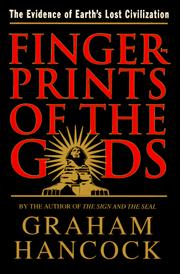
Fingerprints of the gods
Represents popular speculative interpretations readers often compare against archaeology.

Vikings of the sunrise, by Peter H. Buck (Te Rangi Hiroa) ......
First published 1938. Subjects: Ethnology, Polynesians, World history, Australia, history.

Kon-Tiki Kon Tiki Across the Pacific by Raft by Thor Heyerdah...
First published 1950.
eBay marketplace picks
Marketplace Samples
Live-tested eBay searches with available results related to this page.
Endnotes
1.
Source: whc.unesco.org
Title: World Heritage Centre The Ancient Capitals of the Kingdom of Tonga
Link:https://whc.unesco.org/en/tentativelists/5167
Source snippet
UNESCO World Heritage CentreThe Ancient Capitals of the Kingdom of Tonga - UNESCO World Heritage CentreAugust 9, 2007...
Published: August 9, 2007
2.
Source: Wikipedia
Title: Haʻamonga ʻa Maui
Link:https://en.wikipedia.org/wiki/Ha%CA%BBamonga_%CA%BBa_Maui
4.
Source: whc.unesco.org
Link:https://whc.unesco.org/en/tentativelists/5168/
Source snippet
Pottery Archaeological Sites (A National Serial Site for consideration as the Kingdom of Tonga’s contribution to a transnational serial s...
5.
Source: whc.unesco.org
Link:https://whc.unesco.org/en/statesparties/to
Source snippet
UNESCO World Heritage ConventionIMAGE: TONGA TONGA 0 Property inscribed on the World Heritage List 0 Mandate to the World Heritage Commit...
6.
Source: tongaholiday.com
Link:https://www.tongaholiday.com/page_id-1123/
Source snippet
Holiday.comHA’AMONGA ‘A MAUI TRILITHON & NATIONAL HISTORICAL RESERVE Things To Do & See > Historical and Cultural Sites > Historical and...
7.
Source: megalithic.co.uk
Title: Ha’amonga ‘a Maui | Megalithic Portal
Link:https://www.megalithic.co.uk/article.php?map=1&sid=24440
Source snippet
August 17, 2011 — << OUR PHOTO PAGES >> HA'AMONGA 'A MAUI - STANDING STONES IN PACIFIC ISLANDS Submitted by DrewParsons on Wednesday, 17...
Published: August 17, 2011
8.
Source: academia-lab.com
Link:https://academia-lab.com/enciclopedia/haamongaa-maui/
Source snippet
Ha'amonga'a Maui _ AcademiaLabHA'AMONGA'A MAUI format_list_bulleted Contenido keyboard_arrow_down Imprimir Citar Haaamonga ("The Burden o...
9.
Source: en-academic.com
Link:https://en-academic.com/dic.nsf/enwiki/790169/
Source snippet
Ha'amonga 'a MauiHA'AMONGA 'A MAUI Ha'amonga 'a Maui Haokinaamonga okinaa Maui (Burden of Maui) - is a 12-ton stone trilithon located in...
Additional References
10.
Source: frontiersin.org
Link:https://www.frontiersin.org/journals/earth-science/articles/10.3389/feart.2021.748755/full
Source snippet
The ability of bolide impacts to generate tsunamis capable of leaving long-term traces on coastal areas has been extensively discussed (C...
11.
Source: rmg.co.uk
Link:https://www.rmg.co.uk/collections/objects/rmgc-object-1163902
Source snippet
Royal Museums GreenwichNovember 8, 1880 — * Maritime history * Space and astronomy * Art and culture * The ocean * Time * Royal history...
Published: November 8, 1880
12.
Source: en.advisor.travel
Link:https://en.advisor.travel/poi/Ha-amonga-a-Maui-8454
Source snippet
advisor.travelHa'amonga 'a Maui in NiutouaHA'AMONGA 'A MAUI 8.1 ⊚ Religious buildings in Niutoua Info Photos Tips & Hints Hotels nearby S...
13.
Source: rmg.co.uk
Link:https://www.rmg.co.uk/collections/objects/rmgc-object-1163970
Source snippet
i | Royal Museums GreenwichNovember 8, 1880 — A GROUP OF TONGAN WOMEN AND MEN WITH TWO OFFICERS FROM HMS ALERT THROUGH THE MIDDLE OF THE...
Published: November 8, 1880
14.
Source: uhpress.hawaii.edu
Title: heiau aina lani the hawaiian temple system in ancient kahikinui and kaupo maui
Link:https://uhpress.hawaii.edu/title/heiau-aina-lani-the-hawaiian-temple-system-in-ancient-kahikinui-and-kaupo-maui/?attribute_pa_format=hardback
Source snippet
hawaii.eduHeiau, ‘Āina, Lani: The Hawaiian Temple System in Ancient Kahikinui and Kaupō, Maui – UH PressJune 24, 2020 — HEIAU, ‘ĀINA, LAN...
Published: June 24, 2020
15.
Source: vidan.org
Title: “The Legend of Haʻamonga ʻa Maui: Tonga’s Mysterious Stonehenge” | Vidan.org
Link:https://vidan.org/the-legend-of-ha%CA%BBamonga-%CA%BBa-maui-tongas-mysterious-stonehenge/
Source snippet
June 10, 2025 — June 10, 2025 “THE LEGEND OF HAʻAMONGA ʻA MAUI: TONGA’S MYSTERIOUS STONEHENGE” By Bobby White STONEHENGE OF THE PACIFIC...
Published: June 10, 2025
16.
Source: tongantribes.com
Title: Discovering the Tongan Stonehenge: Ha’amonga ‘a Maui
Link:https://tongantribes.com/home/index.php/cultural-tonga/discovering-the-tongan-stonehenge-haamonga-a-maui
Source snippet
May 15, 2023 — Richard J Bell Cultural Tonga 15 May 2023 DISCOVERING THE TONGAN STONEHENGE: HA’AMONGA ‘A MAUI DISCOVERING THE TONGAN STON...
Published: May 15, 2023
17.
Source: ubcpress.ca
Title: GO TO CART HEIAU, ‘ĀINA, LANI THE HA
Link:https://www.ubcpress.ca/heiau-aina-lani
Source snippet
UBC Press | Heiau, ‘Āina, Lani - The Hawaiian Temple System in Ancient Kahikinui and Kaupō, Maui, By Patrick Vinton Kirch and Clive Ruggl...
18.
Source: eyecontactmagazine.com
Title: Sione Faletau’s Trembling Monument – Eye Contact
Link:https://eyecontactmagazine.com/2015/05/sione-faletaus-trembling-monument
Source snippet
At Mu’a they laid slabs coral on top of one another to create pyramids over the graves of kings and queens; in...
19.
Source: researchgate.net
Title: N. Ruggles Clive L. N. Ruggl
Link:https://www.researchgate.net/publication/284761960_Ancient_Hawaiian_Astronomy
Source snippet
Ancient Hawaiian AstronomyJuly 1, 2015 — ANCIENT HAWAIIAN ASTRONOMY * July 2015 DOI:10.1007/978-1-4614-6141-8_244 * In book: Handbook of...
Published: July 1, 2015
Topic Tree