Within North Korea Strange
Did North Korea Really Claim a Unicorn Lair?
The so-called unicorn lair is less a monster discovery than a revealing clash of mythic language, archaeology and global media appetite.
On this page
- What KCNA actually reported
- Kirin, Kiringul and King Tongmyong
- Why the mistranslation travelled so far
Page outline Jump by section
Introduction
Did North Korea really claim to have found a unicorn lair? Not quite. The famous 2012 story became one of the internet’s favourite jokes because an English-language translation from North Korea’s state news agency turned a legendary place associated with a mythical creature into what sounded like an announcement that archaeologists had proved unicorns existed. The real story is stranger and more revealing. It sits at the intersection of archaeology, national mythology, political symbolism, translation, and the global media’s appetite for bizarre stories about North Korea. Rather than being evidence for a legendary beast, the so-called “unicorn lair” is a case study in how mythic language can become distorted when it crosses cultures and languages.[kcna.co.jp]kcna.co.jp20121129 20eeLair of King Tongmyong's Unicorn Reconfirmed in DPRKNov 29, 2555 BE — The discovery of the unicorn lair, associated with legend about Kin…

What KCNA actually reported
The story began on 29 November 2012, when North Korea’s official Korean Central News Agency (KCNA) announced that archaeologists from the History Institute of the Academy of Social Sciences had “reconfirmed” a site linked to King Tongmyong, the legendary founder of the ancient Goguryeo kingdom.
According to the report, the site lay about 200 metres from Yongmyong Temple on Moran Hill in Pyongyang. Archaeologists highlighted a carved stone bearing words translated into English as “Unicorn Lair” and argued that the inscription dated from the Goryeo period (918–1392). The report concluded that the discovery demonstrated Pyongyang’s status as an ancient Korean capital.[kcna.co.jp]kcna.co.jp20121129 20eeLair of King Tongmyong's Unicorn Reconfirmed in DPRKNov 29, 2555 BE — The discovery of the unicorn lair, associated with legend about Kin…
That final point was the real purpose of the announcement. The archaeological claim was not presented primarily as zoological evidence but as support for a long-standing North Korean historical narrative that places Pyongyang at the heart of early Korean civilisation. The legendary animal was important because it connected the site to King Tongmyong, not because anyone claimed to have excavated the remains of a magical creature.[kcna.co.jp]kcna.co.jp20121129 20eeLair of King Tongmyong's Unicorn Reconfirmed in DPRKNov 29, 2555 BE — The discovery of the unicorn lair, associated with legend about Kin…
International headlines, however, often stripped away this context. Many reports summarised the story as “North Korea claims to have discovered a unicorn lair”, a much funnier and more clickable version than the original archaeological announcement.
Kirin, Kiringul and King Tongmyong
The translation problem centres on a single word.
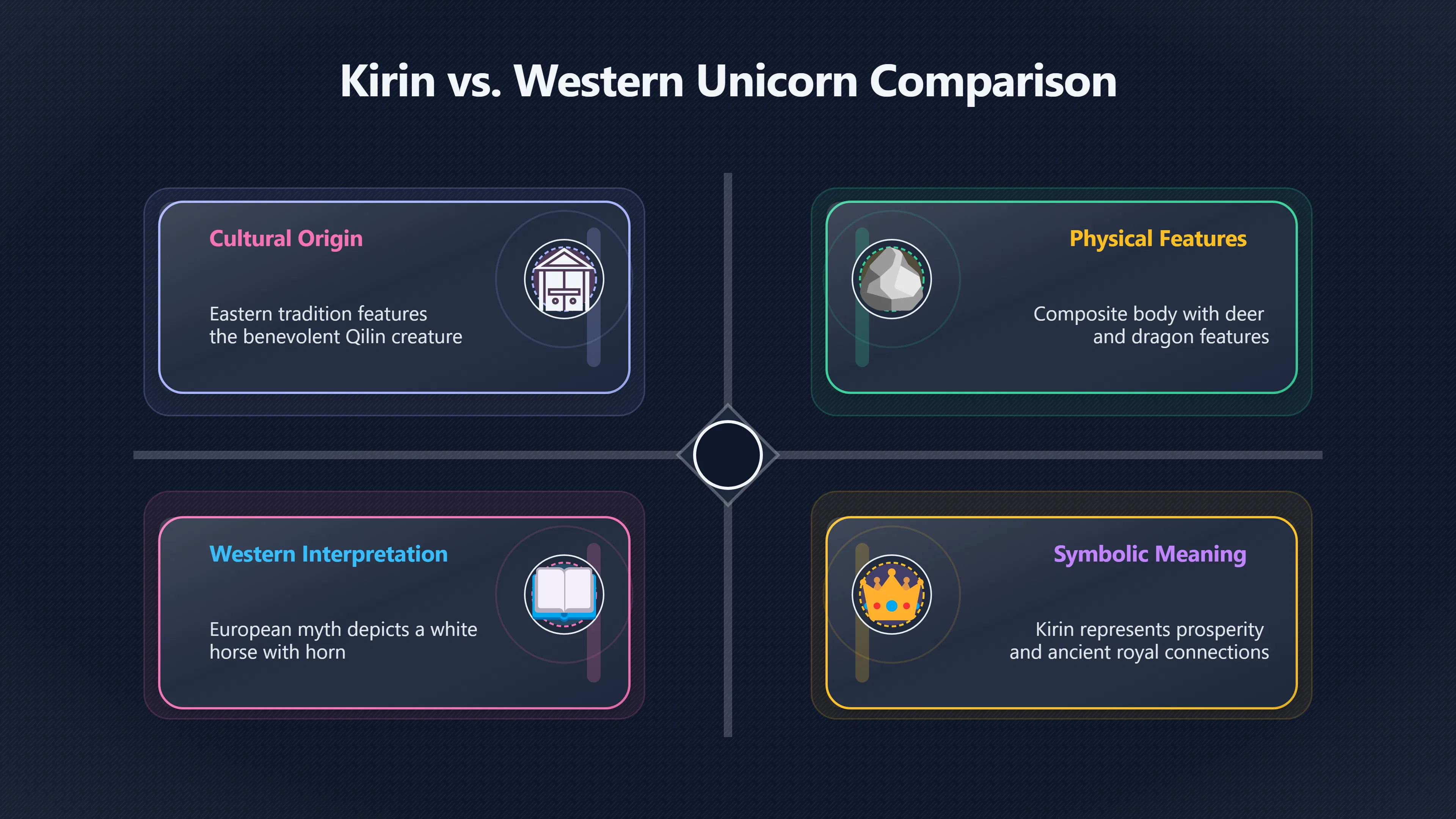
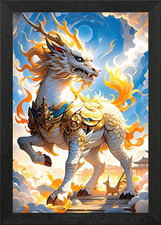
The Korean place name refers to Kiringul, literally “Kirin Cave” or “Kirin Grotto”. A kirin is not the familiar European unicorn. It belongs to the wider East Asian tradition of the qilin, a benevolent mythical creature usually portrayed as a composite animal with features drawn from deer, dragons, horses, oxen and other beasts. Although many artistic depictions include a single horn, the creature carries a very different symbolic meaning from the Western unicorn.[theguardian.com]theguardian.comnorth koreaThe GuardianUnicorn lair 'discovery' blamed partly on mistranslationDec 5, 2555 BE — The North Koreans, said Sixiang Wang, were laying cl…
In Korean tradition, King Tongmyong is closely associated with this legendary beast. Medieval texts describe him riding a kirin, while later tradition attached various places to that legend. Kiringul was therefore understood as a legendary location connected with the king’s story, much as many countries preserve places whose names refer to dragons, giants or fairies without implying that local authorities believe such beings literally existed.[The Guardian]theguardian.comnorth koreaThe GuardianUnicorn lair 'discovery' blamed partly on mistranslationDec 5, 2555 BE — The North Koreans, said Sixiang Wang, were laying cl…
The KCNA report itself referred to the discovery as being “associated with legend about King Tongmyong”. Even in the English version, the emphasis remained on a legendary ruler and an ancient place-name rather than on proving mythical animals were real.[kcna.co.jp]kcna.co.jp20121129 20eeLair of King Tongmyong's Unicorn Reconfirmed in DPRKNov 29, 2555 BE — The discovery of the unicorn lair, associated with legend about Kin…
Why the mistranslation travelled so far
The translation itself was only part of the story.
“Kirin” has no perfect English equivalent. Translating it simply as “kirin” would have required explanation, while translating it as “unicorn” produced a familiar word that carried very different cultural baggage. Western readers immediately imagined a white horse with a spiral horn rather than an East Asian mythological chimera.[The Guardian]theguardian.comnorth koreaThe GuardianUnicorn lair 'discovery' blamed partly on mistranslationDec 5, 2555 BE — The North Koreans, said Sixiang Wang, were laying cl…
Several additional factors allowed the misunderstanding to spread rapidly:
- North Korea’s reputation made extraordinary claims seem plausible to outside audiences.
- The English-language KCNA wording sounded more literal than the Korean original.
- Humorous headlines spread much faster than careful explanations.
- Many early reports repeated one another instead of consulting Korean-language specialists.[arabnews.com]arabnews.comArab News NKorean 'unicorn' claim lost in translationDec 8, 2555 BE — The KCNA item was reported by sections of the foreign media as a claim by Nort…
Within days, Korean historians and linguists pointed out that the report concerned Kiringul, a legendary place-name, rather than proof that unicorns had once grazed around Pyongyang. The correction received far less attention than the original joke.[The Guardian]theguardian.comnorth koreaThe GuardianUnicorn lair 'discovery' blamed partly on mistranslationDec 5, 2555 BE — The North Koreans, said Sixiang Wang, were laying cl…
The archaeology and the politics behind the claim
The archaeological announcement makes much more sense when viewed as part of North Korea’s wider effort to connect the modern state with the ancient kingdom of Goguryeo.
For decades, official history has stressed Pyongyang’s importance as an ancient capital. Monuments linked to King Tongmyong have been restored and promoted, while archaeological discoveries are frequently presented as reinforcing the city’s historical significance. The supposed Kiringul inscription fitted neatly into that programme by tying a legendary royal tradition directly to a recognisable location in modern Pyongyang.[kcna.co.jp]kcna.co.jp20121129 20eeLair of King Tongmyong's Unicorn Reconfirmed in DPRKNov 29, 2555 BE — The discovery of the unicorn lair, associated with legend about Kin…
Outside scholars have questioned both the historical interpretation and the timing of the announcement. Some argue that it formed part of a broader effort to strengthen national legitimacy during the early period of Kim Jong Un’s leadership by emphasising continuity with heroic ancient rulers. Others note that debates over the location of Goguryeo’s capitals remain genuine subjects of historical research, making sweeping political conclusions difficult to support from a single inscription.[theguardian.com]theguardian.comnorth koreaThe GuardianUnicorn lair 'discovery' blamed partly on mistranslationDec 5, 2555 BE — The North Koreans, said Sixiang Wang, were laying cl…
Importantly, these criticisms concern the historical and political interpretation of the site, not whether North Korea genuinely believed in living unicorns.
Why the “unicorn lair” remains a Fortean favourite
As a piece of Forteana, the unicorn lair is fascinating precisely because it is not really about a mysterious creature.
Instead, it illustrates several recurring themes that appear throughout strange history:
- a mythical animal attached to a real landscape;
- archaeology used to reinforce legendary traditions;
- translation reshaping the meaning of a story;
- political symbolism becoming international folklore;
- media incentives favouring the funniest interpretation over the most accurate one.
The result is an enduring modern legend about a legend. Many people still remember North Korea as the country that “claimed to discover unicorns”, even though the original report never quite made that claim.
The lasting lesson of the Kiringul translation trap
The “Pyongyang unicorn lair” has become one of the best-known examples of how stories change as they cross languages and cultures. A legendary kirin became a European unicorn. A place associated with medieval tradition became, in many headlines, evidence for a mythical animal. An archaeological argument about ancient capitals became an internet meme.
For readers interested in North Korean Forteana, the episode is valuable not because it proves anything supernatural, but because it demonstrates how myths, politics, translation and media expectations can combine to create a modern mystery that is ultimately more revealing about human storytelling than about legendary beasts themselves.
Amazon book picks
Further Reading
Books and field guides related to Did North Korea Really Claim a Unicorn Lair?. Use these as the next step if you want deeper reading beyond the article.
The Demon-Haunted World
Useful for evaluating sensational media stories and mistranslations.

The cleanest race
First published 2010. Subjects: North Korean Propaganda, Social aspects, Korean National characteristics, Social conditions, Nationalism.

The Impossible State, Updated Edition
First published 2018. Subjects: Political culture, History, Politics and government, Foreign relations, Social conditions.
eBay marketplace picks
Marketplace Samples
Live-tested eBay searches with available results related to this page.
Endnotes
1.
Source: kcna.co.jp
Title: 20121129 20ee
Link:https://www.kcna.co.jp/item/2012/201211/news29/20121129-20ee.html
Source snippet
Lair of King Tongmyong's Unicorn Reconfirmed in DPRKNov 29, 2555 BE — The discovery of the unicorn lair, associated with legend about Kin...
2.
Source: Wikipedia
Link:https://en.wikipedia.org/wiki/Kiringul
Source snippet
KiringulKiringul is a cave in North Korea said to have been the home of the kirin (Qilin in Chinese), a mythical chimaeric beast that...
3.
Source: theguardian.com
Title: north korea
Link:https://www.theguardian.com/world/2012/dec/05/north-korea
Source snippet
The GuardianUnicorn lair 'discovery' blamed partly on mistranslationDec 5, 2555 BE — The North Koreans, said Sixiang Wang, were laying cl...
4.
Source: arabnews.com
Title: Arab News N
Link:https://www.arabnews.com/node/433650/amp
Source snippet
Korean 'unicorn' claim lost in translationDec 8, 2555 BE — The KCNA item was reported by sections of the foreign media as a claim by Nort...
Additional References
5.
Source: reuters.com
Link:https://www.reuters.com/news/picture/north-koreas-architecture-idUSRTS5INU/
6.
Source: reuters.com
Title: north koreas kim jong un calls more shell production kcna says 2025 06 13
Link:https://www.reuters.com/world/asia-pacific/north-koreas-kim-jong-un-calls-more-shell-production-kcna-says-2025-06-13/
Source snippet
North Korea's Kim Jong Un calls for more shell production...13 Jun 2025 — North Korean leader Kim Jong Un inspected military industrial...
7.
Source: gizmodo.com
Title: no the north korean government did not claim it found 5964879
Link:https://gizmodo.com/no-the-north-korean-government-did-not-claim-it-found-5964879
Source snippet
No, the North Korean government did not claim it found...1 Dec 2012 — The English release poorly translated the name of a historical loc...
8.
Source: forums.pelicanparts.com
Title: 722580 north korea discovers lair ancient unicorn 2
Link:https://forums.pelicanparts.com/off-topic-discussions/722580-north-korea-discovers-lair-ancient-unicorn-2.html
Source snippet
Korea discovers the lair of an ancient unicorn - Page 28 Dec 2012 — The English release poorly translated the name of a historical locati...
9.
Source: keranews.org
Link:https://www.keranews.org/2012-11-30/north-korea-says-its-archaeologists-discovered-a-unicorn-lair
Source snippet
North Korea Says Its Archaeologists Discovered A 'Unicorn...Nov 30, 2555 BE — "The lair is located 200 meters from the Yongmyong Temple...
10.
Source: theregister.com
Title: archaeologists uncover unicorns lair
Link:https://www.theregister.com/offbeat/2012/12/02/archaeologists-uncover-unicorns-lair/1078442
Source snippet
Archaeologists uncover 'Unicorn's lair'Dec 2, 2555 BE — The lair of a unicorn ridden by King Tongmyong, one of many monarchs from Korea's...
11.
Source: piie.com
Title: unicorns dont exist kirins do
Link:https://www.piie.com/blogs/north-korea-witness-transformation/unicorns-dont-exist-kirins-do
Source snippet
Unicorns don't exist, but Kirins doDec 9, 2555 BE — It has been confirmed that there was actually no mention of unicorns in the artic...
12.
Source: youtube.com
Title: Korea Questions S1 | Ep 3: Do Unicorns exist in North Korea? | Sixiang Wang
Link:https://www.youtube.com/watch?v=_bHWz_DiiIM
Source snippet
North Korea claims discovery of UNICORNS! (Unicorn Lair)...
13.
Source: youtube.com
Title: North Korea Announces Discovery of Unicorns
Link:https://www.youtube.com/watch?v=V5GLInrb1HM
Source snippet
Debunking Every North Korea Misconception in 8 Minutes...
14.
Source: youtube.com
Title: Unicorn Lair Discovered In North Korea
Link:https://www.youtube.com/watch?v=Za_Um-CRXVQ
Source snippet
North Korea Announces Discovery of Unicorns...
Topic Tree