Within Liechtenstein Forteana
Why Did the Accusers Become the Ghosts?
The Tobelhocker turn Liechtenstein's witch-trial memory into a rare ghost tradition about accusers, stigma and social repair.
On this page
- The Lawenatobel ravine tradition
- From unlawful trials to cursed families
- Belief, stigma and sceptical readings
Page outline Jump by section
Introduction
The Tobelhocker are one of Liechtenstein’s most unusual ghost traditions because the haunting is not about murdered victims returning from the dead. Instead, local folklore turned the supposed perpetrators of the country’s seventeenth-century witch persecutions into the restless spirits. According to the tradition, the souls of witch-trial accusers, informers and their descendants were condemned after death to the wild Lawenatobel ravine between Triesen and Balzers, where they remained in perpetual punishment. Historians regard this not as evidence for ghost sightings, but as a remarkable example of collective memory reshaping a traumatic past. Unlike many European ghost legends, the Tobelhocker story reflects changing ideas about justice, guilt and reconciliation after unlawful witch trials were eventually recognised as such.[Liechtenstein Historical Lexicon]historisches-lexikon.liLiechtenstein Historical LexiconTobelhockerIn Liechtenstein erinnert die Vorstellung von den Tobelhockern an die letzten Hexenprozesse de…
Why did the accusers become the ghosts?
The Tobelhocker tradition is closely linked to the final witch trials conducted in the County of Vaduz in 1679–1680. Those proceedings were later declared unlawful after intervention by the Holy Roman Emperor, and the persecution came to an end. Instead of remembering only the executed victims, local tradition gradually redirected moral blame towards those believed to have denounced neighbours or supported the prosecutions.[Liechtenstein Historical Lexicon]historisches-lexikon.liLiechtenstein Historical LexiconTobelhockerIn Liechtenstein erinnert die Vorstellung von den Tobelhockern an die letzten Hexenprozesse de…
This reversal is exceptionally rare in European folklore. Across much of the Alps, ravines, caves and mountain gorges were already imagined as places inhabited by ghosts, witches or dangerous spirits. In neighbouring Vorarlberg, for example, similar landscape traditions associated ravines with witches themselves. Liechtenstein’s folklore inverted that expectation: the witches disappeared from the story, while their persecutors inherited the supernatural punishment. Historian Manfred Tschaikner notes that no comparable tradition surviving continuously from the age of the witch persecutions into modern times has been identified elsewhere.[Liechtenstein Historical Lexicon]historisches-lexikon.liLiechtenstein Historical LexiconTobelhockerIn Liechtenstein erinnert die Vorstellung von den Tobelhockern an die letzten Hexenprozesse de…
The Lawenatobel ravine tradition
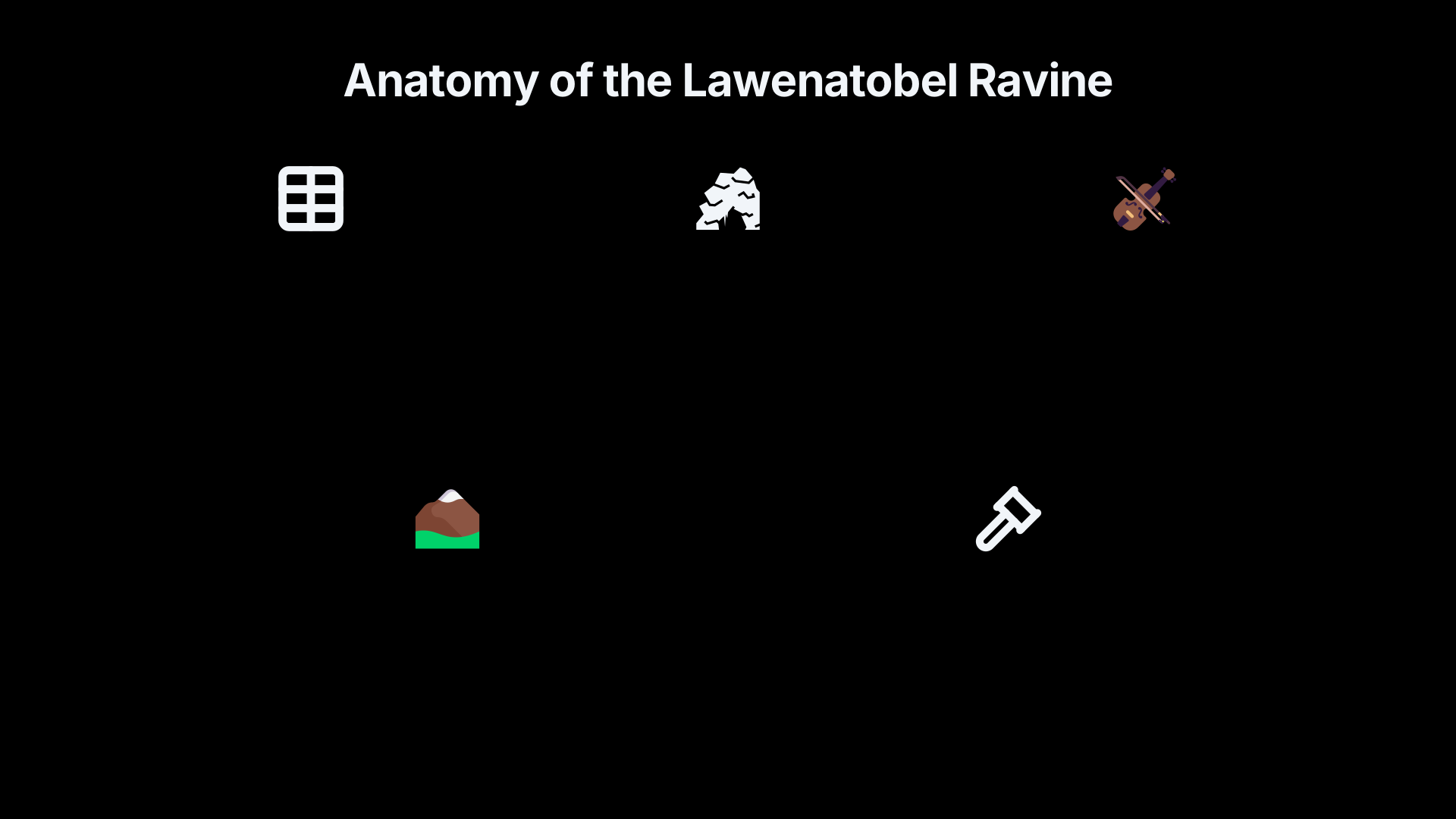
The setting is as important as the legend itself. The Lawenatobel is a steep Alpine ravine whose dramatic terrain already inspired ideas about dangerous supernatural places. According to tradition, the condemned souls were banished into the gorge, where they sat at a great stone table, slept in a stone cave and remained trapped until the Last Judgment. Some later versions claimed that mournful violin music or strange sounds could sometimes be heard rising from the ravine during stormy nights, adding an atmospheric layer without producing a body of modern eyewitness reports.[Wikipedia]WikipediaOpen source on wikipedia.org.
Rather than describing apparitions wandering through villages, the legend fixes the ghosts to a single landscape. The ravine functions almost as a symbolic purgatory: dangerous, isolated and permanently visible to the surrounding communities.
Because the tradition centres on one identifiable place, it became woven into local identity rather than existing as a generic ghost story. The landscape itself served as a reminder of historical wrongdoing.
From unlawful trials to cursed families
The most striking feature of the Tobelhocker legend is that guilt did not stop with the original participants. Folk belief held that the punishment extended to descendants—sometimes as far as the ninth generation. Families believed to descend from informers or prosecutors could carry the stigma for centuries.[Wikipedia]WikipediaOpen source on wikipedia.org.
Modern historians emphasise that this was a social process rather than evidence for a supernatural curse. After the collapse of the witch trials, communities still needed a way to explain responsibility. Since many victims had already been executed and official justice was incomplete, folklore became an alternative means of assigning blame.
This produced an uncomfortable irony. The original witch persecutions had relied upon collective suspicion, inherited reputations and accusations spreading through small communities. The Tobelhocker tradition sometimes repeated similar patterns by attaching inherited guilt to the descendants of the alleged persecutors. In other words, the mechanism of social exclusion survived even though its targets changed.[Academia]academia.eduDie Tobelhocker in Liechtenstein – von Tätern und Opfern…Die Tobelhocker in Liechtenstein – von Tätern und Opfern nach dem End…
Belief, stigma and sceptical readings
There is little evidence that the Tobelhocker tradition rested on numerous reports of visible ghosts. Its significance lies elsewhere.
Believers traditionally treated the ravine as the place where the condemned souls remained, reinforcing the idea that divine justice had succeeded where earthly justice had failed. The legend offered moral reassurance by imagining that those responsible for wrongful executions ultimately received punishment.
Sceptical historians interpret the tradition quite differently. Rather than asking whether ghosts existed, they examine what the story reveals about collective memory.
Several features stand out:
- It represents a rare example of folklore condemning persecutors rather than alleged witches.
- It reflects attempts by communities to rehabilitate victims after the witch trials had been declared unlawful.
- It shows how oral tradition preserved memories of historical injustice long after official records became incomplete or disappeared.
- It demonstrates that legends can become instruments of social judgement as well as entertainment.[historisches-lexikon.li]historisches-lexikon.liLiechtenstein Historical LexiconTobelhockerIn Liechtenstein erinnert die Vorstellung von den Tobelhockern an die letzten Hexenprozesse de…

Why the Tobelhocker still matter
The Tobelhocker occupy a distinctive place within Liechtenstein’s strange-history tradition because they blur the boundary between folklore and historical reckoning. Their importance is not that they provide compelling evidence for haunted ravines, but that they preserve a community’s attempt to come to terms with one of its darkest episodes.
Today the story is presented as part of Liechtenstein’s cultural heritage rather than as proof of paranormal activity. Historians continue to study it because it demonstrates how legends can record changing moral values as effectively as official documents. In this case, the haunting belongs not to the victims of injustice but to those remembered as having caused it—a reversal that makes the Tobelhocker one of the most unusual ghost traditions in Alpine folklore.[historisches-lexikon.li]historisches-lexikon.liLiechtenstein Historical LexiconTobelhockerIn Liechtenstein erinnert die Vorstellung von den Tobelhockern an die letzten Hexenprozesse de…
Amazon book picks
Further Reading
Books and field guides related to Why Did the Accusers Become the Ghosts?. Use these as the next step if you want deeper reading beyond the article.

The witch
Explains the historical background to traditions emerging from witch persecutions.

The Oxford illustrated history of witchcraft and magic
Places the Tobelhocker legend within European witchcraft history.

The lore of the land
Explains how ravines and landscapes acquire supernatural reputations.

eBay marketplace picks
Marketplace Samples
Live-tested eBay searches with available results related to this page.




Endnotes
1.
Source: academia.edu
Title: Die Tobelhocker in Liechtenstein
Link:https://www.academia.edu/8310051/Die_Tobelhocker_in_Liechtenstein_Nachwirkungen_der_Hexenprozesse_bis_in_die_Gegenwart
Source snippet
Nachwirkungen der...Die Tobelhocker in Liechtenstein - Nachwirkungen der Hexenprozesse bis in die Gegenwart...
2.
Source: Wikipedia
Title: Hexenprozesse in Triesen
Link:https://de.wikipedia.org/wiki/Hexenprozesse_in_Triesen
3.
Source: Wikipedia
Link:https://de.wikipedia.org/wiki/Tobelhocker
4.
Source: academia.edu
Link:https://www.academia.edu/62698795/Die_Tobelhocker_in_Liechtenstein_von_T%C3%A4tern_und_Opfern_nach_dem_Ende_der_Hexenprozesse
Source snippet
Die Tobelhocker in Liechtenstein – von Tätern und Opfern...Die Tobelhocker in Liechtenstein – von Tätern und Opfern nach dem End...
5.
Source: en.tourismus.li
Link:https://en.tourismus.li/reiseland/unser-land/feiertage-brauchtum/top-sagen-liechtensteins.html
6.
Source: historisches-lexikon.li
Link:https://historisches-lexikon.li/Tobelhocker
Source snippet
Liechtenstein Historical LexiconTobelhockerIn Liechtenstein erinnert die Vorstellung von den Tobelhockern an die letzten Hexenprozesse de...
7.
Source: historisches-lexikon.li
Link:https://historisches-lexikon.li/index.php?action=mpdf&title=Tobelhocker
Source snippet
Tobelhocker1 Feb 2021 — Die Hexenverfolger und deren Nachkommen sollten nach dem Tod in das. Lawenatobel (Gemeinde Triesen) gebannt sein...
8.
Source: europe.stripes.com
Title: legends of liechtenstein
Link:https://europe.stripes.com/lifestyle/legends-of-liechtenstein.html
Source snippet
of Liechtenstein | Stripes Europe30 Oct 2024 — Liechtenstein is the sixth smallest country in the world. However, there is plenty to do w...
Additional References
9.
Source: eliechtensteinensia.li
Link:https://www.eliechtensteinensia.li/viewer/api/v1/records/000469257/files/images/00000029_B.tif/full.pdf?divID=LOG_0000
Source snippet
Die TobelhockerDie Tobelhocker. Im 17. Jahrhundert wurden in Liechtenstein Hexen verbrannt. Männer und Frauen wurden der Hexerei bezichti...
10.
Source: hls-dhs-dss.ch
Link:https://hls-dhs-dss.ch/articles/011450
Source snippet
HexenwesenUnter dem Begriff Hexenwesen werden hier die Hexenverfolgungen (bzw. der Hexenwahn) des 15. bis 18. Jahrhunderts verstanden, vo...
11.
Source: youtube.com
Link:https://www.youtube.com/watch?v=1wC2iHX2dX4
12.
Source: podcast.de
Link:https://www.podcast.de/episode/704409964/liechtenstein-die-tobelhocker-folge-2-triesen
Source snippet
beschuldigt wird. Er kann seine Widersacher aber überlisten...
13.
Source: contentedtraveller.com
Title: l liechtenstein legends 2
Link:https://contentedtraveller.com/l-liechtenstein-legends-2/
Source snippet
L is for Liechtenstein – Those Legends13 Apr 2014 — The answer is simple Liechtenstein Legends. Have a read of some of their legends and...
14.
Source: youtube.com
Link:https://www.youtube.com/watch?v=b-7tJfVcxYw
Source snippet
gen und Geschichten zu erzählen. Zum Beispiel eine unheimliche...
15.
Source: youtube.com
Title: Tobelhocker: Erbsünde in Liechtenstein
Link:https://www.youtube.com/watch?v=oxp0Uuq4eVk
Source snippet
Manfred Tschaikner...Die Hexenprozesse in Liechtenstein waren brutal und haben die Gesellschaft damals gespaltet. Als der damalige Kaise...
16.
Source: youtube.com
Title: The Witch Hunts That Transformed Christian Europe Into a Land of Terror
Link:http://www.youtube.com/watch?v=zIkH7mFLPXU
Source snippet
The Witch Hunts That Turned Christian Europe Into a Continent of Fear...
17.
Source: youtube.com
Title: The Witch Hunts That Turned Christian Europe Into a Continent of Fear
Link:http://www.youtube.com/watch?v=4y5lAvL_gTU
Source snippet
What really happened during the Salem Witch Trials - Brian A. Pavlac...
18.
Source: youtube.com
Title: Witch Hunts: When Fear Became Law
Link:http://www.youtube.com/watch?v=NWpydyipBog
Source snippet
Tobelhocker Liechtenstein Liechtenstein: Die Tobelhocker | Folge 2 (Triesen) Sagenjäger...
Topic Tree