Where Gabon's Weird History Gets Real
Gabon’s strange-history record is not built around one world-famous ghost, UFO flap, or lake monster. It is stranger than that: a country where the genuinely astonishing, the sacred, and the rumoured sit almost on top of one another.

Page outline Jump by section
The real anomaly: Oklo’s ancient natural reactor
The most extraordinary “strange Gabon” story is also the best evidenced. In 1972, French nuclear scientists analysing uranium ore from Oklo, in Gabon, noticed that its uranium-235 content was slightly lower than expected. Natural uranium today has a very consistent U-235 proportion of about 0.720 per cent, but the Oklo sample showed a depleted value. Further analysis found fission products in the ore, leading to the conclusion that the rock had undergone natural nuclear fission more than two billion years ago.[International Atomic Energy Agency]iaea.orgOpen source on iaea.org.
This is the sort of story Forteans love because it initially sounds like a hoax, a lost civilisation tale or a bad newspaper headline: a “nuclear reactor” before humans existed. The explanation, however, is geological rather than alien or occult. At the time, U-235 was naturally more abundant than it is now, because it decays faster than uranium-238. In the right ore body, with groundwater acting as a neutron moderator, a self-sustaining chain reaction could switch on, heat the water, lose moderation as the water boiled away, and then restart as the system cooled and water returned. Scientific American’s detailed treatment describes natural fission reactors at Oklo, nearby Okelobondo and Bangombé, all in Gabon, rather than as evidence of ancient technology.[Paul Grant's Website]w2agz.comNov 2005 OKLA 18513810Nov 2005 OKLA 18513810
Oklo matters for a country-level Forteana page because it is a genuine “impossible until explained” case. It has the pattern of an anomalous report — a small measurement that should not be there, followed by a startling hypothesis — but it survived investigation and became mainstream science. Unlike most monster or UFO claims, it left isotopic fingerprints. Its modern afterlife is also telling: it is often retold online as if it were a mystery about prehistoric engineers, when the more impressive truth is that the Earth briefly did reactor physics by itself.
Rivers, rainforest and why Gabon breeds hidden-animal stories
Many of Gabon’s odd animal claims make more sense once the setting is understood. Gabon is not a blank “jungle” on a map: it is a heavily forested equatorial country cut through by major rivers, wetlands, lagoons and blackwater systems. UNESCO describes Ivindo National Park in northern Gabon as a largely pristine area of nearly 300,000 hectares crossed by blackwater rivers, rapids and waterfalls, with many fish species still undescribed and some parts hardly investigated.[UNESCO World Heritage Centre]whc.unesco.orgWorld Heritage Centre Ivindo National ParkWorld Heritage Centre Ivindo National Park
That does not mean dinosaurs are hiding there. It does mean that stories of rare, dangerous or half-seen water animals have a plausible cultural and environmental home. The Ogooué system, lagoons such as Fernan Vaz, swampy river margins and dense forest make for a landscape where large animals can be heard, smelt, glimpsed and feared before they are clearly identified. Gabon also has real large mammals capable of becoming monstrous in story. UNESCO lists forest elephants, western lowland gorillas, chimpanzees, mandrills, leopards, pangolins and crocodiles among the threatened or notable fauna associated with Ivindo’s wider ecological world.[UNESCO World Heritage Centre]whc.unesco.orgWorld Heritage Centre Ivindo National ParkWorld Heritage Centre Ivindo National Park
This is where Fortean caution is needed. A local name for a dangerous animal is not automatically a “cryptid”, and a cryptozoological retelling is not the same thing as an ethnographic record. Still, Gabon’s river-monster material has become part of the wider Congo Basin monster tradition, especially through stories that later writers linked to mokele-mbembe, the famous alleged long-necked water creature more often associated with the Republic of Congo, the Democratic Republic of the Congo and Cameroon.

The n’yamala, njago gunda and the dinosaur-shaped rumour
The most repeated Gabonese cryptozoological names are n’yamala and njago gunda. Modern cryptid catalogues describe n’yamala as a river monster reported from the Ogooué and Ngounié rivers, sometimes glossed as “mother of canoes” and sometimes compared with mokele-mbembe. Njago gunda is described in the same fringe literature as a large, elephant-like creature associated with Fernan Vaz Lagoon, Lake Nkomi and the Ogooué region. These sources are useful for tracing the modern legend, but they are not strong evidence for an unknown species.[Cryptid Archives]cryptidarchives.fandom.comCryptid Archives N'yamalaCryptid Archives N'yamala
The clearest published chain into the “living dinosaur” world runs through the American creationist and cryptozoological literature. A widely circulated account says that herpetologist James Powell travelled to Gabon in the 1970s to study rainforest crocodiles and heard Fang stories of a huge river animal called n’yamala; in one retelling, a local man allegedly identified a dinosaur illustration as resembling something he had seen decades earlier. That account was then folded into Roy Mackal’s and others’ searches for mokele-mbembe. It is important to note the source problem: creationist outlets had a strong incentive to frame African animal traditions as evidence against evolutionary science.[Institute for Creation Research]icr.orgOpen source on icr.org.
Sceptical explanations are less cinematic but more plausible. Central African “river monsters” may combine remembered rhinoceroses, hippos, crocodiles, elephants in water, large snakes, manatees in coastal systems, warning tales for river travel, and the tendency of outsiders to translate local categories into European monster shapes. The mokele-mbembe tradition in particular has repeatedly been criticised for relying on testimony, expeditionary enthusiasm and imported dinosaur imagery rather than physical evidence.[Wikipedia]WikipediaOpen source on wikipedia.org.
The Gabonese twist is that these tales are not just “Loch Ness in Africa”. They sit in a landscape where rivers are transport routes, food sources, spiritual boundaries and danger zones. A creature called “mother of canoes” is not merely a zoological claim; it is a story about what can overturn human confidence on the water.
Bwiti: visions, ancestors and the disciplined uncanny
If Gabon has a central uncanny tradition, it is not a ghost in a castle but the visionary religious world of Bwiti. Bwiti is a Central African religious tradition strongly associated with Gabon and with the ritual use of iboga, a psychoactive root. A 2022 theological study describes Gabonese Bwiti rituals as involving the consumption of iboga root, with larger doses producing significant changes in consciousness and initiation rituals that may include purification, fasting, vomiting, repetitive music and visionary experience.[Karolinum]karolinum.czOpen source on karolinum.cz.
For a Fortean reader, Bwiti is easy to misunderstand. It should not be treated as a “drug cult” or reduced to hallucination. In Gabon, it is a serious religious and initiatory system tied to self-knowledge, ancestors, healing, moral reckoning and community. The same study notes that some Gabonese Catholics practise forms of syncretism in which Bwiti initiation is combined with Christian prayers, confession, communion or other Catholic elements.[Karolinum]karolinum.czOpen source on karolinum.cz.
The uncanny element lies in how experience is understood. Initiates may speak of visions, encounters, revelations or journeys into hidden dimensions of reality. A sceptical account can discuss altered states, expectation, music, darkness, ritual pressure and pharmacology. A believer’s account may speak of ancestors, spiritual truth or a veil being opened. A fair account has to hold both together: Bwiti is not “proof” of spirits, but neither is it just a collection of odd symptoms. It is a Gabonese way of organising visionary experience into meaning, memory and obligation.
Spirits of power: Mademoiselle, Mimbare and colonial Gabon’s invisible politics
Gabonese spirit traditions also intersect sharply with politics and colonial history. Anthropologist John M. Cinnamon’s study of late-colonial Gabon discusses spirit figures such as Mademoiselle and Mimbare, incorporated from the 1950s into initiation and healing practices including Mimbiri, Mimbalé and Bwanga. In these practices, initiates may consume iboga to voyage to the spirit world, while ritual specialists consult spirits through objects such as wands received in mystical initiation.[Cambridge University Press & Assessment]cambridge.orgOpen source on cambridge.org.
Mademoiselle is especially revealing. Cinnamon describes her as a “Euro-African” spirit, usually represented as French, white, beautiful, long-haired and dressed in a gown. Some practitioners associate her with the Virgin Mary, Mary Magdalene or Mami Wata; other accounts connect her to local sacrifice traditions. This is not a tidy folklore entry but a shifting spirit of colonial contact, desire, fear, power and healing.[Cambridge University Press & Assessment]cambridge.orgOpen source on cambridge.org.
That makes Mademoiselle a better Gabonese Fortean figure than a generic “white lady” ghost. She is uncanny because she embodies historical contradiction. European power appears as a spirit that can heal, punish, enrich, seduce or dominate. In Fortean terms, the apparition is less interesting as a “did she objectively appear?” question than as a record of how colonial power entered the invisible world.
Ancestors in objects, not just apparitions
Gabon’s ghostly traditions are also material. Fang reliquary guardian figures, often linked to the ancestral cult known as byeri or bieri, were not simply “art objects” in their original setting. The Metropolitan Museum of Art explains that Fang peoples used bieri to maintain continuity with ancestors and community, with guardian figures placed on bark containers holding relics of important clan ancestors.[The Metropolitan Museum of Art]metmuseum.orgThe Metropolitan Museum of Art Okak-Fang artistThe Metropolitan Museum of Art Okak-Fang artist
The British Museum similarly describes Fang reliquary guardian figures as ritual objects associated with honouring ancestors and ensuring continuity between past and present; they were placed on boxes containing remains of influential people and cared for through repeated applications of resin and palm oil.[British Museum]britishmuseum.orgOpen source on britishmuseum.org.
For a Fortean reading, this matters because “haunting” is not always a story of a transparent figure at the end of a corridor. In Gabonese ancestral systems, the dead may be present through relics, guardianship, lineage, ritual care and moral pressure. The uncanny is domestic and social: the ancestor is not necessarily a jump-scare, but a continuing force.
UFO fragments and the problem of thin evidence
Gabon has a small place in UFO catalogues, but the evidence is thin and often second-hand. One archived UFO register lists an event at Iguela, Gabon, on 8 December, describing an oval object with two fins; the entry is brief, coded and stripped of context, which makes it more useful as a catalogue trace than as a reliable case history.[Internet Archive]archive.orgUFO Register Vol 09 Parts 1 2 1978 djvu.txtUFO Register Vol 09 Parts 1 2 1978 djvu.txt
Another frequently repeated item is a claimed Libreville landing on 25 December 1963, in which a fisherman supposedly saw a craft, a humanoid figure and footprints in sand. This is usually traced through Jacques Vallée’s Magonia database and later UFO catalogues rather than through robust local reporting. Patrick Gross’s UFO site summarises the case but also illustrates the problem: by the time it reaches modern readers, the report has become a compressed anecdote with little independent documentation.[Ufologie]ufologie.patrickgross.orgUfologie UFO sightings reports from AfricaUfologie UFO sightings reports from Africa
More recent Gabonese UFO discussion exists, especially through Jann Halexander’s French-language work on UFOs in Central Africa, which presents interviews and testimony from Gabon, Congo and the Democratic Republic of the Congo. Reports include very odd ground-level “egg” imagery as well as more conventional UFO talk. These accounts are culturally interesting because they ask how francophone Central African witnesses frame unexplained experiences, but they should not be treated as verified evidence of extraordinary craft.[Ramdam]ramdam.comConférence 'Les Ovnis en Afrique CentraleConférence 'Les Ovnis en Afrique Centrale
The honest assessment is that Gabon’s UFO material is currently archival, anecdotal and under-documented. Its value lies less in proving visitations than in showing how global UFO language travels into local settings — and how local images may resist the standard flying-saucer template.
Rumour, witchcraft and modern uncanny technology
A final Gabonese Fortean strand is the modern rumour: stories in which technology, witchcraft and invisible harm merge. Anthropologist Julien Bonhomme, writing on witchcraft, rumour and modernity in Africa, mentions seeing mobile phone users in Gabon in 2002 reject unidentified calls for fear that they might be a witch’s trick involving “night-guns”.[Chicago Journals]journals.uchicago.eduOpen source on uchicago.edu.
This is not a quaint superstition. It is a classic modern Fortean pattern: a new technology arrives, and people use older categories of hidden agency to make sense of it. The unknown caller becomes more than a nuisance; the phone becomes a possible channel for attack. Similar rumours around cursed numbers, deadly calls or invisible technological harm have appeared in many countries, but the Gabon example is particularly revealing because it ties modern telecoms to a longer moral world of occult aggression and protection.
The sceptical explanation is straightforward: fear, rumour transmission, uncertainty about technology and social anxiety. Yet the story’s persistence shows why Forteana is not just about monsters. Sometimes the “strange phenomenon” is a rumour that behaves like a living thing.
What Gabon’s weird record really shows
Gabon’s Forteana is strongest when read as a meeting point between landscape, ritual and evidence. Oklo is the hard anomaly: measurable, repeatable and scientifically explained, yet still astonishing. Bwiti and related spirit traditions are the lived uncanny: visionary, disciplined, religious and socially meaningful. The river monsters are the narrative uncanny: shaped by real ecology, local names, dangerous waters and later cryptozoological reframing. The UFO cases are the archival uncanny: intriguing but too thin to carry much weight.
The country’s strange-history record is therefore not a cabinet of random oddities. It is a pattern. Gabon’s forests hide real biological richness; its rivers invite stories of power beneath the surface; its ritual traditions take visions seriously; its colonial history produced spirits that look like politics wearing a white dress; and its most spectacular “ancient mystery” turned out to be natural fission in stone. The best way to read Gabon’s Forteana is with curiosity and restraint: let the stories remain strange, but do not make them do more evidential work than they can bear.
Amazon book picks
Further Reading
Books and field guides related to Where Gabon's Weird History Gets Real. Use these as the next step if you want deeper reading beyond the article.

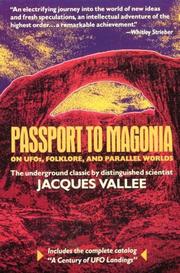
Passport to Magonia: from folklore to flying saucers
Supports the wider Fortean perspective of the site.

eBay marketplace picks
Marketplace Samples
Live-tested eBay searches with available results related to this page.
Endnotes
1.
Source: whc.unesco.org
Title: World Heritage Centre Ivindo National Park
Link:https://whc.unesco.org/en/list/1653/
2.
Source: Wikipedia
Link:https://en.wikipedia.org/wiki/Mokele-mbembe
3.
Source: karolinum.cz
Link:https://karolinum.cz/data/clanek/10749/Theol_12_1_0143.pdf
4.
Source: cambridge.org
Link:https://www.cambridge.org/core/journals/africa/article/spirits-power-and-the-political-imagination-in-latecolonial-gabon/51C136E4EEB332571E60C16B1F1C22CA
5.
Source: archive.org
Title: UFO Register Vol 09 Parts 1 2 1978 djvu.txt
Link:https://archive.org/stream/UFO_Register_Vol_09_Parts_1-2_1978/UFO_Register_Vol_09_Parts_1-2_1978_djvu.txt
6.
Source: ramdam.com
Title: Conférence ‘Les Ovnis en Afrique Centrale
Link:https://www.ramdam.com/Conference-Les-Ovnis-en-Afrique-Centrale
7.
Source: Wikipedia
Title: Mami Wata
Link:https://en.wikipedia.org/wiki/Mami_Wata
8.
Source: Wikipedia
Link:https://en.wikipedia.org/wiki/Bwiti
9.
Source: Wikipedia
Title: Natural nuclear fission reactor
Link:https://en.wikipedia.org/wiki/Natural_nuclear_fission_reactor
10.
Source: Wikipedia
Title: Baka people (Cameroon and Gabon)
Link:https://en.wikipedia.org/wiki/Baka_people_%28Cameroon_and_Gabon%29
11.
Source: Wikipedia
Title: Unusual articles
Link:https://en.wikipedia.org/wiki/Wikipedia%3AUnusual_articles
12.
Source: Wikipedia
Title: Miracle of the Sun
Link:https://en.wikipedia.org/wiki/Miracle_of_the_Sun
13.
Source: whc.unesco.org
Link:https://whc.unesco.org/document/189285
14.
Source: unesco.org
Title: guardians forest baka and living spirit dja
Link:https://www.unesco.org/en/articles/guardians-forest-baka-and-living-spirit-dja
15.
Source: ia801709.us.archive.org
Link:https://ia801709.us.archive.org/26/items/B-001-002-524/B-001-002-524.pdf
16.
Source: iaea.org
Link:https://www.iaea.org/newscenter/news/meet-oklo-the-earths-two-billion-year-old-only-known-natural-nuclear-reactor
17.
Source: w2agz.com
Title: Nov 2005 OKLA 18513810
Link:https://www.w2agz.com/Library/Nuclear/Nov%202005%20OKLA%2018513810.pdf
18.
Source: cryptidarchives.fandom.com
Title: Cryptid Archives N’yamala
Link:https://cryptidarchives.fandom.com/wiki/N%27yamala
19.
Source: cryptidarchives.fandom.com
Title: Cryptid Archives Njago gunda | Encyclopaedia of Cryptozoology
Link:https://cryptidarchives.fandom.com/wiki/Njago_gunda
20.
Source: icr.org
Link:https://www.icr.org/articles/print/306
21.
Source: metmuseum.org
Title: The Metropolitan Museum of Art Okak-Fang artist
Link:https://www.metmuseum.org/art/collection/search/310870
22.
Source: britishmuseum.org
Link:https://www.britishmuseum.org/collection/object/E
23.
Source: ufologie.patrickgross.org
Title: Ufologie UFO sightings reports from Africa
Link:https://ufologie.patrickgross.org/htm/faqafrica.htm
24.
Source: journals.uchicago.edu
Link:https://www.journals.uchicago.edu/doi/pdf/10.14318/hau2.2.012
25.
Source: beastsoflegend.com
Link:https://beastsoflegend.com/bestiary/africa/central/
26.
Source: cryptidz.fandom.com
Link:https://cryptidz.fandom.com/wiki/Amali
27.
Source: cryptidz.fandom.com
Link:https://cryptidz.fandom.com/wiki/N%27yamala
28.
Source: cryptidarchives.fandom.com
Title: Mokele mbembe
Link:https://cryptidarchives.fandom.com/wiki/Mokele-mbembe
29.
Source: cryptidarchives.fandom.com
Link:https://cryptidarchives.fandom.com/wiki/Category%3AGabon
30.
Source: cryptidarchives.fandom.com
Title: Water lion
Link:https://cryptidarchives.fandom.com/wiki/Water_lion
31.
Source: iaea.org
Link:https://www.iaea.org/sites/default/files/17105192224.pdf
32.
Source: iaea.org
Link:https://www.iaea.org/sites/default/files/17304780204.pdf
33.
Source: naturalworldheritagesites.org
Title: Ivindo National Park
Link:https://www.naturalworldheritagesites.org/sites/ivindo-national-park
34.
Source: national-parks.org
Link:https://national-parks.org/gabon/ivindo-national-park/
35.
Source: ndl.ethernet.edu.et
Link:https://ndl.ethernet.edu.et/bitstream/123456789/46979/1/George%20M.%20Eberhart.pdf
36.
Source: mag.uchicago.edu
Title: roy mackals wild speculation
Link:https://mag.uchicago.edu/science-medicine/roy-mackals-wild-speculation
Additional References
37.
Source: arxiv.org
Link:https://arxiv.org/html/2502.06794v2
38.
Source: youtube.com
Title: Earths Only Known Natural Nuclear Reactor
Link:https://www.youtube.com/watch?v=vQOQ6JiNedg
Source snippet
Iboga & Bwiti in Gabon: The National Temple Registration Initiative Begins...
39.
Source: instagram.com
Link:https://www.instagram.com/p/DAbjVblOgwi/
40.
Source: academia.edu
Link:https://www.academia.edu/10092665/Ngoz%C3%A9_Bwiti_and_Iboga
41.
Source: academia.edu
Link:https://www.academia.edu/37151905/Byeri_Ancestral_Worship_Among_the_Fang
42.
Source: researchgate.net
Link:https://www.researchgate.net/publication/365964412_The_Holy_Spirit_of_Iboga_and_a_Contemporary_Perspective_on_Africa%27s_Spiritual_Renaissance_Focus_on_Gabonese_Bwiti_Tradition
43.
Source: academia.edu
Link:https://www.academia.edu/129543629/Water_Spirits_and_Sacred_Rituals_The_Role_of_African_Traditional_Juju_in_Protecting_Blue_Ecosystems_in_Cross_River_State
44.
Source: researchgate.net
Link:https://www.researchgate.net/publication/11650008_Chapter_13_Returning_to_the_path_The_use_of_ibogaine_in_an_equatorial_African_ritual_context_and_the_binding_of_time_space_and_social_relationships
45.
Source: researchgate.net
Link:https://www.researchgate.net/publication/353906776_Biodiversity_of_Forest_Elephants_Loxodonta_Cyclotis_Diet_in_the_Ogooue_Leketi_National_Park_Congo_Brazzaville
46.
Source: researchgate.net
Link:https://www.researchgate.net/publication/356367822_Nationwide_abundance_and_distribution_of_African_forest_elephants_across_Gabon_using_non-invasive_SNP_genotyping
Topic Tree
Follow this branch
Related pages 192
- Afghan Forteana
- Antigua Uncanny
- Bosnian Mysteries
- Botswana Weird
- Brazil Strange
- +187 more in sidebar