Within Cambodia Strange
Why Cambodia's Killing Fields Became Haunted Ground
Ghost stories around Cambodia's mass graves are best read through memory, ritual duty and the problem of improper death.
On this page
- Improper death and restless spirits
- Bones, memorials and ritual questions
- Respectful scepticism and survivor memory
Page outline Jump by section
Introduction
The ghost stories associated with Cambodia’s Killing Fields are not best understood as tales of haunted places in the horror-film sense. They are better read as expressions of grief after mass violence, rooted in a society where proper funerary rites, remembrance and care for the dead are deeply important. Following the Khmer Rouge genocide of 1975–1979, survivors encountered landscapes filled with shallow graves, exposed bones and missing relatives. In that setting, reports of restless spirits became one way of describing lives violently interrupted and mourning left unfinished. Rather than asking whether ghosts are “real”, the more revealing question is why so many people experienced these places as spiritually unsettled, and what those experiences reveal about memory, trauma and the continuing presence of the past.[humanityjournal.org]humanityjournal.orgHumanity Journal Conflicting Sites of Memory in Post-Genocide CambodiaHumanity JournalConflicting Sites of Memory in Post-Genocide CambodiaJune 11, 2014 — 10 Jun 2014 — This essay examines the performance of…
Why Cambodia’s Killing Fields Became Haunted Ground
The Khmer Rouge left hundreds of execution sites scattered across Cambodia. Many victims were buried hastily in mass graves without the ceremonies that traditionally accompany death. Families often never learned exactly where relatives had died, and countless bodies remained unidentified for decades.
Within Cambodian religious life, death is not simply a biological event but a social and spiritual transition. Funeral rites, cremation or other respectful treatment of remains, and remembrance by surviving family members all help complete that transition. When people die violently, anonymously or without ritual care, many Cambodians understand their spirits to be at risk of becoming restless rather than peacefully joining the ancestors.[SHS Hal Science]shs.hal.scienceSHS Hal Science The living archeology of a painful heritageThe first and…by AY Guillou · 2013 · Cited by 17 — 1) In this chapter, I will contrast two perceptions and practices of memory and com…
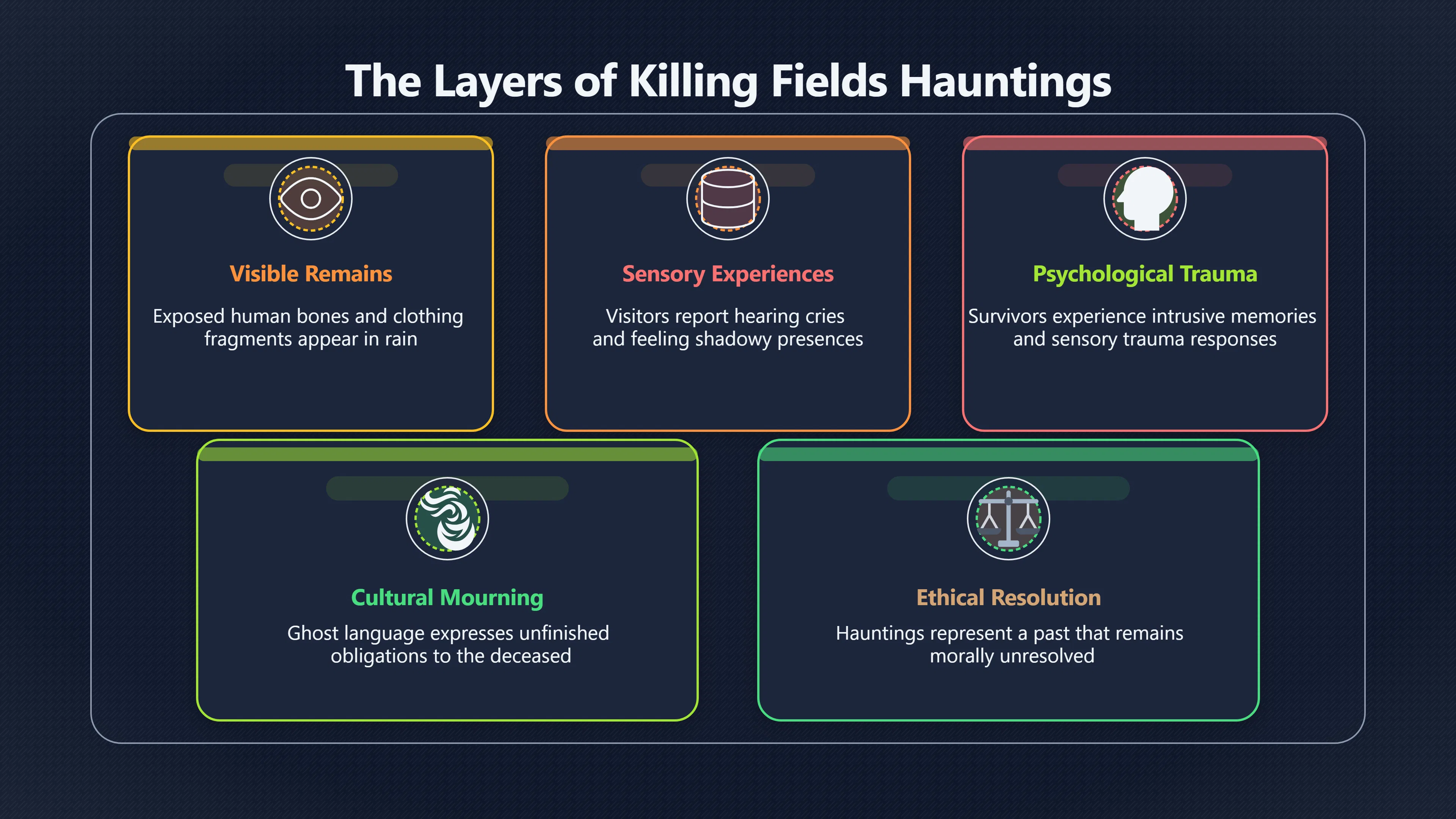
This belief helps explain why the Killing Fields quickly acquired reputations as haunted places. Visitors, guards, villagers and survivors have described hearing unexplained cries, seeing shadowy figures or feeling an overwhelming sense of presence. Such accounts appear in memoirs, oral histories and journalistic reporting, although they are rarely presented as independently verifiable supernatural events. Instead, they exist alongside the physical reality of the sites themselves: landscapes where tens of thousands of people were murdered and buried.
Importantly, these stories emerged within Cambodia itself, not simply as folklore created for tourists. They formed part of the language through which communities processed events that seemed almost impossible to describe in ordinary terms.[Humanity Journal]humanityjournal.orgHumanity Journal Conflicting Sites of Memory in Post-Genocide CambodiaHumanity JournalConflicting Sites of Memory in Post-Genocide CambodiaJune 11, 2014 — 10 Jun 2014 — This essay examines the performance of…
Improper Death and Restless Spirits
Anthropologists studying post-genocide Cambodia have repeatedly found that conversations about ghosts often overlap with conversations about memory, responsibility and mourning rather than fear.
Many survivors speak less about spectacular apparitions than about dreams in which dead relatives ask for food, clothing or religious merit. Others describe spirits lingering because their bodies were abandoned or because their deaths were never properly acknowledged. These accounts fit long-standing Cambodian ideas that the dead remain connected to the living until appropriate obligations have been fulfilled.[SHS Hal Science]shs.hal.scienceSHS Hal Science The living archeology of a painful heritageThe first and…by AY Guillou · 2013 · Cited by 17 — 1) In this chapter, I will contrast two perceptions and practices of memory and com…
Seen this way, ghost language performs several functions:
- It gives emotional form to experiences that resist ordinary description.
- It explains why places containing mass graves feel morally different from ordinary landscapes.
- It expresses continuing obligations to those who died without dignity.
- It allows survivors to speak about trauma without reducing it to medical or political language alone.
The “haunting” is therefore as much ethical as supernatural. A field containing thousands of unnamed victims is haunted because the past has not been fully resolved.
Bones, Memorials and Ritual Questions
One striking feature of Cambodian memorial sites is that the dead remain visibly present. At locations such as Choeung Ek, heavy rain continues to expose fragments of clothing, teeth and human bones from shallow graves. Visitors are asked not to disturb them but to notify staff, reinforcing the sense that these are not ordinary archaeological remains but people whose stories remain incomplete.[Wikipedia]WikipediaKilling FieldsKilling Fields
This creates difficult questions that go beyond archaeology.
Should remains stay where they were found as evidence of genocide? Should they be gathered into memorials? Should they receive Buddhist funerary rites? Or should unidentified victims remain undisturbed as witnesses to history?
Researchers have noted that these debates involve both religious practice and national memory. Memorial stupas displaying thousands of skulls can serve simultaneously as historical evidence, sacred space and political symbol. Yet local communities may have different understandings from official institutions about how the dead should be honoured.[hal.science]shs.hal.scienceSHS Hal Science The living archeology of a painful heritageThe first and…by AY Guillou · 2013 · Cited by 17 — 1) In this chapter, I will contrast two perceptions and practices of memory and com…
Because of this, the presence of bones is never merely physical. For many Cambodians, exposed remains reinforce the sense that the dead continue to ask something of the living: remembrance, respect and proper care.
Respectful Scepticism and Survivor Memory
From a sceptical perspective, there are many reasons why haunted experiences might occur at the Killing Fields without requiring a supernatural explanation.
People entering sites associated with mass murder often do so with intense emotional expectations. Knowledge of the atrocities, visible human remains, silence, heat and isolation can all heighten perception and emotional response. Survivors may also experience intrusive memories, dreams or sensory experiences associated with trauma, all of which are well documented psychological responses to catastrophic violence.
None of this diminishes the sincerity of the reports. A person who dreams repeatedly of a murdered parent or feels an overwhelming presence while standing beside a mass grave is describing a genuine human experience, even if different observers explain it differently.
Believers may interpret these experiences as encounters with unsettled spirits. Psychologists may see them as expressions of grief and trauma. Anthropologists often argue that both perspectives are valuable because they reveal how societies construct meaning after atrocity.[hal.science]shs.hal.scienceSHS Hal Science The living archeology of a painful heritageThe first and…by AY Guillou · 2013 · Cited by 17 — 1) In this chapter, I will contrast two perceptions and practices of memory and com…
This approach avoids two extremes: dismissing survivors’ experiences as mere superstition, or presenting ghost stories as established paranormal fact.

Why These Stories Still Matter
Ghost traditions connected with the Killing Fields remain culturally powerful because they express unfinished mourning rather than simple belief in the supernatural.
Unlike many haunted-house legends, these stories are inseparable from documented historical events. The graves are real. The victims are real. The missing identities, disrupted funerals and continuing discoveries of human remains are real. Against that background, the language of ghosts becomes a way of acknowledging that some losses cannot be neatly confined to the past.
Modern memorials increasingly present these places as sites of education, peace and reflection rather than paranormal tourism. Yet the idea that the ground is still spiritually unsettled continues to resonate because it captures an enduring truth: genocide leaves consequences that survive long after the violence ends. Whether interpreted through religion, psychology or cultural memory, the ghosts of Cambodia’s Killing Fields remind visitors that mourning is not simply about remembering the dead, but about recognising obligations that history has left unfinished.[humanityjournal.org]humanityjournal.orgHumanity Journal Conflicting Sites of Memory in Post-Genocide CambodiaHumanity JournalConflicting Sites of Memory in Post-Genocide CambodiaJune 11, 2014 — 10 Jun 2014 — This essay examines the performance of…
Amazon book picks
Further Reading
Books and field guides related to Why Cambodia's Killing Fields Became Haunted Ground. Use these as the next step if you want deeper reading beyond the article.
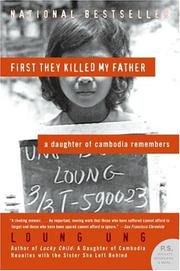
First They Killed My Father
Provides survivor memory and personal context for understanding trauma, loss, mourning and the legacy of the Khmer Rouge.
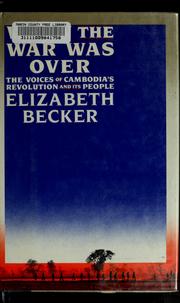
When the war was over
Explains the Khmer Rouge era and its continuing impact on Cambodian society.
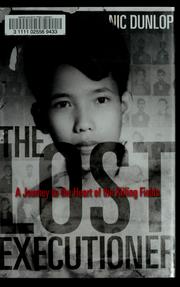
The lost executioner
Investigates Khmer Rouge crimes and the human stories behind Cambodia's killing sites.
The killing fields
Explores the violence and aftermath behind the landscapes that became associated with spirits and remembrance.
eBay marketplace picks
Marketplace Samples
Live-tested eBay searches with available results related to this page.



Endnotes
1.
Source: shs.hal.science
Title: SHS Hal Science The living archeology of a painful heritage
Link:https://shs.hal.science/halshs-02548439/document
Source snippet
The first and...by AY Guillou · 2013 · Cited by 17 — 1) In this chapter, I will contrast two perceptions and practices of memory and com...
2.
Source: pmc.ncbi.nlm.nih.gov
Title: PMCForensic Legacy of the Khmer Rouge: The Cambodian
Link:https://pmc.ncbi.nlm.nih.gov/articles/PMC6474568/
Source snippet
by K Gruspier · 2017 · Cited by 17 — This paper outlines the few forensic investigations which have been undertaken on the remains of...
3.
Source: Wikipedia
Title: Killing Fields
Link:https://en.wikipedia.org/wiki/Killing_Fields
4.
Source: Wikipedia
Title: Choeung Ek
Link:https://en.wikipedia.org/wiki/Choeung_Ek
5.
Source: journals.univie.ac.at
Title: Khmer Rouge killings. roughly 1.7 million Cambodians
Link:https://journals.univie.ac.at/index.php/oezg/article/download/8239/8291/23203
Source snippet
Nixon's Ghost and the Haunting of Violence at Cambodia's...Between 1975 and 1979, upwards of two million men, women, and children perish...
6.
Source: humanityjournal.org
Title: Humanity Journal Conflicting Sites of Memory in Post-Genocide Cambodia
Link:https://humanityjournal.org/issue2-1/conflicting-sites-of-memory-in-post-genocide-cambodia/
Source snippet
Humanity JournalConflicting Sites of Memory in Post-Genocide CambodiaJune 11, 2014 — 10 Jun 2014 — This essay examines the performance of...
Published: June 11, 2014
Additional References
7.
Source: www2.hu-berlin.de
Link:https://www2.hu-berlin.de/transcience/Vol13_No1_65_79.pdf
Source snippet
memory, legitimising powerby R Wild · Cited by 4 — I have drawn on analysis of the state narrative presented at Tuol Sleng to identify th...
8.
Source: facebook.com
Link:https://www.facebook.com/laotiantimes/posts/history%EF%B8%8F50-years-on-cambodia-remembers-the-horrors-of-the-khmer-rouge-but-surviv/1092532202900632/
Source snippet
re barred from mourning at the Killing Fields.Read more...
9.
Source: youtube.com
Title: Ghost Mountain: The Second Killing Fields of Cambodia
Link:https://www.youtube.com/watch?v=QOHgxL4eMEQ
Source snippet
Cambodian Genocide Survivor Phansy Peang (USC Shoah Foundation)...
10.
Source: youtube.com
Title: Cambodian Genocide Survivor Phansy Peang (USC Shoah Foundation)
Link:https://www.youtube.com/watch?v=gocyohYnfrc
Source snippet
Cambodia's Killing Fields: How the Khmer Rouge Destroyed a Nation...
11.
Source: youtube.com
Title: Horror of the Cambodian genocide
Link:https://www.youtube.com/watch?v=a6KaD7yF0-A
Source snippet
Ghost Mountain: The Second Killing Fields of Cambodia - Q&A with Protagonist and Film Director...
12.
Source: d.lib.msu.edu
Link:https://d.lib.msu.edu/etd/6679
Source snippet
of Khmer Rouge Violence: the Materiality of Bones...While the Khmer Rouge period was devastating, the human remains of the victims have...
13.
Source: youtube.com
Title: Cambodia’s Killing Fields: How the Khmer Rouge Destroyed a Nation
Link:https://www.youtube.com/watch?v=LLp_Az-rdys
14.
Source: youtube.com
Title: ‘Ghosts’ of the Khmer Rouge haunt Cambodia
Link:https://www.youtube.com/watch?v=2ZVJyAk-Iig
Source snippet
Horror of the Cambodian genocide...
Topic Tree