Within Strange Gambia
Is The Ninki Nanka A Monster Or A Warning?
The Ninki Nanka turns The Gambia's swamps into a story of danger, testimony, misidentification and tourist-era mythmaking.
On this page
- The changing descriptions of the creature
- The 2006 expedition and its weak evidence
- River hazards, folklore and sceptical explanations
Page outline Jump by section
Introduction
The Ninki Nanka is the best-known mystery creature associated with The Gambia, but it is far more than a simple “river dragon” story. Depending on who is telling the tale, it is a giant serpent, a crocodile-like monster, a dragon with horns, or an omen of death lurking in mangrove swamps. That remarkable variety is one reason the legend has endured. Rather than pointing towards a single unknown animal, the stories reveal how folklore, dangerous river environments, local beliefs and modern cryptozoology have combined into one of West Africa’s most famous mystery traditions. Although a British expedition in 2006 attracted worldwide attention, it failed to produce convincing physical evidence, leaving the Ninki Nanka firmly in the realm of folklore, witness testimony and cultural memory rather than established zoology.[The Independent]independent.co.ukThe Independent The monster detectives: on the trail of the ninki-nankaThe IndependentThe monster detectives: on the trail of the ninki-nankaJuly 12, 2006 — 12 Jul 2006 — Richard Freeman of the Centre for For…

Is the Ninki Nanka a monster or a warning?
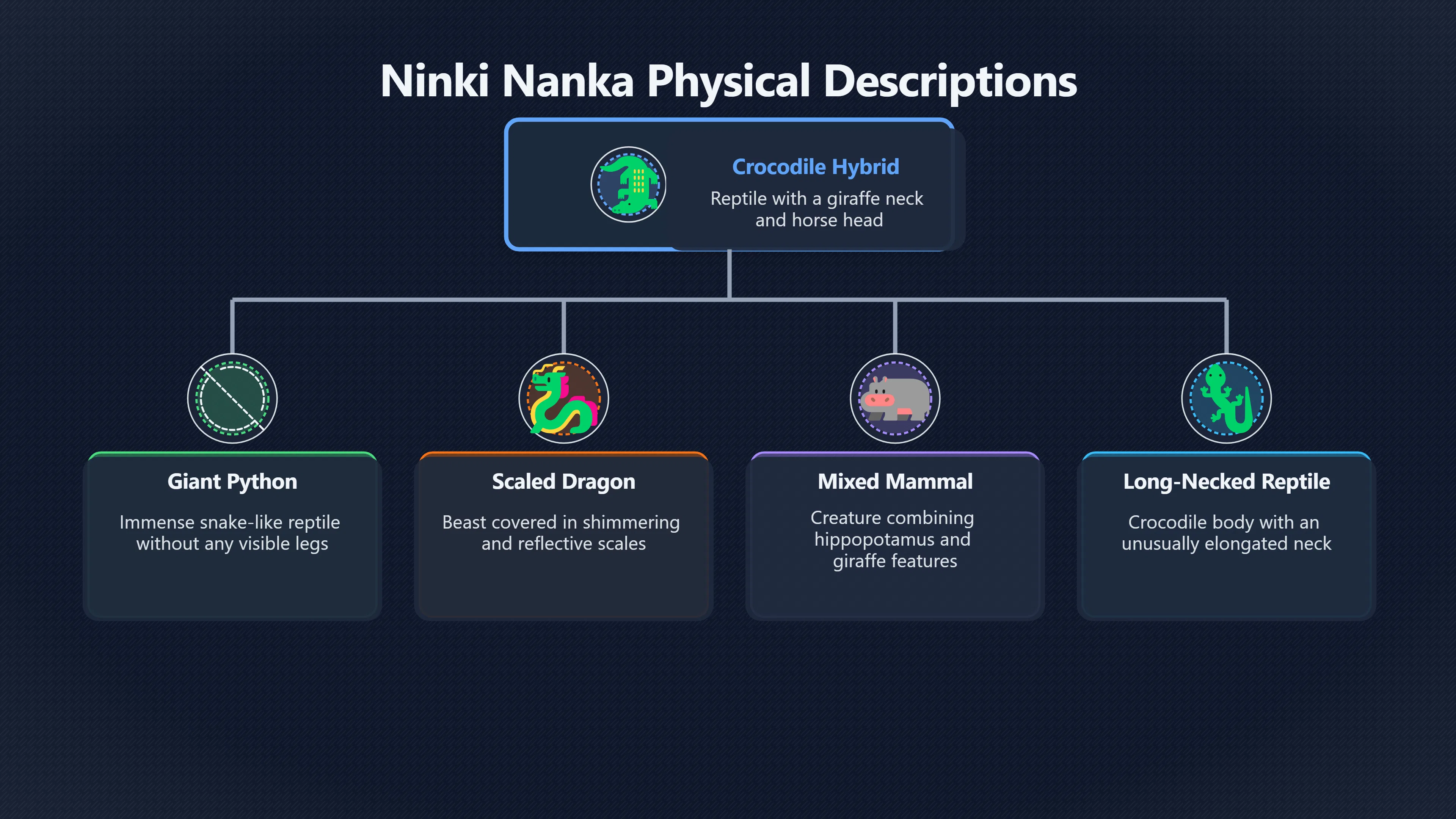
One of the most striking features of the Ninki Nanka legend is that almost nobody describes exactly the same creature. Some accounts speak of a reptile with the body of a crocodile, the neck of a giraffe and the head of a horse crowned with horns. Others describe an immense snake, a dragon-like beast with shimmering scales, or even an animal resembling a Chinese dragon. In some traditions it can breathe fire, while in others it disappears almost as quickly as it appears.[The Independent]independent.co.ukThe Independent The monster detectives: on the trail of the ninki-nankaThe IndependentThe monster detectives: on the trail of the ninki-nankaJuly 12, 2006 — 12 Jul 2006 — Richard Freeman of the Centre for For…
Yet beneath these changing appearances lie several remarkably consistent themes:
- It inhabits swamps, mangrove forests and remote waterways.
- It is considered extraordinarily dangerous.
- Seeing it is widely believed to bring illness or death, sometimes immediately and sometimes within a few years.
- Mirrors are sometimes said to protect against its deadly gaze by reflecting it back upon the creature.[The Independent]independent.co.ukThe Independent The monster detectives: on the trail of the ninki-nankaThe IndependentThe monster detectives: on the trail of the ninki-nankaJuly 12, 2006 — 12 Jul 2006 — Richard Freeman of the Centre for For…
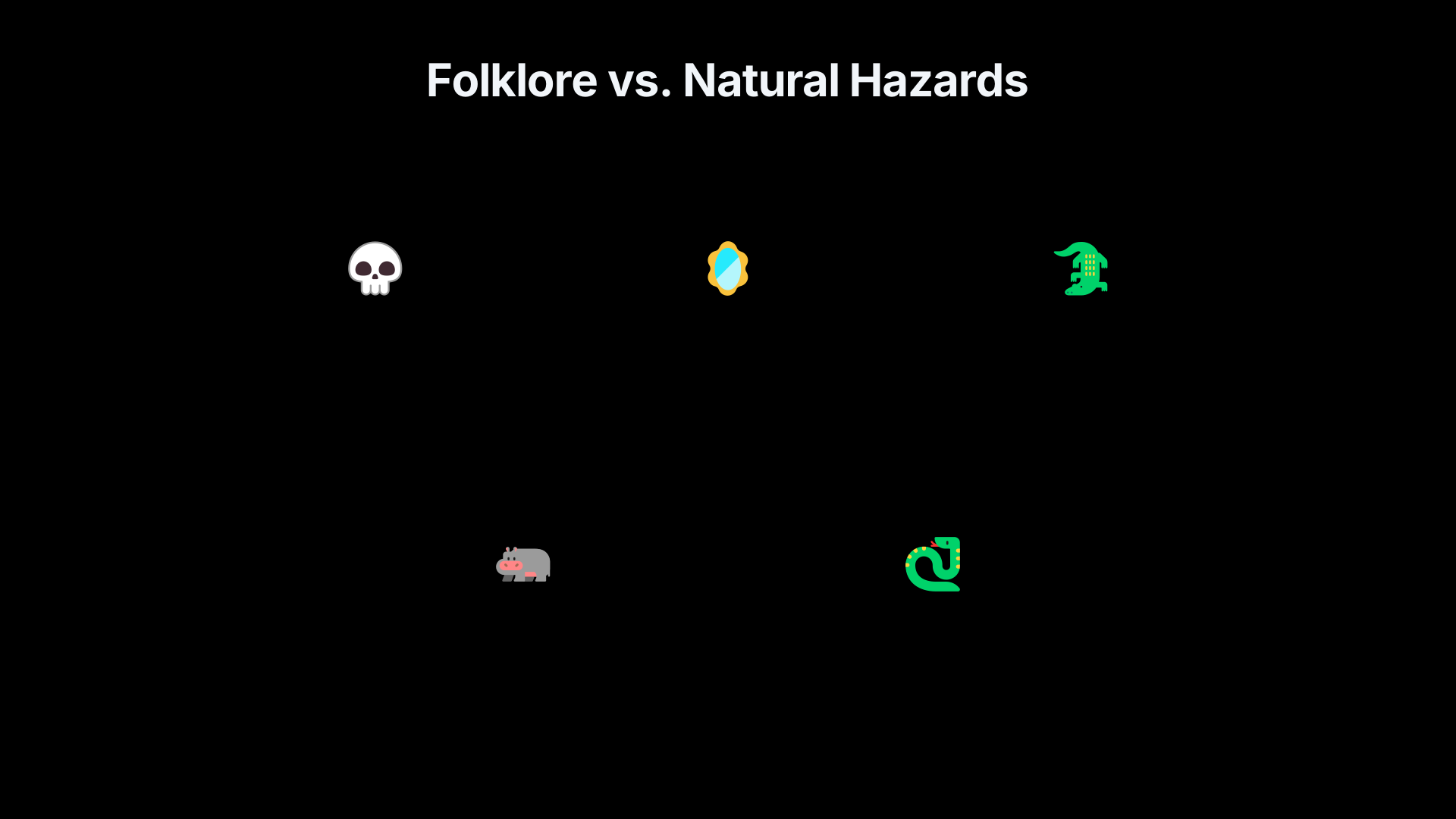
These recurring ideas suggest that the legend’s importance lies less in precise zoological description than in its symbolic role. The Ninki Nanka marks places that should be approached cautiously—deep swamps, isolated creeks and rivers where crocodiles, snakes, disease and drowning were genuine hazards long before modern tourism.
Historical records support the antiquity of this belief. Colonial-era reports from the early twentieth century already describe the Ninki Nanka as a gigantic serpent-like spirit whose appearance foretold sickness or death, showing that the legend predates modern cryptozoological interest by many decades.[Wikipedia]WikipediaNinki NankaNinki Nanka
Why do descriptions vary so much?
From the perspective of cryptozoology, wildly inconsistent eyewitness descriptions usually weaken the case for an undiscovered species. Unlike reports of recognised animals, there is little agreement over the Ninki Nanka’s anatomy.
Descriptions have included:
- a crocodile with an unusually long neck;
- a giant python-like reptile;
- a creature combining hippopotamus, giraffe and horse features;
- a dragon covered with reflective scales;
- an enormous snake lacking visible legs altogether.[Wikipedia]WikipediaNinki NankaNinki Nanka
Folklorists would argue that such variation is exactly what should be expected from a traditional supernatural being. Stories passed between villages adapt over time, absorbing local beliefs and changing to fit different landscapes and audiences.
The result is less like reports of a single biological animal and more like a flexible cultural symbol. The creature’s shape changes, but its purpose remains stable: warning people about dangerous places, reinforcing respect for powerful natural forces and explaining frightening experiences in isolated wetlands.
The 2006 expedition and why it changed the story
The Ninki Nanka entered international headlines in July 2006 when the Centre for Fortean Zoology organised the J. T. Downes Memorial Gambia Expedition specifically to search for the creature. Media outlets portrayed the expedition as a hunt for Africa’s hidden dragon, bringing a legend that had largely remained regional into worldwide cryptozoological discussion.[The Independent]independent.co.ukThe Independent The monster detectives: on the trail of the ninki-nankaThe IndependentThe monster detectives: on the trail of the ninki-nankaJuly 12, 2006 — 12 Jul 2006 — Richard Freeman of the Centre for For…
The investigators interviewed local witnesses and explored river channels and mangrove habitats where sightings had reportedly occurred. Expedition leader Richard Freeman suggested that, if there were any zoological basis to the stories, an exceptionally large monitor lizard or another unfamiliar reptile might provide a more realistic explanation than a mythical dragon.[The Independent]independent.co.ukThe Independent The monster detectives: on the trail of the ninki-nankaThe IndependentThe monster detectives: on the trail of the ninki-nankaJuly 12, 2006 — 12 Jul 2006 — Richard Freeman of the Centre for For…
Despite considerable publicity, the expedition produced little physical evidence.
The most publicised supposed discovery was a set of “Ninki Nanka scales” presented to the team. Examination suggested they were simply fragments of deteriorated photographic film rather than biological material. No verified footprints, DNA, carcasses or clear photographs emerged from the investigation.[The Independent]independent.co.ukThe Independent The monster detectives: on the trail of the ninki-nankaThe IndependentThe monster detectives: on the trail of the ninki-nankaJuly 12, 2006 — 12 Jul 2006 — Richard Freeman of the Centre for For…
What the expedition did collect was testimony. Witnesses repeated familiar themes about enormous reptiles, fatal encounters and fearful avoidance of certain waterways. While these accounts are culturally valuable, they remain anecdotal and cannot establish the existence of an unknown species.
River hazards, folklore and sceptical explanations
Most naturalistic explanations focus not on one hidden monster but on how dangerous river environments generate memorable stories.
Several real hazards exist along the River Gambia and its wetlands:
- crocodiles can remain almost completely submerged before appearing unexpectedly;
- hippopotamuses are among Africa’s most dangerous large mammals and inhabit parts of the river system;
- large snakes, including pythons and venomous species, occur in suitable habitats;
- dense mangroves, poor visibility and changing light can distort perceptions of size and shape.[National Geographic]nationalgeographic.comexploring gambias new ninki nanka trailNational GeographicExploring the Gambia's new Ninki Nanka Trail25 Apr 2023 — Named for a mythical water-dwelling beast, the trail traces…
Fear also shapes memory. A frightening glimpse of an unfamiliar animal at dusk may become more extraordinary as the story is retold, especially within a culture where listeners already recognise the Ninki Nanka tradition.
The persistent belief that seeing the creature causes later death may have psychological as well as folkloric roots. Someone convinced they have encountered an omen could interpret subsequent illness as confirmation of the legend. Because serious disease was historically common in swamp environments, unfortunate coincidences would naturally reinforce the belief over generations.
Rather than dismissing the tradition, many researchers see it as an effective cultural warning system. Stories about deadly supernatural beings discourage children from wandering into hazardous wetlands and encourage caution around rivers where accidents, predators and disease posed genuine risks.
Why the legend still thrives
The Ninki Nanka has gained new life through tourism, literature and popular culture without losing its local roots. In recent years The Gambia has promoted the Ninki Nanka Trail, a river journey encouraging visitors to explore inland communities, wildlife and landscapes associated with the legend. Here the mythical creature functions less as an object of literal monster hunting than as a storytelling guide linking history, ecology and local traditions.[National Geographic]nationalgeographic.comexploring gambias new ninki nanka trailNational GeographicExploring the Gambia's new Ninki Nanka Trail25 Apr 2023 — Named for a mythical water-dwelling beast, the trail traces…
Modern novels, documentaries and television programmes have also introduced the creature to audiences far beyond West Africa, often emphasising its dragon-like qualities. At the same time, many Gambians continue to treat the legend with varying degrees of seriousness, ranging from firm belief to appreciation as an important piece of cultural heritage.[Wikipedia]WikipediaNinki NankaNinki Nanka
How strong is the evidence?
From a scientific perspective, the evidence for the Ninki Nanka as an undiscovered animal remains extremely weak.
There are no verified specimens, reliable photographs, physical traces or independently confirmed observations that demonstrate the existence of a giant unknown reptile in The Gambia. The 2006 expedition, despite attracting considerable publicity, did not change that assessment.[The Independent]independent.co.ukThe Independent The monster detectives: on the trail of the ninki-nankaThe IndependentThe monster detectives: on the trail of the ninki-nankaJuly 12, 2006 — 12 Jul 2006 — Richard Freeman of the Centre for For…
As folklore, however, the Ninki Nanka is exceptionally rich. Its long historical record, enduring association with specific landscapes, recurring themes of danger and death, and ability to adapt to changing audiences make it one of the most distinctive pieces of Gambian strange history.
Whether interpreted as a monster, a misunderstood animal, a river spirit or a powerful cautionary tale, the Ninki Nanka illustrates how legends can preserve practical knowledge about hazardous environments while continuing to inspire curiosity well into the twenty-first century.
Amazon book picks
Further Reading
Books and field guides related to Is The Ninki Nanka A Monster Or A Warning?. Use these as the next step if you want deeper reading beyond the article.


The Penguin Book of Dragons
Places the Ninki Nanka alongside global dragon traditions.

African myths of origin
Explains oral storytelling traditions behind river-monster legends.
eBay marketplace picks
Marketplace Samples
Live-tested eBay searches with available results related to this page.



Endnotes
1.
Source: independent.co.uk
Title: The Independent The monster detectives: on the trail of the ninki-nanka
Link:https://www.independent.co.uk/news/science/the-monster-detectives-on-the-trail-of-the-ninkinanka-6095664.html
Source snippet
The IndependentThe monster detectives: on the trail of the ninki-nankaJuly 12, 2006 — 12 Jul 2006 — Richard Freeman of the Centre for For...
Published: July 12, 2006
2.
Source: Wikipedia
Title: Ninki Nanka
Link:https://en.wikipedia.org/wiki/Ninki_Nanka
3.
Source: nationalgeographic.com
Title: exploring gambias new ninki nanka trail
Link:https://www.nationalgeographic.com/travel/article/exploring-gambias-new-ninki-nanka-trail
Source snippet
National GeographicExploring the Gambia's new Ninki Nanka Trail25 Apr 2023 — Named for a mythical water-dwelling beast, the trail traces...
4.
Source: mythlok.com
Title: ninki nanka
Link:https://mythlok.com/ninki-nanka/
Source snippet
The Elusive Dragon of West African FolkloreIn 2006, the Centre for Fortean Zoology launched the “J. T. Downes Memorial Gambia Expedition”...
5.
Source: facebook.com
Link:https://www.facebook.com/media/set/?set=a.1742531209119463&type=3
Source snippet
The Legend of Ninki NankaA group of "dragon hunters" from the Centre for Fortean Zoology (CFZ) went to Gambia in the summer of 2006 to in...
6.
Source: youtube.com
Title: The Ninki Nanka | West Africa’s Swamp Dragon
Link:https://www.youtube.com/watch?v=Wru7DkEfgVU
Source snippet
NINKI NANKA - The TRUE MYSTICAL STORY...
7.
Source: youtube.com
Title: NINKI NANKA
Link:https://www.youtube.com/watch?v=4CAADFx0nJY
Source snippet
Mythological Creatures of Africa ‐ Mermaids, Dragons & Dinosaurs...
8.
Source: youtube.com
Title: The Ninki Nanka Trail: Gambia & Casamance | My Gambia | My Magazine
Link:https://www.youtube.com/watch?v=dSXixkXwGec
Source snippet
Ninkinanka - Part 2...
9.
Source: youtube.com
Link:https://www.youtube.com/watch?v=28pot9RFODg
Additional References
10.
Source: cryptidarchives.fandom.com
Title: Cryptid Archives Ninki nanka | Encyclopaedia of Cryptozoology
Link:https://cryptidarchives.fandom.com/wiki/Ninki_nanka
Source snippet
Cryptid ArchivesNinki nanka | Encyclopaedia of Cryptozoology - FandomThe ninki nanka (Unknown: "snake" or "dragon devil") is a cryptid ri...
11.
Source: reddit.com
Link:https://www.reddit.com/r/ImaginaryMonsters/comments/m3g6kf/ninki_nanka_a_legendary_creature_from_west/
Source snippet
Descriptions of the creature vary, but most contend that the animal is reptilian and possibly...
12.
Source: youtube.com
Title: Mythological Creatures of Africa ‐ Mermaids, Dragons & Dinosaurs
Link:https://www.youtube.com/watch?v=mDaT4U8PHPg
Source snippet
The Ninki Nanka Trail: Gambia & Casamance | My Gambia | My Magazine...
13.
Source: amazon.de
Link:https://www.amazon.de/CFZ-EXPEDITION-REPORT-GAMBIA-2006/dp/1905723032?tag=searcht-20
Source snippet
CFZ EXPEDITION REPORT: GAMBIA 2006They went in search of a dragon-like creature, known to the natives as `Ninki Nanka`, which has terrori...
Topic Tree