What Makes Cape Verde's Weird History So Unusual?
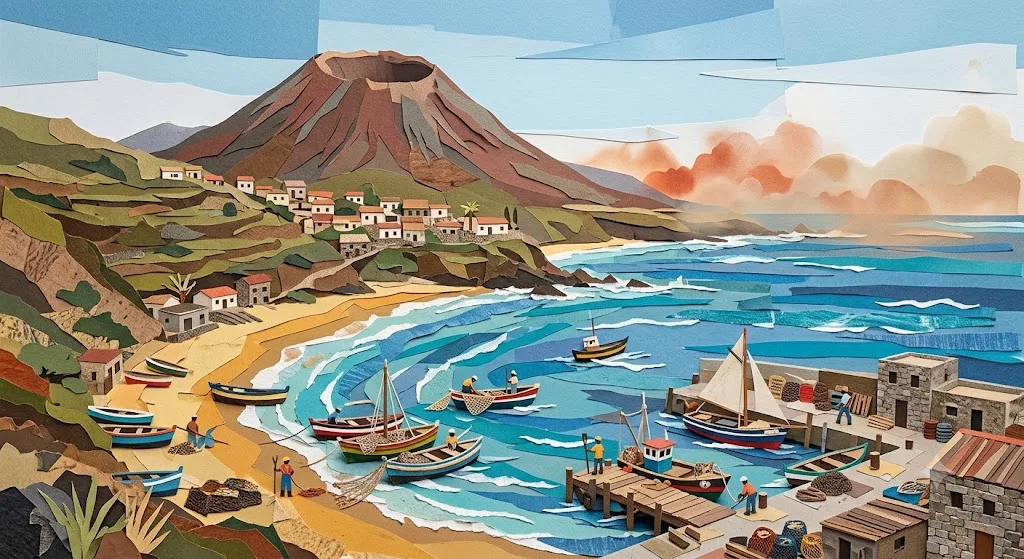
Cape Verde’s strange-history record is not crowded with famous monsters or world-shaking paranormal cases. Its Fortean interest lies elsewhere: in island folklore shaped by Catholicism, West African inheritance, slavery, migration, drought, volcanoes and the Atlantic sea-lanes.
Page outline Jump by section
Why Cape Verde’s weird record is quieter than its landscape
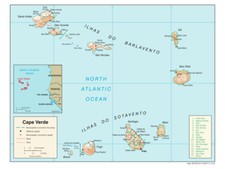
Cape Verde, officially Cabo Verde, is a ten-island Atlantic archipelago around 500 km off West Africa, with most of its population living on nine inhabited islands. That geography matters. Islands generate rumours easily: lights at sea, sudden weather, ship stories, strange animals, saints, witches and omens all travel well in close communities. But Cape Verde’s documentary record is uneven, and much of its older folklore reached print through collectors working with Cape Verdean emigrant communities rather than through local newspapers or modern paranormal catalogues. The result is a body of material that is culturally rich but often hard to pin to a single date, witness or place.[World Bank]worldbank.orgOpen source on worldbank.org.
This also makes Cape Verde a useful test case for evidence-aware Forteana. The islands have dramatic physical phenomena that can look supernatural at first glance: Saharan dust, volcanic glow, earthquakes before eruptions, whale-rich waters, mirages and Atlantic storms. They also have a layered religious culture. The 2021 census figures cited by the US State Department put Roman Catholics at about 73 per cent of the population, while the Smithsonian Folklife Festival’s Cape Verde material notes that Catholic practice has coexisted with older beliefs in witches, traditional healers and superstitions.[State Department]state.govDepartment Cabo VerdeDepartment Cabo Verde
That mixture does not make the traditions “less real”. It helps explain why Cape Verdean weird tales often sit between church teaching, African-derived protective custom, family cautionary tale and entertainment. The most interesting question is rarely “was it paranormal?” It is usually “what danger, anxiety or landscape feature was this story helping people understand?”
Witches, infants and the guarded seventh night
One of the clearest recurring motifs in Cape Verdean folklore is fear of witches. Elsie Clews Parsons’s early twentieth-century work on Cape Verdean folklore records belief in black magic across the islands and describes witches as female figures who could be blamed for harm, illness or misfortune. Later cultural summaries make the same broad point: belief in magic and witchcraft drew on both Portuguese and African roots, and was not simply a decorative story-world separate from everyday life.[JSTOR]jstor.orgOpen source on jstor.org.
A particularly vivid survival is the belief that newborn babies are vulnerable on the seventh night after birth. A translator’s note to Luís Romano’s “Old Isidoro” explains that a traditional belief throughout Cabo Verde held that babies were especially exposed to witches and evil spirits on that night, leading to “Seven” or “Head-Guarding” ceremonies intended to make enough noise to scare away soul-stealers until after midnight.[Words Without Borders]wordswithoutborders.orgWords Without Borders Old Isidoro by Luís RomanoWords Without Borders Old Isidoro by Luís Romano
For a Fortean reader, this is more than a spooky baby custom. It is a good example of how a supernatural explanation can also function as a social technology. Newborns really are fragile; postpartum households really do need attention, visitors, food, vigilance and help. A night of communal guarding turns fear into action. The sceptical reading is that the witch story gives a memorable shape to infant risk. The believer’s reading is that the danger was spiritual as well as physical. Either way, the custom shows how the uncanny can organise care.
It also fits Cape Verde’s wider history. Cidade Velha, formerly Ribeira Grande, was the first European colonial outpost in the tropics and became a major site in Atlantic slavery and Creole cultural formation. Folklore in such a place is not likely to be “purely” European or “purely” African. It is more often a hard-won blend produced by migration, coercion, conversion, secrecy and adaptation.[UNESCO World Heritage Centre]whc.unesco.orgOpen source on unesco.org.
Mermaids, animal brides and the sea as a borderland
Cape Verde’s sea folklore is less famous internationally than that of the Caribbean or West Africa, but mermaid and animal-bride motifs do appear in the published record. Parsons’s collections include Cape Verdean folk material in which mermaids are not only tale figures; the JSTOR record for “Folk-Lore of the Cape Verde Islanders” notes that some informants said a mother or grandmother had once seen a mermaid. The archive listing for Folk-Lore from the Cape Verde Islands also points to mermaid material in the collected tales.[JSTOR]jstor.orgOpen source on jstor.org.
These stories belong naturally to an island culture. The sea brings fish, work, migration, shipwreck danger, foreign news and absence. It is both road and graveyard. A mermaid tale is therefore not just an imported fairy story with a fish tail attached. It gives the ocean a face: alluring, dangerous, generous, unpredictable and morally charged.
A related motif appears in Cape Verdean variants of the “animal wife” or “swan maiden” family of tales. Comparative folklore references identify Cape Verdean versions collected by Parsons, including a story sometimes discussed under the title “White-Flower”, where a supernatural female figure is linked with bird transformation. The specific details vary, but the underlying pattern is familiar across world folklore: a human tries to possess or keep a supernatural spouse by controlling the garment, skin or feather that allows her to return to her own realm.[scjarvis.com]scjarvis.comOpen source on scjarvis.com.
The Fortean value here is not that Cape Verde secretly “has mermaids”. It is that testimony, family memory and tale-type overlap. A grandmother’s claimed sighting, a moral folktale and a migratory Atlantic story pattern can all feed one another. That is exactly the kind of place where strange reports live longest: not as laboratory evidence, but as stories that remain useful.
Fogo’s sleeping giant and the volcano that really does wake
The most physically dramatic strange tradition in Cape Verde is attached to Pico do Fogo. Modern folklore summaries describe a local tale in which a giant sleeps inside the volcano; when the giant shifts or wakes, the island shakes and erupts. It is an elegant mythic explanation for a real hazard, and it works because Fogo is not an extinct scenic cone. It is active.[Sal Cabo Verde]salcaboverde.comSal Cabo Verde Cape Verdean Folklore: Tales and Legends of the IslandsSal Cabo Verde Cape Verdean Folklore: Tales and Legends of the Islands
The 2014–2015 eruption shows how close the legend is to lived reality. NASA reported that Fogo awoke on 23 November 2014 after about 20 years of quiet, with an intense flank eruption that devastated villages inside the caldera and forced thousands to evacuate. The Smithsonian Global Volcanism Program records the November 2014 to February 2015 eruption and notes that residents felt earthquakes the night before the eruption began.[NASA Science]science.nasa.govScience Eruption at FogoScience Eruption at Fogo
Scientific studies of the eruption make the human cost plain. Research on lava-flow damage found that fast-moving lava engulfed 75 per cent of buildings in three villages in Chã das Caldeiras, along with agricultural land, water storage and the only road into the area. That is the sober explanation behind the giant: ground tremors, gas, lava, ash, evacuation and loss.[Springer]link.springer.comOpen source on springer.com.
Still, the giant story should not be dismissed as “primitive science”. It does something modern hazard language often struggles to do. It makes the volcano personal. It turns a geological system into a neighbour with moods. For communities living inside or near a caldera, that is psychologically powerful: the mountain is not background scenery; it is an actor in local life.
Red rain, dust falls and the island version of “blood rain”
Old newspaper oddities are part of any Fortean country file, and Cape Verde has at least one excellent atmospheric example: a 1923 Australian newspaper item headlined “Cape Verde’s Red Rain”. The report treated the fall as a curiosity, saying that the material was found to be dust.[Trove]trove.nla.gov.auOpen source on nla.gov.au.
That explanation is much less disappointing than it sounds. Cape Verde sits in one of the world’s great dust corridors. Scientific work on aerosols over Cape Verde has found seasonal dust variation, with high winter aerosol loadings linked to dust transport in trade winds and summer dust supply associated mainly with the Sahel. Other work on African dust and “blood rain” notes that dust samples collected near the Cape Verde Islands included abundant mineral particles, the same broad family of processes that can colour rain elsewhere.[ScienceDirect]sciencedirect.comOpen source on sciencedirect.com.
The Fortean pattern is familiar: red rain is alarming because rain is expected to be clear. In earlier centuries it could be framed as blood, omen or divine warning. In Cape Verde’s case, the mundane explanation is especially strong: fine desert dust can be lifted, transported and washed out by rain. Yet the old report remains valuable because it captures the moment before explanation, when an ordinary weather event briefly becomes uncanny.
Cape Verde is a particularly good place to make that point. The islands are near enough to Saharan and Sahelian dust sources for coloured skies, dirty rain and haze to be part of the environmental imagination. A strange fall need not be paranormal to belong in a Fortean archive. It only needs to show how nature can briefly violate expectation.
The ancient wave that made boulders look impossible
Some of Cape Verde’s most astonishing “weird history” is now mainstream geology. On Santiago, researchers studied giant boulders high above the coast and argued that they were carried there by a massive tsunami generated when part of Fogo collapsed into the sea around 73,000 years ago. The peer-reviewed Science Advances paper describes the hazard potential of volcanic flank collapses; Nature’s report summarised the finding as a prehistoric Cape Verde landslide unleashing waves about 170 metres high.[Science]science.orgOpen source on science.org.
This is not folklore, and it should not be treated as a recent human memory. It is a scientific reconstruction of a prehistoric event. But it belongs in a Cape Verde Fortean survey because it has the classic structure of a once-impossible anomaly: huge rocks in the wrong place. Before a mechanism is accepted, such evidence can feel like a riddle from catastrophe mythology. After the mechanism is modelled and dated, the “impossible” becomes a record of extreme natural force.
There is also a useful caution here. Popular headlines about mega-tsunamis can become apocalyptic very quickly. The better reading is measured. The evidence supports a catastrophic ancient local event, but it does not mean a repeat is imminent or predictable. As with Fogo’s sleeping giant, the strangeness is strongest when held alongside restraint: Cape Verde’s landscape really has produced events that sound legendary, but science is better at explaining them than prophecy is.
Why there are few solid Cape Verde UFO or monster cases
A search for Cape Verde UFOs, lake monsters or modern cryptids produces thin evidence compared with countries that have large newspaper archives, military UFO files or famous monster traditions. There are scattered catalogue references to Atlantic sightings near the Cape Verde region, including a nineteenth-century maritime “UFO” item involving the steamship Lady of the Lake, but the accessible records tend to be secondary chronology entries rather than strong primary case files.[rhun.co.nz]rhun.co.nzUF O Event Timeline v1.03UF O Event Timeline v1.03
That matters. Cape Verde lies on Atlantic routes where sailors historically reported lights, meteors, mirages, unusual clouds and marine animals. It would be surprising if no strange sky or sea stories circulated. But a country-level page should not inflate weak catalogue entries into national mysteries. For Cape Verde, the better-supported material is folklore, volcanic legend, atmospheric falls and geological oddity.
The same caution applies to “sea monster” searches. Cape Verde’s waters are biologically rich, and modern tourism writing often highlights whales, turtles, fishing and dramatic ocean life. A strange shape offshore can easily become a monster story, especially in retelling, but the stronger Cape Verdean sea material is the mermaid and supernatural-bride folklore collected in older sources, not a well-documented unidentified animal case.[JSTOR]jstor.orgOpen source on jstor.org.
This absence is itself useful. It prevents the page from becoming a padded list of weak mysteries. Cape Verde’s weird identity is not a copy of Loch Ness or Roswell. It is Atlantic, volcanic, Catholic-Creole, dusty, maritime and oral.

How to read Cape Verde’s strange traditions fairly
The fairest approach is to separate four kinds of material.
First, documented natural anomalies. Red rain and dust falls are real atmospheric events with strong physical explanations. The ancient Santiago boulders are real geological evidence interpreted through tsunami science. Fogo’s eruptions are monitored volcanic events. These are not supernatural, but they are exactly the kind of startling facts that keep Fortean curiosity alive.[sciencedirect.com]sciencedirect.comOpen source on sciencedirect.com.
Second, folklore with social function. Witches, infant-guarding customs, mermaids and animal brides are not best judged as failed eyewitness reports. They are traditions that encode danger, desire, illness, childbirth risk, sea anxiety and moral boundaries. They deserve respect without requiring literal belief.[Words Without Borders]wordswithoutborders.orgWords Without Borders Old Isidoro by Luís RomanoWords Without Borders Old Isidoro by Luís Romano
Third, archive curiosities. Newspaper items such as “red rain” show how anomalies were reported before modern explanation reached the reader. These reports are valuable even when the explanation is ordinary, because they preserve the emotional shock of the event.[Trove]trove.nla.gov.auOpen source on nla.gov.au.
Fourth, weak or secondary paranormal claims. UFO catalogue snippets and vague monster claims should be treated as leads, not conclusions. Without a primary report, date, witness chain or local context, they remain marginal.
Why Cape Verde still belongs on a Fortean map
Cape Verde’s strange material has cultural pull because it grows from real pressures: babies surviving the vulnerable first days of life, families negotiating illness and misfortune, islanders living with a volcano that can wake, sailors and migrants facing the Atlantic, and communities watching the sky turn red with travelling dust. The supernatural language is often a human answer to an environmental question.
That makes the islands a strong example of grounded Forteana. The mystery is not that Cape Verde is secretly full of monsters. It is that the archipelago turns ordinary categories unstable. Dust behaves like blood. A mountain behaves like a sleeping body. A wave throws sea rocks into impossible places. A newborn’s seventh night becomes a battle with soul-stealers. A mermaid is not just a creature but the sea itself, translated into story.
The result is a quieter but more durable weird-history record: less about spectacular proof, more about how people remember danger, explain uncertainty and make the Atlantic uncanny enough to live with.
Amazon book picks
Further Reading
Books and field guides related to What Makes Cape Verde's Weird History So Unusual?. Use these as the next step if you want deeper reading beyond the article.
The island at the center of the world
Provides wider Atlantic historical context for island cultures.

The Book of Mythical Beasts and Magical Creatures
Provides wider context for legendary beings and folklore.
Folk-lore from the Cape Verde Islands
Directly covers Cape Verdean tales, beliefs and supernatural traditions.
eBay marketplace picks
Marketplace Samples
Live-tested eBay searches with available results related to this page.
Endnotes
1.
Source: jstor.org
Link:https://www.jstor.org/stable/534936
2.
Source: state.gov
Title: Department Cabo Verde
Link:https://www.state.gov/reports/2023-report-on-international-religious-freedom/cabo-verde
3.
Source: whc.unesco.org
Link:https://whc.unesco.org/en/news/527
4.
Source: archive.org
Link:https://archive.org/download/folklorefromcape01pars/folklorefromcape01pars.pdf
5.
Source: scjarvis.com
Link:https://www.scjarvis.com/sites/default/files/2021-04/mermaid-haase-web.pdf
6.
Source: science.nasa.gov
Title: Science Eruption at Fogo
Link:https://science.nasa.gov/earth/earth-observatory/eruption-at-fogo-84987/
7.
Source: link.springer.com
Link:https://link.springer.com/article/10.1186/s13617
8.
Source: sciencedirect.com
Link:https://www.sciencedirect.com/science/article/abs/pii/S030442031500119X
9.
Source: nature.com
Link:https://www.nature.com/articles/nature.2015.18485
10.
Source: rhun.co.nz
Title: UF O Event Timeline v1.03
Link:https://www.rhun.co.nz/uap/books/ufo_timeline_v1_03.pdf
11.
Source: pmc.ncbi.nlm.nih.gov
Title: PMCHazard potential of volcanic flank collapses raised by
Link:https://pmc.ncbi.nlm.nih.gov/articles/PMC4646801/
12.
Source: cabo-verde.cv
Link:https://cabo-verde.cv/shadows-of-cabo-verde-legends-myths-of-the-islands/
13.
Source: cabo-verde.cv
Title: the 2014 pico do fogo eruption impact and recovery
Link:https://cabo-verde.cv/the-2014-pico-do-fogo-eruption-impact-and-recovery/
14.
Source: archive.org
Link:https://archive.org/stream/ForteanSociety/forteansociety-fbi_djvu.txt
15.
Source: dn790003.ca.archive.org
Link:https://dn790003.ca.archive.org/0/items/celebratedwoment00adamrich/celebratedwoment00adamrich.pdf
16.
Source: 2009-2017.state.gov
Link:https://2009-2017.state.gov/outofdate/bgn/capeverde/81431.htm
17.
Source: 2021-2025.state.gov
Link:https://2021-2025.state.gov/report/custom/dfca0e75a1/
18.
Source: 2021-2025.state.gov
Link:https://2021-2025.state.gov/reports/2023-report-on-international-religious-freedom/andorra/
19.
Source: 2021-2025.state.gov
Title: cabo verde
Link:https://2021-2025.state.gov/reports/2021-report-on-international-religious-freedom/cabo-verde/
20.
Source: 2021-2025.state.gov
Title: san marino
Link:https://2021-2025.state.gov/reports/2023-report-on-international-religious-freedom/san-marino/
21.
Source: 2021-2025.state.gov
Link:https://2021-2025.state.gov/reports/2023-report-on-international-religious-freedom/senegal/
22.
Source: 2021-2025.state.gov
Title: cabo verde
Link:https://2021-2025.state.gov/reports/2023-report-on-international-religious-freedom/cabo-verde/
23.
Source: state.gov
Title: Sierra Leone
Link:https://www.state.gov/reports/2023-report-on-international-religious-freedom/sierra-leone
24.
Source: state.gov
Link:https://www.state.gov/reports/2023-report-on-international-religious-freedom/malta
25.
Source: 2021-2025.state.gov
Link:https://2021-2025.state.gov/reports/2023-report-on-international-religious-freedom/eswatini/
26.
Source: state.gov
Link:https://www.state.gov/reports/2023-report-on-international-religious-freedom/namibia
27.
Source: state.gov
Link:https://www.state.gov/reports/2023-report-on-international-religious-freedom/portugal
28.
Source: 2021-2025.state.gov
Link:https://2021-2025.state.gov/reports/2023-report-on-international-religious-freedom/guinea/
29.
Source: cape.co
Link:https://www.cape.co/
30.
Source: science.nasa.gov
Title: eruption at fogo 84819
Link:https://science.nasa.gov/earth/earth-observatory/eruption-at-fogo-84819/
31.
Source: modis.gsfc.nasa.gov
Link:https://modis.gsfc.nasa.gov/gallery/individual.php?db_date=2014
32.
Source: ares.jsc.nasa.gov
Title: meteorite falls
33.
Source: sciencedirect.com
Link:https://www.sciencedirect.com/science/article/abs/pii/S0048969799000418
34.
Source: sciencedirect.com
Link:https://www.sciencedirect.com/science/article/abs/pii/S0037073811001680
35.
Source: jstor.org
Link:https://www.jstor.org/stable/10.5325/jafrireli.5.2.0239
36.
Source: link.springer.com
Link:https://link.springer.com/content/pdf/10.1007/3-540-28100-2.pdf
37.
Source: africa.com
Link:https://africa.com/countries-of-africa/west-africa/cape-verde
38.
Source: unesdoc.unesco.org
Link:https://unesdoc.unesco.org/ark%3A/48223/pf0000233299
39.
Source: worldbank.org
Link:https://www.worldbank.org/ext/en/country/caboverde
40.
Source: wordswithoutborders.org
Title: Words Without Borders Old Isidoro by Luís Romano
Link:https://wordswithoutborders.org/read/article/2020-05/may-2020-writing-from-cabo-verde-old-isidoro-luis-romano-jeff-hessney/
41.
Source: salcaboverde.com
Title: Sal Cabo Verde Cape Verdean Folklore: Tales and Legends of the Islands
Link:https://salcaboverde.com/cape-verdean-folklore-tales-and-legends-of-the-islands/
42.
Source: trove.nla.gov.au
Link:https://trove.nla.gov.au/newspaper/article/54131200
43.
Source: science.org
Link:https://www.science.org/doi/10.1126/sciadv.1500456
44.
Source: Wikipedia
Title: Pico do Fogo
Link:https://en.wikipedia.org/wiki/Pico_do_Fogo
45.
Source: Wikipedia
Title: Cape Verde
Link:https://en.wikipedia.org/wiki/Cape_Verde
46.
Source: Wikipedia
Title: Cidade Velha
Link:https://en.wikipedia.org/wiki/Cidade_Velha
47.
Source: science.org
Link:https://www.science.org/content/article/ancient-tsunami-heaved-700-ton-boulders-over-island-cliffs
48.
Source: openfactbook.org
Title: Cabo Verde
Link:https://openfactbook.org/countries/cabo-verde/
49.
Source: unchartedwaters.fandom.com
Title: Cabo Verde
Link:https://unchartedwaters.fandom.com/wiki/Cabo_Verde
50.
Source: geofactbook.com
Title: cabo verde
Link:https://geofactbook.com/countries/cabo-verde
51.
Source: cf.usembassy.gov
Title: 2023 report on international religious freedom
Link:https://cf.usembassy.gov/2023-report-on-international-religious-freedom/
52.
Source: documents1.worldbank.org
Link:https://documents1.worldbank.org/curated/en/099060624085036575/pdf/P500482-bf54602d-b397-48a4-b383-5f0d172005a1.pdf
53.
Source: concatenation.org
Title: Science Fiction news
Link:https://www.concatenation.org/news/news9~24.html
54.
Source: princeton.edu
Link:https://www.princeton.edu/~jweisenf/northstar/volume8/white.pdf
55.
Source: sci.news
Title: science megatsunami fogo volcano cape verde 03304
Link:https://www.sci.news/geology/science-megatsunami-fogo-volcano-cape-verde-03304.html
56.
Source: bristol.ac.uk
Link:https://www.bristol.ac.uk/news/2015/october/tsunami.html
57.
Source: boavistaofficial.com
Link:https://www.boavistaofficial.com/culture/folklore/
Additional References
58.
Source: youtube.com
Title: Life Inside an Active VOLCANO | FOGO Island, Cape Verde Documentary
Link:https://www.youtube.com/watch?v=hh23pXkRGDU
Source snippet
CAPE VERDE: The Forgotten Islands of the Atlantic | 4K Travel Documentary...
59.
Source: youtube.com
Title: CAPE VERDE: The Forgotten Islands of the Atlantic | 4K Travel Documentary
Link:https://www.youtube.com/watch?v=rHZNu21YQuY
Source snippet
Lava Flows Extremely Close, Fogo Volcano Eruption, 2014...
60.
Source: govinfo.gov
Link:https://www.govinfo.gov/content/pkg/CDIR-1873-01-01/text/CDIR-1873-01-01.txt
61.
Source: worldradiohistory.com
Link:https://www.worldradiohistory.com/Archive-Popular-Communications/80s/Popular-Communications-1986-09.pdf
62.
Source: researchgate.net
Link:https://www.researchgate.net/publication/259779378_Evidence_for_a_mega-tsunami_generated_by_giant_flank_collapse_of_Fogo_Volcano_Cape_Verde
63.
Source: researchgate.net
Link:https://www.researchgate.net/publication/286907349_Walking_the_Tightrope_female_agency_religious_practice_and_the_Portuguese_Inquisition_on_the_Upper_Guinea_coast
64.
Source: researchgate.net
Link:https://www.researchgate.net/publication/334968461_The_Anthropology_of_Uncertainty_Magic_Witchcraft_and_Risk_and_Forensic_Implications
65.
Source: instagram.com
Link:https://www.instagram.com/p/DDPTAYEOjaA/?hl=en
66.
Source: instagram.com
Link:https://www.instagram.com/p/CWxVxBilePl/
67.
Source: instagram.com
Link:https://www.instagram.com/reel/DLtDAxCgR44/
Topic Tree
Follow this branch
Related pages 192
- Afghan Forteana
- Antigua Uncanny
- Bosnian Mysteries
- Botswana Weird
- Brazil Strange
- +187 more in sidebar