Where Angola's Strange Stories Meet Evidence
Angola’s strange-history record is not dominated by flying saucer flaps or neat monster-hunt dossiers.
Page outline Jump by section
Angola’s weird record starts with spirits, not saucers
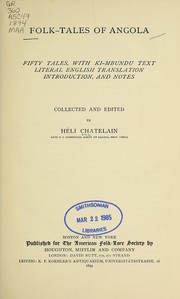
For a country-level Fortean page, Angola asks for a slightly different lens from the usual “UFOs and lake monsters” approach. Publicly accessible evidence for classic modern UFO cases in Angola is thin, scattered and often recycled through weak databases. By contrast, Angola has a strong documented record of strange beings in folklore, especially through Héli Chatelain’s 1894 collection Folk-tales of Angola, which preserved Kimbundu-language tales with English translation and notes for the American Folklore Society. The book’s contents include stories such as “Sudika-Mbambi”, “Ngana Samba and the Ma-kishi”, “The Girls and the Ma-kishi”, and “The Kianda and the Young Woman”, making it one of the key archival anchors for Angolan weird tradition.[Internet Archive]archive.orgOpen source on archive.org.
That matters because Angolan Forteana is often less about a single “case” and more about recurring figures: deceptive monsters, water spirits, spirit possession, prophetic visions, and beings that enforce social boundaries. These are not newspaper oddities in the simple Charles Fort sense. They are part of a cultural memory in which danger may wear a familiar face, water may be sacred and perilous, and spiritual claims can become politically explosive.
The kishi: Angola’s two-faced warning tale
The kishi is probably Angola’s most exportable monster. In popular retellings it is often described as a seductive male figure with a second, ravenous hyena-like face hidden behind the head or body. That modern image is dramatic, but the older source trail is more complicated and more useful. Chatelain’s Folk-tales of Angola records ma-kishi in Kimbundu tales, including stories where such beings are destructive, man-eating or monstrous presences rather than tidy “cryptids” waiting to be photographed.[Internet Archive]archive.orgOpen source on archive.org.
The Fortean pull of the kishi is not that anyone has produced zoological evidence for a two-faced predator. It is that the creature sits at the border of monster story, social warning and spirit language. In Bantu-language contexts across parts of Central Africa, related words such as kishi, nkishi or mukisi can refer to spirit concepts, which helps explain why later English-language monster summaries can flatten a more layered tradition into “Angolan demon”.[Wikipedia]WikipediaKishi (folkloreKishi (folklore
A sceptical reading sees the kishi as a cautionary figure: beware charm without trust, strangers without kinship, appetite disguised as courtship. A believer or tradition-centred reading treats it less as a metaphor and more as a real category of dangerous being. For a modern reader, the strongest evidence is literary and folkloric rather than biological. The kishi belongs beside other world traditions where the monster’s horror lies in doubleness: one face for society, another for hunger.
Kianda and the haunted logic of water
Angola’s water-spirit traditions give the country one of its most distinctive strange figures: Kianda, widely described as a spirit or goddess of the sea and waters, associated especially with Luanda’s coastal imagination. Chatelain’s collection includes “The Kianda and the Young Woman”, while later Angolan literary and cultural commentary treats Kianda as a living mythic presence rather than a dead museum item.[Google Books]books.google.comFolk tales of AngolaFolk tales of Angola
Kianda is often compared with the broader African and African-Atlantic family of water spirits sometimes grouped under Mami Wata, but the Angolan form should not be swallowed whole by that wider label. Museum and scholarship-based summaries of Mami Wata stress that water spirits across Africa and the diaspora may be seductive, protective, healing, dangerous and tied to wealth or transformation; Angolan Kianda sits comfortably in that watery world while retaining a local identity.[National Museums Scotland]nms.ac.ukOpen source on nms.ac.uk.
The Fortean interest is partly ecological. Coastal Angola, river life, fishing, drowning risk, trade, colonial contact and urban Luanda all give water stories a practical charge. A “mermaid” is rarely just a mermaid in such traditions. It may be a way of talking about the sea’s generosity, the danger of desire, the mystery of disappearance, or the feeling that water has its own agency.
There is also a cryptozoological footnote here, though it should be handled carefully. Cambridge-linked scholarship on African-Atlantic mermaid traditions notes that in Angola, fishermen near Luanda have considered the manatee a kind of mermaid or water spirit. That does not “explain away” Kianda, but it shows how folklore, animal encounter and sacred interpretation can overlap without needing a single crude debunking.[Cambridge University Press & Assessment]cambridge.orgUniversity Press & Assessment Mermaid Histories and Power (Chapter 6University Press & Assessment Mermaid Histories and Power (Chapter 6
Prophecy, possession and the dangerous career of Kimpa Vita
One of Angola’s most historically important visionary figures is Dona Beatriz Kimpa Vita, the early eighteenth-century Kongo prophet associated with the Antonian movement. Her story belongs to the old Kingdom of Kongo, whose former capital Mbanza Kongo lies in present-day Angola and is recognised by UNESCO as the political and spiritual capital of one of Southern Africa’s largest historic states from the fourteenth to nineteenth centuries.[UNESCO World Heritage Centre]whc.unesco.orgOpen source on unesco.org.
Kimpa Vita’s claims were extraordinary and politically charged. In 1704, she proclaimed that Saint Anthony had appeared to her during a severe illness and called for the restoration of Kongo’s political unity around Mbanza Kongo. John K. Thornton’s Cambridge study frames her as a Kongolese woman possessed by Saint Anthony who led a mass movement before being burned as a witch and heretic in 1706.[Cambridge Assets]assets.cambridge.orgOpen source on cambridge.org.
For Fortean readers, the key point is not whether her visions were “real” in a paranormal sense. It is that visionary experience became a force in history. Her movement blended Christian symbols, Kongo political restoration, anti-colonial feeling and claims of spirit authority. Later summaries from the Dictionary of African Christian Biography note that the Antonian movement outlasted her and that her ideas survived among ordinary people, feeding later prophetic currents.[African Christian Biography]dacb.orgOpen source on dacb.org.
Kimpa Vita shows why Angola’s strange-history record cannot be separated from power. A vision in this context was not merely private religious experience. It could reorganise loyalties, challenge foreign missionaries, disturb rulers and make a young woman dangerous enough to kill.
Witchcraft accusations: when belief becomes harm
No evidence-aware article on Angolan strange belief should romanticise witchcraft accusations. They are part of the country’s contemporary social reality, but not as charming folklore. Reports from humanitarian and child-protection sources describe children accused of witchcraft in Angola being abandoned, beaten, abused or driven into institutions. The New Humanitarian reported in 2004 that in M’Banza Congo, boys were living in a Catholic-run orphanage after being expelled from their homes for allegedly possessing supernatural powers.[The New Humanitarian]thenewhumanitarian.orgThe New Humanitarian Children victims of witchcraft accusationsThe New Humanitarian Children victims of witchcraft accusations
ReliefWeb later described child witchcraft accusations in Angola as a disturbing trend involving abuse, abandonment and sometimes severe violence. A UNICEF-linked anthropological study on children accused of witchcraft in Africa also warns against lazily treating such accusations as timeless “tradition”; it stresses that these practices are diverse, complex and often intensified by social disruption, poverty, conflict, urbanisation and changing religious authority.[ReliefWeb]reliefweb.intangola witchcraft excuse child abuseangola witchcraft excuse child abuse
The issue has not vanished. A 2025 report from Macau Business, citing Angolan institutional concern, said Angola’s National Children’s Institute had received more than 100 reports involving child witchcraft accusations, including a case in Luanda in which a child was allegedly tortured and mutilated by a pastor.[Macau Business]macaubusiness.comangola institute receives over 100 reports of child witchcraftangola institute receives over 100 reports of child witchcraft
This is Fortean only in the most serious sense: strange belief producing real-world consequences. The sceptical response is not to sneer at belief, but to separate cultural study from harm. A tale of spirits can be meaningful; an accusation that turns a child into a target is a human-rights problem.
The giant sable: a “lost animal” that science found again
Angola’s strongest cryptozoological-adjacent case is not a monster. It is the giant sable antelope, Angola’s national icon, which was feared extinct after decades of civil war. The animal had rumours, searches, patriotic emotion and a lack of hard evidence — all the ingredients that can turn a real species into a “maybe it still lives” legend.[Springer Link]link.springer.comLink Angolan Giant Sable: Rediscovery, Rescue and RecoveryLink Angolan Giant Sable: Rediscovery, Rescue and Recovery
The difference is that this mystery moved from rumour to evidence. A 2006 scientific paper described the DNA-led rediscovery of the giant sable, using mitochondrial DNA from dung samples and comparison with museum specimens, later supported by photographic evidence.[University of Johannesburg]pure.uj.ac.zaOpen source on uj.ac.za.
That makes the giant sable a useful corrective to lazy scepticism. Sometimes reports of a supposedly vanished animal are wishful thinking. Sometimes they are memory, field knowledge and incomplete science waiting for the right method. The giant sable was not a paranormal beast, but its rediscovery belongs in Angola’s weird-history record because it shows how “impossible survival” stories can become conservation history.
Its case also explains why Angola’s landscape can generate uncertainty. Long conflict restricted access, damaged protected areas and left parts of the country difficult to survey. UN Volunteers has noted that almost three decades of civil war damaged Angola’s wildlife and neglected conservation management, while later recovery projects have had to rebuild knowledge as well as habitats.[UN Volunteers]unv.orgcontributing conservation angolan biodiversity and promoting life landcontributing conservation angolan biodiversity and promoting life land
Welwitschia: the plant that looks like a botanical rumour
Not every strange Angolan thing is unexplained. Some are simply so odd that they feel Fortean until botany catches up. Welwitschia mirabilis, native to the Namib region of Angola and Namibia, is one of those cases: a desert plant with only two continuously growing leaves, extreme longevity and a form that can look less like a plant than a heap of ancient green leather.[Kew Gardens]kew.orgOpen source on kew.org.
The South African National Biodiversity Institute notes that Friedrich Welwitsch first encountered the plant in the Namib Desert of southern Angola in 1859 and was reportedly so overwhelmed that he knelt beside it and stared. Kew describes the plant as capable of surviving for hundreds of years in the arid Namib by using sea fog and deep groundwater.[PlantZAfrica]pza.sanbi.orgOpen source on sanbi.org.
Welwitschia is useful on a Fortean page because it shows how “strange” and “supernatural” are not the same thing. Here is an organism that seems invented, yet is entirely real. It also anchors Angola’s weirdness in terrain: the northern Namib, Iona National Park and the desert edge where ordinary biological expectations fail. African Parks describes Iona as Angola’s south-western desert park, part of the northern Namib, known for red dunes, shipwrecked coast and Welwitschia plants.[African Parks]africanparks.orgOpen source on africanparks.org.
The Boeing 727 that vanished from Luanda
If Angola has one modern mystery that fits the classic “unresolved case” mould, it is the disappearance of Boeing 727 N844AA from Luanda on 25 May 2003. The aircraft, a former American Airlines Boeing 727-223, had been sitting at Quatro de Fevereiro Airport before it taxied without normal clearance, took off without proper communication and vanished. Smithsonian’s Air & Space Magazine reports that the aircraft departed with its lights off and transponder not transmitting, heading south-west over the Atlantic; neither the plane nor the men associated with it have been seen since.[Smithsonian Magazine]smithsonianmag.comSmithsonian Magazine The 727 That VanishedSmithsonian Magazine The 727 That Vanished
The story became especially strange because the presumed people on board, American mechanic and flight engineer Ben Charles Padilla and Congolese mechanic John Mutantu, were not a normal three-person 727 flight crew. Later summaries note that the aircraft had been modified for fuel-hauling work, had been grounded for months, and became the subject of international concern in the post-9/11 security climate.[Wikipedia]Wikipedia2003 Angola Boeing 727 disappearance2003 Angola Boeing 727 disappearance
Theories range from crash, theft, criminal use, insurance or business dispute, coercion, and secret landing at a remote strip. The sober reading is that crash or covert removal remains more plausible than anything paranormal. Yet the case remains Fortean in structure: a large object vanishes in front of systems meant to track large objects, official and journalistic accounts leave gaps, and the absence of wreckage keeps the story alive.
It is also a reminder that “mystery” does not always mean “ancient”. Angola’s civil-war aftermath, damaged infrastructure, business disputes, patchy aviation oversight and vast Atlantic-facing geography created the conditions for a modern disappearance that still resists a clean ending.
What is missing from Angola’s Fortean file?
The thinnest areas are worth saying plainly. Public evidence for Angola-specific UFO waves, lake monsters, poltergeist investigations or classic psychical-research cases is not strong in accessible sources. There are scattered claims, social media posts and weakly sourced lists, but they do not currently support a responsible country page built around them.
That absence is not failure; it is information. Angola’s better-supported strange record is archival, folkloric, religious, ecological and historical. It comes from Kimbundu tales collected in the nineteenth century, water-spirit traditions that continue into literature and art, documented prophetic movements, child-protection reports, conservation rediscoveries and a modern aviation disappearance.
Why Angola’s strange stories still matter
Angola’s Forteana has cultural pull because it refuses to sit in one box. The kishi is a monster, but also a lesson about deception. Kianda is a water spirit, but also a way of imagining the sea’s power. Kimpa Vita’s visions are religious claims, but also political history. Witchcraft accusations are supernatural belief, but also social danger. The giant sable was a rumour of survival until DNA and cameras changed the category. The vanished 727 is not paranormal, but it remains genuinely unresolved.
The result is a country file where the best question is not “Is it real?” but “What kind of real are we dealing with?” Some things are real as documented beliefs. Some are real as literature and oral memory. Some are real animals that science nearly lost. Some are real harms caused by supernatural accusation. Some are unresolved events with ordinary explanations that have not yet been proved. Angola’s weird history is strongest when read in that careful middle ground: curious, sceptical, humane, and alert to the fact that mystery often tells us as much about people and places as it does about the unknown.



eBay marketplace picks
Marketplace Samples
Live-tested eBay searches with available results related to this page.



Endnotes
1.
Source: archive.org
Link:https://archive.org/details/folktalesofango00chat
2.
Source: books.google.com
Title: Folk tales of Angola
Link:https://books.google.com/books/about/Folk_tales_of_Angola.html?id=aElyzF0Gl4EC
3.
Source: Wikipedia
Title: Kishi (folklore)
Link:https://en.wikipedia.org/wiki/Kishi_%28folklore%29
4.
Source: cambridge.org
Title: University Press & Assessment Mermaid Histories and Power (Chapter 6)
Link:https://www.cambridge.org/core/books/africanatlantic-cultures-and-the-south-carolina-lowcountry/mermaid-histories-and-power/9AA8DF826E9629951AB80CDB16E5755F
5.
Source: whc.unesco.org
Link:https://whc.unesco.org/en/list/1511/
6.
Source: assets.cambridge.org
Link:https://assets.cambridge.org/97805215/93700/excerpt/9780521593700_excerpt.pdf
7.
Source: reliefweb.int
Title: angola witchcraft excuse child abuse
Link:https://reliefweb.int/report/angola/angola-witchcraft-excuse-child-abuse
8.
Source: unicef.org
Title: Children accused of witchcraft in Africa.pdf
Link:https://www.unicef.org/nigeria/media/1326/file/%20Children-accused-of-witchcraft-in-Africa.pdf.pdf
9.
Source: link.springer.com
Title: Link Angolan Giant Sable: Rediscovery, Rescue and Recovery
Link:https://link.springer.com/chapter/10.1007/978-3-031-24880
10.
Source: kew.org
Link:https://www.kew.org/plants/welwitschia-mirabilis
11.
Source: Wikipedia
Title: 2003 Angola Boeing 727 disappearance
Link:https://en.wikipedia.org/wiki/2003_Angola_Boeing_727_disappearance
12.
Source: open.unicef.org
Title: download pdf
Link:https://open.unicef.org/download-pdf?country-name=Angola&year=2024
13.
Source: Wikipedia
Title: The Book of the Damned
Link:https://en.wikipedia.org/wiki/The_Book_of_the_Damned
14.
Source: Wikipedia
Title: Kimpa Vita
Link:https://en.wikipedia.org/wiki/Kimpa_Vita
15.
Source: Wikipedia
Title: Mami Wata
Link:https://en.wikipedia.org/wiki/Mami_Wata
16.
Source: Wikipedia
Title: Chokwe people
Link:https://en.wikipedia.org/wiki/Chokwe_people
17.
Source: Wikipedia
Link:https://en.wikipedia.org/wiki/Welwitschia
18.
Source: Wikipedia
Title: Operação Prato
Link:https://en.wikipedia.org/wiki/Opera%C3%A7%C3%A3o_Prato
19.
Source: Wikipedia
Title: Verschwinden der Boeing 727 N844AA
Link:https://de.wikipedia.org/wiki/Verschwinden_der_Boeing_727_N844AA
20.
Source: Wikipedia
Title: Witchcraft accusations against children in Africa
Link:https://en.wikipedia.org/wiki/Witchcraft_accusations_against_children_in_Africa
21.
Source: Wikipedia
Link:https://en.wikipedia.org/wiki/Kianda
22.
Source: Wikipedia
Title: M’banza Kongo
Link:https://en.wikipedia.org/wiki/M%27banza-Kongo
23.
Source: archive.org
Title: Fortean Times 09.2019 djvu.txt
Link:https://archive.org/stream/fortean-times-11.2019/Fortean%20Times%2009.2019_djvu.txt
24.
Source: archive.org
Link:https://archive.org/download/folktalesofango00chat/folktalesofango00chat.pdf
25.
Source: archive.org
Link:https://archive.org/details/folktalesofangol00chat
26.
Source: whc.unesco.org
Link:https://whc.unesco.org/en/list/1511/documents/
27.
Source: whc.unesco.org
Link:https://whc.unesco.org/en/list/1511/maps/
28.
Source: books.google.com
Title: Folk tales of Angola
Link:https://books.google.com/books/about/Folk_tales_of_Angola.html?id=w5V0r9Khbo4C
29.
Source: books.google.com
Title: Folk tales of Angola
Link:https://books.google.com/books/about/Folk_tales_of_Angola.html?id=78TYAAAAMAAJ
30.
Source: play.google.com
Link:https://play.google.com/store/books/details?id=aElyzF0Gl4EC&rdid=book-aElyzF0Gl4EC&rdot=1
31.
Source: reliefweb.int
Title: Child witchcraft allegations on the rise
Link:https://reliefweb.int/report/angola/angola-burkina-faso-child-witchcraft-allegations-rise
32.
Source: reliefweb.int
Title: breaking spell responding witchcraft accusations against children
Link:https://reliefweb.int/report/angola/breaking-spell-responding-witchcraft-accusations-against-children
33.
Source: reliefweb.int
Title: angolan returnees vanguard fight against superstition
Link:https://reliefweb.int/report/angola/angolan-returnees-vanguard-fight-against-superstition
34.
Source: reliefweb.int
Title: committee rights child considers report angola
Link:https://reliefweb.int/report/angola/committee-rights-child-considers-report-angola
35.
Source: reliefweb.int
Title: testimony lloyd feinberg manager usaids displaced children and orphans fund dcof
Link:https://reliefweb.int/report/afghanistan/testimony-lloyd-feinberg-manager-usaids-displaced-children-and-orphans-fund-dcof
36.
Source: reliefweb.int
Title: witchcraft allegations refugee protection and human rights review evidence
Link:https://reliefweb.int/report/world/witchcraft-allegations-refugee-protection-and-human-rights-review-evidence
37.
Source: reliefweb.int
Title: Humanitarian Situation in DRC 3
Link:https://reliefweb.int/report/democratic-republic-congo/humanitarian-situation-drc-3-9-apr-2004
38.
Source: reliefweb.int
Title: global number widows rises war and disease take toll
Link:https://reliefweb.int/report/world/global-number-widows-rises-war-and-disease-take-toll
39.
Source: reliefweb.int
Title: democratic republic congo massive violations kill human decency
Link:https://reliefweb.int/report/burundi/democratic-republic-congo-massive-violations-kill-human-decency
40.
Source: books.google.no
Link:https://books.google.no/books?id=1kQKAAAAIAAJ
41.
Source: folktales.africa
Link:https://folktales.africa/the-first-mwana-pwo-mask-dance/
42.
Source: youtube.com
Link:https://www.youtube.com/watch?v=rnS9ldfV1cs
Source snippet
The Mysterious Disappearance of Boeing 727 N844AA: Angola's Unsolved Aviation Enigma...
43.
Source: nms.ac.uk
Link:https://www.nms.ac.uk/discover-catalogue/the-african-spiritual-tradition-of-mami-wata
44.
Source: academic.oup.com
Link:https://academic.oup.com/edited-volume/61663/chapter/553362902?searchresult=1
45.
Source: dacb.org
Link:https://dacb.org/stories/congo/kimpa-vita/
46.
Source: thenewhumanitarian.org
Title: The New Humanitarian Children victims of witchcraft accusations
Link:https://www.thenewhumanitarian.org/report/48287/angola-children-victims-witchcraft-accusations
47.
Source: macaubusiness.com
Title: angola institute receives over 100 reports of child witchcraft
Link:https://macaubusiness.com/angola-institute-receives-over-100-reports-of-child-witchcraft/
48.
Source: pure.uj.ac.za
Link:https://pure.uj.ac.za/en/publications/dna-led-rediscovery-of-the-giant-sable-antelope-in-angola
49.
Source: unv.org
Title: contributing conservation angolan biodiversity and promoting life land
Link:https://www.unv.org/Success-stories/contributing-conservation-angolan-biodiversity-and-promoting-life-land
50.
Source: pza.sanbi.org
Link:https://pza.sanbi.org/welwitschia-mirabilis
51.
Source: africanparks.org
Link:https://www.africanparks.org/the-parks/iona
52.
Source: smithsonianmag.com
Title: Smithsonian Magazine The 727 That Vanished
Link:https://www.smithsonianmag.com/air-space-magazine/the-727-that-vanished-2371187/
53.
Source: scribd.com
Title: Kimpa Vita
Link:https://www.scribd.com/document/297346650/Kimpa-Vita
54.
Source: ferrebeekeeper.wordpress.com
Title: welwitschia mirabilis
Link:https://ferrebeekeeper.wordpress.com/2013/11/22/welwitschia-mirabilis/
55.
Source: cdamm.org
Title: Kimpa Vita
Link:https://www.cdamm.org/articles/kimpa-vita
56.
Source: library.si.edu
Link:https://library.si.edu/digital-library/book/folktalesofango00chat
57.
Source: mythbeasts.com
Link:https://mythbeasts.com/beast/kishi/
58.
Source: abcnews.com
Link:https://abcnews.com/International/angola-plane-theft-aviation-mysteries/story?id=22834731
59.
Source: abcnews.com
Link:https://abcnews.com/US/story?id=96757&page=1
60.
Source: africanparks.org
Link:https://www.africanparks.org/the-parks/iona/partners
61.
Source: africanparks.org
Title: iona national park takes step forward its transformation
Link:https://www.africanparks.org/iona-national-park-takes-step-forward-its-transformation
62.
Source: warriorsofmyth.fandom.com
Link:https://warriorsofmyth.fandom.com/wiki/Kishi
63.
Source: catalog.hathitrust.org
Link:https://catalog.hathitrust.org/Record/002032707
64.
Source: afrolegends.com
Title: Dona Beatriz
Link:https://afrolegends.com/tag/dona-beatriz/
65.
Source: mythosaurus.com
Link:https://mythosaurus.com/kishi
Additional References
66.
Source: youtube.com
Link:https://www.youtube.com/watch?v=JtueR4Dn_p4
Source snippet
The Airplane That Vanished In Plain Sight...
67.
Source: facebook.com
Link:https://www.facebook.com/100064415032446/posts/mametu-luzia-pinta-was-an-african-woman-who-lived-in-colonial-brazil-in-the-18th/1154821013341722/
68.
Source: facebook.com
Link:https://www.facebook.com/anjarloven/posts/childrennotwitches-%EF%B8%8Freports-from-the-local-communities-show-that-more-and-more-c/1268747771277591/
69.
Source: academia.edu
Link:https://www.academia.edu/45497950/Timeline_of_World_Wierdness
70.
Source: aol.com
Link:https://www.aol.com/articles/23-years-boeing-727-vanished-182308138.html
71.
Source: fides.org
Link:https://fides.org/en/news/27433-AFRICA_ANGOLA_Missionaries_efforts_to_eradicate_superstition_of_witchcraft_where_first_victims_are_children
72.
Source: facebook.com
Link:https://www.facebook.com/MIStormChasers/posts/a-meteor-occurred-in-the-northeast-sky-approximately-925pm-tonight-were-working-/928551423294195/
73.
Source: researchgate.net
Link:https://www.researchgate.net/figure/A-Map-of-Iona-National-Park-highlighting-the-four-main-ecological-zones-within-the-park_fig1_359667620
74.
Source: hrw.org
Link:https://www.hrw.org/reports/pdfs/a/angola/angl998.pdf
75.
Source: undp.org
Link:https://www.undp.org/sites/g/files/zskgke326/files/undp/library/corporate/Executive%20Board/2019/Second-regular-session/DPDCPAGO4_ICPE.pdf
Topic Tree
Follow this branch
Related pages 192
- Afghan Forteana
- Antigua Uncanny
- Bosnian Mysteries
- Botswana Weird
- Brazil Strange
- +187 more in sidebar