What Makes Micronesia's Strange History So Unusual?
The Federated States of Micronesia is not rich in modern, well-documented UFO flaps or tabloid-style monster hunts.
Page outline Jump by section
Why Micronesia’s strange record is different
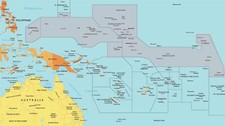
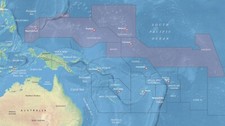
The Federated States of Micronesia is spread across a vast part of the western Pacific, with island groups rather than one compact landmass. That matters for Fortean material. A story from Pohnpei’s Nan Madol, a Chuukese account of possession, a Yapese canoe tradition and a Kosraean sacred-site legend are not interchangeable local colour. They belong to different island histories, different languages and different systems of authority, even though outsiders often flatten them under the single word “Micronesia”.[pacioos.hawaii.edu]pacioos.hawaii.eduOpen source on hawaii.edu.
The country’s modern political history also affects the evidence. The FSM emerged from the former Trust Territory of the Pacific Islands, adopted its own constitution in 1979, entered a Compact of Free Association with the United States in 1986, and joined the United Nations in 1991. Much of the written record was shaped by missionaries, colonial administrators, wartime forces, anthropologists and archaeologists, alongside local oral traditions that were not always written down in the first place.[U.S. Department of the Interior]doi.govOpen source on doi.gov.
That is why the most responsible reading is evidence-aware rather than dismissive. Some claims are plainly legendary, such as magic in the building of megalithic walls. Some are religious or social experiences, such as possession-trance. Some are haunted in a looser cultural sense, such as war wrecks containing human remains. Others are mislabelled as “mysteries” only because modern visitors do not recognise the depth of local engineering, navigation or ritual knowledge.
Nan Madol: the stone city that attracts the wildest claims
Nan Madol, off the south-east coast of Pohnpei, is the FSM’s central Fortean magnet. UNESCO describes it as a series of more than 100 artificial islets with basalt and coral-boulder walls, containing remains of palaces, temples, tombs and residential domains built between about 1200 and 1500 CE. It was the ceremonial centre of the Saudeleur dynasty and is recognised as a World Heritage site because of its monumental architecture and its testimony to complex Pacific chiefly societies.[UNESCO World Heritage Centre]whc.unesco.orgWorld Heritage Centre Nan Madol: Ceremonial Centre of Eastern MicronesiaWorld Heritage Centre Nan Madol: Ceremonial Centre of Eastern Micronesia
The strangeness is obvious even before any legend is added. Nan Madol is a ruined stone city built on a coral reef, with columnar basalt transported from elsewhere on Pohnpei. The Journal of Pacific Archaeology describes it as an 81-hectare prehistoric administrative and ceremonial complex, made up of 93 constructed islets, noted for columnar basalt and large boulders. X-ray fluorescence analysis suggests builders selected particular basalt sources and may have shifted quarry use over time, possibly because of access, exhaustion of stone, or social and political preferences.[pacificarchaeology.org]pacificarchaeology.orgSourcing the Megalithic Stones of Nan Madol: an XRF Study of Architectural Basalt Stone from Pohnpei, Federated States of Micronesia | Jo…
For a Fortean reader, the key point is that Nan Madol is genuinely extraordinary without needing pseudoarchaeology. Its walls, canals, tombs and artificial islets raise real questions about labour, transport, authority and ritual. Smithsonian reported that Pohnpei’s archaeologist Rufino Mauricio said local people were often content to believe the stones were flown by magic, while the same article stresses the practical archaeological puzzle: how huge basalt columns were moved and lifted without metal, pulleys or modern machinery.[Smithsonian Magazine]smithsonianmag.comSmithsonian Magazine Nan Madol: The City Built on Coral ReefsSmithsonian Magazine Nan Madol: The City Built on Coral Reefs
The site’s atmosphere also matters. Smithsonian described modern Pohnpeians as viewing the ruins as sacred and frightening, a place where spirits “own the night”. That is not proof of haunting, but it is important evidence for the site’s cultural charge. Nan Madol is not merely an abandoned monument; it is tied to traditional authority, chiefly legitimacy, remembered tyranny, ritual practice and continuing local sensitivities around ownership and care.[Smithsonian Magazine]smithsonianmag.comSmithsonian Magazine Nan Madol: The City Built on Coral ReefsSmithsonian Magazine Nan Madol: The City Built on Coral Reefs
Magic, memory and pseudoarchaeology
The most familiar legend says the great stones of Nan Madol were moved by supernatural means. In popular retellings this is sometimes turned into a claim that the city must have been built by lost races, vanished continents or outsiders with advanced technology. That move is where a respectful strange-history account has to draw a line. Local traditions about powerful founders and magically moved stones are part of Pohnpei’s mythic and political memory; modern claims that deny local people the capacity to build the site are a different thing altogether.
UNESCO and archaeological work make the grounded case: Nan Madol was a human-built ceremonial and political centre, made by island societies with complex social organisation, quarrying choices and religious authority. The mystery is not “aliens or lost Atlantis”; it is how a Pacific chiefly society mobilised labour, material, ritual meaning and engineering knowledge on such a scale.[UNESCO World Heritage Centre]whc.unesco.orgWorld Heritage Centre Nan Madol: Ceremonial Centre of Eastern MicronesiaWorld Heritage Centre Nan Madol: Ceremonial Centre of Eastern Micronesia
Chuuk: possession, spirits and the living dead
Chuuk offers a different kind of Fortean material: not megalithic mystery, but spirit traditions embedded in family, death and social life. The Micronesian Seminar’s account of spirit possession in Chuuk notes that one cannot live long in Chuuk without hearing tales of possession, and it describes older Chuukese beliefs in two spirits within each person, with different fates and dangers after death.[micsem.org]micsem.orgOpen source on micsem.org.
The strongest scholarly framing treats possession as both belief and behaviour. A study on the distribution of possession and trance in Micronesia says possession on Chuuk is almost always accompanied by trance or trance-like behaviour, while also distinguishing between the observable behaviour of trance and the cultural interpretation that a spirit is responsible. That distinction is useful: it allows readers to take the accounts seriously without having to accept a supernatural explanation.[Friends of Tobi]friendsoftobi.orgOpen source on friendsoftobi.org.
Recent regional writing summarising Chuukese afterlife beliefs describes several classes of spirits, including spirits associated with sea, sky, reef, lagoon, mountains, rocks and land. It also reports beliefs that a dead person’s dangerous spirit might take animal form, while a benevolent spirit could give blessings, healing knowledge or guidance to fishing grounds. Such accounts belong less to “ghost story” entertainment than to a moral and ecological map of the world: the dead, the reef, illness, food and family obligation are all connected.[pactimes]pacificislandtimes.comOpen source on pacificislandtimes.com.
For sceptics, possession stories can be approached through psychology, grief, social stress, performance, illness and culturally patterned trance. For believers, they remain evidence that the dead and other spirits continue to intervene. For the country’s weird-history record, the important fact is that Chuukese possession traditions were persistent enough to be recorded by scholars and remain recognisable in contemporary discussion.[Gale]go.gale.comdeath, funerary possession, and the afterlife in Chuukdeath, funerary possession, and the afterlife in Chuuk
Kosrae’s Menka: a sacred place that became a ghost landscape
Kosrae’s Menka site shows how a sacred place can become Fortean through loss, avoidance and fragmentary memory. A Pacific Island Times account, drawing on archaeologist Felicia Beardsley’s work, describes Menka as a sacred site at the foot of Mt Finkol associated with Sinlaku, a powerful breadfruit goddess and prophet spirit. The tradition linked Sinlaku with magic, medicine, nature, life and death, including the power to affect breadfruit, drought, famine, typhoons and disease.[pactimes]pacificislandtimes.compactimes Kosrae's sacred site where 'powerful ghosts still roampactimes Kosrae's sacred site where 'powerful ghosts still roam
The same account says access to Menka was restricted to selected priests, sorcerers, magicians and healers at particular times, and that Christian missionisation in the nineteenth century displaced the older religious centre. Crucially, Beardsley is reported as stressing how fragmentary the surviving tradition had become: much ritual knowledge was no longer remembered, and what remained came through oral fragments, missionary journals, local reports and archaeological traces.[pactimes]pacificislandtimes.compactimes Kosrae's sacred site where 'powerful ghosts still roampactimes Kosrae's sacred site where 'powerful ghosts still roam
That makes Menka a classic strange-history site. The haunting is not just the claim that powerful ghosts still roam there, though the article says many Kosraeans still avoid it and that it retains an aura of mystery. The deeper haunting is archival: a religious centre once important enough to shape authority and ritual has become difficult to reconstruct, leaving ruins, avoidance, partial stories and a sense that something powerful has withdrawn rather than vanished.[pactimes]pacificislandtimes.compactimes Kosrae's sacred site where 'powerful ghosts still roampactimes Kosrae's sacred site where 'powerful ghosts still roam
Yap: stone money, navigation spirits and knowledge mistaken for magic
Yap is often introduced to outsiders through its stone money, the huge limestone discs known as rai or fei. These are not paranormal objects, but they are frequently treated as “weird” because they overturn modern assumptions about money. Their value could depend on history, reputation and the dangers involved in transport, rather than on portability in the everyday sense. Origin legends include voyages to Palau, divine instruction, storm-driven discovery and early shapes such as fish, lizard, turtle or crescent moon before the familiar round form became standard.[Wikipedia]WikipediaRai stonesRai stones
The Fortean interest lies in how quickly Western observers can mistake a different economic logic for an impossibility or joke. Yapese stone money shows that an object can be socially active even when it does not move in ordinary transactions. It also links wealth to voyage, risk, memory and public recognition — all themes that overlap with legend.
Yapese and wider Carolinian navigation traditions add another layer. A UNESCO-linked paper on preserving traditional navigation and canoe building in Yap describes navigators memorising stars and island positions, but also reading waves, currents, sun, wind and clouds when stars are not visible. The same source notes that master navigators also needed knowledge of weather chants, sea life, canoe repair, medicine and crisis leadership.[e-Knowledge Center]archive.unesco-ichcap.orge-Knowledge Center
To a modern outsider, such non-instrument navigation can look uncanny. To practitioners, it is trained perception, memory and inherited method. Yet the tradition also preserves sacred or mythic elements: the same paper records a Yapese chief’s account of the first canoe being lowered from heaven. That is a reminder that practical knowledge and sacred origin stories need not be enemies in island tradition; they often travel in the same canoe.[e-Knowledge Center]archive.unesco-ichcap.orge-Knowledge Center
Chuuk Lagoon’s “ghost fleet”: haunted by history, not rumour
The phrase “Ghost Fleet of Truk Lagoon” sounds like a paranormal hook, but the core story is historical and grimly material. The National Park Service records that Truk Lagoon, now Chuuk Lagoon, was a major Japanese naval base during the Second World War. On 17–18 February 1944, a US Navy carrier strike badly damaged the base, destroyed Japanese shipping in the lagoon and left submerged freighters, tankers, supply vessels, a destroyer and a submarine among the wrecks.[National Park Service]nps.govOpen source on nps.gov.
The “ghost” label persists because the lagoon is an underwater graveyard as well as a dive destination. The NPS describes the underwater fleet as resting among marine life and containing the honoured remains of Japanese warriors. Recent maritime archaeology adds another dimension: a 2024 Journal of Maritime Archaeology paper reports that Operation Hailstone caused more than 4,500 Japanese casualties, more than 50 ships sunk and over 250 planes lost, while US losses were often understated. Surveys located three US aircraft lost during the battle, each associated with service members still missing in action.[National Park Service]nps.govOpen source on nps.gov.
This is not a ghost story in the campfire sense. It is a place where the language of haunting is almost unavoidable because wrecks, weapons, coral growth, tourism and unrecovered human remains occupy the same water. The best “sceptical” explanation is also the most respectful one: divers’ eerie feelings around Chuuk Lagoon do not require supernatural activity, because the documented history is already heavy enough.
Strange skies and seas: why caution matters
The FSM’s islands sit in a world of reefs, storms, deep ocean, bioluminescence, wartime wreckage and long-distance voyaging. Those conditions can generate strange lights, uncanny sounds, alarming disappearances and powerful stories. But for country-level Forteana, there is a difference between plausible weirdness and well-sourced cases. In this research pass, the strongest evidence did not point to a major, nationally famous modern UFO case, lake monster, anomalous rain or cryptid tradition with documentation comparable to Nan Madol, Chuuk possession, Menka or Chuuk Lagoon.
That absence is itself useful. It prevents padding the page with weak internet rumours. Where unusual lights are reported in island settings, ordinary candidates include boats, aircraft, lightning, meteors, military activity, reflections, atmospheric effects and marine bioluminescence. Ball lightning remains a scientifically puzzling phenomenon reported for centuries, but it is rare and difficult to document reliably; general ball-lightning research does not establish a Micronesian case by itself.[hgss.copernicus.org]hgss.copernicus.orgOpen source on copernicus.org.
The better approach is to treat Micronesia’s strange record as place-based rather than database-driven. Its strongest material is attached to named landscapes and traditions: Nan Madol’s basalt walls, Menka’s avoided sacred ground, Chuuk’s spirit-possession accounts, Yap’s voyaging knowledge and Chuuk Lagoon’s war dead.
How believers and sceptics read the same stories
The divide between belief and scepticism is not as simple as “locals believe, outsiders debunk”. Archaeologists, anthropologists and local tradition-bearers often ask different questions. A Pohnpeian legend about stones moved by magic may not be trying to provide an engineering manual. It may encode power, sacred authority and the remembered otherness of the Saudeleur. An archaeologist asking where the basalt came from is not necessarily attacking the story; they are answering a different part of it.[pacificarchaeology.org]pacificarchaeology.orgSourcing the Megalithic Stones of Nan Madol: an XRF Study of Architectural Basalt Stone from Pohnpei, Federated States of Micronesia | Jo…
Similarly, a Chuukese possession account can be read as spirit encounter, grief practice, trance behaviour, social communication or all of these at once. The scholarly distinction between trance as observable behaviour and possession as interpretation is especially helpful because it avoids both credulity and contempt.[Friends of Tobi]friendsoftobi.orgOpen source on friendsoftobi.org.
The biggest mistake is to replace local complexity with imported spectacle. Nan Madol does not need Atlantis. Yapese navigation does not need telepathy. Chuuk Lagoon does not need invented apparitions. Micronesia’s Fortean pull comes from the opposite: the real record is already strange, but it is strange because islands, ancestors, ruins, reefs, war, memory and authority remain entangled.
Why Micronesia’s Forteana still has cultural pull
The Federated States of Micronesia’s weird-history record endures because its best stories are not disposable curiosities. They sit at pressure points: who built the past, who owns sacred places, what the dead can still do, how knowledge survives without instruments, and how war remains present beneath clear water. Nan Madol asks how a Pacific society made a city of stone on a reef. Menka asks what happens when a sacred system is broken and only fragments remain. Chuuk possession asks how the living negotiate with the dead. Yapese navigation asks why outsiders confuse disciplined perception with magic. Chuuk Lagoon asks whether a battlefield can ever stop being haunted when bodies and machines are still there.
Taken together, these cases make the FSM one of the more subtle Fortean countries. Its strangeness is not best found in sensational claims, but in the borderlands between evidence and reverence: ruins that are archaeological and frightening, spirits that are belief and social fact, wrecks that are tourist sites and graves, and practical knowledge that looks impossible until someone explains how carefully it was learned.
Amazon book picks
Further Reading
Books and field guides related to What Makes Micronesia's Strange History So Unusual?. Use these as the next step if you want deeper reading beyond the article.

Collapse
First published 2004. Subjects: Sociology, Culturen, Environnement, Changement social, Verval (geschiedenis).

Vanished Kingdoms
First published 2011. Subjects: History, Politics and government, Europe - History, Europe - Politics and government, Gesellschaft.
The Archaeology of the Pacific Islands
Places Micronesian archaeology and settlement into wider Pacific history.
Pathways of the Ocean: Traditional Navigation in Micronesia
Explains the remarkable maritime knowledge central to Micronesian history.
eBay marketplace picks
Marketplace Samples
Live-tested eBay searches with available results related to this page.
Endnotes
1.
Source: gov.fm
Link:https://gov.fm/state/
2.
Source: pacioos.hawaii.edu
Link:https://www.pacioos.hawaii.edu/education/region-fsm/
3.
Source: whc.unesco.org
Title: World Heritage Centre Nan Madol: Ceremonial Centre of Eastern Micronesia
Link:https://whc.unesco.org/en/list/1503/
4.
Source: pacificarchaeology.org
Link:https://pacificarchaeology.org/index.php/journal/article/view/68
Source snippet
Sourcing the Megalithic Stones of Nan Madol: an XRF Study of Architectural Basalt Stone from Pohnpei, Federated States of Micronesia | Jo...
5.
Source: micsem.org
Link:https://micsem.org/article/spirit-possession-in-chuuk-a-socio-cultural-interpretation/
6.
Source: micsem.org
Link:https://micsem.org/micronesian-counselo/spirit-possession-in-chuuk-socio-cultural-interpretation/
7.
Source: go.gale.com
Title: death, funerary possession, and the afterlife in Chuuk
Link:https://go.gale.com/ps/i.do?id=GALE%7CA140490313&issn=00141828&it=r&linkaccess=abs&p=LitRC&sid=googleScholar&sw=w&v=2.1
8.
Source: Wikipedia
Title: Rai stones
Link:https://en.wikipedia.org/wiki/Rai_stones
9.
Source: archive.unesco-ichcap.org
Title: e-Knowledge Center
Link:https://archive.unesco-ichcap.org/kor/ek/sub10/pdf_down/04-4.%20Preserving%20the%20Enduring%20Knowledge%20of%20Traditional%20Navigation%20and%20Canoe%20Building%20in%20Yap%2C%20FSM.pdf
10.
Source: nps.gov
Link:https://www.nps.gov/articles/truk-lagoon-underwater-fleet-truk-atoll.htm
11.
Source: hgss.copernicus.org
Link:https://hgss.copernicus.org/articles/12/43/2021/
12.
Source: nach.gov.fm
Link:https://nach.gov.fm/nan-madol-east-site-of-temwen-island-temwen-island/
13.
Source: gov.fm
Link:https://gov.fm/the-compact-of-free-association-between-the-united-states-of-america-and-the-federated-states-of-micronesia-as-amended/
14.
Source: gov.fm
Link:https://gov.fm/
15.
Source: micsem.org
Link:https://micsem.org/article/congeries-of-spirits/
16.
Source: micsem.org
Link:https://micsem.org/article/distribution-of-spirit-possession-and-trance-in-micronesia/
17.
Source: nps.gov
Title: nan madol
Link:https://www.nps.gov/places/nan-madol.htm
18.
Source: nps.gov
Title: cultural landscapes places that we look at every day but often don t really see
Link:https://www.nps.gov/articles/000/cultural-landscapes-places-that-we-look-at-every-day-but-often-don-t-really-see.htm
19.
Source: nps.gov
Link:https://www.nps.gov/subjects/aapiheritage/upload/AAPI_Find_Your_Place.pdf
20.
Source: nps.gov
Title: List of NHLs by State
Link:https://www.nps.gov/subjects/nationalhistoriclandmarks/list-of-nhls-by-state.htm
21.
Source: nps.gov
Title: asian american and pacific islander heritage month
Link:https://www.nps.gov/subjects/nationalregister/asian-american-and-pacific-islander-heritage-month.htm
22.
Source: nps.gov
Link:https://www.nps.gov/articles/upload/Harada_House-508-compliant.pdf
23.
Source: nps.gov
Link:https://www.nps.gov/subjects/aapiheritage/upload/Asianisms-2.pdf
24.
Source: planning.nps.gov
Title: show File.cfm
Link:https://planning.nps.gov/showFile.cfm?projectID=65104&sfid=538037
25.
Source: whc.unesco.org
Link:https://whc.unesco.org/en/news/1524
26.
Source: whc.unesco.org
Link:https://whc.unesco.org/en/documents/141512
27.
Source: whc.unesco.org
Link:https://whc.unesco.org/en/list/1503/gallery/
28.
Source: whc.unesco.org
Link:https://whc.unesco.org/uploads/nominations/1503.pdf
29.
Source: whc.unesco.org
Link:https://whc.unesco.org/en/decisions/8686/
30.
Source: whc.unesco.org
Link:https://whc.unesco.org/document/224559
31.
Source: whc.unesco.org
Link:https://whc.unesco.org/en/decisions/6800/
32.
Source: whc.unesco.org
Link:https://whc.unesco.org/en/decisions/7693/
33.
Source: whc.unesco.org
Link:https://whc.unesco.org/fr/etatsparties/fm
34.
Source: ich.unesco.org
Title: carolinian wayfinding and canoe making 01735
Link:https://ich.unesco.org/en/USL/carolinian-wayfinding-and-canoe-making-01735
35.
Source: Wikipedia
Link:https://en.wikipedia.org/wiki/Pohnpei
36.
Source: Wikipedia
Title: Nan Madol
Link:https://en.wikipedia.org/wiki/Nan_Madol
37.
Source: Wikipedia
Title: Pohnpei State
Link:https://en.wikipedia.org/wiki/Pohnpei_State
38.
Source: Wikipedia
Title: Micronesian mythology
Link:https://en.wikipedia.org/wiki/Micronesian_mythology
39.
Source: Wikipedia
Title: Federated States of Micronesia
Link:https://en.wikipedia.org/wiki/Federated_States_of_Micronesia
40.
Source: Wikipedia
Title: Ball lightning
Link:https://en.wikipedia.org/wiki/Ball_lightning
41.
Source: Wikipedia
Title: Religion in Yap
Link:https://en.wikipedia.org/wiki/Religion_in_Yap
42.
Source: Wikipedia
Title: Mau Piailug
Link:https://en.wikipedia.org/wiki/Mau_Piailug
43.
Source: Wikipedia
Title: Operation Hailstone
Link:https://en.wikipedia.org/wiki/Operation_Hailstone
44.
Source: Wikipedia
Title: Chuuk Lagoon
Link:https://en.wikipedia.org/wiki/Chuuk_Lagoon
45.
Source: manifold.uhpress.hawaii.edu
Link:https://manifold.uhpress.hawaii.edu/read/upon-a-stone-altar-a-history-of-the-island-of-pohnpei-to-1890/section/7713828c-2979-428a-929d-8633ad3d6491
46.
Source: scholarspace.manoa.hawaii.edu
Link:https://scholarspace.manoa.hawaii.edu/bitstreams/51288464-0266-47d6-b745-d94bda876821/download
47.
Source: dfat.gov.au
Link:https://www.dfat.gov.au/geo/federated-states-of-micronesia/federated-states-of-micronesia-country-brief
48.
Source: marshall.csu.edu.au
Link:https://marshall.csu.edu.au/MJHSS/Issue2002/MJHSS02-05.pdf
49.
Source: marshall.csu.edu.au
Link:https://marshall.csu.edu.au/MJHSS/Issue2004/MJHSS2004_02.pdf
50.
Source: doi.gov
Link:https://www.doi.gov/oia/islands/fsm
51.
Source: smithsonianmag.com
Title: Smithsonian Magazine Nan Madol: The City Built on Coral Reefs
Link:https://www.smithsonianmag.com/history/nan-madol-the-city-built-on-coral-reefs-147288758/
52.
Source: friendsoftobi.org
Link:https://www.friendsoftobi.org/tobithenandnow/ifiridoitch/hezelanddobbins1996.htm
53.
Source: pacificislandtimes.com
Link:https://www.pacificislandtimes.com/post/spiritualism-and-superstitions-the-chuukese-journey-to-the-underworld-and-afterlife
54.
Source: pacificislandtimes.com
Title: pactimes Kosrae’s sacred site where ‘powerful ghosts still roam’
Link:https://www.pacificislandtimes.com/post/kosrae-s-sacred-site-where-powerful-ghosts-still-roam
55.
Source: facebook.com
Title: Nan Madol
Link:https://www.facebook.com/tassilosieben/posts/nan-madol-the-mysterious-ruined-city-in-the-pacificbuilt-from-massive-basalt-col/1197308339062651/
56.
Source: 2021-2025.state.gov
Title: u s relations with the federated states of micronesia
Link:https://2021-2025.state.gov/u-s-relations-with-the-federated-states-of-micronesia/
57.
Source: 2009-2017.state.gov
Link:https://2009-2017.state.gov/outofdate/bgn/micronesia/47510.htm
58.
Source: 2009-2017.state.gov
Title: gov1 Executive
Link:https://2009-2017.state.gov/documents/organization/228785.pdf
59.
Source: doi.gov
Link:https://www.doi.gov/oia/compacts-of-free-association
60.
Source: divessi.com
Title: Operation Hailstone
Link:https://www.divessi.com/en/blog/operation-hailstone-chuuk-lagoon-6964.html
61.
Source: openfactbook.org
Title: Federated States of Micronesia
Link:https://openfactbook.org/countries/federated-states-of-micronesia/
62.
Source: ebsco.com
Link:https://www.ebsco.com/research-starters/social-sciences-and-humanities/federated-states-micronesia
63.
Source: suetravels.com
Link:https://suetravels.com/oceania/micronesia/micronesia-pohnpei-and-mysterious-nan-madol-the-northern-pacific-4/
64.
Source: historicmysteries.com
Title: nan madol
Link:https://www.historicmysteries.com/archaeology/nan-madol/346/
65.
Source: madurodive.com
Title: truk lagoon
Link:https://www.madurodive.com/2016/05/24/truk-lagoon/
66.
Source: micronesiatour.com
Link:https://www.micronesiatour.com/destinations/pohnpei
67.
Source: nationalgeographic.com
Title: ball lightning
Link:https://www.nationalgeographic.com/environment/article/ball-lightning
68.
Source: thedirtydozenexpeditions.com
Title: Truk Lagoon
Link:https://thedirtydozenexpeditions.com/operationhailstone
69.
Source: vocal.media
Title: Nan Madol | History
Link:https://vocal.media/history/nan-madol
70.
Source: atlasobscura.com
Title: ghost fleet of truk lagoon
Link:https://www.atlasobscura.com/places/ghost-fleet-of-truk-lagoon
Additional References
71.
Source: youtube.com
Title: The Ghost Fleet of Truk Lagoon – Japan’s Sunken Armada Beneath the Pacific
Link:https://www.youtube.com/watch?v=vP9VGQhV3tA
Source snippet
The "Japanese Pearl Harbor": We Dived the Ghost Fleet of 1944...
72.
Source: youtube.com
Link:https://www.youtube.com/watch?v=zARgs3tu_gw
Source snippet
Visiting 900 year old ANCIENT RUINS in Pohnpei, Micronesia...
73.
Source: youtube.com
Title: Visiting 900 year old ANCIENT RUINS in Pohnpei, Micronesia
Link:https://www.youtube.com/watch?v=YI1CYFcAiD0
Source snippet
82 Years Later Operation Hailstone The Wrecks of Chuuk Lagoon...
74.
Source: researchgate.net
Link:https://www.researchgate.net/publication/351762510_Micronesian_Archaeoastronomy_Expedition_Kosrae_and_Pohnpei_the_Federated_States_of_Micronesia
75.
Source: facebook.com
Link:https://www.facebook.com/MastermindsofHorror/posts/7-chuuk-lagoon-micronesiathe-chuuk-lagoon-may-be-a-tropical-paradise-but-dark-se/825053469658203/
76.
Source: facebook.com
Link:https://www.facebook.com/groups/589305838717658/posts/1581223599525872/
77.
Source: degruyterbrill.com
Link:https://www.degruyterbrill.com/document/doi/10.1515/9780824860110-007/html?srsltid=AfmBOoo-_5gG9tt4hiPbJOOxig49Ei6f4_DOJL0NIAQnd37ahvVHC2V8
78.
Source: dtmag.com
Link:https://dtmag.com/thelibrary/chuuk-lagoon-a-micronesian-war-memorial-and-wreck-divers-heaven/
79.
Source: mythlok.com
Link:https://mythlok.com/world-mythologies/oceanian/micronesian/chuukese/
80.
Source: comfsm.fm
Link:https://www.comfsm.fm/socscie/johnresearch.htm
Topic Tree
Follow this branch
Related pages 192
- Afghan Forteana
- Antigua Uncanny
- Bosnian Mysteries
- Botswana Weird
- Brazil Strange
- +187 more in sidebar