Within Afghan Forteana
When Jinn Belief Becomes a Cure
Afghan jinn traditions can shape how illness and distress are explained, but shrine cures also raise serious medical and human-rights concerns.
On this page
- Jinn, illness and the Afghan unseen
- Shrines, sacred stones and older spirit worlds
- Healing claims, coercion and medical risk
Page outline Jump by section
Introduction
Stories of jinn possession occupy an unusual place in Afghanistan’s strange-history landscape because they sit at the meeting point of folklore, religious belief, mental health and public health. For many Afghans, experiences such as hearing voices, sudden personality changes, seizures, nightmares or unexplained distress may be interpreted through the idea of spirit influence rather than psychiatric illness. That does not mean every reported case is understood in the same way, nor that all religious responses are harmful. Many families seek comfort through prayer, respected religious figures and local shrines without rejecting medical treatment. The controversy arises when belief in possession becomes the primary explanation for serious illness and leads to coercive or dangerous practices.
For anyone interested in Afghan Forteana, the subject is fascinating not because it proves the existence of supernatural beings, but because it shows how extraordinary experiences are interpreted, treated and remembered. It also illustrates how centuries-old healing traditions continue to coexist with modern medicine in a country where conflict, trauma and limited healthcare have shaped everyday life.
Jinn, illness and the Afghan unseen
Belief in jinn is part of mainstream Islamic tradition, but the interpretation of illness attributed to them varies enormously between communities and religious scholars. In Afghanistan, reports of apparent possession are often linked to unexplained behaviour, prolonged anxiety, depression, psychosis, epilepsy or other conditions that lack an obvious physical explanation. Anthropological studies have found that many Afghans understand emotional suffering through a blend of religious ideas, local folklore and lived experience rather than through modern psychiatric categories alone.[Research Explorer]pure.uva.nlResearch Explorer ThesisResearch ExplorerThesis - Research ExplorerToday — by P Ventevogel · Cited by 39 — Borderlands of mental health: Explorations in medical…
Years of war have added another layer. Afghanistan has endured decades of violence, displacement and bereavement, leaving many people with symptoms that psychiatrists might recognise as trauma-related disorders. Yet families may instead describe frightening dreams, uncontrollable fear, withdrawal or aggression as evidence of spirit interference. The same behaviour can therefore receive very different explanations depending on whether the observer approaches it through religion, local custom or medicine.[Research Explorer]pure.uva.nlResearch Explorer ThesisResearch ExplorerThesis - Research ExplorerToday — by P Ventevogel · Cited by 39 — Borderlands of mental health: Explorations in medical…
From a Fortean perspective, this ambiguity is significant. The reported experiences are often genuine and deeply distressing. What remains uncertain is their cause. Believers may interpret them as encounters with unseen beings, while clinicians point to psychiatric illness, neurological disorders, trauma or combinations of social and psychological pressures. Neither perspective changes the fact that the sufferer’s experiences feel real.
Shrines, sacred stones and older spirit worlds
Afghanistan has long been home to shrines associated with saints, holy men and places believed to possess special spiritual power. Some attract pilgrims seeking blessings, healing or relief from misfortune. Others occupy locations that may have held sacred significance even before the spread of Islam, creating layers of tradition in which older beliefs about powerful places merged with later religious practice.
Anthropologist Homayun Sidky has argued that some Afghan sacred sites preserve echoes of pre-Islamic traditions, including beliefs that unusual stones or remote places were inhabited by powerful spirits. Rather than disappearing, these ideas became intertwined with Islamic understandings of the unseen, producing a landscape where shrines, caves, springs and isolated hills could all acquire reputations for supernatural influence.[Wikipedia]WikipediaOpen source on wikipedia.org.
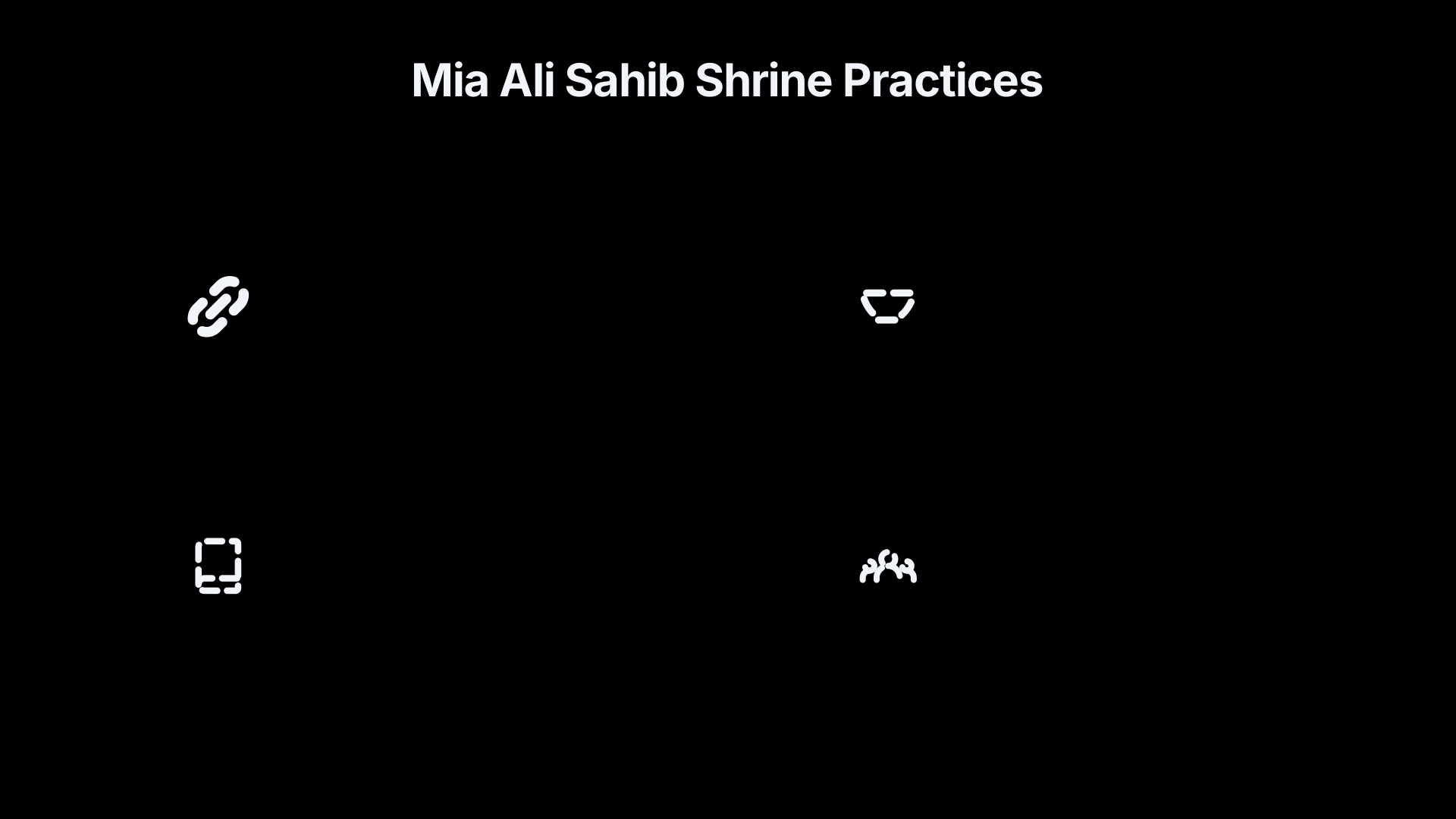
Because of this mixture of traditions, some shrines became associated with the treatment of suspected possession. Visitors might seek prayers, recitation of scripture, blessings or temporary residence near the shrine in the hope that spiritual forces would leave the afflicted person. Such practices should not be viewed simply as relics of medieval folklore. For many families, particularly where psychiatric services are scarce, they remain one of the few accessible forms of help.
Healing claims, coercion and medical risk
The greatest controversy concerns not belief itself but the methods sometimes used in the name of healing.
Perhaps the best-known example is the shrine of Mia Ali Sahib near Jalalabad, where people believed to be possessed or mentally ill have historically been confined for forty days. Reports from journalists over more than a decade describe patients chained or locked into small cells while surviving on extremely limited diets, with the expectation that the combination of isolation, prayer and the saint’s blessing would expel harmful spirits. Families often brought relatives voluntarily because they believed no better treatment was available.[washingtonpost.com]washingtonpost.comThe Washington PostAt Afghan shrine, ancient treatment for a new epidemic23 Oct 2012 — Mental health patients are chained to a cell for 4…
The stories are striking because they combine several themes common in Fortean history:
- supernatural explanations for unusual behaviour;
- sacred places believed to possess unique healing power;
- ritual isolation lasting forty days;
- dramatic personal testimonies of recovery or failure;
- continuing debate between faith-based and medical interpretations.
Some former patients and caretakers have described apparent recoveries, reinforcing local belief in the shrine’s power. Others have left without improvement or suffered additional physical and psychological harm during confinement. Because mental illnesses naturally fluctuate, and because some conditions improve over time regardless of treatment, such individual stories cannot demonstrate whether spiritual intervention itself caused recovery.
Human rights organisations have drawn attention to the darker side of these practices. Human Rights Watch documented Afghanistan as one of many countries where people with psychosocial disabilities have been shackled, confined or restrained in religious or traditional healing settings, often because families lacked access to affordable mental healthcare. The organisation argues that such treatment violates basic human rights and can produce lasting physical and psychological injury.[Human Rights Watch]hrw.orgHuman Rights Watch People with Mental Health Conditions Living in ChainsHuman Rights WatchPeople with Mental Health Conditions Living in ChainsOctober 6, 2020 — 6 Oct 2020 — Hundreds of thousands of people wit…
Medical specialists working in Afghanistan generally argue that psychiatric disorders, epilepsy and trauma require proper clinical assessment even when patients or relatives also hold religious beliefs. Many Afghan mental health professionals do not see faith and medicine as mutually exclusive. Prayer, pastoral support and religious counselling may offer comfort, but they emphasise that these should complement rather than replace evidence-based medical care, particularly where patients are at risk of self-harm, neglect or abuse.[Research Explorer]pure.uva.nlResearch Explorer ThesisResearch ExplorerThesis - Research ExplorerToday — by P Ventevogel · Cited by 39 — Borderlands of mental health: Explorations in medical…
Why these stories remain part of Afghan Forteana
Jinn-possession narratives continue to attract attention because they resist simple classification. They are neither merely ghost stories nor simply examples of psychiatric misunderstanding. Instead they reveal how people construct meaning when confronted by frightening experiences that appear to fall outside ordinary explanation.
For believers, shrine healings may represent genuine encounters with the unseen and evidence that spiritual forces influence human life. For sceptics, the same accounts demonstrate how cultural expectations shape the interpretation of illness and how vulnerable people may be exposed to ineffective or harmful treatments. Anthropologists add a further perspective, arguing that these traditions cannot be understood without recognising Afghanistan’s history of war, disrupted healthcare and enduring religious culture.
That combination makes the subject an enduring part of Afghanistan’s strange cultural record. The mystery lies not only in claims of possession but also in the human need to explain suffering, seek hope and find healing where medicine, faith and folklore meet.

Amazon book picks
Further Reading
Books and field guides related to When Jinn Belief Becomes a Cure. Use these as the next step if you want deeper reading beyond the article.

Afghanistan A Cultural And Political History
Supplies cultural background for Afghan healing traditions.


Legends of the fire spirits
Directly addresses jinn beliefs and cultural interpretations.

eBay marketplace picks
Marketplace Samples
Live-tested eBay searches with available results related to this page.

Endnotes
1.
Source: pure.uva.nl
Title: Research Explorer Thesis
Link:https://pure.uva.nl/ws/files/2769192/176799_Ventevogel_Thesis_Borderlands_of_mental_health.pdf
Source snippet
Research ExplorerThesis - Research ExplorerToday — by P Ventevogel · Cited by 39 — Borderlands of mental health: Explorations in medical...
2.
Source: washingtonpost.com
Link:https://www.washingtonpost.com/world/asia_pacific/at-afghan-shrine-ancient-treatment-for-a-new-epidemic/2012/10/23/570ce338-187f-11e2-a346-f24efc680b8d_story.html
Source snippet
The Washington PostAt Afghan shrine, ancient treatment for a new epidemic23 Oct 2012 — Mental health patients are chained to a cell for 4...
3.
Source: Wikipedia
Link:https://en.wikipedia.org/wiki/Jinn
4.
Source: csmonitor.com
Link:https://www.csmonitor.com/World/2009/1215/Afghanistan-mental-health-Treatment-caught-between-ancient-and-modern-worlds
Source snippet
The Christian Science MonitorAfghanistan mental health: Treatment caught between...15 Dec 2009 — An Afghan man is chained to a wall at t...
5.
Source: hrw.org
Title: Human Rights Watch People with Mental Health Conditions Living in Chains
Link:https://www.hrw.org/news/2020/10/06/people-mental-health-conditions-living-chains
Source snippet
Human Rights WatchPeople with Mental Health Conditions Living in ChainsOctober 6, 2020 — 6 Oct 2020 — Hundreds of thousands of people wit...
Published: October 6, 2020
Additional References
6.
Source: commons.lib.jmu.edu
Link:https://commons.lib.jmu.edu/cgi/viewcontent.cgi?article=2110&context=cisr-globalcwd
Source snippet
Assistance in Afghanistan: Afghan Perceptions on...by A Consulting · Cited by 1 — The research also examines the variation of attitude t...
7.
Source: pmc.ncbi.nlm.nih.gov
Title: PMCJinn Possession; a Case Report Exploring Symptom
Link:https://pmc.ncbi.nlm.nih.gov/articles/PMC12260809/
Source snippet
by G Edgerley-Harris · 2025 — Aims: We report on an Afghan refugee is in his 30s who presented to a Community Mental Health Recovery S...
8.
Source: malaymail.com
Title: 40 days in chains afghan shrine offers cure for evil spirits
Link:https://www.malaymail.com/news/life/2013/12/05/40-days-in-chains-afghan-shrine-offers-cure-for-evil-spirits/575749
Source snippet
40 days in chains: Afghan shrine offers 'cure' for evil spirits5 Dec 2013 — SAMAR KHEL, Dec 5 — All it took to land Din Muhammed in a cel...
9.
Source: telegraph.co.uk
Title: chained tree 40 days afghanistans shrine cure mental illness
Link:https://www.telegraph.co.uk/global-health/climate-and-people/chained-tree-40-days-afghanistans-shrine-cure-mental-illness/
Source snippet
Chained to a tree for 40 days: Afghanistan's shrine to 'cure'...22 Oct 2019 — Here, at Mia Ali Sahib shrine in Samarkhel, a village in A...
10.
Source: youtube.com
Title: Jinn, Evil Eye or Mental Illness? Islam’s Answer | Sheikh Belal Assaad
Link:https://www.youtube.com/watch?v=Un_Hwla4eFg
Source snippet
Jinn Possession: Misunderstood Mental Illness or Spiritual Reality? | Dr. Mustafa Merter...
11.
Source: youtube.com
Title: Jinn Possession or Mental Health? Prof Rasjid Skinner Explains
Link:https://www.youtube.com/watch?v=hcFZ797yqD0
Source snippet
Jinn, Evil Eye or Mental Illness? Islam's Answer | Sheikh Belal Assaad...
12.
Source: youtube.com
Title: Shrine or hospital? Mental health choices in Afghanistan
Link:https://www.youtube.com/watch?v=u2NIcO82Nm4
Source snippet
Jinn Possession or Mental Health? Prof Rasjid Skinner Explains...
13.
Source: guides.libraries.emory.edu
Link:https://guides.libraries.emory.edu/main/anthronew
Source snippet
Films for Anthropology - Research Guides at Emory...11 Mar 2026 — Narrated by the linguist and anthropologist Peter Sutton, this documen...
14.
Source: youtube.com
Title: Mia Ali Baba Shrine in Afghanistan
Link:https://www.youtube.com/watch?v=tPWcUE5dhEI
Source snippet
Shrine or hospital? Mental health choices in Afghanistan...
15.
Source: youtube.com
Link:https://www.youtube.com/watch?v=3kzLlsVQRt4
Topic Tree