What Makes Niger's Weird History So Unusual?
Niger’s strange-history record is not a neat parade of famous UFO cases or lake monsters. It is stranger, and more revealing, than that: a country where desert, river, fossil beds, spirit traditions, colonial memory and meteorite commerce keep producing stories that sit on the edge between evidence and wonder.
Page outline Jump by section
Why Niger’s Weird Record Begins With Landscape
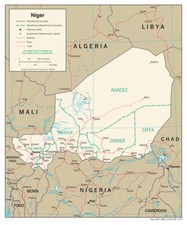
Niger is a landlocked West African country shaped by two great imaginative poles: the Sahara and the Niger River. More than four-fifths of the country lies within the Sahara, while much of the settled population is concentrated in the south and west, closer to the river, savannah and Sahelian farming zones. That matters for strange reports because many of Niger’s most memorable traditions are tied to places where human life feels exposed to powers larger than itself: desert tracks, river crossings, old caravan towns, drought zones and sites where the ground itself gives up impossible-looking bones.[Wikipedia]WikipediaOpen source on wikipedia.org.
Agadez is a useful starting point. UNESCO describes its historic centre as a living city of mudbrick architecture, caravan history, palatial and religious buildings, and a still-functioning sultanate system. It is not a “haunted city” in the simple tourist-brochure sense. Rather, it is a place where long-distance trade, Islam, Tuareg history, desert travel and local memory overlap. That makes the surrounding Aïr and Ténéré region unusually fertile ground for stories about lost routes, uncanny landmarks, buried pasts and objects arriving from the sky.[UNESCO World Heritage Centre]whc.unesco.orgOpen source on unesco.org.
This is also why a country-level account has to be careful. Niger’s best-documented “weird” material often comes from anthropology, archaeology, palaeontology and meteorite science rather than from tabloid paranormal journalism. The evidence is stronger when treated as folklore, ritual, natural history or contested heritage than when forced into a modern paranormal template.
Spirits That Remember History
One of Niger’s most important bodies of strange testimony comes from Songhay spirit possession, especially the work of anthropologist Paul Stoller among Songhay communities in Niger. Stoller’s studies of the Hauka spirits are valuable because they do not treat possession merely as an exotic spectacle. He argues that Hauka possession embodied colonial power and memory: spirits mimicked and reworked the figures of colonial authority, turning domination into performance, ritual and social commentary.[AfricaBib]africabib.orgOpen source on africabib.org.
For Fortean readers, the temptation is to ask, “Were the spirits real?” The better first question is, “What did people experience, and what did the ritual make possible?” Stoller’s work presents possession as a public, sensory event involving bodies, sounds, smells, rhythm and social roles. The strangeness is not just that a person is said to be taken by a spirit. It is that a community can use the spirit’s arrival to speak about power, illness, danger, memory and identity in a way ordinary speech may not allow.[Persée]persee.frassr 0335 5985 1992 numassr 0335 5985 1992 num
Hausa Bori traditions add another layer. Early twentieth-century scholarship recorded Bori among Hausa-speaking communities, and later studies describe it as a spirit-possession complex involving music, trance, healing and social organisation. Some accounts focus on Nigeria, but Hausa cultural geography crosses modern borders, and Niger’s southern regions are part of that wider world. Contemporary travel writing also reports Bori ceremonies in southern Niger, but those modern descriptions are best used as secondary colour rather than as proof of any supernatural claim.[africabib.org]africabib.orgOpen source on africabib.org.
Sceptically, possession can be read through performance, psychology, healing practice, gendered authority and social stress. Believers or practitioners may understand it as contact with actual spirits. A good evidence-aware account does not need to flatten either view. The important point is that Niger’s spirit traditions are not random ghost stories; they are systems for making invisible pressures visible.
Monsters Along the River and at the Edge of the Bush
Niger’s folklore also contains beings that look, to modern eyes, like cryptids: ogres, river spirits, monster buffaloes and tiny supernatural protectors. These are not zoological reports in the way a modern “mystery animal” file might be. They belong mainly to oral narrative, epic and moral storytelling. Still, they matter because they show how dangerous landscapes become characters.
One striking example is the Hira, a monstrous buffalo-like being in Songhay epic tradition. Summaries of the tradition connect Hira to tales of Moussa Gname, a culture hero whose story involves spirit ancestry, hunting magic, divination and the defeat of a ravaging monster. The setting belongs to the wider Niger River cultural world, especially communities historically linked to hunting and fishing. The Hira is best understood as a mythic opponent rather than an unknown species, but its force comes from recognisable fears: wild power, hunger, water, hunting, and the need for cleverness as well as strength.[Wikipedia]WikipediaHira (mythical monsterHira (mythical monster
The Hausa Dodo is another important figure. In folklore, Dodo appears as a frightening bush monster or bogey, sometimes imagined as a giant, sometimes linked with dangerous animals, swallowing, wilderness and moral threat. A 2017 Boston University African Studies paper on Hausa ogres describes the Hausa fabulous tale as a recognised imaginative form, not a literal field report. That distinction is crucial: Dodo is not evidence of a surviving hominid or monster animal, but it is a powerful example of how oral tales turn fear of the bush, predation and social danger into a memorable being.[OpenBU]open.bu.eduOpen source on bu.edu.
Against Dodo stands Zankallala, a tiny but formidable figure in Hausa tales. In old Hausa folktale collections, Zankallala can defeat the man-swallower not by size but by supernatural resilience and cunning. That reversal is part of the charm: the monster is huge, the saviour is small, and the listener is invited to enjoy a world where brute force is not the final law.[Internet Archive]archive.orgOpen source on archive.org.
Haunted Places Without the Gothic Wallpaper
Nigerien haunting traditions do not always fit the familiar Western image of a ruined castle, a pale apparition and a single tragic death. Anthropologist Adeline Masquelier, writing about Niger, describes haunted places as places inhabited by spirits, sometimes understood as “hidden people”. In that frame, haunting is not necessarily an exception to reality. It can be a normal feature of a morally and historically crowded landscape.[Allegra Lab]allegralaboratory.netAllegra Lab Haunted: Spirits and the Agency of the No Longer in NigerAllegra Lab Haunted: Spirits and the Agency of the No Longer in Niger
That makes Niger especially interesting for readers used to ghost stories as isolated anomalies. A school, a former colonial site, a neglected place or a location marked by suffering may be experienced as haunted because the past has not become inert. It presses on the present. The haunted place is not just a spooky backdrop; it is a demand for attention.[Allegra Lab]allegralaboratory.netAllegra Lab Haunted: Spirits and the Agency of the No Longer in NigerAllegra Lab Haunted: Spirits and the Agency of the No Longer in Niger
A sceptical reading might say these stories encode memory, trauma, land claims or social unease. A believer might say spirits are present because the world contains persons not visible to ordinary sight. Either way, the story does cultural work. It tells people that places remember, and that the living may not be the only beings with claims upon them.
The Desert Gives Up Giants
Niger’s Sahara is one of the rare places where genuine science can feel more outrageous than folklore. The fossil fields of Gadoufaoua and the wider Ténéré region have produced dinosaurs and giant crocodile-like reptiles that look as if they belong in monster lore. The crucial difference is that these creatures are not cryptids. They are extinct animals documented through fossils.
Gadoufaoua has been described in scientific literature as one of Africa’s major dinosaur and crocodilian localities. Philippe Taquet’s work brought attention to the site in the 1960s, and later expeditions helped make Niger famous in palaeontology. Fossils from the region include Ouranosaurus nigeriensis, Nigersaurus and the giant crocodyliform Sarcosuchus imperator, popularly nicknamed “SuperCroc”.[Natural History Museum]naturalhistory.si.eduNatural History Museum On the dinosaurian and crocodilian locality of GadoufaouaNatural History Museum On the dinosaurian and crocodilian locality of Gadoufaoua
Sarcosuchus is especially useful for country-level Forteana because it shows how monster imagery and scientific evidence can overlap without being the same thing. A huge crocodile-like animal from deep time is not a lake monster hiding in the present. Yet its skull, teeth and scale change the reader’s sense of what has been possible on Earth. A Nigerien “monster” can be entirely real, provided one is willing to look back more than 100 million years.[University of Chicago Chronicle]chronicle.uchicago.eduOpen source on uchicago.edu.
This fossil record also helps explain why desert landscapes generate wonder. A place now associated with heat, sand and dryness once held rivers, lakes and giant reptiles. The uncanny fact is not that science has failed to explain the bones. It is that science has explained them, and the explanation is still astonishing.
Gobero: A Cemetery Where the Sahara Used To Be Green
Gobero, in Niger’s Ténéré Desert, is one of the country’s most haunting archaeological sites. Discovered during expeditions associated with Paul Sereno’s work, it revealed hundreds of burials and evidence of long human occupation during periods when the Sahara was far wetter than it is today. A University of Chicago report described it as the largest Stone Age graveyard found in the Sahara, preserving evidence for two successive cultures living beside a lake.[Chicago News]news.uchicago.eduOpen source on uchicago.edu.
The strangeness here is not paranormal. It is temporal. At Gobero, the present-day desert overlays a former lakeside world of fish, pottery, burials and human communities. The scientific paper on the site describes roughly two hundred burials on the edge of a palaeolake, giving researchers an unusually preserved record of population and environmental change through several thousand years.[PubMed Central]pmc.ncbi.nlm.nih.govOpen source on nih.gov.
For a public-facing weird-history page, Gobero deserves a place because it reverses expectations. The “empty” desert is not empty. It is layered with people, water, animals, grief and ritual. Later retellings sometimes make the site sound like a lost civilisation mystery, but the real evidence is more grounded and more moving: climate changed, lakes came and went, and human groups adapted, vanished or moved on.[nigerheritage.org]nigerheritage.orgOpen source on nigerheritage.org.

The Tree of Ténéré and the Oddity of a Landmark Becoming a Legend
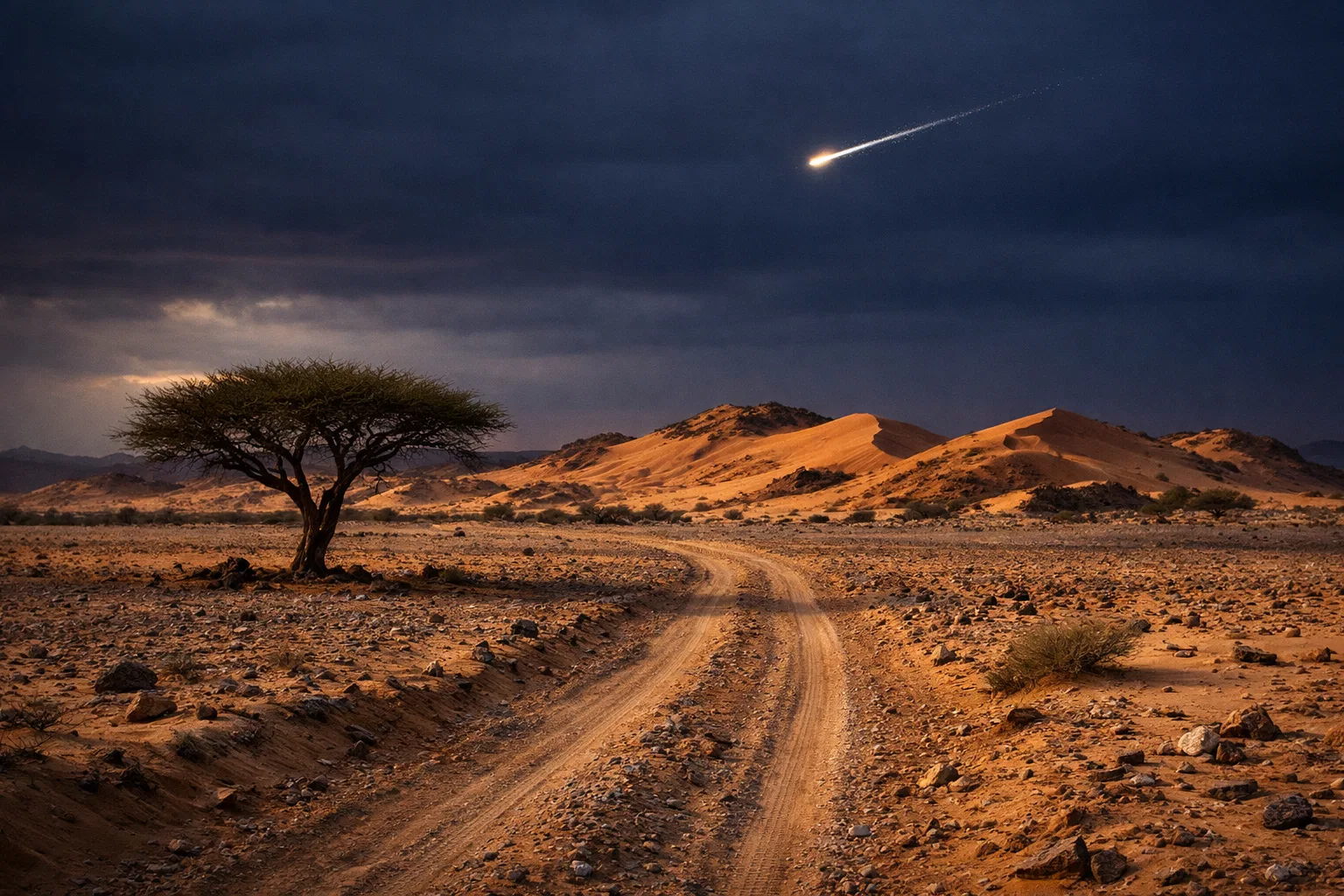
Few Nigerien stories have the elegant absurdity of the Tree of Ténéré. For decades, this lone acacia stood in the Ténéré Desert as a landmark for travellers and caravans. It became famous as one of the most isolated trees on Earth, reportedly the only tree for hundreds of kilometres, and was remarkable enough to appear on maps that would normally ignore a single plant.[Smithsonian Magazine]smithsonianmag.comOpen source on smithsonianmag.com.
The end of the story is what gives it its Fortean flavour. In 1973, the tree was knocked down by a truck driver, often described in retellings as drunk. The remains were taken to Niger’s national museum in Niamey, while a metal sculpture now marks the site. The tale sounds almost like a cosmic joke: in an enormous empty desert, a driver hit the one tree.[Smithsonian Magazine]smithsonianmag.comOpen source on smithsonianmag.com.
Sceptically, some details of the “most isolated” claim have been challenged or softened, and the exact folklore around the crash varies. But the story endures because it is a perfect desert parable. The tree was a survivor from a greener past, a navigational aid, a symbol of endurance, and then a victim of improbable human carelessness. It is not supernatural, yet it belongs naturally in a catalogue of Niger’s uncanny history.
Rocks From the Sky: Meteorites, Mars and Ownership
Meteorites are classic Fortean objects: stones that fall from the sky, invite awe, and blur the line between science, treasure hunting and myth. Niger became central to one of the biggest recent meteorite stories through Northwest Africa 16788, an officially recognised Martian meteorite found in Niger in 2023. The Meteoritical Bulletin lists it as an official meteorite name, classifies it as a Martian shergottite, gives Niger as the country, records it as not an observed fall, and lists its mass at 24.67 kg.[LPI]lpi.usra.eduOpen source on usra.edu.
The object’s scientific drama is straightforward: it is a large piece of Mars on Earth. Sotheby’s described it as discovered in Niger’s Agadez Region and about 70% larger than the next largest known Martian meteorite, representing a notable fraction of known Martian material. That is an extraordinary claim, but it is not paranormal; it is planetary geology made tangible.[Sothebys.com]sothebys.comOpen source on sothebys.com.
The social drama began when the meteorite was sold at auction in New York in 2025 for more than $5 million. Associated Press reported that Niger opened an investigation into the sale and questioned whether the rock had been removed legally, while Sotheby’s said standard procedures had been followed. President Abdourahamane Tiani then suspended exports of precious stones and meteorites while traceability was reviewed.[AP News]apnews.comOpen source on apnews.com.
This is where the case becomes more than a curiosity. A meteorite is at once a scientific sample, a market object, a national heritage issue and a literal visitor from another world. Believers in cosmic significance do not need to invent anything here. The real dispute is strange enough: who owns a rock from Mars once it lands in Niger?
Blood Rain, Dust and the Problem With Imported Wonders
Classic Fortean writing loves anomalous falls: frogs, fish, stones, coloured rain and mysterious dust. Niger does not have a strong, well-documented public archive of spectacular “raining animals” cases comparable to some better-known countries. Searches often confuse Niger with Nigeria or drift into social-media claims. That thinness is itself useful: it warns against padding a country page with borrowed wonders.
There is, however, a scientifically grounded connection to “blood rain” through Saharan dust. Research on red rain events in Europe has identified Saharan dust source regions including north Mali and north-west Niger, carried by atmospheric circulation and washed down by rain. In other words, Niger may be part of the natural source geography behind red or muddy rain elsewhere, even when the dramatic fall is reported far away.[ResearchGate]researchgate.netResearch Gate Mineralogy and physicochemical features of Saharan dustResearch Gate Mineralogy and physicochemical features of Saharan dust
The likely explanation is prosaic but elegant. Fine mineral dust, often rich in iron oxides and other particles, is lifted from desert regions, transported over long distances, and deposited with rain. To a witness, the result can look like a stain from the sky. To a scientist, it is atmospheric transport. To a Fortean reader, it is a reminder that “falls” can be genuinely strange without being supernatural.[AGU Publications]agupubs.onlinelibrary.wiley.comOpen source on wiley.com.
Living “Impossible Animals”: Niger’s Last West African Giraffes
Not every mystery animal is hidden. Sometimes the weirdest animal story is that a creature everyone knows nearly disappeared so completely that its survival feels improbable. Niger is home to the last wild West African giraffes, historically reduced to a tiny remnant population in the Kouré area. A 2024 review states that the remaining population was estimated at only 49 giraffes in 1996 and was geographically restricted to the “Giraffe Zone” around Kouré.[PubMed Central]pmc.ncbi.nlm.nih.govPub Med Central Saving the Last West African Giraffe PopulationPub Med Central Saving the Last West African Giraffe Population
Conservation work has since turned the story from near-extinction into cautious recovery. The Giraffe Conservation Foundation reports that Niger’s West African giraffe population has grown from 49 individuals to more than 600, and conservation groups have supported translocations to Gadabedji Biosphere Reserve to restore giraffes after local absence.[Giraffe Conservation Foundation]giraffeconservation.orgOpen source on giraffeconservation.org.
This belongs in Niger’s strange-history record because it complicates the usual cryptozoological hunger for unknown beasts. Here is a large, spectacular, real animal that came close to becoming a memory. The cultural pull lies not in whether the giraffe exists, but in how easily an existing creature can become a ghost of its former range.
How to Read Niger’s Strange Material Without Flattening It
Niger’s Forteana works best when sorted by evidence type. Some material is well documented but not paranormal: meteorites, fossils, Gobero, the Tree of Ténéré and giraffe conservation. Some is ethnographic and experiential: possession, haunting, ritual and spirit landscapes. Some is mythic and literary: Dodo, Zankallala, Hira and other beings from oral narrative. The mistake would be to treat all of these as the same kind of claim.
A practical reading guide looks like this:
- For sky and fall stories, ask whether there is a dated observation, a recovered specimen and an independent scientific classification. NWA 16788 meets the specimen test; vague UFO or social-media claims usually do not.[LPI]lpi.usra.eduOpen source on usra.edu.
- For spirits and possession, ask what role the event plays in healing, memory, gender, power or identity, not only whether an outsider can verify a spirit as a physical entity.[AfricaBib]africabib.orgOpen source on africabib.org.
- For monsters, ask whether the source is oral tale, epic, ritual belief, eyewitness testimony or fossil evidence. A Dodo tale and a Sarcosuchus skull are both “monster material”, but they are not the same kind of evidence.[OpenBU]open.bu.eduOpen source on bu.edu.
- For desert mysteries, ask whether the strangeness comes from missing evidence or from a real change in environment. Gobero is astonishing precisely because the evidence is strong: today’s desert was once a lakeside human world.[PubMed Central]pmc.ncbi.nlm.nih.govOpen source on nih.gov.
The result is a richer, less gullible account. Niger does not need invented paranormal drama. Its documented record already contains spirits that remember empire, monsters that teach survival, a desert tree turned legend, a cemetery in a vanished green Sahara, giant reptiles from deep time, and a stone from Mars that raised questions of science, money and national belonging.
Amazon book picks
Further Reading
Books and field guides related to What Makes Niger's Weird History So Unusual?. Use these as the next step if you want deeper reading beyond the article.


The Atlas of Ancient Worlds
Covers landscapes, archaeology and ancient mysteries relevant to Niger.
eBay marketplace picks
Marketplace Samples
Live-tested eBay searches with available results related to this page.
Endnotes
1.
Source: africabib.org
Link:https://www.africabib.org/rec.php?RID=124976263
2.
Source: africabib.org
Link:https://www.africabib.org/rec.php?RID=P00045044
3.
Source: lpi.usra.edu
Link:https://www.lpi.usra.edu/meteor/metbull.php?code=82729
4.
Source: Wikipedia
Link:https://en.wikipedia.org/wiki/Niger
5.
Source: whc.unesco.org
Link:https://whc.unesco.org/en/list/1268/
6.
Source: Wikipedia
Title: Hira (mythical monster)
Link:https://en.wikipedia.org/wiki/Hira_%28mythical_monster%29
7.
Source: archive.org
Link:https://archive.org/stream/cu31924026919518/cu31924026919518_djvu.txt
8.
Source: Wikipedia
Link:https://en.wikipedia.org/wiki/Sarcosuchus
9.
Source: nigerheritage.org
Link:https://www.nigerheritage.org/archaeology
10.
Source: Wikipedia
Link:https://en.wikipedia.org/wiki/T%C3%A9n%C3%A9r%C3%A9
11.
Source: sothebys.com
Link:https://www.sothebys.com/buy/3365b9bf-f40f-43cf-91fd-97143d4270cb/lots/16e373e3-7b41-4c79-a181-081349df37b5
12.
Source: researchgate.net
Title: Research Gate Mineralogy and physicochemical features of Saharan dust
Link:https://www.researchgate.net/publication/323496410_Mineralogy_and_physicochemical_features_of_Saharan_dust_wet_deposited_in_the_Iberian_Peninsula_during_an_extreme_red_rain_event
13.
Source: Wikipedia
Title: List of reported UFO sightings
Link:https://en.wikipedia.org/wiki/List_of_reported_UFO_sightings
14.
Source: Wikipedia
Title: West African mythology
Link:https://en.wikipedia.org/wiki/West_African_mythology
15.
Source: Wikipedia
Title: Hausa animism
Link:https://en.wikipedia.org/wiki/Hausa_animism
16.
Source: Wikipedia
Title: Northwest Africa 16788
Link:https://en.wikipedia.org/wiki/Northwest_Africa_16788
17.
Source: Wikipedia
Title: Niger River
Link:https://en.wikipedia.org/wiki/Niger_River
18.
Source: Wikipedia
Title: Historic Centre of Agadez
Link:https://en.wikipedia.org/wiki/Historic_Centre_of_Agadez
19.
Source: Wikipedia
Title: Tree of Ténéré
Link:https://en.wikipedia.org/wiki/Tree_of_T%C3%A9n%C3%A9r%C3%A9
20.
Source: Wikipedia
Title: Lost Tree
Link:https://en.wikipedia.org/wiki/Lost_Tree
21.
Source: Wikipedia
Title: Arbre du Ténéré
Link:https://de.wikipedia.org/wiki/Arbre_du_T%C3%A9n%C3%A9r%C3%A9
22.
Source: Wikipedia
Title: West African giraffe
Link:https://en.wikipedia.org/wiki/West_African_giraffe
23.
Source: Wikipedia
Link:https://en.wikipedia.org/wiki/Gobero
24.
Source: nigerheritage.org
Link:https://www.nigerheritage.org/dinosaurs
25.
Source: researchgate.net
Link:https://www.researchgate.net/publication/231861233_Bloody_rain_again_Red_rain_and_meteors_in_history_and_myth
26.
Source: researchgate.net
Link:https://www.researchgate.net/publication/230331355_Embodying_Colonial_Memories_Spirit_Possession_Power_and_the_Hauka_In_West_Africa
27.
Source: researchgate.net
Link:https://www.researchgate.net/publication/232938367_Exploring_bori_as_a_site_of_myth_in_Hausa_culture
28.
Source: researchgate.net
Link:https://www.researchgate.net/publication/269840466_Excavations_at_Gao_Saney_New_Evidence_for_Settlement_Growth_Trade_and_Interaction_on_the_Niger_Bend_in_the_First_Millennium_CE
29.
Source: researchgate.net
Link:https://www.researchgate.net/publication/288306576_The_giraffes_of_Niger_the_last_West_African_giraffes
30.
Source: researchgate.net
Link:https://www.researchgate.net/publication/379111343_Bori_Religion_in_West_Africa
31.
Source: archive.org
Link:https://archive.org/download/hausafolktalesha00tremrich/hausafolktalesha00tremrich.pdf
32.
Source: africa.com
Link:https://africa.com/countries-of-africa/west-africa/niger
33.
Source: youtube.com
Title: The Sahara Will Turn Green Again — and Here’s When
Link:https://www.youtube.com/watch?v=uoq5vsxxr6s
Source snippet
Sarcosuchus - The Biggest Crocodile That Ever Existed?...
34.
Source: youtube.com
Link:https://www.youtube.com/watch?v=O18oIkTO6tY
35.
Source: smithsonianmag.com
Link:https://www.smithsonianmag.com/smart-news/the-most-isolated-tree-in-the-world-was-killed-by-a-probably-drunk-driver-5369329/
36.
Source: persee.fr
Title: assr 0335 5985 1992 num 79 1 1547
Link:https://www.persee.fr/doc/assr_0335-5985_1992_num
37.
Source: ehrafworldcultures.yale.edu
Link:https://ehrafworldcultures.yale.edu/cultures/ms12/documents/021
38.
Source: open.bu.edu
Link:https://open.bu.edu/bitstreams/c57df790-754c-446c-a079-bdaa098d47d1/download
39.
Source: abookofcreatures.com
Link:https://abookofcreatures.com/category/niger/
40.
Source: allegralaboratory.net
Title: Allegra Lab Haunted: Spirits and the Agency of the No Longer in Niger
Link:https://allegralaboratory.net/haunted-spirits-and-the-agency-of-the-no-longer-in-niger/
41.
Source: naturalhistory.si.edu
Title: Natural History Museum On the dinosaurian and crocodilian locality of Gadoufaoua
Link:https://naturalhistory.si.edu/sites/default/files/media/translated_publications/Taquet%252070.pdf
42.
Source: chronicle.uchicago.edu
Link:https://chronicle.uchicago.edu/011101/supercroc.shtml
43.
Source: news.uchicago.edu
Link:https://news.uchicago.edu/story/stone-age-graveyard-reveals-lifestyles-green-sahara-two-successive-cultures-thrived-lakeside
44.
Source: pmc.ncbi.nlm.nih.gov
Link:https://pmc.ncbi.nlm.nih.gov/articles/PMC2515196/
45.
Source: paulsereno.uchicago.edu
Title: The Gobero Story | Paul Sereno
Link:https://paulsereno.uchicago.edu/discoveries/people_of_the_green_sahara/the_gobero_story/
46.
Source: agupubs.onlinelibrary.wiley.com
Link:https://agupubs.onlinelibrary.wiley.com/doi/full/10.1029/2024JE008885
47.
Source: apnews.com
Link:https://apnews.com/article/17d755247b8ee04eb6d084cafa0b6831
48.
Source: agupubs.onlinelibrary.wiley.com
Link:https://agupubs.onlinelibrary.wiley.com/doi/full/10.1029/2019JD030725
49.
Source: pmc.ncbi.nlm.nih.gov
Title: Pub Med Central Saving the Last West African Giraffe Population
Link:https://pmc.ncbi.nlm.nih.gov/articles/PMC10930505/
50.
Source: giraffeconservation.org
Link:https://giraffeconservation.org/programs/west-african-giraffe-conservation-in-niger/
51.
Source: saharaconservation.org
Title: west african giraffe
Link:https://saharaconservation.org/sahel-and-sahara-fauna/west-african-giraffe/
52.
Source: abookofcreatures.com
Link:https://abookofcreatures.com/2021/05/07/zankallala/
53.
Source: giraffeconservation.org
Link:https://giraffeconservation.org/news-from-niger/
54.
Source: zslpublications.onlinelibrary.wiley.com
Link:https://zslpublications.onlinelibrary.wiley.com/doi/10.1111/acv.70039?af=R
55.
Source: ebsco.com
Title: niger river
Link:https://www.ebsco.com/research-starters/geography-and-cartography/niger-river
56.
Source: cryptidz.fandom.com
Title: Lake Monsters
Link:https://cryptidz.fandom.com/wiki/Lake_Monsters
57.
Source: van-helsing-own-story.fandom.com
Link:https://van-helsing-own-story.fandom.com/wiki/Nigeria
58.
Source: cryptidz.fandom.com
Link:https://cryptidz.fandom.com/wiki/Zankallala
59.
Source: fossil.fandom.com
Link:https://fossil.fandom.com/wiki/Gadoufaoua
60.
Source: paulsereno.uchicago.edu
Title: laganosuchus thaumastos
Link:https://paulsereno.uchicago.edu/discoveries/laganosuchus-thaumastos/
61.
Source: lpi.usra.edu
Link:https://www.lpi.usra.edu/meteor/metbull.cfm?ants=&browse=&categ=All&code=82729&country=All&falls=&lrec=50&map=ge&mblist=All&nwas=&phot=no&pnt=Normal+table&rect=&sea=Martian+%28shergottite%29&sfor=types&snew=0&srt=mass&strewn=no&stype=exact&valids=
62.
Source: fieldsupport.dliflc.edu
Link:https://fieldsupport.dliflc.edu/products/cip/niger/website/niger.pdf
63.
Source: abcnews.com
Link:https://abcnews.com/International/fireball-meteor-called-bolide-lights-japanese-sky/story?id=26678086
64.
Source: ru.scribd.com
Link:https://ru.scribd.com/document/63083931/Bori
65.
Source: sciencefocus.com
Title: sarcosuchus imperator
Link:https://www.sciencefocus.com/nature/sarcosuchus-imperator
66.
Source: pubmed.ncbi.nlm.nih.gov
Link:https://pubmed.ncbi.nlm.nih.gov/11679634/
67.
Source: afrospiritualities.com
Link:https://afrospiritualities.com/tag/bori/
Additional References
68.
Source: lemonde.fr
Link:https://www.lemonde.fr/en/obituaries/article/2025/11/17/philippe-taquet-dinosaur-hunter-and-former-director-of-french-national-museum-of-natural-history-has-died_6747541_15.html
Source snippet
Taquet, originally expected to join his family's textile business, chose science instead and studied at the Sorbonne and MNHN. He conduct...
69.
Source: youtube.com
Title: When the Sahara Was Green: The Paradise That Disappeared Beneath the Sand
Link:https://www.youtube.com/watch?v=GHnZS_rYPBg
Source snippet
The Sahara Was Green - Why Did It Dry Out?...
70.
Source: instagram.com
Link:https://www.instagram.com/p/DMX3EQktohY/
71.
Source: facebook.com
Link:https://www.facebook.com/100068173440519/posts/a-fish-reportedly-fell-straight-from-the-sky-and-landed-on-the-ground-in-harbelw/1261952962753807/
72.
Source: facebook.com
Link:https://www.facebook.com/osaro00/posts/a-massive-dust-storm-hit-birnin-kebbi-this-evening-leaving-residents-in-awe-of-n/1427446346071532/
73.
Source: instagram.com
Link:https://www.instagram.com/reel/DVrchTblAGd/?hl=en
74.
Source: abookofcreatures.com
Link:https://abookofcreatures.com/tag/african-folklore/
75.
Source: pinterest.com
Link:https://www.pinterest.com/pin/african-folklore-a-book-of-creatures–270708627594607018/
76.
Source: instagram.com
Link:https://www.instagram.com/reel/DZr_sJUs97i/
77.
Source: alamy.com
Link:https://www.alamy.com/stock-photo/agadez-unesco-heritage.html?page=2
Topic Tree
Follow this branch
Related pages 192
- Afghan Forteana
- Antigua Uncanny
- Bosnian Mysteries
- Botswana Weird
- Brazil Strange
- +187 more in sidebar