Within Botswana Weird
What Do Okavango River Monsters Warn About?
The Dikongoro and related river-serpent stories turn real Okavango hazards into memorable warnings about water, death and respect.
On this page
- Dikongoro stories in the panhandle
- Water danger, taboos and river knowledge
- Monster, metaphor or misidentified hazard
Page outline Jump by section
Introduction
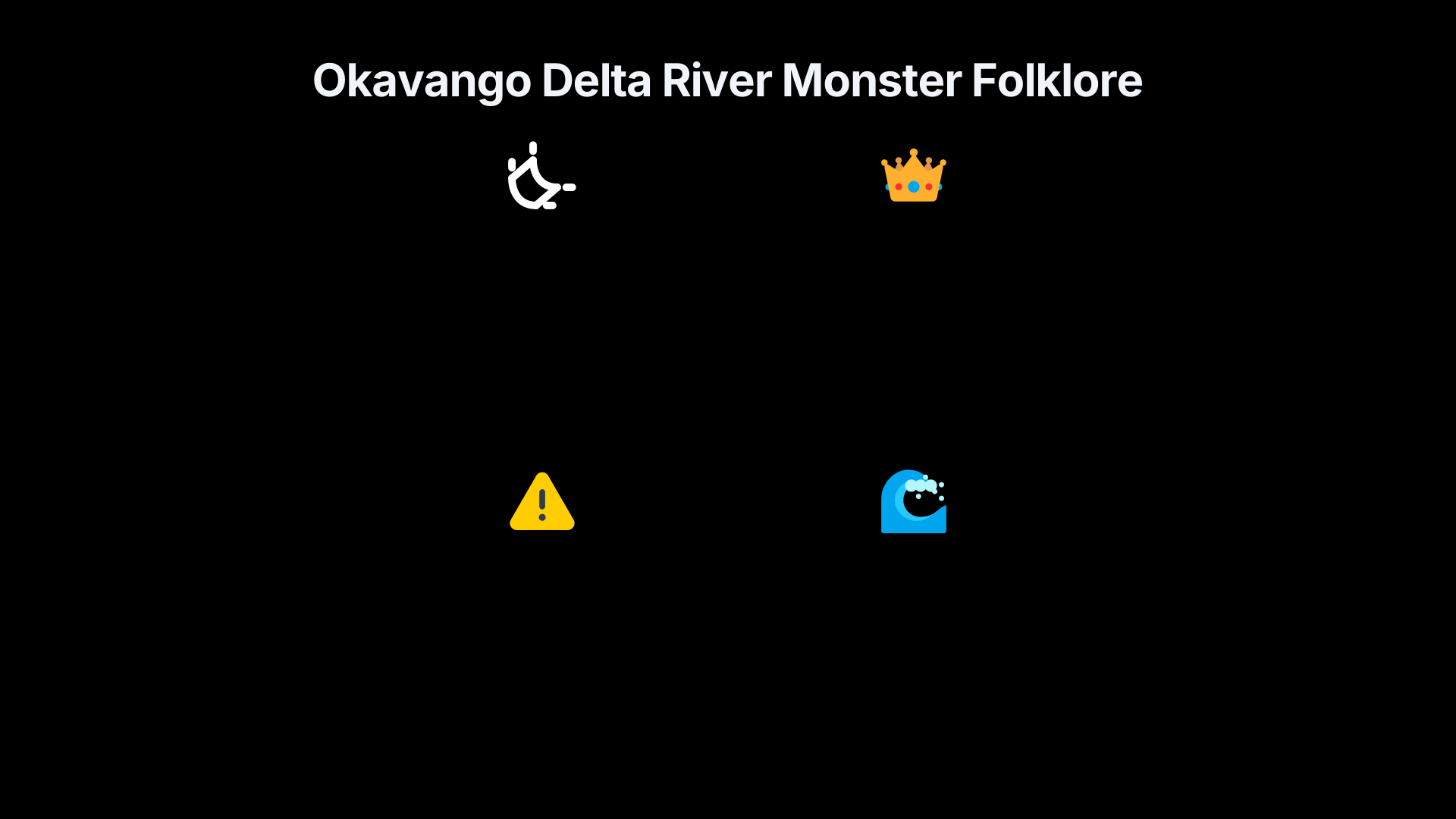
Stories about giant river monsters in the Okavango are best understood as danger folklore rather than hidden-zoology reports. In north-west Botswana, especially around the Okavango Panhandle, traditions about creatures such as the Dikongoro transform the real risks of deep channels, hidden currents, crocodiles, hippos and sudden drownings into memorable narratives. These tales are not simply entertainment. They teach respect for powerful water, reinforce local customs surrounding fishing and burial, and remind people that rivers demand caution. Their enduring appeal lies in the way they blend spiritual belief with practical knowledge, leaving open the possibility of mystery while serving an unmistakable social purpose.
What do Okavango river monsters warn about?
The Okavango is unlike most great rivers. Instead of reaching the sea, it spreads into one of the world’s largest inland deltas, creating an intricate maze of permanent channels, seasonal floodplains and reed beds. Water levels rise months after the rains have fallen in Angola, so the landscape can change dramatically even during Botswana’s dry season. This dynamic environment has long rewarded careful local knowledge while punishing mistakes.[UNESCO World Heritage Centre]whc.unesco.orgUNESCO World Heritage CentreOkavango DeltaOkavango Delta. This delta in north-west Botswana comprises permanent marshlands and seasonally…
Against this backdrop, stories of river monsters become easy to understand. Rather than describing a creature that can be scientifically identified, many traditions describe an intelligent, powerful being that inhabits dangerous stretches of water. The lesson is straightforward: never assume the river is safe simply because it looks calm.
Unlike modern cryptid legends that invite searches for physical evidence, Okavango monster stories often place greater emphasis on behaviour than appearance. Respecting the river, following community customs and avoiding reckless actions matter more than proving whether a monster literally exists.
Dikongoro stories in the Panhandle
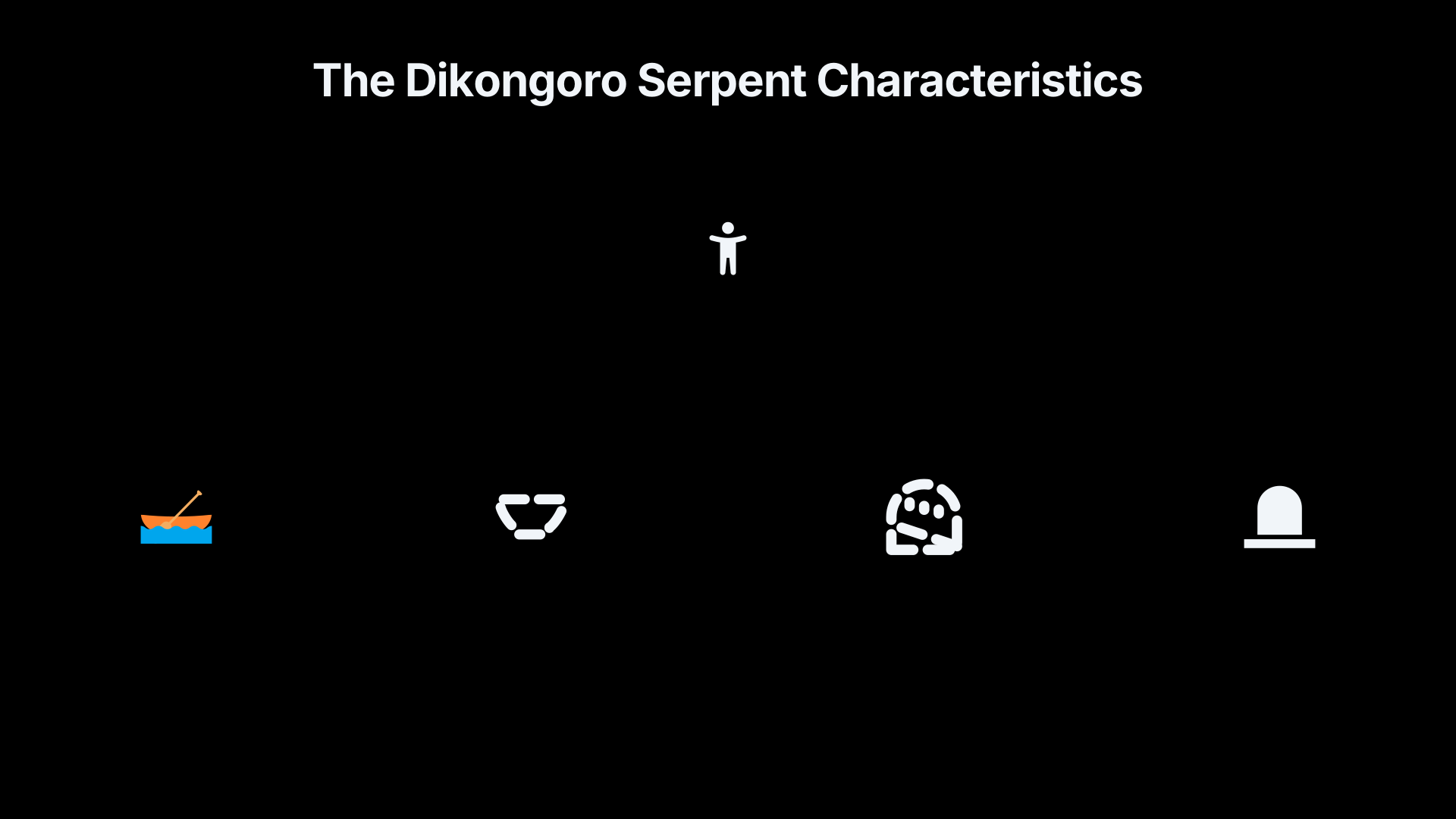
Among the best-known traditions is the Dikongoro, described in oral accounts from Hambukushu communities living along the Okavango. It is usually portrayed as an enormous serpent-like creature capable of overturning or swallowing a mokoro, the traditional dugout canoe used throughout the delta. According to storytellers, the creature inhabits particular reaches of the river rather than roaming everywhere indiscriminately.[Ngepi Camp]ngepicamp.comNgepi Camp Dikongoro river monster OkavangoThe… Dikongoro under you; a huge snake-like monster. Although you've never seen…Read more…
Some versions of the tradition add striking details. A traveller trapped by the Dikongoro may survive only by offering blood, after which the monster releases both canoe and passenger. Other accounts link the creature with tunnels beneath riverbanks or with the spirits of important leaders transformed after death. Thomas J. Larson’s ethnographic work on Hambukushu beliefs records traditions in which a deceased chief becomes the Dikongoro, connecting political authority, ancestral spirits and the river itself.[Ngepi Camp]ngepicamp.comNgepi Camp Dikongoro river monster OkavangoThe… Dikongoro under you; a huge snake-like monster. Although you've never seen…Read more…
These stories differ from sensational “lake monster” traditions elsewhere because they are deeply embedded within local cultural life. The Dikongoro is not simply an unexplained animal but part of a wider understanding of the relationship between people, ancestors and the waters that sustain them.
Water danger, taboos and river knowledge
Looking beneath the supernatural surface reveals how effectively these stories communicate practical safety.
The Okavango contains numerous genuine hazards:
- Hidden channels with unexpectedly strong currents.
- Nile crocodiles capable of ambushing people near the water’s edge.
- Hippopotamuses, among Africa’s most dangerous large mammals, especially when surprised in narrow waterways.
- Floating vegetation and submerged obstacles that can trap or overturn mokoros.
- Seasonal flooding that changes familiar routes from year to year.[UNESCO World Heritage Centre]whc.unesco.orgUNESCO World Heritage CentreOkavango DeltaOkavango Delta. This delta in north-west Botswana comprises permanent marshlands and seasonally…
In communities where oral teaching traditionally outweighed written instruction, attaching these dangers to memorable supernatural beings helped important knowledge survive across generations.
Some traditions also associate the Dikongoro with particular burial customs. Accounts recorded from Hambukushu informants describe beliefs that important individuals should be buried in ways that acknowledge the river because the transformed chief or river spirit remains connected with the water. Whether interpreted literally or symbolically, such traditions reinforce the idea that the river is not merely a resource but a place inhabited by powerful forces deserving respect.[Ngepi Camp]ngepicamp.comNgepi Camp Dikongoro river monster OkavangoThe… Dikongoro under you; a huge snake-like monster. Although you've never seen…Read more…
Monster, metaphor or misidentified hazard?
Modern readers often ask whether the Dikongoro was inspired by an unknown animal.
No convincing physical evidence supports the existence of a giant undiscovered serpent living in the Okavango. Zoological surveys of the delta document an exceptionally rich ecosystem, including crocodiles, pythons, fish, hippos and many other aquatic species, but no verified animal matching the traditional descriptions.[UNESCO World Heritage Centre]whc.unesco.orgUNESCO World Heritage CentreOkavango DeltaOkavango Delta. This delta in north-west Botswana comprises permanent marshlands and seasonally…
Several explanations have been proposed:
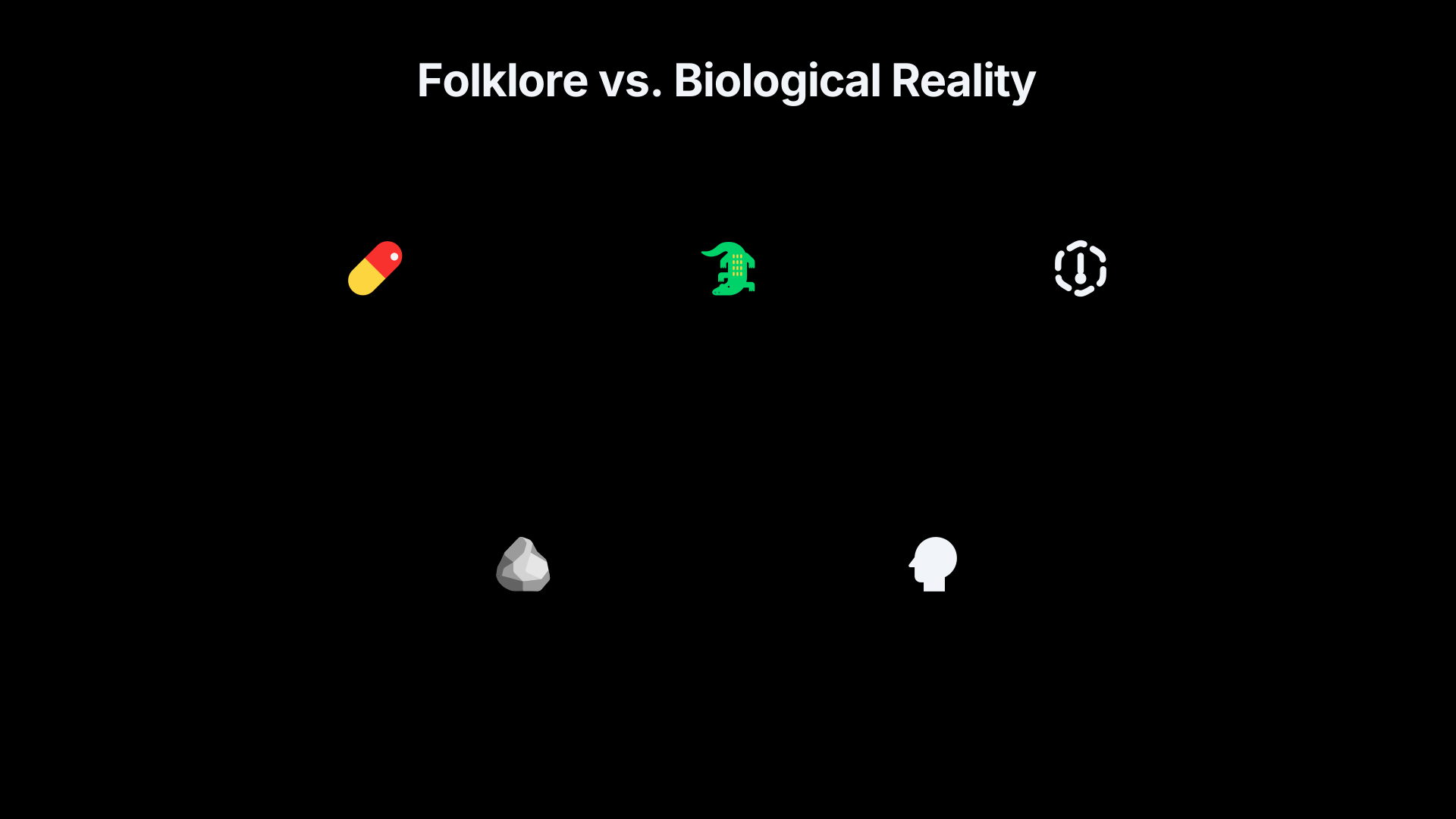
- Symbolic interpretation. Many folklorists see the Dikongoro primarily as a cultural expression of respect for dangerous water and ancestral power.
- Misidentification. Encounters with large crocodiles, pythons or partially submerged hippos could easily become exaggerated in retelling, particularly under poor visibility.
- Composite tradition. The monster may combine observations of real animals with spiritual beliefs about ancestors, chiefs and sacred places, creating a figure that is neither purely zoological nor purely metaphorical.
These interpretations are not necessarily mutually exclusive. Folklore often preserves practical truths through imaginative stories rather than factual description.
Why the stories still matter
River-monster traditions remain culturally significant because they continue to express something true about life in the Okavango even if the monsters themselves cannot be verified.
The delta remains a landscape where water brings both life and danger. Visitors glide silently through reed-lined channels in mokoros much as local communities have done for generations, and guides still emphasise respect for waterways that can appear tranquil while concealing serious risks.[Africa Geographic]africageographic.comAfrica GeographicUnderstanding the Okavango DeltaThe Okavango Delta is an enormous watery oasis, home to an astonishing variety of wildli…
For Botswana’s wider strange-history tradition, the Dikongoro occupies an interesting middle ground. It is neither a modern cryptozoological sensation nor simply a fairy tale. Instead, it illustrates how oral tradition can encode environmental knowledge, reinforce social values and preserve memories of a landscape whose hazards are real enough without requiring a literal monster beneath the water. That combination of practical warning, spiritual meaning and enduring mystery explains why the Okavango’s river monsters remain among Botswana’s most distinctive pieces of danger folklore.
Amazon book picks
Further Reading
Books and field guides related to What Do Okavango River Monsters Warn About?. Use these as the next step if you want deeper reading beyond the article.

The Lost World of the Kalahari
Provides environmental context for regional traditions.
Fingerprints of the gods
First published 1995. Subjects: Lost continents, World maps, Ancient Civilization, Discovery and exploration, Early works to 1800.
eBay marketplace picks
Marketplace Samples
Live-tested eBay searches with available results related to this page.




Endnotes
1.
Source: whc.unesco.org
Link:https://whc.unesco.org/en/list/1432/
Source snippet
UNESCO World Heritage CentreOkavango DeltaOkavango Delta. This delta in north-west Botswana comprises permanent marshlands and seasonally...
2.
Source: africageographic.com
Link:https://africageographic.com/stories/understanding-the-okavango-delta/
Source snippet
Africa GeographicUnderstanding the Okavango DeltaThe Okavango Delta is an enormous watery oasis, home to an astonishing variety of wildli...
3.
Source: ngepicamp.com
Title: Ngepi Camp Dikongoro river monster Okavango
Link:https://ngepicamp.com/okavango-river-monsters-and-other-secrets-of-the-hambukushu-people/
Source snippet
The... Dikongoro under you; a huge snake-like monster. Although you've never seen...Read more...
Additional References
4.
Source: researchgate.net
Link:https://www.researchgate.net/publication/226358917_Species_diversity_of_the_Okavango_Delta_Botswana
Source snippet
(PDF) Species diversity of the Okavango Delta, BotswanaIn the Okavango Delta (about 28,000km2) the number of identified species is 1,300...
5.
Source: timbuktutravel.com
Link:https://www.timbuktutravel.com/blog/okavango-delta-fluke-nature
6.
Source: biodiversity-plants.de
Link:https://www.biodiversity-plants.de/biodivers_ecol/publishing/b-e.00292.pdf
Source snippet
Ma- kongoro are Hafumu of water and we respect them. 57 Village on the Kavango River...Read more...
7.
Source: blog.rhinoafrica.com
Title: myths miracles and mystery the okavango river delta explained
Link:https://blog.rhinoafrica.com/2024/02/16/myths-miracles-and-mystery-the-okavango-river-delta-explained/
Source snippet
rhinoafrica.comMyths, Miracles and Mysteries: The Okavango River...15 Feb 2024 — Uncover the myths, miracles, and mysteries of the Okava...
8.
Source: youtube.com
Title: OKAVANG O ETERNAL
Link:https://www.youtube.com/watch?v=WQoqXHsh50w
Source snippet
OKAVANGO ETERNAL - NATIONAL GEOGRAPHIC X DE...The beers and the National Geographic Society have been working to help protect the source...
9.
Source: youtube.com
Title: Becoming The River Ch.II | River, Iron & Sand
Link:https://www.youtube.com/watch?v=aGw8Nv6MwjY
Source snippet
Becoming The River Ch.3 | The Lioness & The Rainmaker...
10.
Source: youtube.com
Title: Becoming The River Ch.1 | The Hakamussuma Exodus
Link:https://www.youtube.com/watch?v=mOgBCP3Ewnk
Source snippet
Becoming The River Ch.II | River, Iron & Sand...
11.
Source: youtube.com
Title: Becoming The River Ch.3 | The Lioness & The Rainmaker
Link:https://www.youtube.com/watch?v=5YdMGwqKViE
Topic Tree