Within Albania Weird
Did Albania's Storms Fight Like Dragons?
Albanian storm myths turn thunder, floods and drought into a battle between heroic protectors and a monstrous serpent-dragon.
On this page
- The drangue and the kulshedra
- Weather, water and mountain scenery
- Myth as an explanation for disaster
Page outline Jump by section
Introduction
Albanian folklore explains some of the country’s most violent weather not as random natural events but as the visible signs of an epic struggle between a heroic protector and a monstrous serpent-dragon. According to traditional belief, the drangue fights the kulshedra, a destructive female dragon associated with storms, drought, floods and blocked waters. When thunder rolled across the mountains, people could imagine they were hearing these supernatural battles rather than merely the clash of clouds. This was never simply a monster story. It was a way of making sense of dangerous landscapes, unpredictable weather and the constant dependence of mountain communities on rain, rivers and fertile land. Modern folklore scholars treat these accounts as part of Albania’s rich mythological tradition rather than evidence for literal dragons, but the stories remain among the country’s most distinctive examples of weather folklore and strange belief.[Wikipedia]WikipediaOpen source on wikipedia.org.
The drangue and the kulshedra
The heart of the tradition is a simple but powerful mechanism: every destructive storm has an opponent.
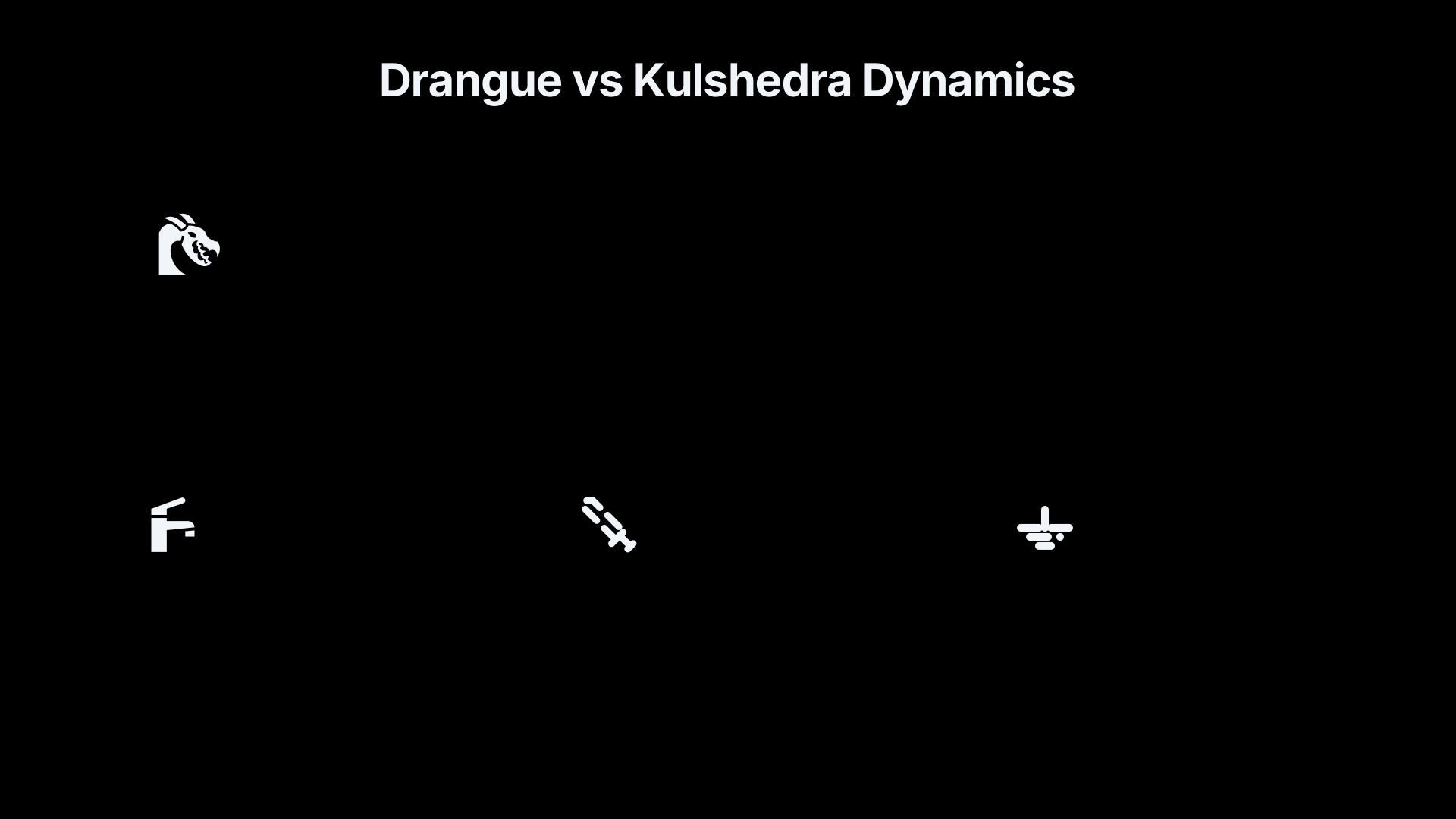
The kulshedra is usually described as an enormous female serpent or dragon with several heads. Rather than guarding treasure, she represents chaos in nature. Different traditions credit her with causing thunderstorms, hail, flooding, drought, earthquakes and crop failure. In many stories she blocks springs or rivers, withholding life-giving water until confronted.[Wikipedia]WikipediaOpen source on wikipedia.org.
The drangue is her opposite. He is a supernatural champion associated with the sky, thunder and protection. Folklore describes him as possessing extraordinary strength, sometimes with hidden wings, and destined from birth to defend people against the kulshedra. Rather than hunting monsters for glory, his role is specifically to restore balance by preventing weather disasters from overwhelming human communities.[Wikipedia]WikipediaOpen source on wikipedia.org.
Traditional accounts give the drangue dramatic weapons. Lightning itself may become his sword or spear. Elsewhere he tears up trees, hurls vast boulders or even throws entire buildings during combat. These impossible feats mirror the violence of severe mountain storms, where lightning, landslides and flying debris can transform familiar landscapes within minutes.[Wikipedia]WikipediaOpen source on wikipedia.org.
Perhaps the most memorable feature of the myth is that people were not expected to witness the combat directly. Instead, they experienced its consequences. A violent thunderstorm, repeated lightning and deafening crashes overhead were understood as signs that the drangue and the kulshedra were locked in battle.[Wikipedia]WikipediaOpen source on wikipedia.org.
Weather, water and mountain scenery
The stories are closely tied to Albania’s physical landscape. Mountain communities depended upon regular rainfall yet also lived with the dangers of flash floods, swollen rivers, rockfalls and prolonged drought. Rather than seeing these hazards as unrelated events, folklore united them within a single narrative.
Blocked springs and disappearing water are especially important. In many traditions the kulshedra restrains or captures water, bringing drought and threatening crops and livestock. Her defeat allows rivers and springs to flow again, making the myth an explanation not only for storms but also for the return of fertility after dry periods.[Wikipedia]WikipediaOpen source on wikipedia.org.
This connection between dragons and water reflects a wider pattern across the Balkans, yet Albanian tradition gives the struggle a particularly strong meteorological emphasis. The storm itself becomes the battlefield, with thunder signalling combat and rain representing the restoration of natural order rather than merely a change in weather.[Wikipedia]WikipediaAlbanian paganismAlbanian paganism
Folklore collected in northern and central Albania also associates the battles with specific landscapes, including mountain passes, rivers and dramatic rocky terrain. Large isolated boulders or unusual landforms could be explained as remnants of the drangue’s immense projectiles rather than ordinary geological features, giving familiar scenery an enduring supernatural history. This localisation helped transform abstract mythology into stories rooted in recognisable places.[Wikipedia]WikipediaOpen source on wikipedia.org.
Myth as an explanation for disaster
Before modern meteorology, severe weather was frightening, unpredictable and often catastrophic. Storm myths offered an explanation that combined observation with imagination.
The stories helped answer practical questions:
- Why did violent thunderstorms appear so suddenly?
- Why could one valley receive life-saving rain while another suffered drought?
- Why were floods and landslides capable of moving enormous rocks?
- Why did weather sometimes seem almost purposeful in its destruction?
Instead of describing atmospheric pressure or mountain microclimates, folklore framed these events as the visible effects of a continuing struggle between order and chaos. The explanation was emotionally satisfying because disasters were not meaningless; they were part of an ongoing battle in which human survival ultimately depended upon a heroic defender.[Wikipedia]WikipediaAlbanian paganismAlbanian paganism
Importantly, this does not mean historical Albanians literally believed every clap of thunder came from dragons in the modern sense. Folk belief existed alongside practical knowledge of seasons, farming and local weather. Myth gave natural forces personality and moral meaning without replacing everyday experience.
Why scholars see an ancient pattern
Modern folklorists and historians of religion note that the Albanian story resembles a very old mythic pattern found across many Indo-European traditions: a storm or sky hero defeating a great serpent associated with chaos and destructive waters. Researchers often describe this recurring structure using the German term Chaoskampf—the struggle against primordial chaos.[Wikipedia]WikipediaAlbanian paganismAlbanian paganism
That comparison does not suggest direct borrowing from a single source. Instead, it places the Albanian drangue and kulshedra within a broad family of myths in which civilisation depends upon the repeated victory of order over destructive natural forces. In Albania, however, the tradition developed its own distinctive imagery, local geography and folklore, making it recognisably part of the country’s cultural identity rather than merely a version of someone else’s dragon story.[Wikipedia]WikipediaOpen source on wikipedia.org.
Why the storm battles still matter
For anyone interested in Albania’s Fortean traditions, the drangue and kulshedra stand out because they blur the line between observable nature and supernatural explanation. They are not reports of mysterious creatures glimpsed in forests but enduring narratives that transform every dramatic thunderstorm into a possible sign of hidden conflict.
Today the battles are valued primarily as folklore. There is no evidence that literal dragon combat causes storms, and modern science explains thunder, lightning and flooding through atmospheric and geological processes. Yet the old stories continue to give emotional shape to dangerous weather, preserving a vivid example of how communities once interpreted the natural world.
Rather than competing with science, the myth survives as cultural memory. It reminds readers that long before weather radar and satellite forecasts, thunder over Albania’s mountains could be heard as something much stranger: the clash between a guardian of humanity and the dragon who threatened the balance of the world.

Amazon book picks
Further Reading
Books and field guides related to Did Albania's Storms Fight Like Dragons?. Use these as the next step if you want deeper reading beyond the article.

The Dictionary of Albanian Religion, Mythology and Folk Culture
First published 2000. Subjects: Dictionaries, Social life and customs, Albania, Folklore, Religious life and customs.


eBay marketplace picks
Marketplace Samples
Live-tested eBay searches with available results related to this page.


Endnotes
1.
Source: Wikipedia
Link:https://en.wikipedia.org/wiki/Drangue
2.
Source: Wikipedia
Link:https://en.wikipedia.org/wiki/Kulshedra
3.
Source: Wikipedia
Title: Albanian paganism
Link:https://en.wikipedia.org/wiki/Albanian_paganism
4.
Source: albanianregistry.org
Link:https://albanianregistry.org/blog/drangue
Source snippet
The Storm-Born Dragon-Slayer of Albanian Myth21 May 2026 — The thing the drangue is born to fight is the Kuçedra — the many-headed, fire...
Published: May 2026
Additional References
5.
Source: mythlok.com
Link:https://mythlok.com/beings/kucedra/
Source snippet
Kucedra: The 7 headed dragonAlbanian dragon lore tells of a hero, Drangue, battling Kulshedra, a multi-headed dragon. Storms rage as the...
6.
Source: linkedin.com
Link:https://www.linkedin.com/pulse/ciklopi-kucedra-personal-window-albanian-balkan-mythology-shaska-wbkgf
Source snippet
les were used to explain sudden storms or frightening thunder.Read more...
7.
Source: van-helsing-own-story.fandom.com
Link:https://van-helsing-own-story.fandom.com/wiki/Kulshedra
Source snippet
Van Helsing Own Story Wiki - FandomIn Albanian mythology she is usually fought and defeated by a drangue, a semi-human winged divine hero...
8.
Source: youtube.com
Title: Kucedra: The 7 Headed Dragon | Balkan Mythology
Link:https://www.youtube.com/watch?v=_3U6k1j8I9E
Source snippet
Hana: The Albanian Moon Goddess of Cycles and Balance...
9.
Source: europeanfolktales.com
Link:https://europeanfolktales.com/the-kulshedra-and-the-brave-drangue/
Source snippet
The Kulshedra and the Brave Drangue: Albanian Folktale7 Feb 2026 — The Kulshedra is a multi-headed serpent-demon that brings drought, des...
10.
Source: youtube.com
Title: Kulshedra – The Storm Demon
Link:https://www.youtube.com/watch?v=o6zkCIdn5zw
Source snippet
Kucedra: The 7 Headed Dragon | Balkan Mythology...
11.
Source: youtube.com
Link:https://www.youtube.com/watch?v=KGykMnj9UH4
Topic Tree