Within Mongolia Weird
Why Mongolia's Haunted Places Feel Watched
Mongolian uncanny stories often turn on what happens when places, spirits and old ritual obligations are ignored.
On this page
- Sacred mountains and ritual relationships
- Shamanic practice and spirit interpretation
- Socialist disbelief, demon stories and narrative revenge
Page outline Jump by section
Introduction
Many of Mongolia’s most unsettling ghost stories are not about abandoned houses or wandering spectres. They are about landscapes that seem to watch the people moving through them. Mountains, springs and isolated passes are often treated not as empty scenery but as places inhabited by powerful local spirits whose favour depends on correct behaviour. Within this tradition, frightening experiences are rarely presented as random hauntings. They are interpreted as signs that someone has ignored ritual obligations, entered a forbidden place carelessly, or disturbed a relationship between humans, ancestors and the natural world. That way of thinking has survived dramatic political change, from centuries of Buddhist influence to the suppression of religion under the socialist state and the revival of shamanic practice after 1990. Rather than proving supernatural claims, these traditions reveal how fear, memory and landscape became intertwined in Mongolia’s strange folklore and modern Forteana.[UNESCO World Heritage Centre]whc.unesco.orgUNESCO World Heritage CentreSacred Mountains of MongoliaHis book called “The Call of Mongol Shaman” is considered a significant source fo…
Why sacred mountains are treated as living places
One of the easiest mistakes for outsiders is to imagine that a sacred mountain is simply an impressive landmark. In Mongolian tradition, many mountains are understood as living presences with personalities, expectations and protective powers. They are approached with respect rather than conquered.
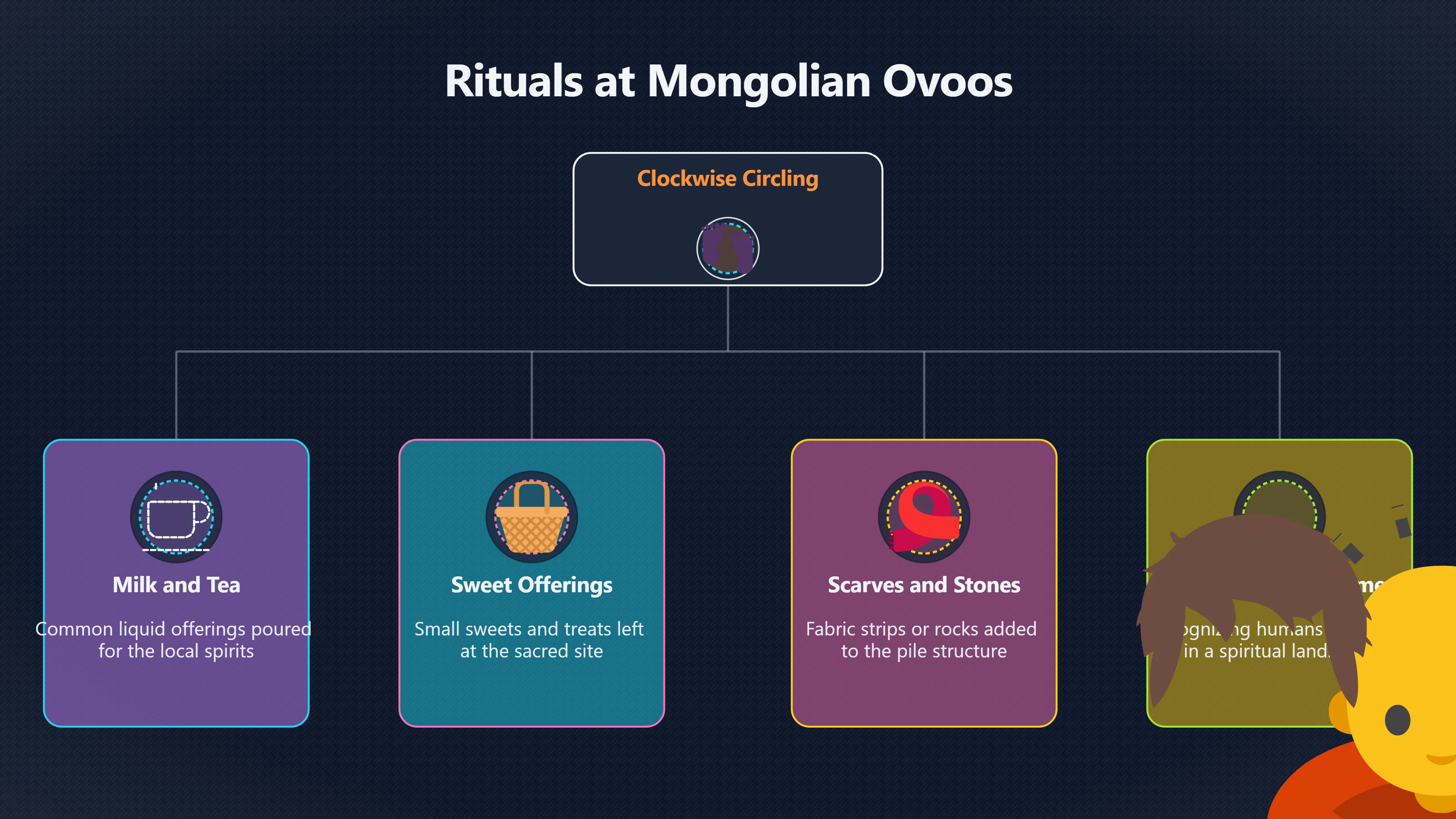
This attitude is reflected in ceremonies held at sacred peaks and at stone cairns known as ovoos. Travellers traditionally stop, circle the cairn clockwise and leave a small offering before continuing their journey. Milk, tea, sweets, scarves or stones may all be offered. The ritual is less about “magic” than acknowledging that humans are guests within a landscape occupied by spiritual powers. UNESCO’s documentation on Mongolia’s sacred mountains describes these practices as part of a long tradition linking environmental protection, local identity and religious observance.[UNESCO World Heritage Centre]whc.unesco.orgUNESCO World Heritage CentreSacred Mountains of MongoliaHis book called “The Call of Mongol Shaman” is considered a significant source fo…
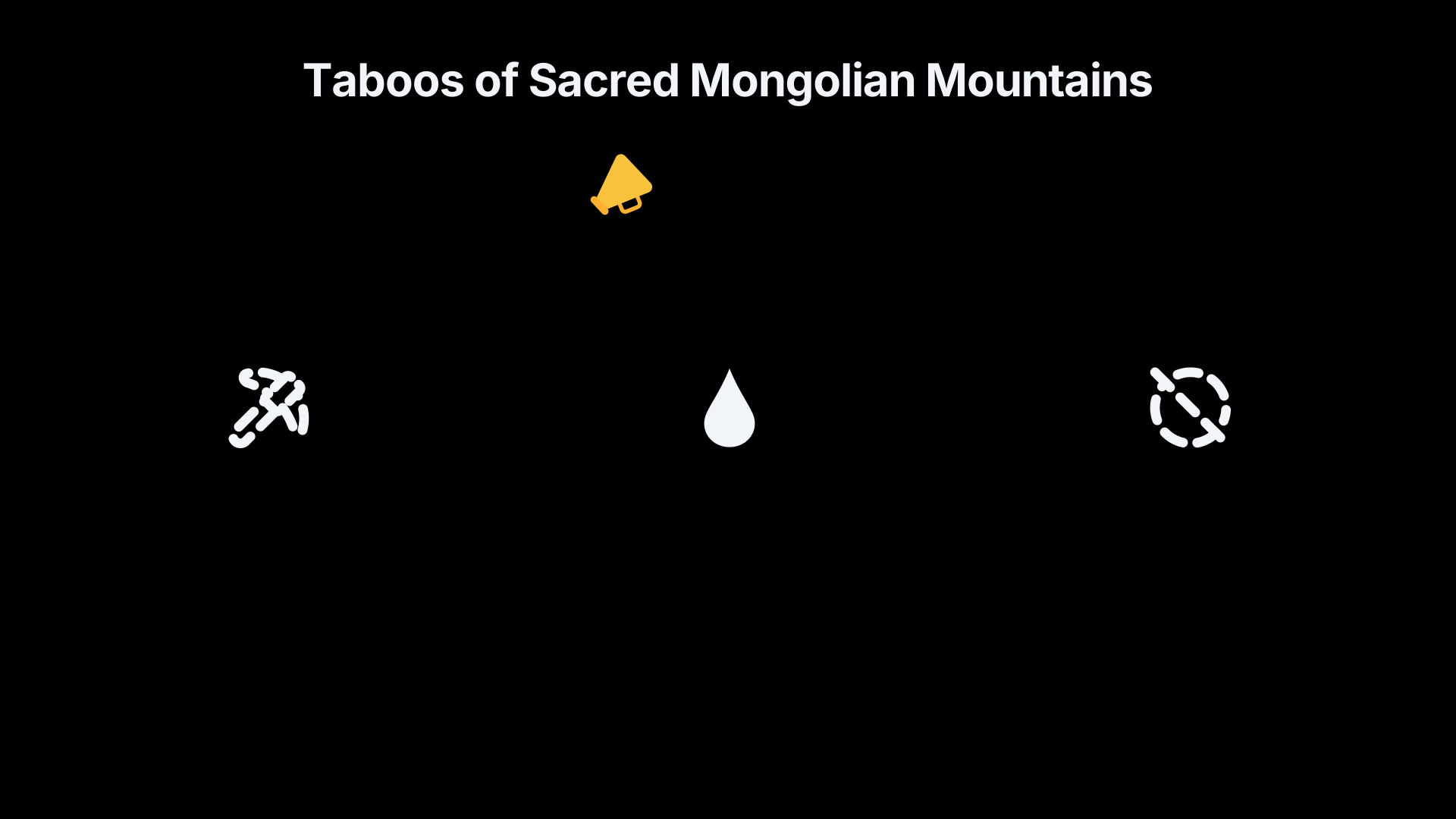
The fear attached to these places therefore differs from the Western idea of a haunted location. The danger is usually moral rather than purely physical. Local stories warn against:
- shouting or behaving disrespectfully on sacred mountains;[sacredland.org]sacredland.orgmongolias ten sacred mountainsSacred LandMongolia's Ten Sacred Mountains4 Oct 2018 — Ovoos and Sutras Shamanism and Buddhism today work together in the veneration of s…
- damaging ovoos or removing stones from them;
- polluting springs and rivers associated with local spirits;
- entering certain sites without proper ritual acknowledgement.
Breaking these expectations is commonly said to invite illness, bad luck, accidents or disturbing encounters with unseen beings. Whether interpreted literally or symbolically, the stories reinforce respectful behaviour towards both landscape and community traditions.[unesco.org]whc.unesco.orgUNESCO World Heritage CentreSacred Mountains of MongoliaHis book called “The Call of Mongol Shaman” is considered a significant source fo…
How shamanic belief explains uncanny encounters
Within Mongolian shamanic traditions, frightening experiences are rarely explained as meaningless paranormal events. Instead, they are interpreted through relationships between people, ancestors and place.
Spirits belong to particular landscapes
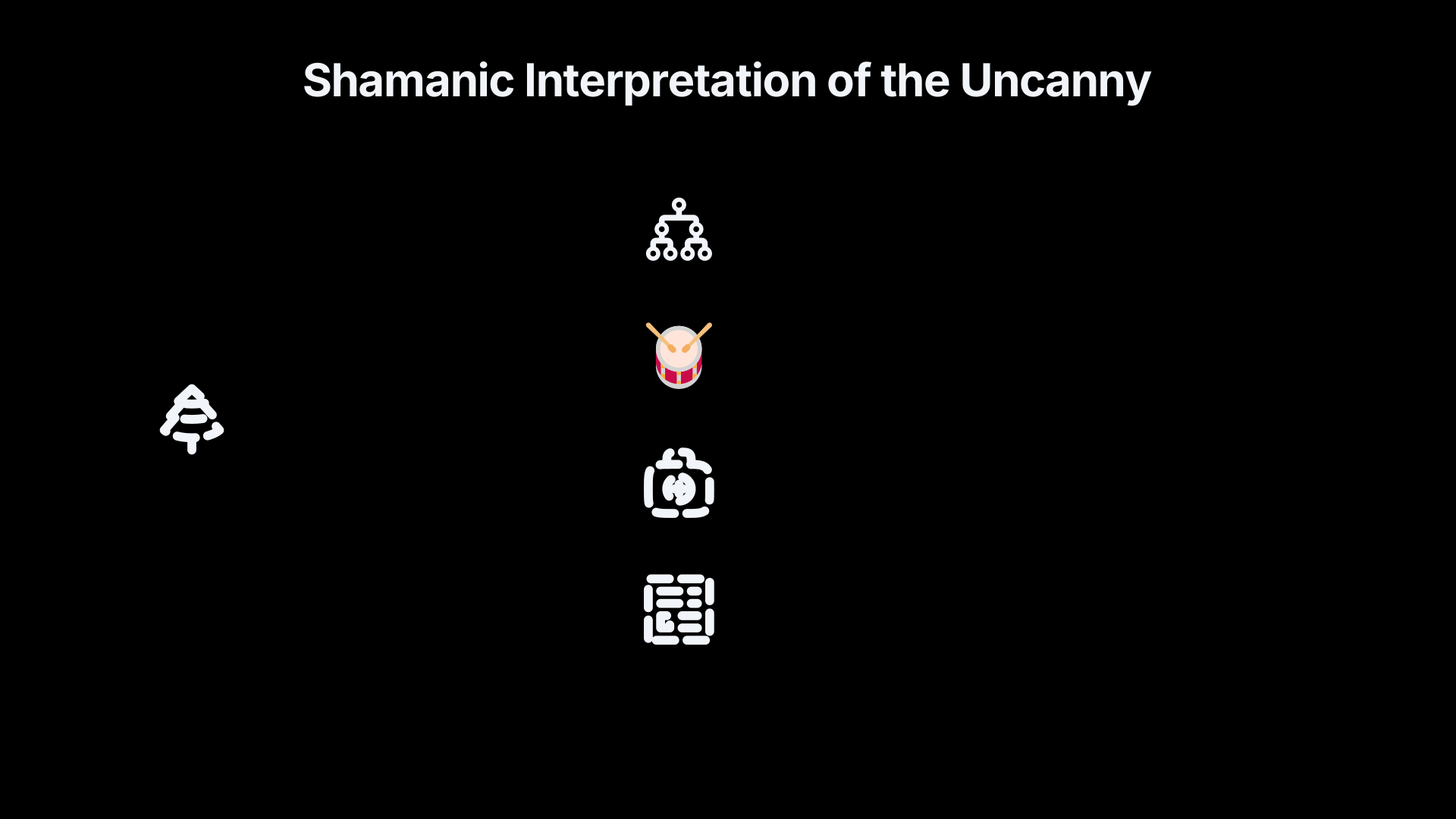
Rather than imagining ghosts roaming everywhere, many traditions associate spiritual beings with specific mountains, rivers, forests or clan territories. Classical descriptions of Mongolian cosmology include guardian spirits attached to particular localities as well as ancestral spirits connected with family lines. A frightening encounter on a mountain therefore says as much about where someone is as about what they experienced.[Wikipedia]WikipediaRegional forms of shamanismRegional forms of shamanism
This helps explain why many oral accounts describe travellers suddenly becoming disoriented, hearing unexplained voices or feeling overwhelming dread in isolated places. Such experiences are not automatically taken as evidence of dead human ghosts. They may instead be interpreted as encounters with territorial spirits or as warnings from the mountain itself.
Shamans as interpreters rather than ghost hunters
In popular culture, shamans are sometimes portrayed as supernatural detectives chasing spirits. Traditional practice is considerably more complex.
A shaman’s role has historically included mediation between humans and unseen powers, healing illness believed to have spiritual causes, restoring damaged relationships with ancestors or local spirits, and advising communities about ritual obligations. If someone believed misfortune followed disrespect towards a sacred site, the response was often ritual reconciliation rather than confrontation.
This interpretation makes many Mongolian ghost narratives less about defeating evil than restoring balance. What matters is not whether every reported spirit exists objectively, but whether the social and ritual relationship has been repaired.[ichlinks.com]mongolia.ichlinks.comGreat Khaan Chingis had been sacred it in 13th century./Great Khans /.Read moreCurrent Safeguarding Status and Challenges of Shaman…- Most popular is “Middle ovoo of Burkhan Haldun” mountain in Khentii,Mongolia…
Why haunted places often reflect political history
Mongolia’s uncanny traditions cannot be separated from the country’s twentieth-century history.
From the 1920s until the democratic changes of 1990, the socialist government heavily restricted organised religion. Buddhist monasteries were destroyed or closed, many clergy were persecuted, and shamanic practice was driven underground. Sacred rituals associated with mountains and ovoos were officially discouraged or prohibited.[sacredland.org]sacredland.orgmongolias ten sacred mountainsSacred LandMongolia's Ten Sacred Mountains4 Oct 2018 — Ovoos and Sutras Shamanism and Buddhism today work together in the veneration of s…
This created an intriguing pattern in later folklore.
Stories circulated about abandoned monasteries, desecrated sacred places and landscapes whose spirits had become angered after traditional rituals ceased. Such accounts often functioned as narrative revenge: political power could suppress ceremonies, but it could not entirely silence the places themselves. The supernatural became a way of expressing cultural continuity when public religious language was dangerous.
These tales should not be read as historical evidence that ghosts appeared after the socialist period. They are better understood as cultural responses to profound social disruption. The haunting expresses the feeling that an old relationship between people and landscape had been broken.
Why fear itself becomes part of the experience
Many reported encounters begin with an overwhelming emotional response before anything unusual is supposedly seen.
Remote mountains naturally produce conditions that heighten anxiety:
- isolation over enormous distances;
- rapidly changing weather;
- unfamiliar sounds carried across open valleys;
- altitude and physical exhaustion;
- strong cultural expectations about sacred places.
Psychologists recognise that expectation strongly shapes how ambiguous experiences are interpreted. Someone who believes a mountain is inhabited by powerful spirits may interpret sudden silence, an unexpected echo or an animal moving through mist very differently from someone with no cultural connection to the place.
That does not make the experience unreal. The fear itself is genuine. What differs is the explanation given to it.
This combination of harsh environments and inherited belief helps explain why Mongolia’s sacred mountains continue to generate stories even without dramatic apparitions or famous ghost photographs.
Between belief and scepticism
Modern interpretations generally fall into several broad categories.
Believers often argue that repeated traditions across generations suggest genuine encounters with spiritual beings inhabiting sacred landscapes. From this perspective, ritual respect is practical rather than symbolic.
Anthropologists are usually more interested in how these stories regulate behaviour. Sacred fear discourages environmental damage, reinforces community identity and preserves traditional obligations towards important places. The mountain’s “watchfulness” becomes a cultural mechanism protecting both landscape and memory.[HAL]hal.scienceSacred Cairns (Ovoo, Oboo) in the Mongolian Cultural Worldby A Dumont · 2024 · Cited by 3 — Ovoo found on ritually significant mountai…
Sceptics point instead to psychological expectation, environmental hazards and the tendency for memorable stories to accumulate around famous sacred sites. They note that many reports lack independent documentation and are transmitted primarily through oral tradition rather than contemporary investigation.
These explanations are not always mutually exclusive. A traveller can experience genuine fear on an isolated mountain while explaining it through very different worldviews.
Why these stories remain central to Mongolia’s Fortean tradition
Unlike classic haunted-house legends, Mongolia’s ghost traditions rarely separate the supernatural from geography, ecology and history. Sacred mountains are not simply dramatic backdrops but active participants in the stories.
That gives Mongolian Forteana a distinctive character. Instead of asking, “Did someone really see a ghost?”, the traditions often ask a different question: what happens when people forget the obligations that once connected them to particular places?
Whether understood as religious belief, environmental ethics, folklore or unexplained experience, the stories endure because they transform ordinary landscapes into places where memory, identity and fear meet. The mountain itself becomes the witness, and sometimes, according to tradition, the judge.
Amazon book picks
Further Reading
Books and field guides related to Why Mongolia's Haunted Places Feel Watched. Use these as the next step if you want deeper reading beyond the article.


Hunt for the Skinwalker
The author of the controversial bestseller Brain Trust brings his scientific expertise to the chilling true story of unexplained phenomen...
eBay marketplace picks
Marketplace Samples
Live-tested eBay searches with available results related to this page.


Endnotes
1.
Source: whc.unesco.org
Link:https://whc.unesco.org/en/tentativelists/6068/
Source snippet
UNESCO World Heritage CentreSacred Mountains of MongoliaHis book called “The Call of Mongol Shaman” is considered a significant source fo...
2.
Source: hal.science
Link:https://hal.science/hal-04795368v1/file/acrefore-9780190277727-e-829.pdf
Source snippet
Sacred Cairns (Ovoo, Oboo) in the Mongolian Cultural Worldby A Dumont · 2024 · Cited by 3 — Ovoo found on ritually significant mountai...
3.
Source: Wikipedia
Title: Regional forms of shamanism
Link:https://en.wikipedia.org/wiki/Regional_forms_of_shamanism
4.
Source: mongolia.ichlinks.com
Title: Great Khaan Chingis had been sacred it in 13th century./Great Khans /.Read more
Link:https://mongolia.ichlinks.com/muploader/downloadFile.do?fileUid=16317557377563499066
Source snippet
Current Safeguarding Status and Challenges of Shaman...- Most popular is “Middle ovoo of Burkhan Haldun” mountain in Khentii,Mongolia...
5.
Source: Wikipedia
Link:https://en.wikipedia.org/wiki/Ovoo
6.
Source: Wikipedia
Title: Mongolian shamanism
Link:https://en.wikipedia.org/wiki/Mongolian_shamanism
7.
Source: sacredland.org
Title: mongolias ten sacred mountains
Link:https://sacredland.org/mongolias-ten-sacred-mountains/
Source snippet
Sacred LandMongolia's Ten Sacred Mountains4 Oct 2018 — Ovoos and Sutras Shamanism and Buddhism today work together in the veneration of s...
Additional References
8.
Source: researchgate.net
Link:https://www.researchgate.net/publication/266150674_Nationalising_civilisational_resources_sacred_mountains_and_cosmopolitical_ritual_in_Mongolia
Source snippet
First, when Tibetan Buddhism spread to Mongolia during the 16th and 17th centuries, it became...
9.
Source: landportal.org
Title: dilemma sacred lands preserving mongolia’s ovoos
Link:https://landportal.org/news/2022/05/dilemma-sacred-lands-preserving-mongolia%E2%80%99s-ovoos
Source snippet
Dilemma of the Sacred Lands: Preserving Mongolia's Ovoos6 May 2022 — An ovoo is a pile of stones, dirt, and tree branches laden with peop...
Published: May 2022
10.
Source: instagram.com
Link:https://www.instagram.com/reel/DP7onQyksKT/?hl=en
Source snippet
nnect the sky and the earth. Each stone carries someone's wish. We...
11.
Source: facebook.com
Link:https://www.facebook.com/groups/606307082869043/posts/3194641950702197/
Source snippet
em, that are still widely found in Mongolia, marking sacred places...
12.
Source: academia.edu
Link:https://www.academia.edu/3683844/TWO_MONGOL_TEXTS_CONCERNING_THE_CULT_OF_THE_MOUNTAINS
Source snippet
two mongol texts concerning the cult of the mountainsShamanistic practices regarding mountains often involve taboos and rituals, dating b...
13.
Source: youtube.com
Title: Exploring the Sacred Great Burkhan Khaldun Mountain
Link:https://www.youtube.com/watch?v=_qZcJt9GIY4
Source snippet
Mongolian Shaman Worshipping Nature Mountain Ovoo Jeremy Wade gets BLESSED by a Mongolian Female SHAMAN | River Monsters River Monsters™...
14.
Source: youtube.com
Title: A Young Shaman’s Quest Across Mongolia | Full Documentary | SLICE
Link:https://www.youtube.com/watch?v=LJaPUFefKx4
Source snippet
Man, God & Frozen Mountain - Mongolian OVOO Ceremony! Village Life...
15.
Source: youtube.com
Title: Man, God & Frozen Mountain
Link:https://www.youtube.com/watch?v=pjFOg285Nlo
Source snippet
A Guide to Mongolian Shamanism | Human Voiced, No Ads...
16.
Source: youtube.com
Title: Mongolian traditional practices of worshipping the sacred sites
Link:https://www.youtube.com/watch?v=USkdDM8tYfs
Source snippet
Exploring the Sacred Great Burkhan Khaldun Mountain...
17.
Source: youtube.com
Title: A Guide to Mongolian Shamanism | Human Voiced, No Ads
Link:https://www.youtube.com/watch?v=ewn4Ke7sjUE
Source snippet
Mongolian traditional practices of worshipping the sacred sites...
Topic Tree