Within Montenegro Forteana
Are Montenegro's Lake Monsters Really Folklore?
Montenegro's lakes carry dragon, devil and monster stories, but the strongest evidence is landscape folklore rather than zoology.
On this page
- Skadar's dragon like creature claims
- Devil's Lake and cautionary mountain legends
- Natural triggers behind lake monster stories
Page outline Jump by section
Introduction
Montenegro’s lakes have a reputation for hiding dragons, devils and mysterious creatures, but the evidence tells a more interesting story than a straightforward hunt for lake monsters. Around the vast wetlands of Lake Skadar and the glacial waters of Durmitor, folklore has accumulated over centuries, blending religious ideas, local cautionary tales, dramatic landscapes and older Slavic myth. Unlike famous monster traditions such as Loch Ness, there is no sustained body of eyewitness reports, scientific investigations or historical newspaper campaigns suggesting an unknown animal. Instead, the strongest evidence points towards a rich tradition of landscape folklore that explains dangerous water, strange weather and the emotional power of isolated lakes. That makes these stories an important part of Montenegro’s strange cultural heritage, even if they offer little support for the existence of hidden beasts.
Are Lake Skadar’s monsters ancient dragons or modern myths?
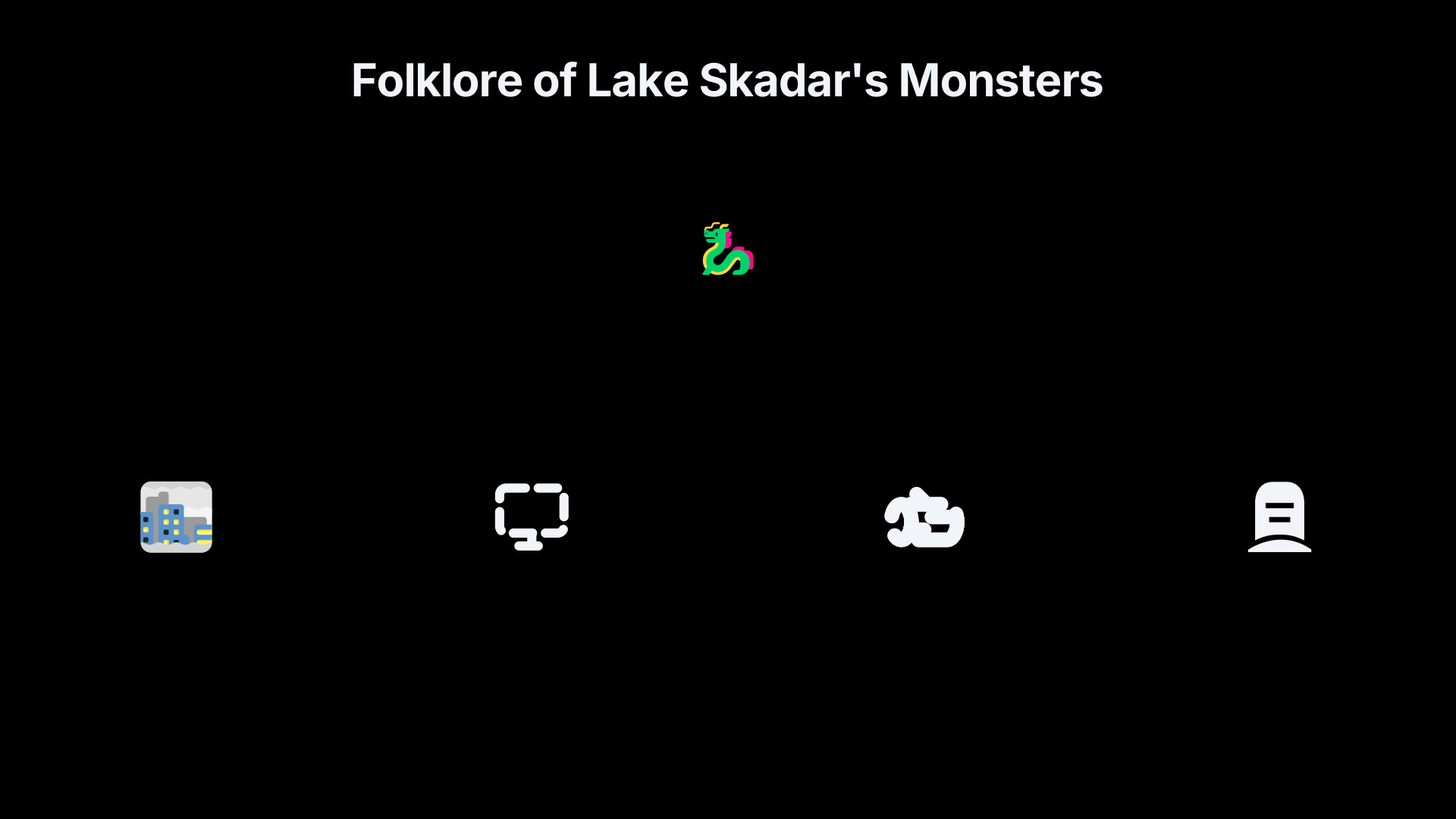
Lake Skadar, shared between Montenegro and Albania, is the largest lake in the Balkans. Its reed beds, floating vegetation, submerged channels and shifting mists create an environment where unusual sights are easy to imagine. Even today, the lake’s vast wetlands can hide large fish, flocks of birds and drifting logs that briefly resemble living creatures.
Stories from the region often refer to a dragon-like being rather than an unknown animal in the zoological sense. In South Slavic folklore this figure resembles the aždaja, a powerful dragon associated with water, storms and dangerous places. Across the Balkans, dragons are frequently linked with lakes, rivers and springs, reflecting a broader mythological tradition rather than reports of undiscovered reptiles. Folklore scholars note that these dragons belong to a family of legendary beings whose role is symbolic as much as physical, often representing untamed natural forces.[Wikipedia]WikipediaSlavic dragonSlavic dragon
Unlike better-known cryptid traditions elsewhere, however, Lake Skadar lacks a continuous record of documented sightings. Modern cryptid websites often repeat dramatic descriptions of a gigantic black creature with horns and extraordinary length, but these accounts generally trace back to retellings of local legend rather than identifiable eyewitness investigations or contemporary reporting.[Cryptid Wiki]cryptidz.fandom.comCryptid Wiki Monster of Lake SkadarCryptid WikiMonster of Lake Skadar - Cryptid Wiki - FandomThe creature is described as being 3 meters tall, 40 meters long, black and hav…
This difference matters. The cultural tradition is genuine, but the supposed monster evidence is extremely thin.
Why Devil’s Lake became a supernatural place
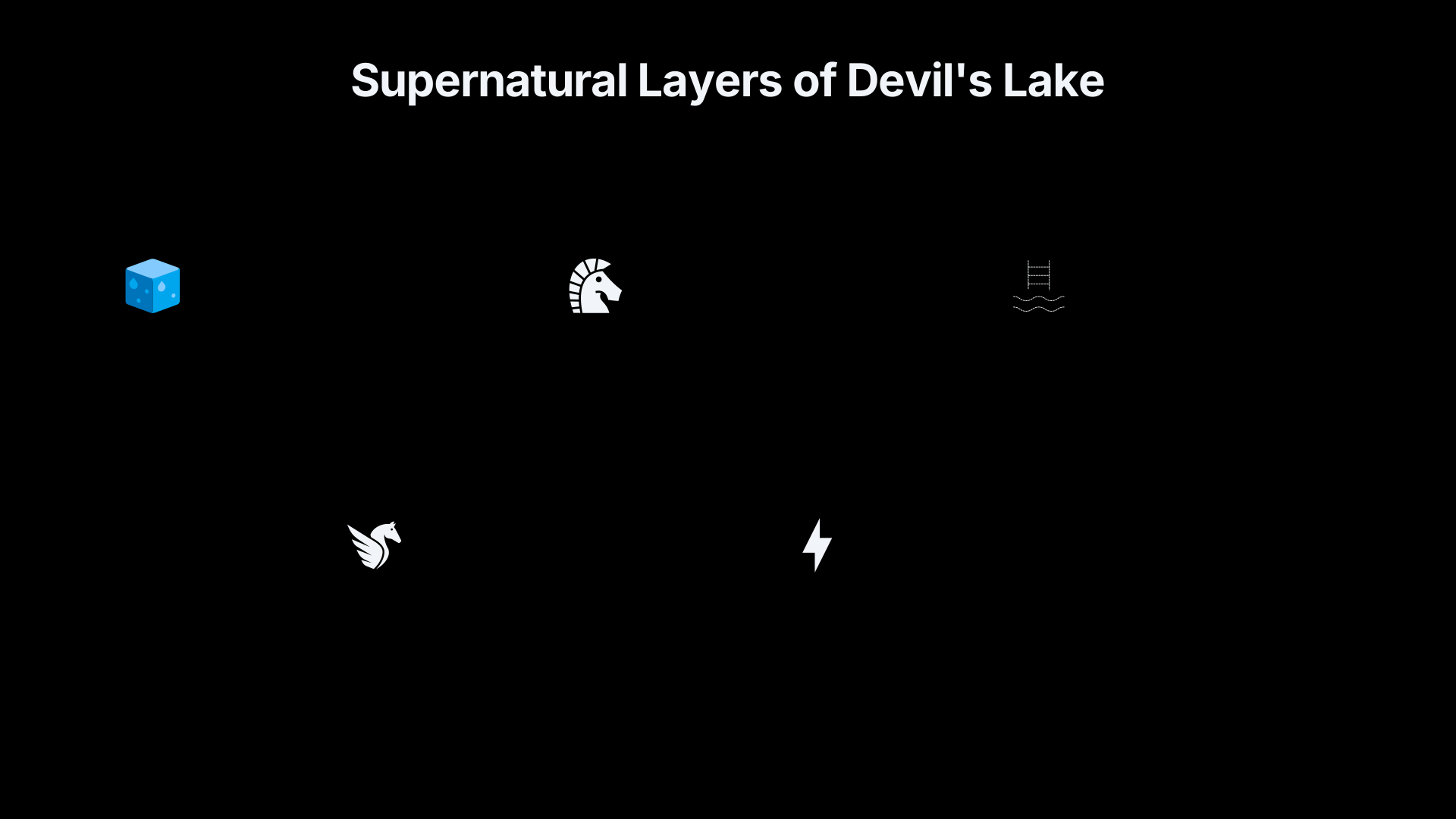
The Durmitor massif contains eighteen glacial lakes, sometimes poetically called the “mountain eyes” of Montenegro. Among them, Vražje Jezero—Devil’s Lake—has attracted the richest supernatural tradition.
Several overlapping legends explain its sinister name:
- A devil is said to have escaped into the lake after divine punishment and built an icy palace beneath the water.
- Some stories claim the devil occasionally emerged as a huge bull or horse, terrifying anyone nearby.
- Other versions warn that swimmers could be dragged beneath the surface into the underwater palace.
- Local traditions also connect the lake with winged horses, fairies and heroes associated with the medieval stronghold of Pirlitor.
These stories vary considerably from village to village, suggesting a living oral tradition rather than a single fixed legend. Tourism organisations and local storytellers openly present them as folklore rather than historical fact, while still celebrating them as part of Durmitor’s cultural identity.[zabljak.travel]zabljak.travelŽabljak TravelMontenegrin Olympus - this is not a dream, this is reality!20 Nov 2025 — The beasts fled to Durmitor, the fairies to the cl…
The legends also illustrate how Christian imagery merged with older beliefs. Saints such as Elijah appear battling the devil with lightning, while older motifs involving magical animals and fairy beings continue underneath the Christian framework.[Žabljak Travel]zabljak.travelŽabljak TravelMontenegrin Olympus - this is not a dream, this is reality!20 Nov 2025 — The beasts fled to Durmitor, the fairies to the cl…
Why these lakes invite monster stories
The physical characteristics of both lake systems naturally encourage mysterious interpretations.
Lake Skadar combines:[cryptidz.fandom.com]cryptidz.fandom.comCryptid Wiki Monster of Lake SkadarCryptid WikiMonster of Lake Skadar - Cryptid Wiki - FandomThe creature is described as being 3 meters tall, 40 meters long, black and hav…
- extensive reed beds that conceal movement;
- rapidly changing fog and light;
- isolated islands with monasteries and ruins;
- exceptionally rich wildlife, including large fish and hundreds of bird species.
Durmitor’s lakes present a different atmosphere:
- cold, unusually clear glacial water;
- sudden mountain weather;
- dark reflections from surrounding forests;
- striking colour changes caused by light, depth and mineral content.
These conditions produce exactly the sort of fleeting observations that folklore transforms into stories about hidden beings. A distant swimming deer, an otter, a floating tree trunk or ripples from large carp can appear remarkably animal-like under poor visibility. Cold alpine lakes also possess an intimidating character that naturally attracts cautionary legends warning children and travellers away from dangerous water.
In many cultures, lakes become narrative boundaries between the ordinary world and a hidden one. Montenegro’s traditions fit that wider European pattern remarkably well.
Where the evidence gap appears
The most striking feature of Montenegro’s lake legends is not abundant evidence but its absence.
If an unknown large aquatic animal really inhabited either Lake Skadar or Devil’s Lake, researchers would expect to find at least some combination of:
- repeated independent eyewitness reports over many decades;
- photographs or videos of reasonable quality;
- physical traces such as carcasses or unusual DNA samples;
- historical newspaper investigations;
- scientific surveys suggesting unexplained large animals.
None of this evidence exists in a convincing form for either lake.
Instead, the surviving material consists primarily of folklore collections, tourism narratives and occasional modern retellings inspired by older dragon traditions. The legends remain culturally important because they preserve local ideas about dangerous places, not because they document an unidentified species.
This places the stories firmly within what might be called an “evidence gap”: there is abundant tradition but very little verifiable observational evidence.
Why the stories still matter
Judging these legends only by whether monsters exist misses much of their value.
Lake Skadar’s dragon traditions preserve echoes of wider Balkan beliefs in water dragons associated with storms, fertility and landscape. Devil’s Lake reflects centuries of attempts to explain an unusually cold, isolated alpine lake through memorable stories involving devils, saints and supernatural justice. Together they reveal how communities transformed dramatic geography into narratives that taught caution, reinforced local identity and gave memorable explanations for places that felt different from ordinary landscapes.
For readers interested in Fortean traditions, Montenegro’s lake legends occupy an intriguing middle ground. They are not convincing cryptozoological cases, yet neither are they empty inventions for modern tourism. They are authentic folklore attached to real places whose physical character continues to inspire mystery. The strongest evidence supports the existence of enduring stories rather than hidden monsters—and that distinction is precisely what makes these lakes such fascinating entries in Montenegro’s strange cultural record.



eBay marketplace picks
Marketplace Samples
Live-tested eBay searches with available results related to this page.


Endnotes
1.
Source: Wikipedia
Title: Slavic dragon
Link:https://en.wikipedia.org/wiki/Slavic_dragon
2.
Source: durmitornp.com
Link:https://www.durmitornp.com/vrazije-jezero/
Source snippet
t resides in the lake, causing...Read more...
3.
Source: cryptidz.fandom.com
Title: Cryptid Wiki Monster of Lake Skadar
Link:https://cryptidz.fandom.com/wiki/Monster_of_Lake_Skadar
Source snippet
Cryptid WikiMonster of Lake Skadar - Cryptid Wiki - FandomThe creature is described as being 3 meters tall, 40 meters long, black and hav...
4.
Source: zabljak.travel
Link:https://zabljak.travel/en/montenegrin-olympus-this-is-not-a-dream-this-is-reality/
Source snippet
Žabljak TravelMontenegrin Olympus - this is not a dream, this is reality!20 Nov 2025 — The beasts fled to Durmitor, the fairies to the cl...
Additional References
5.
Source: facebook.com
Link:https://www.facebook.com/groups/1884776005076822/posts/3601096093444796/
Source snippet
Montenegro's Vrazje Jezero lake and its legendsDragon's Eye lake ٠٠Among the folklore of local Croat people, Lake in Rognozica is known a...
6.
Source: livetheworld.com
Link:https://www.livetheworld.com//post/mountain-eyes-of-durmitor-devil-s-lake-110m
Source snippet
Mountain eyes of Durmitor: Devil's lakeVražje or Devil's lake is one of the 18 glacial lakes known as Mountain eyes of Durmitor. And here...
7.
Source: facebook.com
Link:https://www.facebook.com/balkanweek/posts/just-a-short-walk-from-montenegros-devils-lake-lies-something-truly-unique-the-l/753989287377467/
Source snippet
tains and is a great place for birdwatching, kayaking, or taking...Read more...
8.
Source: sarajevotimes.com
Title: Meet The Montenegrin Olympus
Link:https://sarajevotimes.com/meet-the-montenegrin-olympus-the-greek-gods-chose-it-as-their-resort-and-resting-place/
Source snippet
The Greek Gods Chose...20 Apr 2025 — According to some old legends, the Greek gods from Olympus chose Durmitor precisely as their resort...
9.
Source: nomadtours.me
Title: lake and legends part i
Link:https://nomadtours.me/lake-and-legends-part-i/
Source snippet
Nomad Tours MontenegroLake And Legends (part I)9 Apr 2020 — The beasts fled to Durmitor, the fairies flew into the clouds, and the devil...
10.
Source: youtube.com
Title: Zduhaci: The Forgotten Celestial Heroes From Western Serbian Villages
Link:https://www.youtube.com/watch?v=-X090EUXBRQ
Source snippet
Aspid - Slavic Snake & Bird-like Dragon - Slavic Mythology Saturday...
11.
Source: youtube.com
Title: Dark Doc | #1
Link:https://www.youtube.com/watch?v=9A-m5TpUznM
Source snippet
Zmey Gorynych: The Three-Headed Dragons of Slavic Mythology That Terrified Kingdoms...
12.
Source: youtube.com
Title: Serbian Slavic Mythology
Link:https://www.youtube.com/watch?v=9KM6oXT87zM
Source snippet
Zduhaci: The Forgotten Celestial Heroes From Western Serbian Villages...
13.
Source: youtube.com
Link:https://www.youtube.com/watch?v=Z33xYePMLnY
Source snippet
Serbian Slavic Mythology - Zduhač...
14.
Source: youtube.com
Title: T2FFa ST79Xo
Link:https://www.youtube.com/shorts/T2FFaST79Xo
Source snippet
Devil's Lake (Vrazje Jezero), Durmitor National Park"Embracing the Mystique of Vražje Lake ✨. Located at 1411 meters above sea level, th...
Topic Tree