Why Spain Became So Strangely Well Documented
Spain’s strange-history record is unusually rich because it sits at the crossroads of older Catholic visionary culture, regional folklore, modern mass media, military UFO files, tourism, and sceptical investigation.
Page outline Jump by section
Introduction
The most useful cases are those with a paper trail: the Ministry of Defence’s declassified UFO files, the Church’s cautious rulings on alleged apparitions, tourism records around Bélmez, historical accounts of the great aurora of 1770, and modern scientific work on meteors and unusual weather. Together they show why Spain became a particularly lively country for strange reports: it had vivid local traditions, a strong appetite for marvels, and enough official documentation to keep the mysteries arguable rather than merely rumoured.[gob.es]bibliotecavirtual.defensa.gob.esOpen source on gob.es.
Why Spain became fertile ground for modern Forteana
Spanish Forteana has two overlapping roots. One is old and local: saints’ legends, dragons, ghosts, warnings, miraculous images, village visions and stories attached to wells, lakes, churches, mountains and family houses. The other is modern and media-driven: UFO flaps, tabloid oddities, declassified files, television mystery shows, paranormal tourism and internet retellings. The most enduring Spanish cases usually sit where those roots meet. A domestic floor becomes a national “mystery”. A rural apparition becomes a pilgrimage dispute. An odd light seen from an aircraft becomes an official file.
This matters because Spain’s strange cases often have more social evidence than physical evidence. That is, we can document that people gathered, reported, photographed, argued, investigated, visited and commercialised a mystery; proving what caused the original event is usually much harder. The Spanish Ministry of Defence’s UFO archive is a good example. It does not prove alien visitation, but it does prove that the Air Force collected and later released a significant body of reports about unusual aerial phenomena in Spanish airspace. The archive presentation says the declassification process began in 1991, that physical copies were deposited in 1992, and that the digital collection includes 80 files and roughly 1,900 pages covering incidents from 1962 to 1995.[Biblioteca Virtual Defensa]bibliotecavirtual.defensa.gob.esOpen source on gob.es.
That makes Spain especially useful for readers who like strange material but want the ground under their feet. Many countries have legends; fewer have a searchable state archive of official UFO-era paperwork sitting alongside strong regional folklore and heavily debated religious-vision cases.
The Bélmez faces: Spain’s classic haunted-house controversy
The faces of Bélmez are probably Spain’s most famous domestic paranormal case. In 1971, at María Gómez Cámara’s house in Bélmez de la Moraleda in Andalusia, patches on a concrete floor were said to have formed face-like images. The story quickly acquired the ingredients of a perfect modern mystery: a frightened householder, images that allegedly changed or reappeared, crowds of visitors, journalists, investigators, chemical claims, allegations of fraud, and a small town discovering that the uncanny could draw tourists. Andalucía’s tourism site describes the case as beginning in the 1970s, when face-shaped patches appeared in the house, and notes that the town later opened a Faces Interpretation Centre in 2013.[Andalusia]en.andalucia.orgAndalusia The Faces of Bélmez de la MoraledaAndalusia The Faces of Bélmez de la Moraleda
The appeal is obvious. Unlike a fleeting light in the sky, the faces seemed to be fixed enough to photograph, visit and argue about. Believers treated them as a form of psychic or spirit-related manifestation. Sceptics saw a mixture of pareidolia, pigment, damp, media incentive and possible deliberate fakery. The story gained further atmosphere from claims that the house was built over an old cemetery, a detail that made the case almost too narratively perfect: the dead, apparently, returning as stains under the living-room floor.[Andalusia]en.andalucia.orgAndalusia The Faces of Bélmez de la MoraledaAndalusia The Faces of Bélmez de la Moraleda
What keeps Bélmez interesting is not that it has been cleanly proven paranormal. It has not. Its importance is that it shows how a Spanish mystery can become a complete cultural machine. The case produced visitors, local identity, books, television coverage, sceptical counter-investigation and tourism infrastructure. Even official tourism language avoids a firm supernatural claim, framing the story as a debate between fraud and paranormal interpretation while acknowledging its lasting pull for visitors.[Andalusia]en.andalucia.orgAndalusia The Faces of Bélmez de la MoraledaAndalusia The Faces of Bélmez de la Moraleda
Bélmez also illustrates a recurring Fortean lesson: a case can be culturally real even when its paranormal claim is doubtful. The faces mattered because people came, argued, photographed and remembered them. The mystery’s afterlife may be stronger than the original evidence.
UFO Spain: from village saucers to Ministry of Defence files
Spain’s UFO history is unusually well documented by European standards because the Ministry of Defence eventually made its Air Force files available through the Virtual Defence Library. The official presentation says these files concern “strange phenomena” in Spanish airspace and include summaries, witness interviews, service reports and weather information, depending on the case. The list includes incidents across the country: the Canary Islands, Balearic waters, Barcelona, Burgos, Gijón, Reus, Talavera, airline flights and military radar stations.[Biblioteca Virtual Defensa]bibliotecavirtual.defensa.gob.esOpen source on gob.es.
Two points are worth keeping clear. First, an official file is not an official endorsement of an extraordinary explanation. It means a report was logged, considered or investigated. Secondly, “unidentified” is not a synonym for “alien”. It often means that the available information was insufficient, contradictory or not worth further pursuit. That distinction is easy to lose in popular retellings, especially when a case already has pilots, military aircraft or radar in the story.
The Manises incident of 11 November 1979 became one of Spain’s most famous UFO cases because it had drama in the air: a commercial aircraft diverted to Valencia after its crew reported unexplained lights, and a Spanish Air Force Mirage was sent to investigate. The case is frequently presented as Spain’s premier UFO emergency, but sceptical treatments have argued for more earthly possibilities, including military activity, misidentification and the wider UFO-saturated media climate of late-1970s Spain.[Wikipedia]WikipediaManises UFO incidentManises UFO incident
The Canary Islands files are another pillar of Spanish ufology. The Defence Library’s list includes several Canary Islands sightings, including 22 June 1976 and later cases from 1979 and 1980. These reports have had a long afterlife because they involved striking light phenomena over sea and islands, multiple witnesses and the later availability of official documentation. They also show the interpretive problem at the heart of UFO history: a spectacular sky event can be sincerely witnessed, officially recorded and still remain uncertain without becoming evidence of a spacecraft.[Biblioteca Virtual Defensa]bibliotecavirtual.defensa.gob.es› Listado de títulos…
Spain’s UFO folklore also has a more mischievous, literary side: the Ummo affair. In the 1960s, letters allegedly from extraterrestrials of the planet Ummo circulated among UFO enthusiasts in Spain and France. The supposed 1967 Alcorcón sighting, involving a craft marked with an Ummo-like symbol, helped turn the affair into a legend. José Luis Jordán Peña later admitted creating the elaborate hoax, which makes Ummo one of Spain’s clearest examples of the UFO mythos as social experiment, prank, pseudoscientific fiction and belief network all at once.[Atlas Obscura]atlasobscura.comAtlas Obscura Castles of Valderas in AlcorcónAtlas Obscura Castles of Valderas in Alcorcón
Visions, warnings and the politics of belief
Spain’s visionary culture is older than the UFO age, but the twentieth century gave it new public force. Apparition claims could become village events, media stories, pilgrimage economies and Church headaches. The pattern is usually the same: witnesses report a vision or message; crowds gather; supporters see spiritual urgency; sceptics see suggestion, social stress or performance; Church authorities move slowly, often preferring caution to either enthusiasm or ridicule.
Garabandal, in Cantabria, is the best-known Spanish apparition case for many English-speaking readers. From 1961 to 1965, four girls said they experienced apparitions of Saint Michael and the Virgin Mary. The claims attracted devotees and controversy, especially because the messages included warnings, calls to penance and apocalyptic expectation. The Diocese of Santander’s position, as summarised in a statement hosted by EWTN, was that successive bishops held that the supernatural character of the apparitions had not been proven; a later study reached the same conclusion, and the Holy See left the matter under the ordinary jurisdiction of the local bishop.[EWTN Global Catholic Television Network]ewtn.comGlobal Catholic Television Network The Alleged Apparitions at Garabandal | EWTNGlobal Catholic Television Network The Alleged Apparitions at Garabandal | EWTN
That judgement is subtle but important. It is not the same as saying every person involved lied. It means the Church did not find sufficient grounds to establish a supernatural origin. For Fortean readers, Garabandal is valuable because it shows the difference between testimony, devotion, institutional caution and proof. A reported vision can become deeply meaningful to believers while remaining unapproved, contested and historically unresolved.
Ezkioga, in the Basque Country, offers an earlier and more politically charged example. In 1931, visions centred on Ezkioga drew widespread attention during the early Second Spanish Republic, a period of intense religious and political tension. Historian William A. Christian Jr.’s study of the first month of visions describes how the claims became increasingly elaborate, with many Basque seers involved. The case matters because it shows visionary experience not as an isolated oddity, but as something shaped by community expectation, public ritual, politics, fear and hope.[JSTOR]jstor.orgOpen source on jstor.org.
In both Garabandal and Ezkioga, the strangeness lies less in a single miracle claim than in social amplification. Children, crowds, clergy, local identity and national tension turned private vision into public event.

Monsters, lakes and local beasts
Spain’s mystery animals are often more folkloric than cryptozoological. They are not always presented as modern biological claims in the way that Bigfoot or the Loch Ness monster often are. Instead, many belong to local storytelling: dragons, serpents, lake creatures, wolves with exaggerated powers, ghostly animals or beasts tamed by saints.
The monster of Lake Banyoles in Catalonia is a good example. The tale usually centres on a dragon-like creature in the lake, brought under control in some versions by a holy figure. It belongs more to moral legend and local identity than to zoological field evidence. A 2025 Cadena SER piece on the Banyoles monster makes the modern position plain: there is no magical beast in the water, but there is a rich natural ecosystem, including more than 20 fish species, around 200 bird species, amphibians, reptiles and mammals. The same article explains the lake’s geological formation through tectonic and karstic processes, with underground water rising through fissures and sink-like formations shaping the basin.[Cadena SER]cadenaser.comOpen source on cadenaser.com.
That scientific context does not ruin the legend. It improves it. Banyoles is exactly the kind of place where a monster story can grow: a deep, unusual lake; hidden water systems; local memory; real animals; and enough danger or mystery in the landscape to invite a creature. The monster becomes a way of making a strange environment legible before geology and ecology supply different explanations.
Spain’s beast traditions are best treated as folklore unless a specific modern report offers testable evidence. Their value is cultural: they show how communities turned difficult landscapes into stories with characters, warnings and jokes.
Strange skies before UFOs: auroras, meteors and fireballs
Before UFOs, Spain already had a long record of extraordinary sky events. One of the most striking is the great aurora of 18 January 1770, observed from many Spanish locations, including San Cristóbal de La Laguna in the Canary Islands, Cádiz, Córdoba, Badajoz, Valencia, Castellón, Madrid and Barcelona. A scientific analysis of historical records found that observers described red displays, with some white and ash colours, and that the aurora was seen at unusually low geomagnetic latitudes.[arXiv]arxiv.orgOpen source on arxiv.org.
For modern readers, an aurora is a natural phenomenon. For eighteenth-century witnesses in Spain, a red glow spread across the sky could easily carry religious, political or apocalyptic meaning. This is one of the key bridges between folklore and science: the event may be natural, while the human response is still historically strange. People did not need to be foolish to be frightened. They were seeing something rare, vivid and poorly understood in their local context.
Modern Spanish sky science also complicates Fortean storytelling in a useful way. The Spanish Meteor Network has studied bright fireballs using multi-station observations, trajectory reconstruction and orbital modelling. A 2023 study of bright sporadic bolides recorded in spring 2022 analysed 15 large meteoroids and identified two possible meteorite-producing events, though field searches were unsuccessful.[arXiv]arxiv.orgOpen source on arxiv.org.
That kind of work matters because many “mystery light” reports begin as honest perceptions of rare but natural events: meteors, re-entering debris, military exercises, balloons, atmospheric optics or astronomical objects. Spain’s landscape of islands, coastlines, mountains and open skies gives plenty of opportunities for dramatic sightings. The Fortean value is not lost when a fireball is explained. The story becomes a record of how unusual natural phenomena become rumours, newspaper items, official reports and sometimes folklore.
Falls from the sky and other weather oddities
Anomalous falls are a classic Fortean theme: fish, frogs, coloured rain, dust, stones, organic matter and objects apparently arriving from nowhere. Spain has a climate and geography that can produce genuinely strange-looking weather, especially with Saharan dust, violent storms, coastal waterspouts and localised downpours. A reader should be cautious, however, about treating every old “rain of animals” anecdote as a well-documented Spanish event. Many such stories circulate internationally, often with details copied, embellished or detached from their original source.
The scientific baseline is that unusual falls can have ordinary mechanisms. The Library of Congress guide to reports of frogs, fish and other objects falling from the sky points readers towards waterspouts, tornadoes and severe-weather explanations, while also noting a long literature on strange precipitation. In other words, the phenomenon is not impossible in principle, but each report needs its own evidence: date, location, witnesses, weather conditions, specimens and contemporary documentation.[The Library of Congress]loc.govOpen source on loc.gov.
For Spain, the most grounded approach is to place anomalous falls in the broader category of “weather that looks supernatural until traced”. Saharan dust can turn skies orange or leave reddish deposits. Waterspouts along coasts can plausibly lift small aquatic animals or debris. Hail, mud rain and storm fallout can become local marvels if they arrive suddenly and unevenly. The interesting question is not simply “Did it happen?” but “What did people think had happened before meteorology had a neat answer?”
Hoax, humour and the Spanish taste for the marvellous
A good Spanish Forteana page needs room for fraud and play. Ummo was not just a deception; it was a sustained act of world-building. Bélmez may involve genuine belief, misperception, opportunism or deliberate manufacture depending on which phase and claim is being examined. Local monster stories may be told with affection rather than literal belief. The boundary between sincere testimony and performance is often porous.
This is not a weakness in the subject. It is one of the main reasons it is interesting. Spain’s strange cases frequently show how modern people keep older habits of wonder alive while negotiating newspapers, tourism, television, science and scepticism. A village can laugh at its monster and still cherish it. A UFO enthusiast can be fooled by documents because the documents are beautifully detailed. A tourist centre can preserve a mystery without proving it.
The healthiest reading of Spanish Forteana is therefore neither gullible nor joyless. It asks what was claimed, who recorded it, what physical evidence exists, what ordinary explanations fit, and what the story did for the people who kept telling it.
How to read Spain’s strange record without flattening it
Spain’s Fortean record is strongest when treated as layered evidence rather than a yes-or-no paranormal ledger. The Ministry of Defence files document that unusual aerial reports were taken seriously enough to file; they do not certify alien craft. Garabandal and Ezkioga document powerful visionary movements; they do not force a supernatural conclusion. Bélmez documents the making of a modern haunted attraction; it does not require the faces to be spirit photographs. Banyoles documents the durability of a lake monster in local imagination; it does not need a hidden dragon.
The recurring pattern is simple:
- A vivid claim starts locally. A face appears, a girl sees a figure, a pilot reports a light, a lake gains a beast.
- Institutions react. The Air Force files reports, bishops issue cautious statements, journalists investigate, councils promote or contain the story.
- Explanations multiply. Believers, sceptics, scientists, clergy and tourists each preserve a different version.
- The story survives because it does cultural work. It gives a place atmosphere, turns uncertainty into memory, and lets ordinary readers revisit the border between evidence and wonder.
That is why Spain belongs firmly on any country-level map of Forteana. Its strange history is not just a list of odd claims. It is a record of how a modern European country has argued with marvels: sometimes devoutly, sometimes scientifically, sometimes commercially, sometimes with a wink, and often with enough documentation to keep the argument alive.
Amazon book picks
Further Reading
Books and field guides related to Why Spain Became So Strangely Well Documented. Use these as the next step if you want deeper reading beyond the article.
The World's Greatest Unsolved Mysteries
Includes famous unexplained cases comparable to those discussed for Spain.

The Rough Guide to Unexplained Phenomena 2
Places Spanish mysteries alongside global unexplained phenomena.
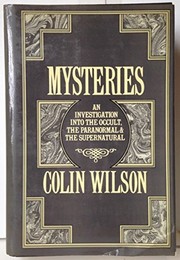
Mysteries
First published 1978. Subjects: Occultism, Parapsychology, Supernatural, Curiosities and wonders.
The Mammoth Encyclopedia of the Unsolved
Covers many classic Fortean mysteries in the same tradition as Spain's documented cases.
eBay marketplace picks
Marketplace Samples
Live-tested eBay searches with available results related to this page.



Endnotes
1.
Source: ewtn.com
Title: Global Catholic Television Network The Alleged Apparitions at Garabandal | EWTN
Link:https://www.ewtn.com/catholicism/library/alleged-apparitions-at-garabandal-3719
2.
Source: arxiv.org
Link:https://arxiv.org/abs/1809.08685
3.
Source: Wikipedia
Title: Bélmez Faces
Link:https://en.wikipedia.org/wiki/B%C3%A9lmez_Faces
4.
Source: Wikipedia
Title: Manises UFO incident
Link:https://en.wikipedia.org/wiki/Manises_UFO_incident
5.
Source: jstor.org
Link:https://www.jstor.org/stable/645638
6.
Source: arxiv.org
Link:https://arxiv.org/abs/2301.03515
7.
Source: Wikipedia
Title: Rain of animals
Link:https://en.wikipedia.org/wiki/Rain_of_animals
8.
Source: Wikipedia
Title: UFO sightings in the Canary Islands
Link:https://en.wikipedia.org/wiki/UFO_sightings_in_the_Canary_Islands
9.
Source: Wikipedia
Title: Planetary objects proposed in religion, astrology, ufology and pseudoscience
Link:https://en.wikipedia.org/wiki/Planetary_objects_proposed_in_religion%2C_astrology%2C_ufology_and_pseudoscience
10.
Source: Wikipedia
Title: Garabandal apparitions
Link:https://en.wikipedia.org/wiki/Garabandal_apparitions
11.
Source: Wikipedia
Title: Banyoles monster
Link:https://en.wikipedia.org/wiki/Banyoles_monster
12.
Source: Wikipedia
Link:https://en.wikipedia.org/wiki/Ezkio
13.
Source: ewtn.com
Link:https://www.ewtn.com/catholicism/answers/apparitions-private-revelations-24763
14.
Source: ewtn.com
Link:https://www.ewtn.com/catholicism/library/bishop-pavo-zanics-orders-3916
15.
Source: garabandal.org
Link:https://www.garabandal.org/
16.
Source: garabandal.org
Link:https://www.garabandal.org/News/Garabandal_and_Akita.shtml
17.
Source: garabandal.org
Link:https://www.garabandal.org/vigil/interview.shtml
18.
Source: garabandal.org
Link:https://www.garabandal.org/church.shtml
19.
Source: garabandal.it
Title: Statements from the Bishops of Santander
Link:https://www.garabandal.it/en/documentation/statements-from-the-bishops-of-santander
20.
Source: garabandal.it
Title: “Non Constat”
Link:https://www.garabandal.it/en/documentation/going-deeper/962-non-constat
21.
Source: garabandal.it
Title: A Long Silence
Link:https://www.garabandal.it/en/documentation/going-deeper/971-a-long-silence
22.
Source: garabandal.it
Title: 1510 garabandal has not been condemned by the church
Link:https://www.garabandal.it/en/documentation/going-deeper/1510-garabandal-has-not-been-condemned-by-the-church
23.
Source: archive.org
Title: Zetetic.Scholar No 12 13 1987 djvu.txt
Link:https://archive.org/stream/ZeteticScholarNo111983/Zetetic.Scholar%20%20No%2012-13%20%201987_djvu.txt
24.
Source: archive.org
Link:https://archive.org/download/jufoh/jufoh.pdf
25.
Source: bibliotecavirtual.defensa.gob.es
Link:https://bibliotecavirtual.defensa.gob.es/BVMDefensa/exp_ovni/es/micrositios/inicio.do
26.
Source: en.andalucia.org
Title: Andalusia The Faces of Bélmez de la Moraleda
Link:https://en.andalucia.org/blog/post/the-faces-of-belmez-de-la-moraleda/
27.
Source: bibliotecavirtual.defensa.gob.es
Link:https://bibliotecavirtual.defensa.gob.es/BVMDefensa/exp_ovni/es/consulta/indice_campo.do?campo=idtitulo
Source snippet
› Listado de títulos...
28.
Source: atlasobscura.com
Title: Atlas Obscura Castles of Valderas in Alcorcón
Link:https://www.atlasobscura.com/places/castles-of-valderas
29.
Source: cadenaser.com
Link:https://cadenaser.com/cataluna/2025/05/30/que-hi-ha-de-cert-de-la-llegenda-del-monstre-de-banyoles-i-quins-animals-viuen-a-lestany-sercat/
30.
Source: loc.gov
Link:https://www.loc.gov/everyday-mysteries/browse-all-questions/item/can-it-rain-frogs-fish-and-other-objects/
31.
Source: facebook.com
Link:https://www.facebook.com/garabandalthemovie/photos/the-diocese-of-santander-has-always-maintained-that-it-has-not-found-anything-co/2872939549469068/
32.
Source: cryptidz.fandom.com
Title: Banyoles Monster
Link:https://cryptidz.fandom.com/wiki/Banyoles_Monster
33.
Source: atlasobscura.com
Title: [belmez faces]({{ ‘belmez-faces/’ | relative_url }})
Link:https://www.atlasobscura.com/places/belmez-faces
34.
Source: prezi.com
Title: The Banyoles Monster
Link:https://prezi.com/p/5sky7yusfu9i/the-banyoles-monster/
35.
Source: wordsbecamebooks.com
Link:https://wordsbecamebooks.com/2014/11/21/ezkioga/
36.
Source: catholicism.org
Title: spanish bishop makes statement on alleged apparitions at garabandal
Link:https://catholicism.org/spanish-bishop-makes-statement-on-alleged-apparitions-at-garabandal.html
37.
Source: pinterest.com
Title: Banyoles Monster
Link:https://www.pinterest.com/pin/686869380644834088/
Additional References
38.
Source: youtube.com
Title: Garabandal: Can We Believe In It? Explaining the Faith with Fr. Chris Alar
Link:https://www.youtube.com/watch?v=jHLrDdp3tbM
Source snippet
Garabandal: The Untold Story of the Virgin Mary's Visit to Spain- Part 1...
39.
Source: youtube.com
Title: HAUNTED SPAIN | The Bélmez Faces | Paranormal Podcast (Ep 346)
Link:https://www.youtube.com/watch?v=A7mPXTgBh6E
Source snippet
Garabandal: Can We Believe In It? Explaining the Faith with Fr. Chris Alar...
40.
Source: youtube.com
Title: The Belmez Faces | The Dark Record | Ep. 21
Link:https://www.youtube.com/watch?v=ZL-ZJ9p4-vU
Source snippet
HAUNTED SPAIN | The Bélmez Faces | Paranormal Podcast (Ep 346)...
41.
Source: facebook.com
Link:https://www.facebook.com/stuburguiere/posts/texarkana-a-town-on-the-border-of-texas-and-arkansas-recently-experienced-a-biza/10158762818408379/
42.
Source: academia.edu
Link:https://www.academia.edu/27920724/THE_MANISES_UFO_FILE
43.
Source: researchgate.net
Link:https://www.researchgate.net/publication/304315096_Data_from_a_five_year_monitoring_on_Green_frogs_Pelophylax_esculentus_complex_at_the_Black_sea_coast_of_north_Bulgaria
44.
Source: reddit.com
Link:https://www.reddit.com/r/UFOs/comments/17cf0q5/argument_we_dont_need_more_evidence_of_ufos_and/
45.
Source: folklore-bestiary.vercel.app
Link:https://folklore-bestiary.vercel.app/en/creatures/es-banyoles-monster
46.
Source: mindtrip.ai
Link:https://mindtrip.ai/attraction/belmez-de-la-moraleda-andalucia/centro-de-interpretacion-de-las-caras-de-belmez/at-PfG8cLGa
47.
Source: reddit.com
Link:https://www.reddit.com/r/UFOs/comments/18mri4a/declassified_mass_sighting_in_the_canary_islands/
Topic Tree
Follow this branch
Related pages 192
- Afghan Forteana
- Antigua Uncanny
- Bosnian Mysteries
- Botswana Weird
- Brazil Strange
- +187 more in sidebar