What Makes South Sudan's Weird History So Different?
South Sudan’s strange-history record is not a tidy catalogue of famous UFOs, monster scares and newspaper-ready ghost stories. It is stranger than that, and more serious.

Page outline Jump by section
Introduction
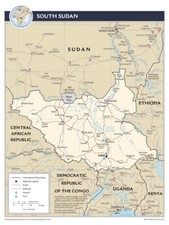
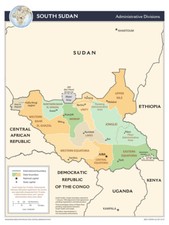
That does not mean these things should be treated as proven paranormal events. The better approach is to read them as claims, traditions, social facts and contested memories. South Sudan became independent on 9 July 2011, and its communities include Dinka, Nuer, Shilluk, Azande and many others, each with distinct histories rather than one blended “South Sudanese mythology”.[Foreign Affairs Ministry]mofaic.gov.sscountry briefcountry brief The country’s Forteana is therefore best understood as a landscape of powerful local explanations: why sickness comes, why cattle die, why rain fails, why leaders gain authority, and why rivers and marshes feel as if they might still conceal something.
Why South Sudan’s weird record begins in the wetlands
The Sudd is the obvious starting point. It is one of Africa’s great natural labyrinths: UNESCO describes it as Africa’s largest wetland and one of the largest tropical wetlands in the world, a social, ecological and hydrological system shaped by the Nile basin’s water regime.[UNESCO World Heritage Centre]whc.unesco.orgWorld Heritage Centre Sudd wetlandWorld Heritage Centre Sudd wetland It is also culturally important, associated with communities including the Nuer, Dinka, Shilluk and Anyuak, whose ways of life have long been adapted to flood, grazing, cattle movement, fishing and seasonal change.[UNESCO World Heritage Centre]whc.unesco.orgWorld Heritage Centre Sudd wetlandWorld Heritage Centre Sudd wetland
That matters for Forteana because large wetlands generate the right conditions for mystery. Distance is hard to judge over water. Papyrus, floating vegetation, mist, hippos, crocodiles, giant fish, birds and night sounds can make ordinary animals seem monstrous. Reports become more durable when they arise in places that are difficult for outsiders to survey. The Sudd is also a real biological wonder: UNESCO notes its role in major antelope movement and says the flooded plain holds Africa’s largest population of the globally threatened shoebill, estimated at 5,000 to 8,000 birds.[UNESCO World Heritage Centre]whc.unesco.orgWorld Heritage Centre Sudd wetlandWorld Heritage Centre Sudd wetland In such a place, a “prehistoric-looking” bird is not a monster, but it helps explain why visitors may feel they have stepped into a living cryptozoological stage set.
The most famous mystery-animal name attached to the region is the lau, usually described in cryptozoological retellings as a huge serpentine or fish-like creature from the White Nile marshes, especially around Bahr el Zeraf. Modern summaries treat it as a cryptid of what is now South Sudan, with suggested mundane explanations including an oversized catfish, a snake, a crocodile seen badly, or a story that grew as it travelled through colonial and cryptozoological literature.[Cryptid Archives]cryptidarchives.fandom.comCryptid Archives LauCryptid Archives Lau The source trail is not strong enough to treat the lau as an evidenced unknown animal, but it is a good example of how South Sudan’s marsh environment turns natural history into monster lore.
The lau: monster, catfish, crocodile, or marsh rumour?
The lau sits in the same family of reports as other African “water monsters”: a creature claimed from difficult waterways, described in ways that hover between serpent, fish and surviving prehistoric animal. In South Sudan’s case, the setting does much of the work. Bahr el Zeraf, the White Nile and the Sudd are exactly the sort of habitats where a large animal can be glimpsed briefly, partly submerged, and then become bigger in the telling.
A cautious reading leaves several possibilities open without pretending they are equally likely:
- Large fish: The catfish explanation is plausible because whiskered, surfacing fish can look strange from a canoe or riverbank, especially if size is exaggerated.
- Crocodile or python: A partial view of a reptile in broken water could produce a serpent-like report.
- Hippo disturbance: Hippos are not serpents, but their sudden surfacing, water movement and dangerous reputation can generate stories of unseen power beneath the surface.
- Folklore amplified by outsiders: Once a local animal story enters cryptozoological books, it can be reshaped into a “case” even when the original testimony is thin.
The lau’s cultural pull lies less in zoological proof than in the way it compresses the Sudd’s reality: enormous water, limited visibility, dangerous animals, colonial curiosity and the human habit of giving a name to what moves just beyond clear sight.

Prophets, relics and political power
South Sudan’s most consequential “strange” material is not a monster story but prophetic authority. Nuer prophetic traditions have repeatedly shaped how people understand war, peace and legitimacy. A Rift Valley Institute report on Nuer prophetic histories argues that prophets have been able both to mobilise and demobilise armed youth, and that political and military leaders have long tried to co-opt their authority.[riftvalley.net]riftvalley.netOpen source on riftvalley.net. This is not prophecy as stage magic; it is prophecy as public power.
The best-known figure is Ngundeng Bong, the nineteenth-century Nuer prophet whose sacred stick, or dang, has become one of South Sudan’s most charged relics. Associated Press reported that the stick is believed by some followers to have been used by Ngundeng in a battle in 1878, where the story says a thunderbolt struck rival fighters. The same report describes the relic’s later return to South Sudan in 2009 and its association with Riek Machar, whose supporters have connected him with interpretations of Ngundeng’s prophecies.[AP News]apnews.comOpen source on apnews.com.
The Fortean interest here is not whether a stick literally summoned lightning. It is how a physical object can carry supernatural reputation, historical memory and political force at once. AP’s reporting notes disagreement over how Ngundeng’s words should be interpreted, while scholars quoted in the piece stress the importance of perception: what people believe the relic means can itself affect political behaviour.[AP News]apnews.comOpen source on apnews.com.
That makes the dang a classic Fortean object in a modern setting: a relic whose alleged power is unverifiable in laboratory terms, yet whose social power is quite real.
Witchcraft and oracles among the Azande
For readers interested in the overlap between anthropology and the uncanny, the Azande are central. E. E. Evans-Pritchard’s 1937 study Witchcraft, Oracles and Magic Among the Azande remains one of the landmark works on the subject. Yale’s eHRAF summary calls it the outstanding source on Azande witchcraft and notes that Evans-Pritchard spent twenty months in Zandeland over three expeditions, studying how witchcraft, magic and oracles formed an interconnected system reflected in social behaviour.[eHRAF World Cultures]ehrafworldcultures.yale.edue HRAF World Cultures Witchcraft, Oracles And Magic Among The Azandee HRAF World Cultures Witchcraft, Oracles And Magic Among The Azande
The key point is that Azande witchcraft belief was not simply “irrational fear” in the crude outsider sense. In Evans-Pritchard’s account, witchcraft explained why misfortune happened to a particular person at a particular time. A granary might collapse because termites weakened it; witchcraft explained why it collapsed when certain people were sitting beneath it. That distinction is important for public-facing Forteana because it shows how a supernatural explanation can coexist with practical observation.
Azande oracles also complicate easy sceptical dismissal. They were not random spooky customs but methods for decision-making, accusation, suspicion and social repair. A modern reader does not have to accept the oracle’s supernatural premise to recognise its role as a truth-finding technology within its own culture.
Ghost marriage: uncanny name, social logic
“Ghost marriage” sounds like pure folklore, but in South Sudanese contexts it is better understood as kinship, inheritance and continuity. Among the Nuer, Evans-Pritchard’s work on marriage and family dealt extensively with the institution known as ghost marriage: the marriage of a woman to the name of a deceased man, with related practices such as levirate marriage explained in relation to Nuer social organisation.[eHRAF World Cultures]ehrafworldcultures.yale.edue HRAF World Cultures Some Aspects Of Marriage And The Family Among The Nuere HRAF World Cultures Some Aspects Of Marriage And The Family Among The Nuer
The oddity, for an outside reader, is the idea that a dead man may remain socially active as a husband and father through lineage rules. But the practice is not a ghost story in the haunted-house sense. It is about cattle, descent, heirs, obligation and the continuation of a family line. Later scholarship also links ghost marriage among the Atuot of southern Sudan to cattle trade and social change, showing that even institutions that look timeless can shift with economics.[Cambridge University Press & Assessment]cambridge.orgghost marriage and the cattle trade among the atuot of the southern sudanghost marriage and the cattle trade among the atuot of the southern sudan
For a Fortean country page, ghost marriage belongs because it sits in the uncanny borderland between the living and the dead. It treats death not as total social absence but as a condition through which a person’s name, rights and lineage can still act in the world.
Sacred kingship and the Shilluk memory of Nyikang
The Shilluk tradition of sacred kingship adds another layer to South Sudan’s weird-history record. Scholarship on Shilluk divine kingship describes the king, or reth, as embodying the presence of Nyikang, the legendary founder and a divine or semi-divine figure.[Chicago Journals]journals.uchicago.eduOpen source on uchicago.edu. A UNESCO document on Fashoda as a cultural space identifies Nyikang as the ancestor of the Shilluk and founder of their kingdom, underlining his importance to Shilluk identity and sacred geography.[UNESCO Intangible Cultural Heritage]ich.unesco.orgIntangible Cultural Heritage Fashoda as a Cultural Space NyikangIntangible Cultural Heritage Fashoda as a Cultural Space Nyikang
This is not “paranormal” in the modern ghost-hunting sense. It is stranger and older: a political theology in which authority, ancestry, land and ritual are bound together. The reth is not just a ruler in a bureaucratic system; he is part of a sacred continuity. That makes Shilluk kingship a key South Sudanese example of how power can be imagined as more than human office-holding.
The Fortean angle is the persistence of a question found across many cultures: can a person, object or office carry a force larger than the individual? In Shilluk tradition, the answer is not framed as a laboratory claim but as a ritual and social reality.
Rain, curses and dangerous accusations
South Sudan’s “strange” beliefs are not only preserved in old ethnographies. They can have immediate social consequences. The Conflict Sensitivity Resource Facility has warned that accusations involving witchcraft, failure to bring rain and curses may contribute to displacement and create obstacles to protection and return for affected people.[Conflict Sensitivity Resource Facility]csrf-southsudan.orgOpen source on csrf-southsudan.org. It also advises aid agencies to treat such fears as real safety concerns rather than dismissing them as colourful background.[Conflict Sensitivity Resource Facility]csrf-southsudan.orgOpen source on csrf-southsudan.org.
This is one of the most important cautions in writing about South Sudanese Forteana. A rainmaking accusation may sound quaint from a distance, but locally it can become a matter of threat, exile or violence. Likewise, “witchcraft” can be both a belief system and an accusation with dangerous practical effects.
There is also a useful distinction between anomalous rain and rainmaking blame. South Sudan does not have a strong public record of famous fish-rains or red-rain cases comparable with better-documented global examples. The stranger and better-supported material is instead social: the belief that certain people may influence rain, curse others, or misuse supernatural power. The mystery is not a dramatic fall from the sky; it is the way weather, misfortune and human responsibility become entangled.
Why there are fewer classic UFO and poltergeist cases
A reader looking for South Sudanese flying saucer waves, haunted hotels or Victorian newspaper oddities may come away surprised by how thin the public record is. There are several likely reasons.
First, South Sudan is a young state, but its communities and traditions are not young. Much of the relevant material was recorded under “southern Sudan” before independence, often by colonial officials, missionaries and anthropologists. That means older strange material is easily filed under Sudan rather than South Sudan.
Second, decades of war and displacement shaped what was recorded and preserved. In places where survival, migration and political violence dominate public documentation, small oddities are less likely to be archived, digitised or circulated internationally.
Third, the most powerful anomalous traditions in South Sudan are not usually packaged as “paranormal cases”. They appear as kinship institutions, religious authority, cattle-camp histories, spirit possession, witchcraft accusations, prophetic songs or sacred objects. A Fortean reading has to work across anthropology, oral history and political reporting rather than expecting a neat column headed “mysteries”.
How to read South Sudanese Forteana responsibly
The best way to approach South Sudan’s strange material is neither credulous nor dismissive. Treat the lau as a marsh cryptid with weak zoological evidence but a revealing ecological setting. Treat Ngundeng’s dang as a sacred relic whose political life is documented even if its thunderbolt story remains a tradition. Treat Azande witchcraft and oracles as a serious intellectual system, not as a cartoon of superstition. Treat ghost marriage as social structure, not a ghost tale. Treat accusations of curses and failed rainmaking as matters that can affect real safety.
South Sudan’s weird-history record is therefore less about spectacular one-off anomalies than about living systems of explanation. The country’s Forteana asks practical questions in uncanny form: who has power, who caused misfortune, why the rains failed, whether a dead person can still matter, whether a relic can authorise a leader, and what might be moving in the marsh when the water breaks and no one gets a clear look.
Amazon book picks
Further Reading
Books and field guides related to What Makes South Sudan's Weird History So Different?. Use these as the next step if you want deeper reading beyond the article.

The Penguin book of the undead
Appeals to readers exploring global strange traditions.

African myths of origin
Places South Sudanese traditions within wider African mythology.
Witchcraft, Oracles and Magic among the Azande
Central to understanding South Sudan's best-known belief systems.
eBay marketplace picks
Marketplace Samples
Live-tested eBay searches with available results related to this page.
Endnotes
1.
Source: whc.unesco.org
Title: World Heritage Centre Sudd wetland
Link:https://whc.unesco.org/en/tentativelists/6276/
2.
Source: riftvalley.net
Link:https://riftvalley.net/wp-content/uploads/2020/02/Speaking-Truth-to-Power-by-Jedeit-J.-Riek-and-Naomi-R.-Pendle-RVI-SSCA-Project-2019.pdf
3.
Source: ehrafworldcultures.yale.edu
Title: e HRAF World Cultures Witchcraft, Oracles And Magic Among The Azande
Link:https://ehrafworldcultures.yale.edu/cultures/fo07/documents/071
4.
Source: ehrafworldcultures.yale.edu
Title: e HRAF World Cultures Some Aspects Of Marriage And The Family Among The Nuer
Link:https://ehrafworldcultures.yale.edu/cultures/fj22/documents/011
5.
Source: cambridge.org
Title: ghost marriage and the cattle trade among the atuot of the southern sudan
Link:https://www.cambridge.org/core/services/aop-cambridge-core/content/view/5459F7F8C57B1AD1DE2A9B26DFB45E4C/S0001972000076634a.pdf/ghost-marriage-and-the-cattle-trade-among-the-atuot-of-the-southern-sudan.pdf
6.
Source: ich.unesco.org
Title: Intangible Cultural Heritage Fashoda as a Cultural Space Nyikang
Link:https://ich.unesco.org/doc/src/00153-EN.pdf
7.
Source: ehrafworldcultures.yale.edu
Link:https://ehrafworldcultures.yale.edu/cultures/fo07/documents
8.
Source: ehrafworldcultures.yale.edu
Link:https://ehrafworldcultures.yale.edu/documents?q=author%3A%22Evans-Pritchard%2C+E.+E.+%28Edward+Evan%29%22%5E2+OR+authors%3A%22Evans-Pritchard%2C+E.+E.+%28Edward+Evan%29%22
9.
Source: ehrafworldcultures.yale.edu
Link:https://ehrafworldcultures.yale.edu/subjects/791/documents
10.
Source: ehrafworldcultures.yale.edu
Link:https://ehrafworldcultures.yale.edu/cultures/fj23/summary
11.
Source: ehrafworldcultures.yale.edu
Link:https://ehrafworldcultures.yale.edu/cultures/fj22/summary
12.
Source: unesdoc.unesco.org
Link:https://unesdoc.unesco.org/ark%3A/48223/pf0000051739
13.
Source: riftvalley.net
Title: fate ngungdengs dang
Link:https://riftvalley.net/news/sudan-and-south-sudan/fate-ngungdengs-dang/
14.
Source: cambridge.org
Link:https://www.cambridge.org/core/journals/africa/article/ghost-marriage-and-the-cattle-trade-among-the-atuot-of-the-southern-sudan/5459F7F8C57B1AD1DE2A9B26DFB45E4C
15.
Source: history.state.gov
Title: south sudan
Link:https://history.state.gov/countries/south-sudan
16.
Source: mofaic.gov.ss
Title: country brief
Link:https://mofaic.gov.ss/country-brief/
17.
Source: cryptidarchives.fandom.com
Title: Cryptid Archives Lau
Link:https://cryptidarchives.fandom.com/wiki/Lau
18.
Source: cryptidz.fandom.com
Title: Cryptid Wiki Lau
Link:https://cryptidz.fandom.com/wiki/Lau
19.
Source: apnews.com
Link:https://apnews.com/article/e2300925846a694731e7627bb7a2f04e
20.
Source: journals.uchicago.edu
Link:https://www.journals.uchicago.edu/doi/10.14318/hau1.1.002
21.
Source: csrf-southsudan.org
Link:https://csrf-southsudan.org/the-challenges-of-protecting-people-accused-of-misusing-supernatural-powers-in-south-sudan/
22.
Source: Wikipedia
Title: Witchcraft, Oracles and Magic Among the Azande
Link:https://en.wikipedia.org/wiki/Witchcraft%2C_Oracles_and_Magic_Among_the_Azande
23.
Source: Wikipedia
Link:https://en.wikipedia.org/wiki/Sudd
24.
Source: Wikipedia
Title: Ngundeng Bong
Link:https://en.wikipedia.org/wiki/Ngundeng_Bong
25.
Source: Wikipedia
Title: South Sudan
Link:https://en.wikipedia.org/wiki/South_Sudan
26.
Source: csrf-southsudan.org
Title: speaking truth to power in south sudan oral histories of the nuer prophets
Link:https://csrf-southsudan.org/repository/speaking-truth-to-power-in-south-sudan-oral-histories-of-the-nuer-prophets/
27.
Source: csrf-southsudan.org
Title: religious framing south sudanese civil wars enduring legacy ngundengs prophecy
Link:https://csrf-southsudan.org/repository/religious-framing-south-sudanese-civil-wars-enduring-legacy-ngundengs-prophecy/
28.
Source: ndl.ethernet.edu.et
Title: George M. Eberhart
Link:https://ndl.ethernet.edu.et/bitstream/123456789/46979/1/George%20M.%20Eberhart.pdf
29.
Source: hal.science
Link:https://hal.science/hal-02541478/document
30.
Source: haujournal.org
Link:https://www.haujournal.org/index.php/hau/article/view/1896
31.
Source: haujournal.org
Link:https://www.haujournal.org/index.php/hau/article/view/1891
32.
Source: unmission.au.int
Title: south sudan
Link:https://unmission.au.int/docroot/index.php/en/member-states/south-sudan
33.
Source: myend.com
Link:https://myend.com/country/south-sudan/
34.
Source: assets.publishing.service.gov.uk
Title: publishing.service.gov.uk South Sudan
Link:https://assets.publishing.service.gov.uk/media/671267b5b40d67191077b398/South_Sudan_Toponymic_Factfile.pdf
35.
Source: relief.unboundmedicine.com
Title: South Sudan
Link:https://relief.unboundmedicine.com/relief/view/The-World-Factbook/563275/all/South_Sudan?q=15-24+ages+unemployment%2C+youth
36.
Source: religionsmn.carleton.edu
Link:https://religionsmn.carleton.edu/exhibits/show/os/scholarship
37.
Source: emerald.com
Link:https://www.emerald.com/dpm/article/doi/10.1108/dpm.2003.07312bac.004/90211/Weather
Additional References
38.
Source: youtube.com
Title: Discover the Mysteries of South Sudan’s Sudd Swamp
Link:https://www.youtube.com/watch?v=XqdX9Pm2KV0
Source snippet
"Christ as the Nuer Ngundeng: A South Sudanese Christology[https://www.youtube.com/watch?v=5v2X2I5L-pQ..."](https://www.youtube.com/watch?v=5v2X2I5L-pQ...")...
39.
Source: loc.gov
Link:https://www.loc.gov/everyday-mysteries/browse-all-questions/item/can-it-rain-frogs-fish-and-other-objects/
40.
Source: facebook.com
Link:https://www.facebook.com/LichBroadcast/posts/copied-from-gatluak-gatjiak-rethngundeng-buong-pyramid-is-one-of-the-most-presti/1226081203003788/
41.
Source: researchgate.net
Link:https://www.researchgate.net/publication/354703295_Christ%27s_Seer_Office_in_the_South_Sudanese_Context_Exploring_the_Place_of_Prophet_Ngundeng_as_a_Receptor_Lens_of_Understanding_Christology_Among_the_Nuer
42.
Source: scribd.com
Link:https://www.scribd.com/document/413392774/A-Guidebook-to-Hidden-Animals-Web
43.
Source: instagram.com
Link:https://www.instagram.com/p/DPkPAqYDNIc/
44.
Source: instagram.com
Link:https://www.instagram.com/reel/DWcEsWtAEaJ/
45.
Source: facebook.com
Link:https://www.facebook.com/groups/3662574880668021/posts/3995138024078370/
46.
Source: ipcc.ch
Link:https://www.ipcc.ch/report/ar6/wg1/downloads/report/IPCC_AR6_WGI_Chapter11.pdf
47.
Source: facebook.com
Link:https://www.facebook.com/groups/archeologyandcivilizations/posts/7392408404185953/
Topic Tree
Follow this branch
Related pages 192
- Afghan Forteana
- Antigua Uncanny
- Bosnian Mysteries
- Botswana Weird
- Brazil Strange
- +187 more in sidebar