Why Venezuela Feels Made for Forteana
Venezuela’s strange-history record is unusually strong because its best-known “mysteries” sit on a spectrum: some are spectacular but natural, some are living religious and folkloric traditions, and some are internet-age oddities that look more mysterious than the evidence allows.
Page outline Jump by section
Why Venezuela has such a strong strange-country profile
Venezuela gives Fortean writers something many countries do not: world-class natural strangeness that does not need exaggeration. The Catatumbo region really is one of the most lightning-rich places on Earth; Canaima really does contain immense flat-topped mountains, sheer cliffs and the world’s highest waterfall; the plains really do have a dense oral tradition of warning spirits and night terrors. These are not interchangeable “spooky stories”. They are tied to specific places: Lake Maracaibo, the Gran Sabana, Sorte Mountain, Los Llanos, Canaima and the Orinoco world.
That matters because many famous anomaly traditions become thinner when detached from place. In Venezuela, the geography helps explain the stories. Vast plains invite tales of whistling presences carried on the night air. Isolated table mountains invite “lost world” speculation. A lightning storm that can be seen again and again from roughly the same region invites both scientific investigation and mythic interpretation. UNESCO’s description of Canaima National Park, for example, stresses that roughly 65% of the park is covered by tepui formations and that its cliffs and waterfalls create an exceptional landscape; the official natural description already sounds half-Fortean before any monsters are added.[UNESCO World Heritage Centre]whc.unesco.orgOpen source on unesco.org.
The other reason Venezuela is important is cultural. Its strange material is not only tourist folklore or imported paranormal culture. The devotional world of María Lionza is a Venezuelan religious movement with spirit possession, pilgrimage, healing, national symbolism and public ritual. In 2024, Reuters reported that Venezuela had recognised the fiery “baile en candela” ritual honouring María Lionza as cultural heritage, placing a living ecstatic practice inside the country’s official cultural story.[Reuters]reuters.comVenezuela recognizes fiery ritual honoring goddess as cultural heritageVenezuela recognizes fiery ritual honoring goddess as cultural heritage
The Catatumbo lightning: the mystery that is real
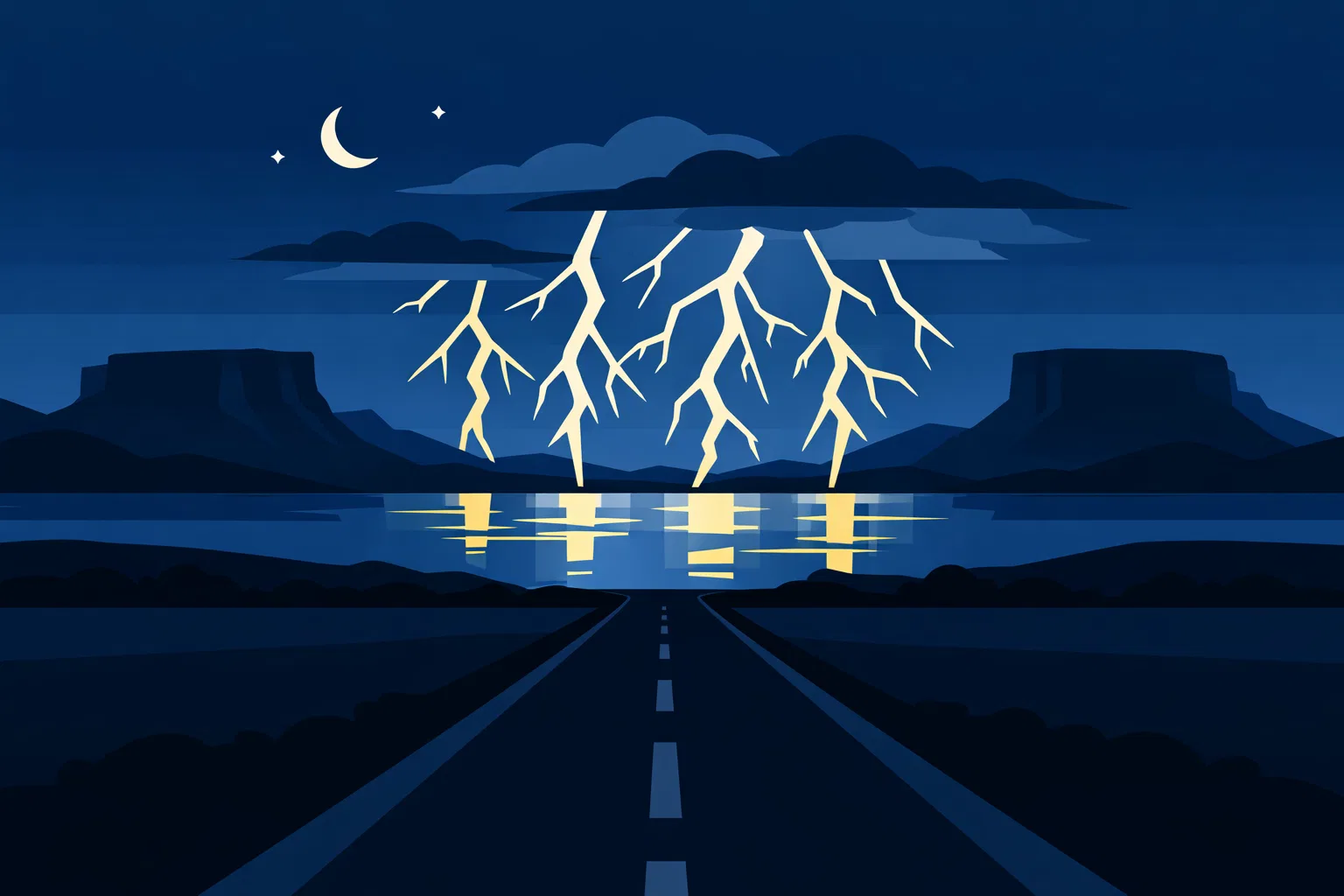
The most famous Venezuelan anomaly is not a hoax, a ghost story or a blurry photograph. It is lightning. The Catatumbo lightning occurs where the Catatumbo River enters Lake Maracaibo in western Venezuela, and its regularity has made it one of the world’s great natural spectacles. NASA Earthdata calls it the “Maracaibo Beacon” and describes lightning so consistent that it can occur at the same time and in the same area around the meeting of river and lake.[NASA Earthdata]earthdata.nasa.govmaracaibo beaconmaracaibo beacon
Guinness World Records lists the area as having the highest concentration of lightning, citing almost 250 flashes per square kilometre per year and displays that can occur up to 300 nights annually, sometimes lasting for hours.[Guinness World Records]guinnessworldrecords.comGuinness World Records Highest concentration of lightningGuinness World Records Highest concentration of lightning This is exactly the kind of phenomenon that attracts supernatural explanations because the raw facts are already astonishing. A sky that repeatedly flashes over the same region looks like a signal, a warning, a lighthouse or a machine.
The science is strong enough to make the wonder more interesting, not less. A 2016 paper in Atmospheric Research treated the Lake Maracaibo Basin as the world’s leading lightning hotspot and explored seasonal prediction, connecting local drivers with broader climate influences such as ENSO, the El Niño–Southern Oscillation.[ScienceDirect]sciencedirect.comOpen source on sciencedirect.com. The implication is that the “everlasting storm” is not magic, but neither is it ordinary weather. It is the product of an unusually favourable landscape, moisture, winds, mountains and climate patterns.
The Fortean edge comes from three things. First, the lightning was historically remembered as a navigational beacon, the “Lighthouse of Maracaibo”. Secondly, it has attracted dubious claims, especially the idea that it helps regenerate the ozone layer. Thirdly, it briefly faltered: Guinness notes that the phenomenon stopped from January to April 2010, possibly connected to ENSO-related conditions, which was enough to create headlines suggesting that the great storm might have vanished.[Guinness World Records]guinnessworldrecords.comGuinness World Records Highest concentration of lightningGuinness World Records Highest concentration of lightning
That 2010 pause is a useful warning. A real phenomenon can still acquire folklore. When a reliable wonder stops behaving reliably, people reach for big meanings. The sceptical reading is not that the lightning is “debunked”, but that the mystery sits in a rare weather engine rather than in the supernatural.
María Lionza: possession, pilgrimage and national imagination
María Lionza belongs in Venezuelan Forteana because the tradition combines visionary religion, healing, trance, spirit communication and national identity. It is not merely a “ghost story”, and treating it as one would flatten it. The movement centres on María Lionza as a powerful feminine figure associated with nature, harmony and protection, and it is strongly linked with Sorte Mountain in Yaracuy.
Anthropological work treats the cult seriously as a possession-based religious practice. Barbara Placido’s article in the Journal of the Royal Anthropological Institute analyses spirit possession in the Venezuelan cult of María Lionza, showing that this is a structured ritual world rather than a loose set of spooky anecdotes.[JSTOR]jstor.orgOpen source on jstor.org. A separate academic conference abstract describes the cult as a widespread Venezuelan ritual practice in which spirit possession is frequent and notes that the internet has reshaped links between believers, ancestors and supernatural beings.[NomadIT]nomadit.co.ukOpen source on nomadit.co.uk.
For an outsider, the most dramatic features are the rituals: trance, cleansing, offerings, spirit courts, tobacco smoke, river purification and fire-walking. Reuters’ 2024 report on the recognition of the “baile en candela” describes participants crossing hot coals, cleansing in a river and venerating María Lionza within a blend of Indigenous, Catholic and African beliefs.[Reuters]reuters.comVenezuela recognizes fiery ritual honoring goddess as cultural heritageVenezuela recognizes fiery ritual honoring goddess as cultural heritage
A sceptical interpretation sees this as religion, performance, psychology, community healing and cultural memory. A believer’s interpretation sees actual contact with spirits, ancestors and powers. The country-level Fortean importance lies in the overlap. María Lionza is a national-scale example of the supernatural as lived practice, not just entertainment. It shows how Venezuelan weird history includes ritual systems that people use for healing, identity and crisis, not only tales told to frighten children.
The ghosts of Los Llanos: warnings that whistle and wait
Two of Venezuela’s most widely repeated ghostly figures are El Silbón and La Sayona. Both are strongly associated with the plains and with moral warning. They are less like “haunted house” ghosts and more like travelling social alarms: figures who punish drunkenness, violence, betrayal or sexual misconduct.
El Silbón, usually translated as “The Whistler”, is attached especially to the Venezuelan Llanos and also appears in the Colombian-Venezuelan borderlands. Folkloric summaries describe him as a lost soul whose whistle is a warning, often linked to a sack of bones and to punishment of drunkards or womanisers.[Wikipedia]WikipediaEl SilbónEl Silbón La Sayona is usually described as a vengeful female spectre who appears to unfaithful men, sometimes along lonely roads or in rural settings; the legend is rooted in Venezuelan oral tradition and appears in folklore collections and retellings.[Wikipedia]WikipediaOpen source on wikipedia.org.
The important point is not whether either being “exists” as a literal entity. These legends work because they turn everyday anxieties into a night encounter. The plains are open, dark and socially exposed; a rider, driver, hunter or labourer alone at night becomes vulnerable not just to animals or criminals, but to judgement. The supernatural figure arrives when the person is already morally or physically isolated.
Mercedes Franco’s Diccionario de fantasmas, misterios y leyendas de Venezuela is a useful marker of how these figures have been collected and packaged as Venezuelan ghost heritage. Google Books identifies the volume as a dictionary of ghosts, mysteries and legends of Venezuela, published by El Nacional in 2007.[Google Books]books.google.comOpen source on google.com. That does not make every tale historically factual, but it does show that these stories have been treated as part of a national repertoire rather than as stray campfire inventions.
Canaima and the “lost world” that fiction helped create
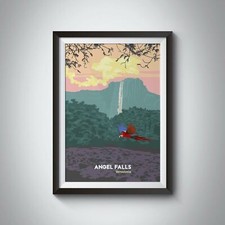
The tepuis of south-eastern Venezuela look like places where normal rules might stop. Their flat summits, sheer walls and ecological isolation made them natural magnets for speculation. Canaima National Park covers around three million hectares, and UNESCO emphasises the tepuis as a unique biogeological entity with spectacular cliffs and waterfalls, including the world’s highest waterfall.[UNESCO World Heritage Centre]whc.unesco.orgOpen source on unesco.org.
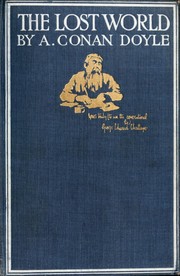
This is where Venezuela’s strange geography meets global fiction. Royal Botanic Gardens, Kew notes that reports from early Victorian expeditions to Roraima are thought to have inspired Arthur Conan Doyle’s The Lost World, the 1912 adventure novel about prehistoric survivals on a remote plateau in South America.[Kew Gardens]kew.orgOpen source on kew.org. The novel did not document dinosaurs in Venezuela, but it did fix a powerful image in the English-speaking imagination: the table mountain as a biological time capsule.
That image has never quite gone away. Modern travel writing still leans on “lost world” language because the landscape earns it. UNESCO’s own multimedia archive calls Canaima “The Lost World” and describes more than 100 flat-topped table mountains across the park.[UNESCO]unesco.orgdocument 172document 172 Meanwhile, local Indigenous traditions give the tepuis meanings that are not reducible to European adventure fantasy. PBS’s Nature notes that tepuis, waterfalls and rivers in the region carry connections with Pemón mythology.[PBS]pbs.orgeco explorer peopleeco explorer people
The Fortean lesson is that a real landscape can generate several layers of strangeness at once. To science, tepuis are ancient, isolated ecosystems. To local tradition, they are spiritually meaningful. To imperial adventure fiction, they became platforms for prehistoric survival. To modern internet culture, they are endlessly shareable “impossible places”. The mystery is not a single claim, but a stack of interpretations placed on a dramatic geology.
The Venezuelan poodle moth: a real photo, an uncertain creature, a perfect internet anomaly
The Venezuelan poodle moth is one of the best modern examples of a small natural-history uncertainty becoming a global weird object. The basic story is simple: zoologist Arthur Anker photographed an unusual moth in Venezuela’s Gran Sabana region in 2009; the image later went viral because the moth looked fluffy, big-eyed and oddly mammalian.
The careful version is less dramatic than many online posts. Snopes treats the image as a real photograph of a moth, but the “Venezuelan poodle moth” is not a formally established species name in the way viral captions often imply.[Snopes]snopes.comIs the 'Venezuelan Poodle Moth' Real?Is the 'Venezuelan Poodle Moth' Real? Mongabay similarly reported in 2012 that the white moth photographed in Canaima National Park had become an internet sensation and had yet to be identified, with the possibility that it could represent a species not yet known to science.[Mongabay News]news.mongabay.comNews Unidentified poodle moth takes Internet by stormNews Unidentified poodle moth takes Internet by storm
Specialist sceptical commentary has tended to land in a sensible middle. The moth appears to be real, probably within the family Lasiocampidae and possibly related to the genus Artace, but a single photograph is not enough to describe a new species confidently. The Skeptical Moth noted that the viral reporting was broadly correct in treating it as a real moth, while cautioning against turning it into a cryptid without taxonomic evidence.[theskepticalmoth.com]theskepticalmoth.comThe Poodle Moth and the Problem of CryptozoologyThe Poodle Moth and the Problem of Cryptozoology
This is very Venezuelan Forteana in miniature. The country’s biodiversity is rich enough that an odd moth from the Gran Sabana is plausible. The evidence is limited enough that certainty is not justified. The image is cute and strange enough that the internet fills the gaps. It is not a hoax in the crude sense, but it is a lesson in how quickly “unidentified” becomes “mysterious creature” when a photograph has the right face.
UFOs, glowing huts and hairy dwarfs: the thin but persistent aerial file
Venezuela has UFO material, but it is much weaker than the Catatumbo, María Lionza or folklore record. The best-known cases tend to circulate through UFO catalogues, podcasts, forums and retellings rather than through strong primary documentation. That does not make them worthless as cultural material, but it does mean they should be handled as claims.
One older curiosity is the 1886 Scientific American correspondence item from Venezuela, often discussed in UFO circles because it describes a family near Maracaibo awakened by a humming noise and dazzling light during a storm. The magazine’s archive confirms the December 18, 1886 “Correspondence” item, while a later discussion quotes the account as a strange luminous episode rather than a modern spacecraft report.[Scientific American]scientificamerican.comScientific American CorrespondenceScientific American Correspondence In context, it is better read as a historical atmospheric oddity or electrical-event report than as evidence of alien visitation.
The other repeatedly cited cluster is the 1954 Venezuelan “hairy dwarf” or close-encounter material, especially stories involving Gustavo González and José Ponce near Petare. UFO catalogues preserve versions of the tale, but the available web evidence is mostly secondary and enthusiast-led.[ufologie.patrickgross.org]ufologie.patrickgross.orgURECA TURECA T That is exactly where an evidence-aware Fortean page should slow down. The story is interesting because it belongs to the 1950s wave of humanoid-contact narratives, not because it has been demonstrated as a physical event.
Modern UAP research also gives a useful corrective. Reuters reported in 2024 that a Pentagon historical review found no evidence that UFO investigations had uncovered extraterrestrial technology, and that many sightings were attributed to ordinary objects or phenomena where data allowed assessment.[Reuters]reuters.comPentagon UFO report says most sightings 'ordinary objects' and phenomenaPentagon UFO report says most sightings 'ordinary objects' and phenomena That does not explain every Venezuelan report, but it sets the standard: strange lights need dates, locations, witnesses, sensor data and alternative explanations before they become more than folklore with a sky attached.
Giant snakes and monster logic in a country that really has giants
Venezuela does not need invented monsters to feel zoologically extreme. Its wetlands and river systems are home to animals that already strain the imagination: anacondas, caimans, jaguars, giant anteaters, huge birds and unfamiliar insects. This matters because cryptozoological rumours often grow best where real animals are already large, dangerous or poorly seen.
Recent palaeontological research adds an intriguing twist. In 2025, the University of Cambridge reported that researchers had measured 183 fossilised anaconda vertebrae from Falcón State, Venezuela, representing at least 32 snakes, and concluded that ancient anacondas were already giants, around four to five metres long, more than 12 million years ago.[University of Cambridge]cam.ac.ukUniversity of Cambridge Fossils reveal anacondas have been giants for over 12University of Cambridge Fossils reveal anacondas have been giants for over 12 That finding does not support tales of impossibly huge modern snakes, but it does show why snake folklore in northern South America has such deep imaginative fuel. The real animal is already formidable.
The sceptical line is straightforward. Claims of extraordinary anacondas require measurements, specimens, photographs with scale, or reliable biological documentation. Campfire accounts of snakes “as wide as furniture” are not evidence. Yet it would be a mistake to mock the whole tradition too quickly. In landscapes where humans share water, forest and savannah with large constrictors, monster stories are partly ecological common sense: they teach caution, dramatise danger and make the invisible life of rivers memorable.
What sceptics and believers are really arguing about
Venezuelan Forteana is not a single debate between “real” and “fake”. Different cases require different standards.
Catatumbo lightning is physically real, measured and scientifically studied. The paranormal claims around it, such as ozone-layer regeneration or mystical signalling, are the contested layer. María Lionza is a real religious movement; the debate is not whether people perform the rituals, but how to interpret possession, healing and spirit contact. El Silbón and La Sayona are folklore; their truth lies in oral tradition, moral teaching and cultural endurance rather than in police-report evidence. The poodle moth is a real photographed animal, but not a formally pinned-down species in the popular sense. The UFO and hairy-dwarf stories are the weakest evidentially, surviving mainly as retellings in a global UFO tradition.
This range is what makes Venezuela interesting. A sceptic can explain much of the material without flattening it: weather, geology, ecology, oral tradition, ritual psychology, misidentification, exaggeration and online virality all play their parts. A believer can point out, fairly, that not every meaningful human experience is captured by laboratory proof. People do see lights, enter trances, inherit warnings, recognise sacred places and encounter animals they cannot name.
The best reading keeps both ideas in view. Venezuela’s weird-history record is strongest when it is grounded: the lake that flashes, the mountain that isolates life, the plains that carry warnings, the ritual mountain where spirits are invited, the moth that one photograph made famous. The strangeness does not need inflation. It is already there, but it becomes clearer when fact, claim, legend and interpretation are kept separate.
Why these stories still have cultural pull
Venezuela’s Fortean material endures because it gives dramatic form to real features of the country. Catatumbo lightning turns weather into a national emblem of awe. María Lionza turns mixed ancestry, healing and crisis into ritual conversation with spirits. The Llanos ghosts turn social rules into night terrors. Canaima turns geology into myth, fiction and ecological wonder. The poodle moth turns biodiversity into an internet-age miniature mystery.
There is also a deeper pattern: many Venezuelan strange stories live at thresholds. The Catatumbo lightning appears where river, lake, swamp, wind and mountain meet. María Lionza’s rituals occur between Catholic, Indigenous, African and spiritist worlds. La Sayona and El Silbón appear at the edge of road, plain, night and conscience. Tepuis rise between earth and sky. The poodle moth sits between scientific specimen and viral creature. UFO stories hover between weather, technology and imagination.
That is why Venezuela belongs naturally in a country-by-country map of Forteana. Its strongest cases are not random oddities. They show how a place becomes uncanny when natural spectacle, oral memory, religious practice and media retelling keep reinforcing one another. The result is not proof that Venezuela is uniquely paranormal. It is something more useful and more durable: a country where the strange has unusually good terrain.
Amazon book picks
Further Reading
Books and field guides related to Why Venezuela Feels Made for Forteana. Use these as the next step if you want deeper reading beyond the article.

The world of Lore
Explores legendary beings and folklore traditions relevant to Venezuela's myths.
The Encyclopedia of Ghosts and Spirits
Places Venezuelan ghost and spirit traditions into a wider context.

eBay marketplace picks
Marketplace Samples
Live-tested eBay searches with available results related to this page.

Endnotes
1.
Source: whc.unesco.org
Link:https://whc.unesco.org/en/list/701/
2.
Source: reuters.com
Title: Venezuela recognizes fiery ritual honoring goddess as cultural heritage
Link:https://www.reuters.com/world/americas/venezuela-recognizes-fiery-ritual-honoring-goddess-cultural-heritage-2024-10-14/
3.
Source: earthdata.nasa.gov
Title: maracaibo beacon
Link:https://www.earthdata.nasa.gov/news/feature-articles/maracaibo-beacon
4.
Source: sciencedirect.com
Link:https://www.sciencedirect.com/science/article/abs/pii/S0169809516000041
5.
Source: jstor.org
Link:https://www.jstor.org/stable/2661219
6.
Source: Wikipedia
Title: El Silbón
Link:https://en.wikipedia.org/wiki/El_Silb%C3%B3n
7.
Source: Wikipedia
Link:https://en.wikipedia.org/wiki/Sayona
8.
Source: books.google.com
Link:https://books.google.com/books/about/Diccionario_de_fantasmas_misterios_y_ley.html?id=pK3wlzarBjgC
9.
Source: kew.org
Link:https://www.kew.org/read-and-watch/everard-im-thurn-lost-world
10.
Source: unesco.org
Title: document 172
Link:https://www.unesco.org/archives/multimedia/document-172
11.
Source: pbs.org
Title: eco explorer people
Link:https://www.pbs.org/wnet/nature/eco-explorer-people/1987/
12.
Source: snopes.com
Title: Is the ‘Venezuelan Poodle Moth’ Real?
Link:https://www.snopes.com/fact-check/venezuelan-poodle-moth/
13.
Source: news.mongabay.com
Title: News Unidentified poodle moth takes Internet by storm
Link:https://news.mongabay.com/2012/08/unidentified-poodle-moth-takes-internet-by-storm/
14.
Source: theskepticalmoth.com
Title: The Poodle Moth and the Problem of Cryptozoology
Link:https://www.theskepticalmoth.com/2012/12/16/poodle-moth/
15.
Source: scientificamerican.com
Title: Scientific American Correspondence
Link:https://www.scientificamerican.com/article/correspondence-1886-12-18/
16.
Source: ufologie.patrickgross.org
Title: URECA T
Link:https://ufologie.patrickgross.org/ce3/1954-11-29-venezuela-petare.htm
17.
Source: reuters.com
Title: Pentagon UFO report says most sightings ‘ordinary objects’ and phenomena
Link:https://www.reuters.com/technology/space/pentagon-ufo-report-says-most-sightings-ordinary-objects-phenomena-2024-03-08/
18.
Source: Wikipedia
Title: Catatumbo lightning
Link:https://en.wikipedia.org/wiki/Catatumbo_lightning
19.
Source: Wikipedia
Title: Catatumbo region
Link:https://en.wikipedia.org/wiki/Catatumbo_region
20.
Source: Wikipedia
Link:https://en.wikipedia.org/wiki/Chupacabra
21.
Source: Wikipedia
Title: María Lionza
Link:https://en.wikipedia.org/wiki/Mar%C3%ADa_Lionza
22.
Source: Wikipedia
Title: List of reported UFO sightings
Link:https://en.wikipedia.org/wiki/List_of_reported_UFO_sightings
23.
Source: Wikipedia
Title: File:Jose Bonilla UFO observation 12 August 1883.jpg
Link:https://it.wikipedia.org/wiki/File%3AJose_Bonilla_UFO_observation_12_August_1883.jpg
Published: August 1883
24.
Source: Wikipedia
Title: Archivo:Jose Bonilla UFO observation 12 August 1883.jpg
Link:https://es.wikipedia.org/wiki/Archivo%3AJose_Bonilla_UFO_observation_12_August_1883.jpg
Published: August 1883
25.
Source: Wikipedia
Title: Charles Fort
Link:https://en.wikipedia.org/wiki/Charles_Fort
26.
Source: Wikipedia
Title: Rain of animals
Link:https://en.wikipedia.org/wiki/Rain_of_animals
27.
Source: Wikipedia
Title: Roraima Tepui
Link:https://de.wikipedia.org/wiki/Roraima-Tepui
28.
Source: Wikipedia
Title: Monster of Lake Tota
Link:https://en.wikipedia.org/wiki/Monster_of_Lake_Tota
29.
Source: Wikipedia
Link:https://en.wikipedia.org/wiki/Cryptozoology
30.
Source: Wikipedia
Title: Unusual articles
Link:https://en.wikipedia.org/wiki/Wikipedia%3AUnusual_articles
31.
Source: whc.unesco.org
Link:https://whc.unesco.org/document/154052
32.
Source: jstor.org
Link:https://www.jstor.org/stable/43597532
33.
Source: earthdata.nasa.gov
Title: The Maracaibo Beacon
Link:https://www.earthdata.nasa.gov/s3fs-public/2025-02/TheMaracaiboBeacon.pdf?VersionId=kBxqhBDRibgrLHI13SVRIU85RDFVgDa
34.
Source: books.google.com
Title: Diccionario de fantasmas misterios y ley
Link:https://books.google.com/books/about/Diccionario_de_fantasmas_misterios_y_ley.html?hl=es&id=pK3wlzarBjgC
35.
Source: artsandculture.google.com
Link:https://artsandculture.google.com/story/mount-roraima-ephemera-documentary/0wVBNbmVRPLfoA?hl=en
36.
Source: ia600600.us.archive.org
Title: 492780987 The UFO Book Encyclopedia of the Extraterrestrial PDFDrive
Link:https://ia600600.us.archive.org/32/items/492780987-the-ufo-book-encyclopedia-of-the-extraterrestrial-pdfdrive/492780987-The-UFO-Book-Encyclopedia-of-the-Extraterrestrial-PDFDrive.pdf
37.
Source: archive.org
Title: The Complete Books of Charles Fort
Link:https://archive.org/download/biological-mysteries/The%20Complete%20Works%20of%20Charles%20Fort.pdf
38.
Source: dn790007.ca.archive.org
Link:https://dn790007.ca.archive.org/0/items/scientificamerican00hopkrich/scientificamerican00hopkrich.pdf
39.
Source: sciencedirect.com
Link:https://www.sciencedirect.com/science/article/abs/pii/S1364682612000272
40.
Source: guinnessworldrecords.com
Title: Guinness World Records Highest concentration of lightning
Link:https://www.guinnessworldrecords.com/world-records/highest-concentration-of-lightning-
41.
Source: nomadit.co.uk
Link:https://nomadit.co.uk/conference/44/paper/28436
42.
Source: cam.ac.uk
Title: University of Cambridge Fossils reveal anacondas have been giants for over 12
Link:https://www.cam.ac.uk/stories/twelve-million-years-of-giant-anacondas
43.
Source: worldheritageexplorer.org
Title: canaima national park
Link:https://www.worldheritageexplorer.org/sites/canaima_national_park.html
44.
Source: ui.adsabs.harvard.edu
Link:https://ui.adsabs.harvard.edu/abs/2016AtmRe.172..147M/abstract
45.
Source: ui.adsabs.harvard.edu
Link:https://ui.adsabs.harvard.edu/abs/2012JASTP..77..241B/abstract
46.
Source: abookofcreatures.com
Link:https://abookofcreatures.com/category/venezuela/
47.
Source: youtube.com
Link:https://www.youtube.com/watch?v=yUsLXgAtrIc
48.
Source: youtube.com
Link:https://www.youtube.com/watch?v=90nsL5nQLKI
49.
Source: villains.fandom.com
Title: La Sayona
Link:https://villains.fandom.com/wiki/La_Sayona
50.
Source: scientificamerican.com
Link:https://www.scientificamerican.com/article/maybe-the-aliens-really-are-here/
51.
Source: scientificamerican.com
Title: New Books and Publications
Link:https://www.scientificamerican.com/article/new-books-and-publications-1884-07-19/
52.
Source: scientificamerican.com
Title: the u s governments top ufo scientist has an open mind about alien
Link:https://www.scientificamerican.com/article/the-u-s-governments-top-ufo-scientist-has-an-open-mind-about-alien/
53.
Source: scientificamerican.com
Link:https://www.scientificamerican.com/article/how-the-search-for-aliens-is-redefining-life-in-the-golden-age-of/
54.
Source: play.anghami.com
Link:https://play.anghami.com/episode/1215269014
55.
Source: library.eshikshya.org
Title: Venezuelan poodle moth
Link:https://library.eshikshya.org/kiwix/content/wikipedia_en_all_maxi_2023-05/A/Venezuelan_poodle_moth
56.
Source: national-parks.org
Link:https://national-parks.org/venezuela/canaima/
57.
Source: civilservicepala.org
Title: catatumbo lightning
Link:https://civilservicepala.org/brain-boosters/catatumbo-lightning
58.
Source: mcgill.ca
Title: catatumbo lightning
Link:https://www.mcgill.ca/oss/article/did-you-know/catatumbo-lightning
59.
Source: revues.ulaval.ca
Link:https://revues.ulaval.ca/ojs/index.php/anthropen/en/article/view/30597
60.
Source: scholarworks.iu.edu
Link:https://scholarworks.iu.edu/journals/index.php/jfrr/article/view/39300
Additional References
61.
Source: youtube.com
Link:https://www.youtube.com/watch?v=VIhk5cVXF_4
Source snippet
This Catatumbo Lightning documentary provides scientific and geographical context for Lake Maracaibo's eternal nocturnal thunderstorm, il...
62.
Source: youtube.com
Title: Canaima National Park 8K
Link:https://www.youtube.com/watch?v=tb0kA5IWfQU
Source snippet
VENEZUELAN POODLE MOTH! (Amazing Animals you probably didn't know existed – volume 1.)...
63.
Source: youtube.com
Title: [MARIA LIONZA]({{ ‘maria-lionza/’ | relative_url }}): The Most DISTURBING Legend of Venezuela
Link:https://www.youtube.com/watch?v=TQhczklc4d0
Source snippet
Canaima National Park 8K - Tepui Mountains, Angel Falls & Venezuela's Lost World...
64.
Source: loc.gov
Link:https://www.loc.gov/everyday-mysteries/browse-all-questions/item/can-it-rain-frogs-fish-and-other-objects/
65.
Source: youtube.com
Title: Catatumbo Lightning: What Is The Beacon Of Maracaibo?
Link:https://www.youtube.com/watch?v=iPw2KFU2raw
Source snippet
World: Celebrating María Lionza | The New York Times...
66.
Source: youtube.com
Title: World: Celebrating María Lionza | The New York Times
Link:https://www.youtube.com/watch?v=RTUHX6UvkXw
Source snippet
MARIA LIONZA: The Most DISTURBING Legend of Venezuela...
67.
Source: academia.edu
Link:https://www.academia.edu/127852422/The_Shadowlands_UFOs_Humanoids_Cryptids_and_Alternate_Realities
68.
Source: academia.edu
Link:https://www.academia.edu/71337593/UFOs_and_the_extraterrestrial_contact_movement_a_bibliography
69.
Source: reddit.com
Link:https://www.reddit.com/r/UFOs/comments/1tjxa3d/a_disturbing_encounter_with_a_ufo_in_venezuela/
70.
Source: instagram.com
Link:https://www.instagram.com/reel/DaOZOUnAS9f/
Topic Tree
Follow this branch
Related pages 192
- Afghan Forteana
- Antigua Uncanny
- Bosnian Mysteries
- Botswana Weird
- Brazil Strange
- +187 more in sidebar